
[REVIEW] “A City in Panorama: Hong Kong Through Keith Macgregor’s Lens” by Simon Patton
Keith Macgregor. An Eye on Hong Kong, Odyssey Publications, 1999. 196 pgs.
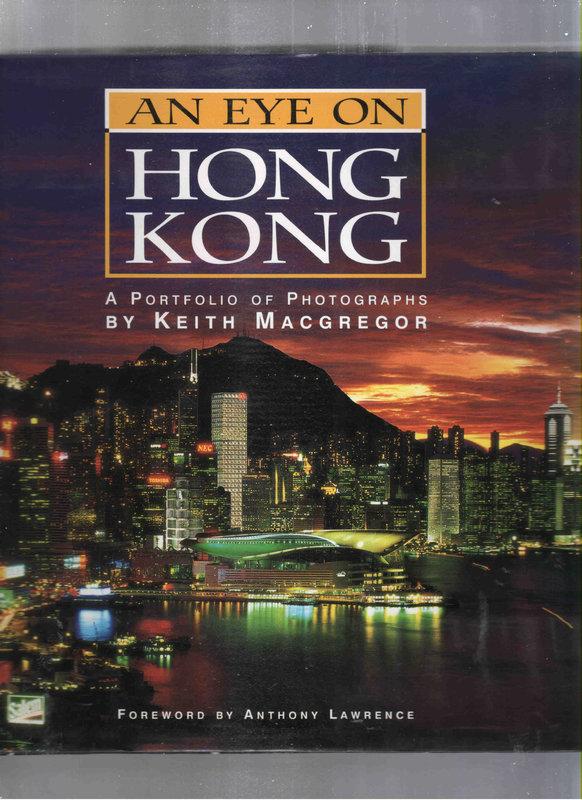
It was Martin Booth who once observed that the view of Victoria Harbour regularly reduced friends to the verge of tears.
It was Martin Booth who once observed that the view of Victoria Harbour regularly reduced friends to the verge of tears, either because they were moved by the magnificence of the vista or because they could fit only one-fifth of it into the viewfinder of their cameras. In An Eye on Hong Kong, one senses that photographer Keith Macgregor is absorbed by this problem of the panorama and what it implies for our understanding and appreciation of Hong Kong.
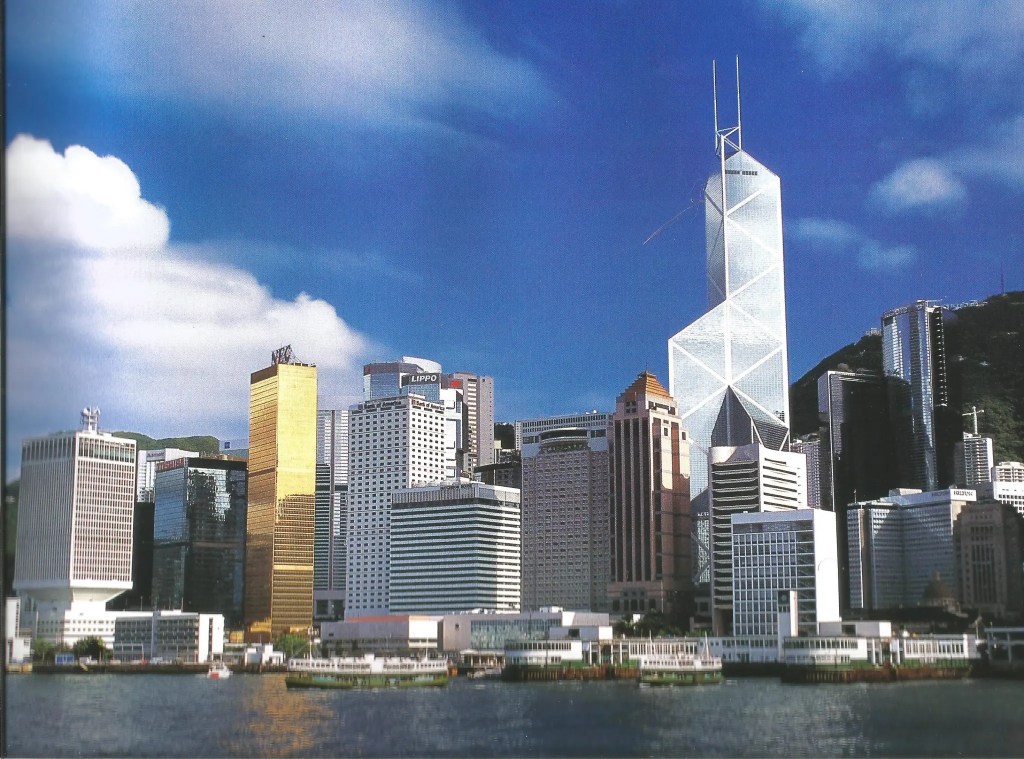
Keith Macgregor: “Central 1990”
The urban panorama is the obvious point of departure, and Macgregor understands its idiom perfectly. “Central 1990” captures the mixed, ruthless geometry of the harbour-side skyline set against a deep-blue sky only partially softened by cloud. This is one of the founding dreams of Hong Kong, in which no individual human being matters, for none appears in this image, and where wealth and power solidify themselves with breathtaking yet cold-blooded aplomb.
More lively and endearing are the nightscapes, often shot with long-exposure times to create vivid light-trails inscribed by ferry boats and land traffic in motion. Colour here intrudes upon the otherwise imperturbable architecture and softens the harsh angles and plate-glass glare of the daytime city environment. There is a garish vitality to the light, as contradictory as the night itself, with promises of leisure, if not pleasure, alongside our instinctive terror of the dark. Macgregor’s masterpiece in this mode is the three-page fold-out “Island 1996”, taken from Hung Hom on the Kowloon side. It shows Victoria Harbour from North Point to Sheung Wan, lit up by neon and the complementary red and yellow lights of the boats. Beyond it all, beneath a late-twilight sky, the mountains on the eastern coast of the island remain featureless, forbidding presences.
A different kind of panorama characterises the Kowloon pictures. It is not horizontal sweep that matters but depth within a streetscape filled with what Romain Jacquet-Lagrèze calls “city poetry”, that is, the collage of signage that transforms main roads into textual fields. One typical example is “Tung Choi Street Market, Mong Kok 1994”. With the exception of the words “PARK’N SHOP” in the foreground and an upper-case “GROOVY” in the middle distance, what follows down the length of the road is a galaxy of Chinese writing, much of it rendered in red, some of it read right-to-left, in other cases top-to-bottom. If one reads Chinese, one could spend an easy half-hour deciphering what is visible, I noticed a shop sign for a Buddhist vegetarian restaurant tucked among the linguistic barrage.
Naturally, night scenes of a neon-lit Nathan Road lend themselves perfectly to photography. No language glows in the dark quite like Chinese.
Once we leave the built-up centres of Hong Kong behind, we arrive at a third mode of panorama, composed of sea, mountains, and sky.
Once we leave the built-up centres of Hong Kong behind, we arrive at a third mode of panorama, composed of sea, mountains, and sky, the whole unified by light that transforms blues and greens into jewel-like azure and emerald. The eastern New Territories is a favourite location for Macgregor in this respect, with examples including “North Sai Kung 1995” and “Sai Kung Peninsula 1995”. Other images have a tourist-brochure quality, yet at their best they distil the overpowering natural beauty of the Hong Kong landscape and suggest that there is something altogether remarkable about the feng shui of the place.
Apart from the panorama, many photographs in An Eye on Hong Kong are concerned with the lives of fisherfolk. Images of junks are a stock feature in books on Hong Kong, but Macgregor goes well beyond this, with numerous depictions of working life at sea and of dragon-boat races. Like the remarkable Barbara E. Ward before him, Macgregor appears to feel a close affinity with the Tanka people and has taken care to document aspects of their seafaring lifestyle. Late in the book (pp. 114–116), there are even images of celebrations for the birthday of Hung Shing on Kau Sai Island, not far from where the locals have erected a plaque in commemoration of Ward for her contributions to the community, including the creation of a new Kau Sai Village in Hebe Haven.
This affinity also produces some especially striking photographs of female figures, a minor strand in Macgregor’s work that serves as a tender counterbalance to the sweep and impersonality of his panoramas. There is a full-page image in the introductory section of the book depicting a woman dressed in her finest clothes, wearing elaborate silvery ornaments in her hair, set against the vibrant colours of temple decoration. It is the epitome of festivity, encapsulated in a couplet I once saw in Tsz Tin Tsuen Village, 神人共樂, Gods and human beings enjoying themselves together. Of this type, the most memorable image for me is “Fisherwoman”, taken in Aberdeen in 1986. It is not a photograph that commands attention at first glance, yet there is something in the woman’s appearance and expression that remains enigmatic, drawing one back repeatedly.
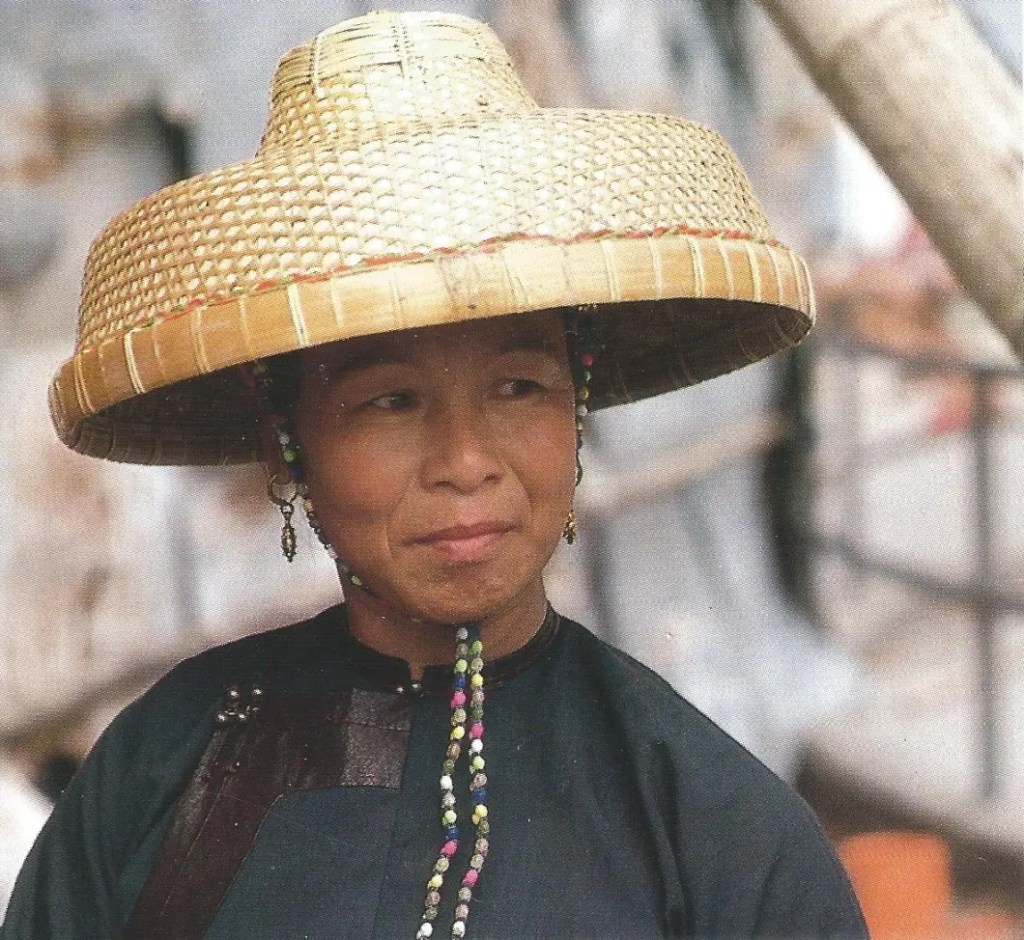
Keith Macgregor: “Fisherwoman”
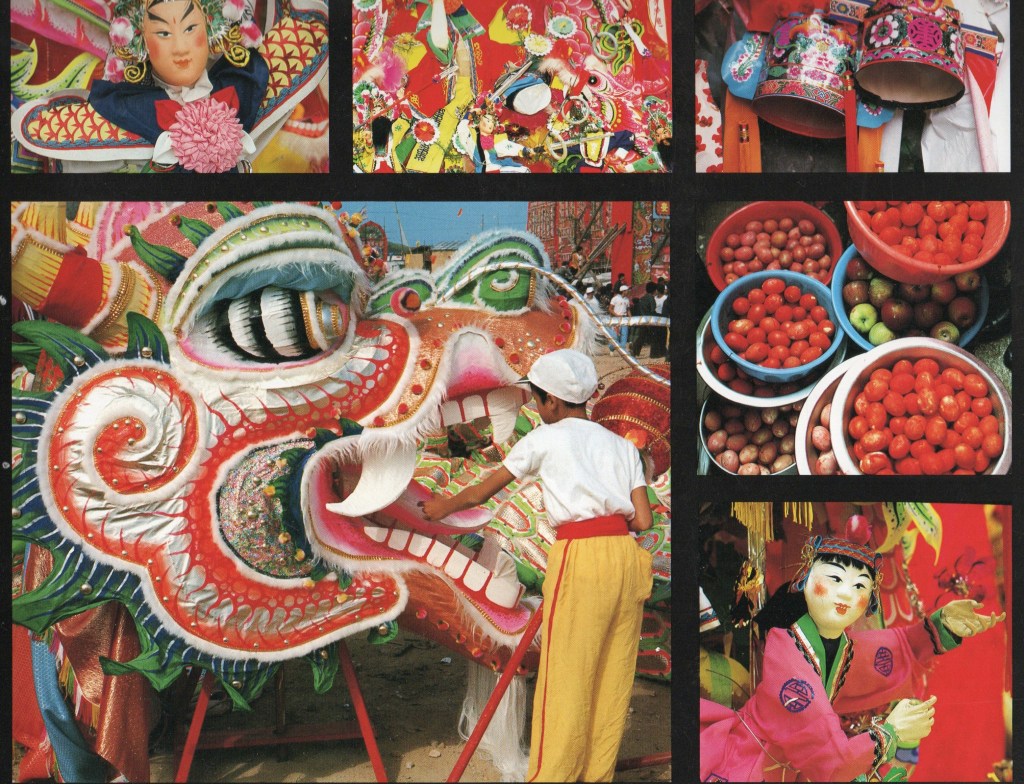
Collage and contrast are two further elements in Macgregor’s photography that broaden his appeal. Subjects for the former include temple decoration, smiling faces, various dry goods, aerial views, seafood, and salt-dried fish, as well as children participating in the annual float procession held on Cheung Chau. Contrasts generally involve two photographs of the same scene taken at different times. The prime example is “The Harbour and the City”, which juxtaposes a panorama taken by Mee Cheung in pre-skyscraper 1948 with one by Macgregor from 1970. Quieter, and for me more melancholy, instances include the image of a “typical old building in Eastern Street, Kennedy Town” from 1977 placed beside that imposing photograph of Central in 1990, as well as two images of Sha Tin, before and after its transformation into a new town, its present form dominated by the racecourse in the foreground alongside extensive sewage-treatment works.
Macgregor also includes a number of important images from the Sau Mau Ping Monkey God Festival. In one, a young male medium, possessed by the Monkey King’s spirit, prepares to dip his feet into a wok filled with boiling oil, while in another he sprints along a road of burning coals past an exclusive area reserved for VIPs.
The book concludes on a glorious, sombre note, with a final panorama entitled “Sunset over Lantau Island 1996”. From a vantage point above Central, we look westward over darkened waters towards a yellow-gold conflagration of light and monumental cloud, beneath a sky still faintly blue. It suggests the end of an era, and with it, perhaps, an extraordinary way of life that will not be repeated elsewhere.
How to cite: Patton, Simon. “A City in Panorama: Hong Kong Through Keith Macgregor’s Lens.” Cha: An Asian Literary Journal, 22 Apr. 2026. chajournal.com/2026/04/22/eye-on-hong-kong.

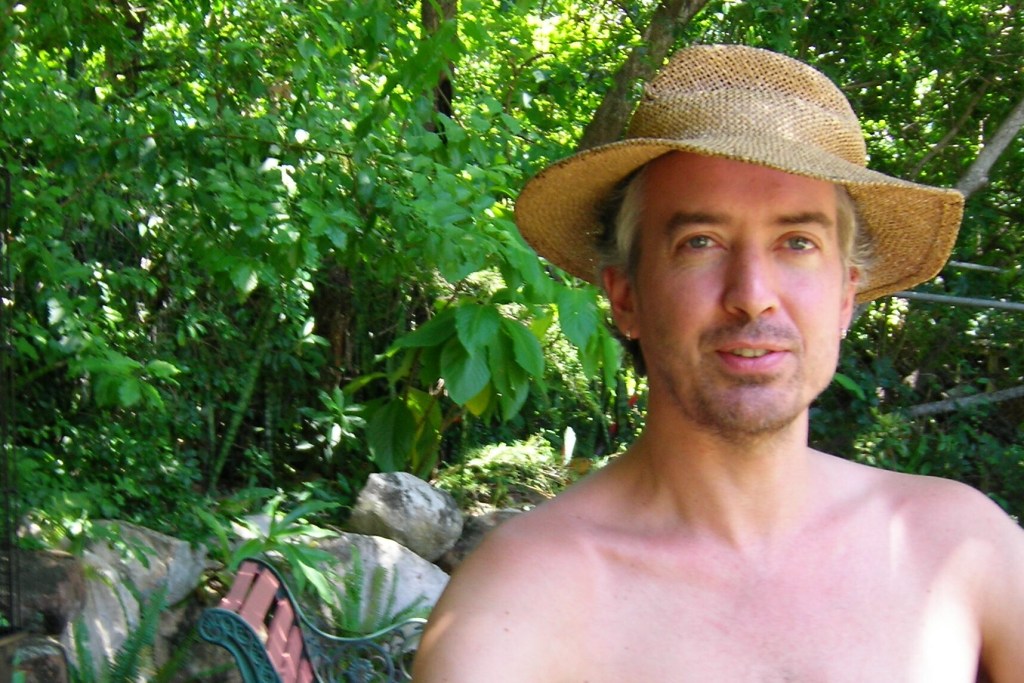
Simon Patton was born in suburban Melbourne, Australia, in 1961. Left-handed and temperamentally introverted, he developed an interest in poetry at about the same time that he began listening regularly to the radio. His first attempt at writing, composed at the age of fourteen, was a song titled “At the Beach Party”. In 1980 he entered university intending to study poetry, but in his second year he changed direction and began studying Chinese instead. This shift later shaped much of his literary work. In 1997 he received an invitation, sent by fax, to travel to Hong Kong to work as an editorial assistant at Renditions: A Chinese-English Translation Magazine. He held the position during three separate periods in 1998, 1999, and 2000. The experience proved formative and sparked a lasting interest in Hong Kong literature and culture. From 2002 to 2008 Patton co-edited the China domain of Poetry International Web together with the Chinese poet Yu Jian. During this period he helped introduce a range of contemporary Chinese poets to a wider international readership. In 2011 he left city life and settled in rural Central Victoria, where he continues to live with his partner near Chinaman Creek, sharing the landscape with a cat, chickens, goldfish, and a Sealyham terrier. [All contributions by Simon Patton.]
 Cha
Cha 