
茶 FIRST IMPRESSIONS
茶 REVIEW OF BOOKS & FILMS
[FIRST IMPRESSIONS] “Fragmentation and Repair in Leslie Shimotakahara’s The Breakwater” by Jonathan Han
Click HERE to read all entries in Cha
on The Breakwater.
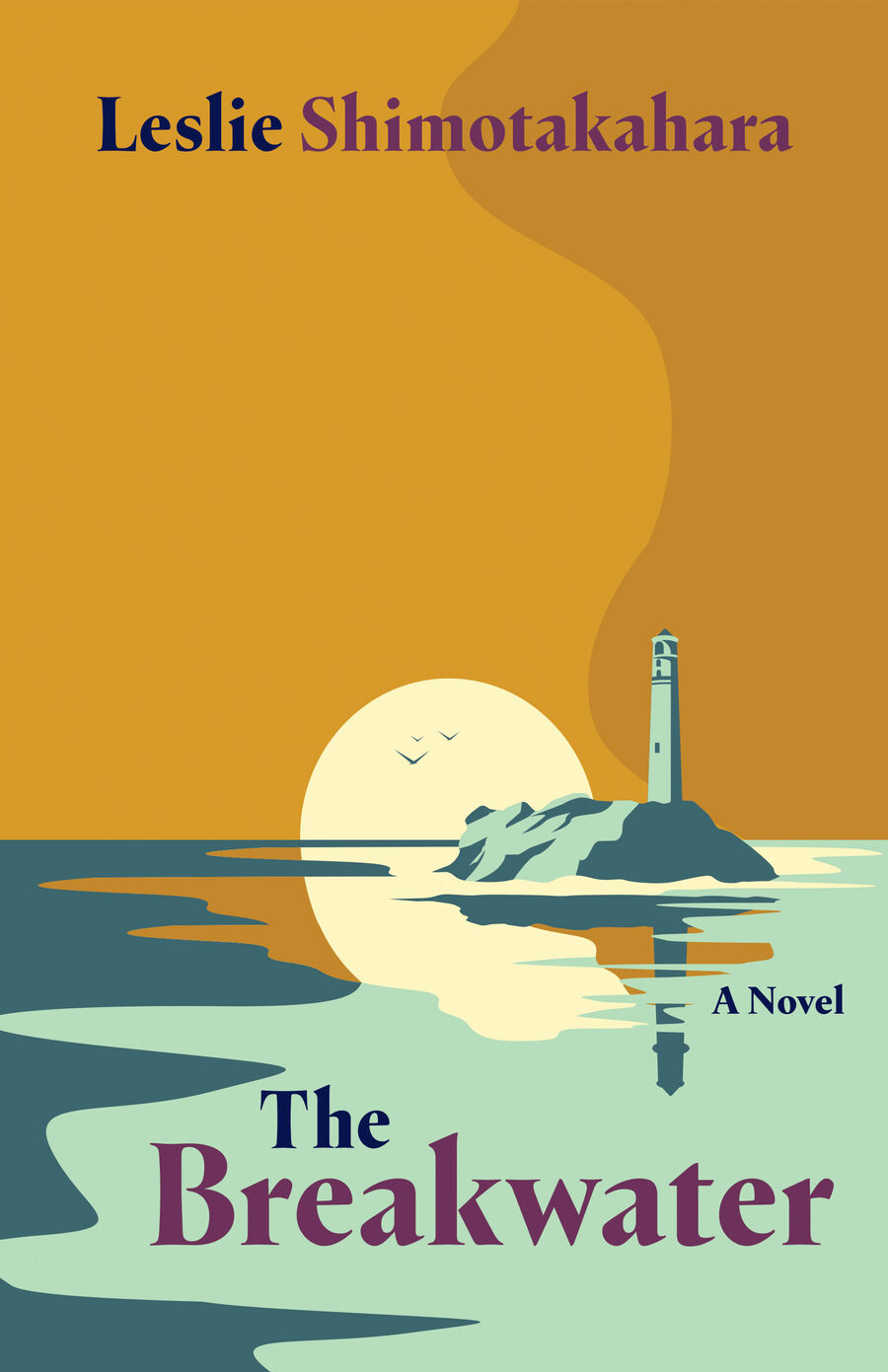
Leslie Shimotakahara, The Breakwater, Cormorant Books, 2026. 350 pgs.
Since committing his younger brother Stum to Essondale Asylum, Yas Matsumoto believes he has done his best. He has lovingly cared for his stepmother, raised his children, and buried his wife where she wished to be laid to rest. Now, forty years later, upon learning of his brother’s cancer diagnosis, Yas resolves to visit him at the asylum for the first and last time. He does not go alone. Given his age, his daughter Cathy forbids it. Accompanied by his daughter and granddaughter Tessa, the three of them travel from Toronto to Yas’s hometown of Victoria in what promises to be a journey of reconciliation.
Told through the perspectives of Yas, Cathy, and later Stum, Leslie Shimotakahara’s The Breakwater deftly oscillates between the estrangement of two brothers and the history of Japanese Canadians. The expulsion of Japanese families from their homes and their subsequent internment both propel the plot and serve as the backdrop to Yas’s memories as he returns to Victoria. Seeing the neighbourhood of his youth dramatically changed, Yas admits to himself that “[t]he past, if present at all, is another past. A past that never belonged to me and my kind.”
That rupture between Yas’s present and his past self extends to his relationship with his brother, a fragment of his past left behind, now to be recovered. While Yas spent his formative years as the family’s main breadwinner, Stum wandered between gambling dens and seedy hotels. Through the backstory of these opposing brothers, Shimotakahara reveals both sides of the Japanese Canadian experience, the marginalised and the underground, both culminating in tragic imprisonment.
Ironically, the internment offers Yas a means of alleviating his guilt. By committing Stum to the asylum, Yas inadvertently saved his brother from the hardships and dangers of the camps. This justification is tenuous at best, but becomes more complex once the narrative shifts to Stum’s perspective. Despite the many years spent in an asylum, Stum proves to be a lucid narrator, and a familiar one too. Certain turns of phrase used by both Yas and Stum, such as “What I wouldn’t give,” reflect close, albeit contentious, upbringings. Like Yas, and partly because of him, Stum struggles with the past, admitting:
The past is a broken teapot, shards scattered across the floor. All that remains to be done is to sweep it up, throw it in the trash. Any attempt to put the pieces back together only results in an ugly creation, full of jagged gaps and blobs of glue and edges that no longer align.
Stum’s metaphor evokes the Japanese tradition of kintsugi, in which broken pottery is repaired with lacquer mixed with gold. Dislodged from his heritage and abandoned by his family, Stum believes the past will remain broken and is determined to sweep it away. However, as the story progresses, The Breakwater does precisely the opposite of what Stum describes. His exploits and criminal liaisons are counterbalanced by his self-awareness and swagger, shaping a charming portrait of a deeply flawed rogue. Through their journey, Cathy and Tessa come to understand his story and begin to piece the past together.
At first, Cathy knows nothing about her uncle. Yas initially tells her that Stum is a cousin, revealing the truth only at the very last moment. Understandably irritated by her father’s deception, Cathy remains patient, keenly aware that the internment camps also resulted in the disjunction of her family’s history. Just as Yas and Stum are estranged from one another, Cathy is likewise separated from her family’s past by the generational consequences of displacement.
The trope of estrangement between two brothers, one conventionally good and the other bad, is not uncommon. Shimotakahara avoids this stereotype by carefully fragmenting the narrative, with strands of wrongdoing, blame, and remorse layered upon one another. As the story culminates in the brothers’ final encounter, it is the present journey that, like lacquer, binds these fragments together. The result is a meticulous plot, neither overconstructed nor obscure, steeped in history and written in clear, generous prose.
How to cite, Han, Jonathan. “Fragmentation and Repair in Leslie Shimotakahara’s The Breakwater.” Cha: An Asian Literary Journal, 8 Apr. 2026. chajournal.com/2026/04/08/leslie-shimotakahara-breakwater.



Jonathan Han is a Hong Kong-based writer. His work has appeared in Essays in Criticism, Hong Kong Review of Books, and Asian Review of Books. His chapbook Quinquennial was published by Pen and Anvil Press. Follow his Substack @jhantheman. [All contributions by Jonathan Han.]
 Cha
Cha 