
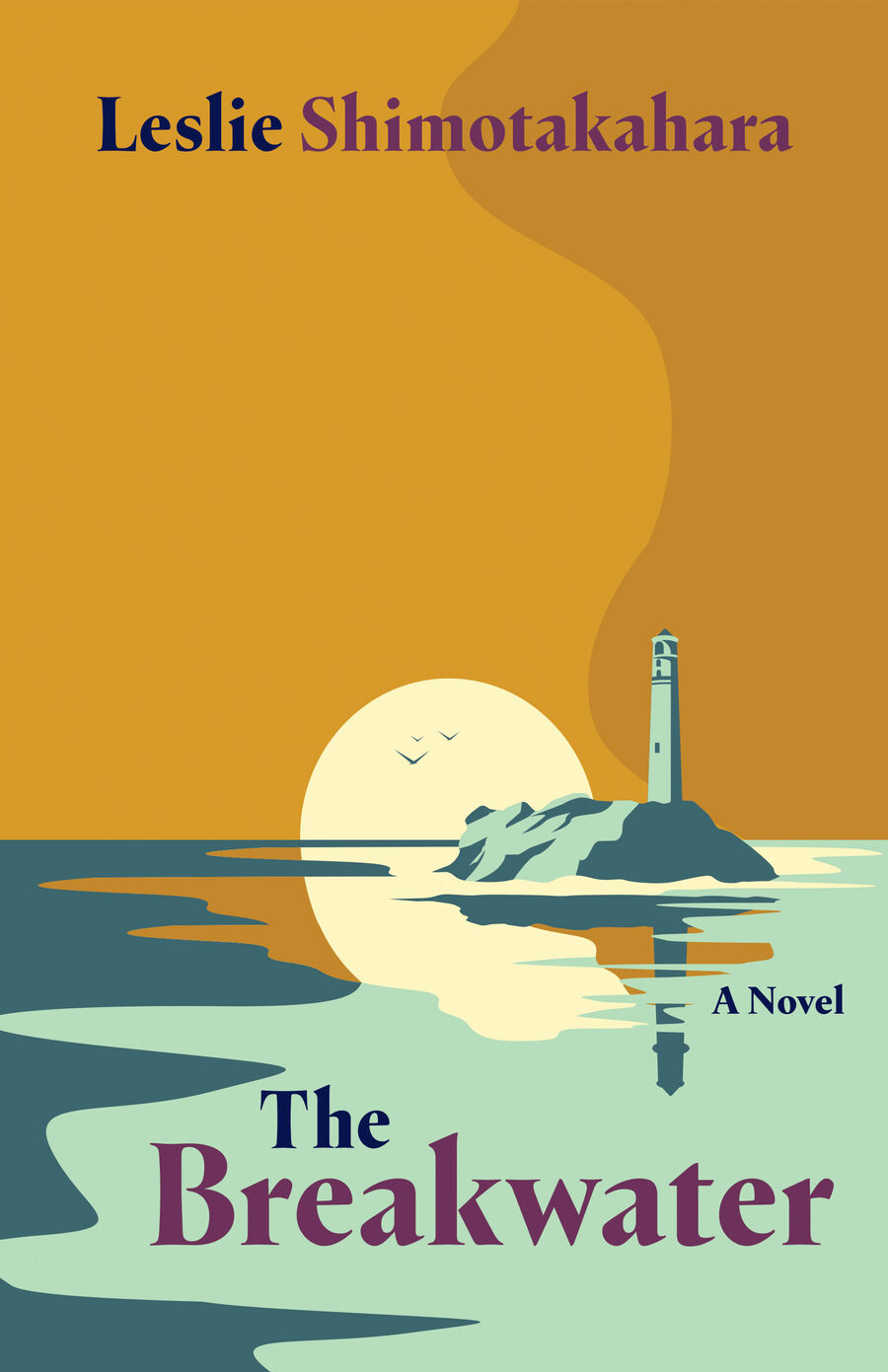
Read Leslie Shimotakahara’s essay
on the writing of The Breakwater HERE.
[EXCERPT] “From The Breakwater” by Leslie Shimotakahara
Leslie Shimotakahara, The Breakwater, Cormorant Books, 2026. 350 pgs.
I wasn’t a week past my seventeenth birthday. Freshly kicked out of the house. All hell had broken loose when Yas found out that I hadn’t been at school for weeks. I’d thrown in the towel on the Tigers too. I can’t explain why exactly, but chasing a ball around a dusty field no longer excited me. Maybe I’d come to see that even if I made it big, it was going to be the small kind of big. The adoration of the Japanese Canadian community, but not much fame beyond that and no big money. Not enough to turn my crank.
While I was supposed to be at math class or team practice, what’d I been up to? I’d been back at the fan tan clubs and spending all my winnings on the girls at Mrs. Shimizu’s. Those girls. They knew how to excite me; they knew how to turn my crank.
Of course, it was only a matter of time before Yas found out about me playing hooky. One evening, after he and I had had it out—with Chotto wringing her hands and egging Yas on in the background—I decided enough with this crap. This hovel, full of filth and lies, had never been much of a home. Let them kick me out. I was packing my grip and hightailing it, without a second thought.
Time to try my luck over on the mainland. Vancouver was bigger, faster, shinier. Much more my pace. A new gambling club, the Showa, had just opened in the heart of Little Tokyo. I had a buddy, Mike Okada, who said I could sleep on his couch till I got on my feet.
So there I found myself on my second night in Van, hanging out at the Showa. Since Mike had to work, I was flying solo. The club turned out to be a surprisingly discreet establishment, tucked on the second floor of a slender building that overlooked the park. Despite all my years of playing ball there, I’d never been to the park at night. I wasn’t prepared for how creepy it looked in the misty drizzle.
Since it was a Tuesday, the club wasn’t busy. I slid onto a stool at the dimly lit bar, trying to appear like I belonged. The place was pretty swanky. Black-and-white tiled floors. Round booths, padded in burgundy velvet. Jazz music played softly, a song I hadn’t heard before, lots of sax and no words. Although I was nowhere close to drinking age, I looked the bartender right in the eye and ordered a gin and tonic.
While nursing my glass and feeling very grown-up, I peered toward the rear of the establishment. That was where the gambling den was tucked, carefully concealed behind false walls in case of police raids. I was trying to get up the nerve to ask the bartender about slipping back to play a round. But I worried it’d be members only, and you likely needed to know somebody to become a member and dish out a fat fee. Suddenly, I was very aware that I’d been a big fish in a small pond in Vic. Here, I was a nobody, with bitten-down fingernails and scuffed shoes and not much dough in my wallet.
The barkeep was a tall, pale man, not very talkative, at least to the likes of me. A couple of serious looking Oriental fellows came in from the rain and greeted him by name before heading into the back with a sense of purpose.
Shortly after, she walked in. A girl in an elegant tan raincoat, short enough to show off shapely legs. The drizzle had settled all over her skin, giving it a dewy look. Although blond, her hair wasn’t brassy like out of a bottle—it was a classier shade, pulled up in a twist. There was something rather charming about those unruly, damp wisps coming undone around her neck. She appeared out of breath, like she’d just dashed up the stairs.
“Can I help you, miss?” the bartender said.
“I certainly hope so!” An exaggerated pout. “I need to speak to the Oyabun.”
He cracked a smile. He looked at her with a touch of curiosity, well deserved. A good-looking white gal, bursting in out of the rain, demanding to speak to the Oyabun?
“There are a lot of folks who’d like the ear of the Oyabun, sweetie. But he’s a very busy man.”
No guff. The Oyabun: the Big Boss. Not only did this club belong to him, but so did pretty much all of Little Tokyo. A few times in my life, I’d caught peeps of the man. Greeting folks, smiling, shaking hands, he might as well have been the goddamn mayor of Little Tokyo. A trim, short man he was, always sporting a well tailored suit. His dyed black hair was as neatly buzzed as a freshly mown lawn of grass.
“Well, I’m not leaving till I get a word,” the blond said, flushing fetchingly. “He and I have business to settle. And in case you don’t know, my husband is—”
“Then your husband can make an appointment to speak to the boss himself,” the barkeep cut her off.
She continued to fume until a sudden stillness descended over her shoulders. Her gaze settled upon me. I was hunched over my drink at the other end of the bar, trying to appear to be minding my own business. But I was very aware of her eyes now. Her expression softened, butter melting across a piece of toast.
Maybe this evening wasn’t going to be such a write-off, after all?
How to cite: Shimotakahara, Leslie. “From The Breakwater.” Cha: An Asian Literary Journal, 7 Apr. 2026, chajournal.com/2026/04/07/breakwater.

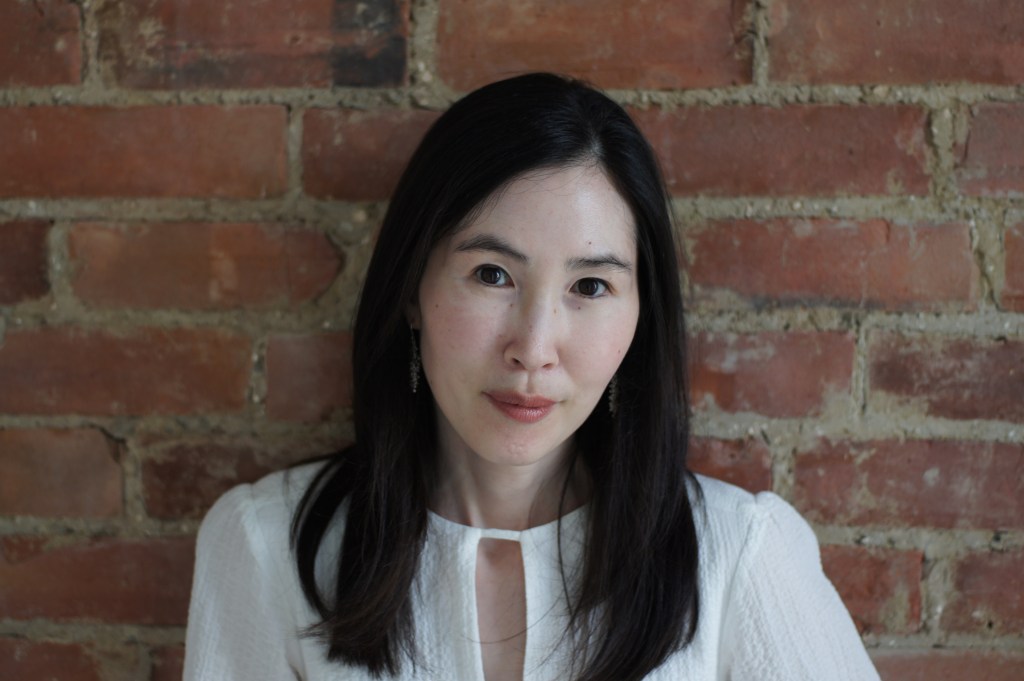

Leslie Shimotakahara is an award-winning author of three novels and a memoir, as well as numerous short fiction and essays. She won the Canada-Japan Literary Prize (2012) and has been shortlisted for the K.M. Hunter Artist Award. Her writing can be found in the National Post, World Literature Today, and anthologies and periodicals. She holds a PhD in English from Brown University, and lives in Toronto with her husband. Visit her website for more information. [All contributions by Leslie Shimotakahara.]
 Cha
Cha 