
茶 FIRST IMPRESSIONS
茶 REVIEW OF BOOKS & FILMS
[ESSAY] “Ghostly Formations and Queer Futures: On Queer Southeast Asia” by Charlotte Marie Chadwick
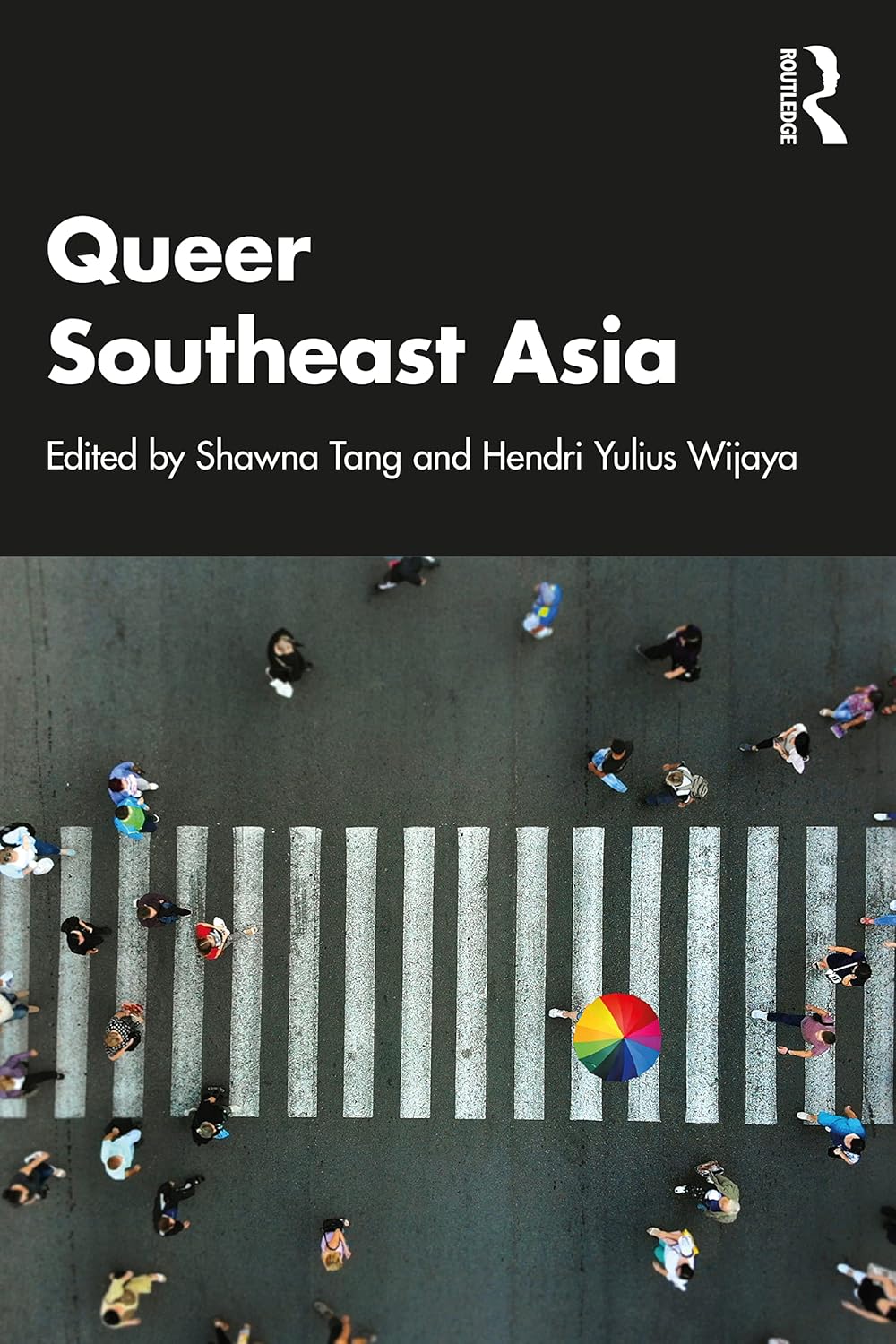
Shawna Tang and Hendri Yulius Wijaya (editors). Queer Southeast Asia, Routledge. 2022. 296 pgs.
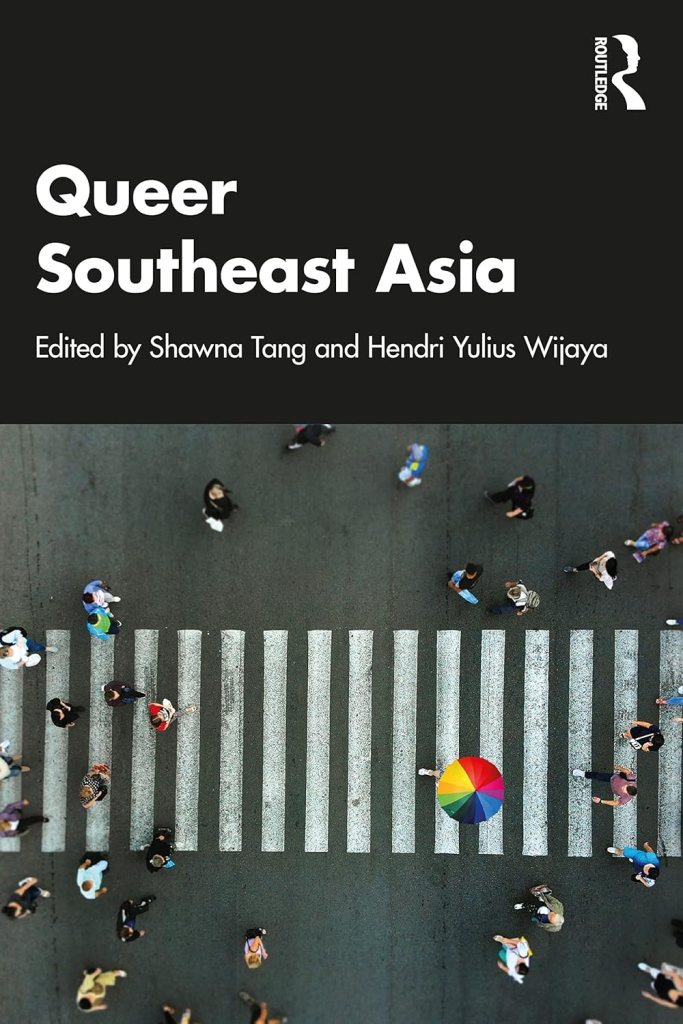
Queer Southeast Asia, edited by Shawna Tang and Hendri Yulius Wijaya, is a vibrant and necessary book emerging from the storied intersection of area studies and queer studies. This collection continues the tradition of Gayatri Chakravorty Spivak, Shih Shu-mei, Stuart Hall, and especially Kuan-hsing Chen’s influential Asia as Method: Toward Deimperialization (2010). The book mobilises the latter’s notion of “internationalist localism”, aiming to decentre the West and deconstruct binaries by bringing cultural theory into dialogue with locally grounded traditions and epistemologies.
Their approach is informed by an earlier wave of scholars who explored how queerness intersects with national borders, geographical locations, and cultural flows.
Tang and Wijaya have assembled a broad and diverse range of entry points into thinking about Queer Southeast Asia as a specific regional imaginary. Their approach is informed by an earlier wave of scholars who explored how queerness intersects with national borders, geographical locations, and cultural flows. These efforts towards theorising “queer Asia” included attempts to formulate “queer Asia as method” (Yue, 2017), resisting an “area unconscious” (Chiang and Wong, 2016), and continuing the project of rendering visible the “unmarked” North American locale of queer studies (2018). This meant pushing against the historical limitations of area studies by highlighting multiplicity, fluidity, and partiality, in order to map instances of Asian queerness across various scales and sites, including national, supranational, and subnational contexts, as well as within metropoles (Bao, 2020; Henry, 2020; Jackson, 2011; Martin, 2008; Ung Loh, 2019; Yue and Leung, 2017).
)
As Tang and Wijaya underline, any theorisation of Queer Southeast Asia must remain attuned to the “geo-colonialist” and orientalist origins of the regional imaginary.
Accordingly, Tang and Wijaya prudently open with a more personal and self-reflective meditation on the process of the book’s production. They demonstrate their awareness of the politics of institutionalised knowledge. Wijaya, in particular, observes the impact of material conditions on the field of queer studies, in an attempt to mitigate the “particular area studies baggage” (p. 5) of this region, where intelligence-gathering origins of Southeast Asia, focused on “usable data”, also created a dearth of theory and methodology. This baggage is especially relevant to the ethnographic research on minoritised communities that forms the bulk of this collection, including the Hong Kong Igorot community, by Jose Kervin Cesar B. Calabias; transpuan women in Indonesia, by Ferdiansyah Thajib; and Southeast Asian migrants in the Anglo-diaspora, co-written by Tang and Quah Ee Ling. As Tang and Wijaya underline, any theorisation of Queer Southeast Asia must remain attuned to the “geo-colonialist” and orientalist origins of the regional imaginary. The way that academic knowledge formation itself perpetuates existing inequalities, where race and class privilege tend to align with the subject object division of research, for example, is an ongoing challenge that academia must reckon with.
This collection accordingly brings into sharp relief how several places in the region reckon with the impact of globalised LGBTQ+ activism, the limitations of which have been articulated by Joseph Andoni Massad (“Re-Orienting Desire: The Gay International and the Arab World”, 2002) and Denis Altman (“Global Gaze/Global Gays”, 2001). Benjamin Hegarty’s chapter, for example, considers the nuances of terms such as transpuan, waria, and transgender within Indonesian cultures, while Daniel C. Tsang’s chapter gives a historical overview of sexuality studies and queer activism in the Vietnamese context. Anthony J. Langlois cogently examines the intersection of human rights, digital rights, and LGBTIQ and SOGIE rights. His chapter applies a queer analysis to the complex interweaving of human rights norms and the emergence of new digital technologies within ASEAN. Other chapters engage self-reflexively with academic institutions. Daryl W. J. Yang and Yogesh Tulsi’s chapter on “The G Spot”, the Yale-NUS gender and sexuality alliance, reads it through Chua’s notion of pragmatic resistance (2014), while the final chapter takes the form of a roundtable on the pedagogy of queer studies “beyond empire”. This is a deft structural move on the part of the editors, unifying the disparate voices in the book through a conversational format and providing a sense of closure by shifting the focus towards the future.
)
Queer is a shapeshifting term, already ambiguous in its double meaning as both an insult and a badge of pride.
However, the temporality of the book is not as linear as that move suggests. In addition to the collection’s careful rejection of a bounded spatiality, it also eschews chrononormativity. Elizabeth Freeman coined “chrononormativity” to describe the way bodies are saturated with linear time and “naturally” directed towards maximum productivity (2010). Freeman drew on Judith Butler’s influential account of how drag artists both highlight and subvert the performativity of gender naturalised in everyday life. Freeman argues that “temporal drag” and other elements of queer lives can disrupt chrononormativity. Thus, Tang and Wijaya argue that scholarship on Queer Southeast Asia can create a form of queer connective tissue that functions similarly to that found in the case studies it narrates. For Tang and Wijaya, the ways in which Atit Pongpanit and Ben Murtagh’s chapter on cinema spans Thai, Filipino, and Indonesian contexts across decades; Kristine Michelle L. Santos’ chapter charts supranational queer comics networks; Sim Jiaying delineates digital communities navigating state censorship in Singapore; and Brian Curtin adopts an open-ended ethical stance in his essay on photographing teenage sex workers in Bangkok all perform queerness in its antinormative capacity. These approaches challenge naturalised hegemonies by destabilising and operating outside existing structures. This brings into focus one of the main challenges, and one of the most compelling aspects, of “queer” as an object of study. As is duly noted whenever this term is mobilised, including by the editors, the pliability of queer as a concept is both frustrating and liberating. Queer is a shapeshifting term, already ambiguous in its double meaning as both an insult and a badge of pride. It can function as a verb indicating a refusal of identitarian hegemonic norms, as seen in the introduction and in Brian Curtin’s chapter. At the same time, the “queer” of the book’s title can also serve as an umbrella term for marginalised sexual orientations, gender identities, and expressions, as in Ferdiansyah Thajib’s chapter.
)
Correspondingly, both the strength and limitation of this volume lie in its remarkable diversity. There are very few points of connection across the collection, either in research topics or methodologies. This is not to disparage the volume, since it would be a formidable task even to represent all the nation states within Southeast Asia. A nation-state-centred approach would shift the focus away from the range of methodologies and subjects on display here. Moreover, it would be inappropriate to underline the constructedness of postcolonial Southeast Asia in the introduction, only to structure the volume by nation state. The most pressing question the volume provokes, then, is how the issues and studies communicated apply to other national contexts, including Myanmar, Laos, Cambodia, Brunei, and Timor-Leste, not to mention across other scales, such as within and across minority ethnic groups, or the area deemed Zomia by Willem van Schendel, a term famously applied to upland Southeast Asia by James C. Scott (2009).
This collection aligns with the recent turn in queer theory by speaking back to the unmarked United States-centrism of the field.
Any review is shaped by the positionality of the reviewer, and this becomes particularly evident here. As noted, this collection aligns with the recent turn in queer theory by speaking back to the unmarked United States-centrism of the field. However, given my own connections to Aotearoa New Zealand, it would be remiss not to draw attention to the number of contributors and editors based in Australia. The editors acknowledge the Australian provenance of the volume at the outset of the introduction and credit the University of Sydney for the grants and conferences that facilitated its development. However, given the prominence of the historical AsiaPacifiQueer Network1 in shaping Queer Asia as a conceptual field, the specifically Australian inflection of the “West” could be more explicitly acknowledged and theoretically integrated into strategies of decentring Europe and North America, negotiating postcolonial identities, and unpacking the relationship between Queer Southeast Asia and Queer Asia.
)
My second observation turns to a brief but suggestive citation in the introduction. Tang and Wijaya invoke Avery Gordon (1997) to describe Queer Southeast Asia as “a figuration that haunts present formations, a ghostly residue” (p. 6). This moment could be further developed to express more than intangibility, particularly in light of the repressed violence that Gordon and others associate with “ghostly matters”. Given the substantial body of scholarship on the intersections of religion, gender, and sexuality, it is tempting to speculate how this volume would appear if it more fully engaged with that field. Thomas Baudinette’s chapter, though primarily ethnographic, positions queer Filipino intersections with Japanese popular culture through Neferti Tadiar’s psychoanalytic reading of the feminisation of the Philippines within fantasies of development and modernity (2004). Brian Curtin’s thought-provoking chapter, which examines the ethics of photographing underage male sex workers in Chiang Mai, stands out methodologically by addressing questions of visibility and morally inflected frameworks grounded in local religious contexts.
While not all contributors can be expected to adopt a visual or cinematic approach, the field of cinema studies has developed sophisticated analyses of how Southeast Asia is mediated, constructed, and performed. As Curtin’s chapter demonstrates, such work may help address the lack of theoretical depth noted by the editors. Studies of queer film festivals could provide productive parallels to Santos’s account of how queer safe spaces are mediated through comics in popular Southeast Asia. Similarly, while Sim Jiaying productively positions the digital platform Viddsee in Singapore as a queer assemblage, future work could extend this argument beyond the national frame by engaging with Olivia Khoo’s research on transnational queer cinematic networks in Southeast Asia (2014). Atit Pongpanit and Ben Murtagh’s transnational approach to cinema therefore presents an important contribution to this volume, particularly given that scholarship on Southeast Asian cinema often remains nationally bounded, while scholarship on Southeast Asia more broadly has historically marginalised queerness. Future work might further explore how regional networks of artistic production and academic scholarship are co-constituted, as suggested in Philippa Lovatt and Jasmine Nadua Trice’s overview of film and video cultures in the region (2021).
)
To reiterate, this book is significant not only for the work it presents but also for the new directions it opens up. Traces of the Covid-19 pandemic remain visible in Tang’s summary of the volume’s themes, namely “distanced intimacies and camaraderie; flux; surveillance; and hope” (p. 266). Since then, initiatives such as the 2021 “Queer Asia as Method” events, organised by Ge Liang, J. Daniel Luther, Hongwei Bao, and Victor Fan, culminating in a special issue of Media, Culture and Society, demonstrate a growing engagement between area studies and queer theory in postcolonial Asian contexts. Southeast Asia, a dynamic nexus of cultural, economic, and political flows, is often overshadowed by its larger neighbours. Yet it offers numerous compelling entry points into theorising Queer Asia, as this important volume convincingly demonstrates.
- To find out more about, see AsiaPacifiQueer: Rethinking Genders and Sexualities, which is available via Amazon and JSTOR. These links refer to the same volume in different formats. ↩︎
Works Cited
▚ Altman, Dennis. “Global Gaze/Global Gays.” Sexual Identities, Queer Politics, 2001, pp. 96–117.
▚ Bao, Hongwei. Queer China: Lesbian and Gay Literature and Visual Culture under Postsocialism. Routledge, 2020.
▚ Chen, Kuan-Hsing. Asia as Method: Toward Deimperialization. Duke University Press, 2010.
▚ Chiang, Howard, and Alvin K. Wong. “Queering the Transnational Turn: Regionalism and Queer Asias.” Gender, Place & Culture, vol. 23, no. 11, 2016, pp. 1643–1656.
▚ Chua, Lynette J. Mobilizing Gay Singapore: Rights and Resistance in an Authoritarian State. Temple University Press, 2014.
▚ Freeman, Elizabeth. Time Binds: Queer Temporalities, Queer Histories. Duke University Press, 2010.
▚ Ge, Liang, J. Daniel Luther, and Eva Cheuk-Yin Li. “Editorial introduction: Queer Asia as method.” Media, Culture & Society 47.7 (2025): 1452-1461.
▚ Gordon, Avery F. Ghostly Matters: Haunting and the Sociological Imagination. University of Minnesota Press, 1997.
▚ Henry, Todd A. Queer Korea. Duke University Press, 2020.
▚ Jackson, Peter A. Queer Bangkok: Twenty-First-Century Markets, Media, and Rights. Hong Kong University Press, 2011.
▚ Khoo, Olivia. “The Minor Transnationalism of Queer Asian Cinema: Female Authorship and the Short-Film Format.” Camera Obscura, vol. 29, no. 1, 2014, pp. 33–57. https://doi.org/10.1215/02705346-2408507.
▚ Lovatt, Peter, and Jonathan N. Trice. “Theorizing Region: Film and Video Cultures in Southeast Asia.” JCMS: Journal of Cinema and Media Studies, vol. 60, no. 3, 2021, pp. 158–162.
▚ Martin, Fran, et al. AsiaPacifiQueer: Rethinking Genders and Sexualities. University of Illinois Press, 2008.
▚ Massad, Joseph A. “Re-Orienting Desire: The Gay International and the Arab World.” Public Culture, vol. 14, no. 2, 2002, pp. 361–385.
▚ Puar, Jasbir K. Terrorist Assemblages: Homonationalism in Queer Times. Duke University Press, 2018.
▚ Scott, James C. The Art of Not Being Governed: An Anarchist History of Upland Southeast Asia. Yale University Press, 2009.
▚ Tadiar, Neferti Xina M. Fantasy Production: Sexual Economies and Other Philippine Consequences for the New World Order. Hong Kong University Press, 2004. JSTOR, http://www.jstor.org/stable/j.ctt2jc3j9. Accessed 1 Apr. 2026.
▚ Ung Loh, J. L., and J. Daniel. ‘Queer’ Asia: Decolonising and Reimagining Sexuality and Gender. Zed Books, 2019.
▚ Yue, Audrey. “Trans-Singapore: Some Notes toward Queer Asia as Method.” Inter-Asia Cultural Studies, vol. 18, no. 1, 2017, pp. 10–24.
▚ Yue, Audrey, and Helen Hok-Sze Leung. “Notes toward the Queer Asian City: Singapore and Hong Kong.” Urban Studies, vol. 54, no. 3, 2017, pp. 747–764. https://doi.org/10.1177/0042098015602996.
How to cite: Chadwick, Charlotte Marie. “Ghostly Formations and Queer Futures: On Queer Southeast Asia.” Cha: An Asian Literary Journal, 2 Apr. 2026, chajournal.com/2026/04/02/queer-southeast-asia.

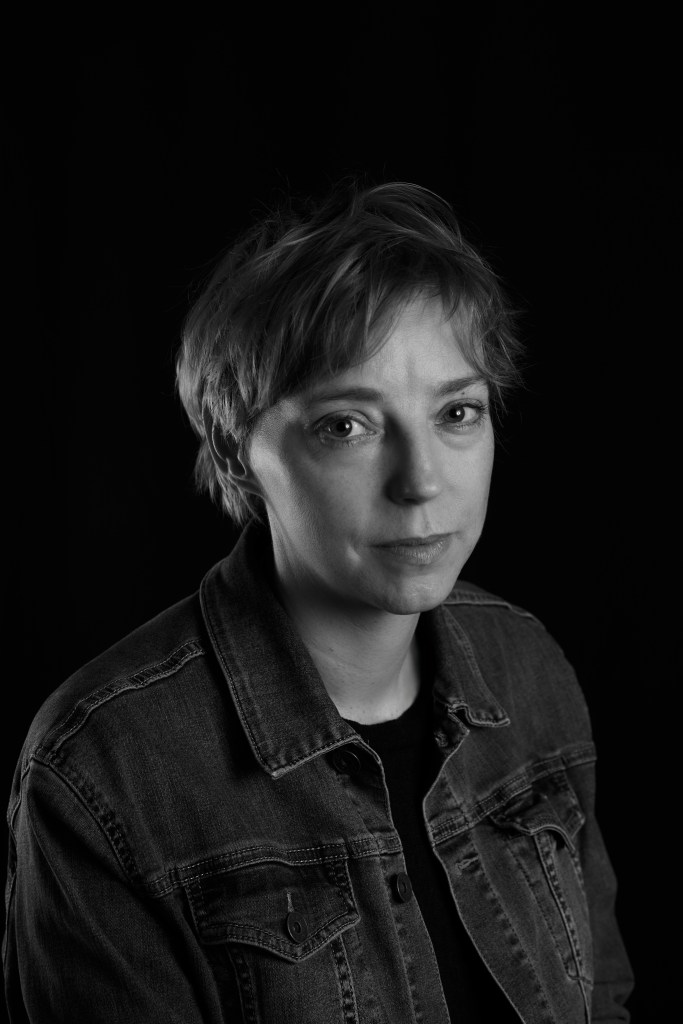

Charlotte Marie Chadwick is a PhD candidate in the Department of Humanities and Creative Writing at Hong Kong Baptist University and a recent visiting scholar with Cornell University Southeast Asia Program. Originally from New Zealand, Char also holds an MA (Research) in Literature from University of Melbourne and has spent several years living in the United Kingdom and Southeast Asia. Char’s research interests include queer theory, affect studies, and posthumanism across literature, performance, and cinema. Their dissertation focuses on Burmese identity, gender, and sexuality, as well as transnational affect in cinema. They also publish and perform creative work, including poetry, short fiction, theatre, and film.
 Cha
Cha 