
茶 FIRST IMPRESSIONS
茶 REVIEW OF BOOKS & FILMS
[REVIEW] “Mordant Wit and Material Imagination in Huang Fan’s flower ash” by Nicholas Y. H. Wong
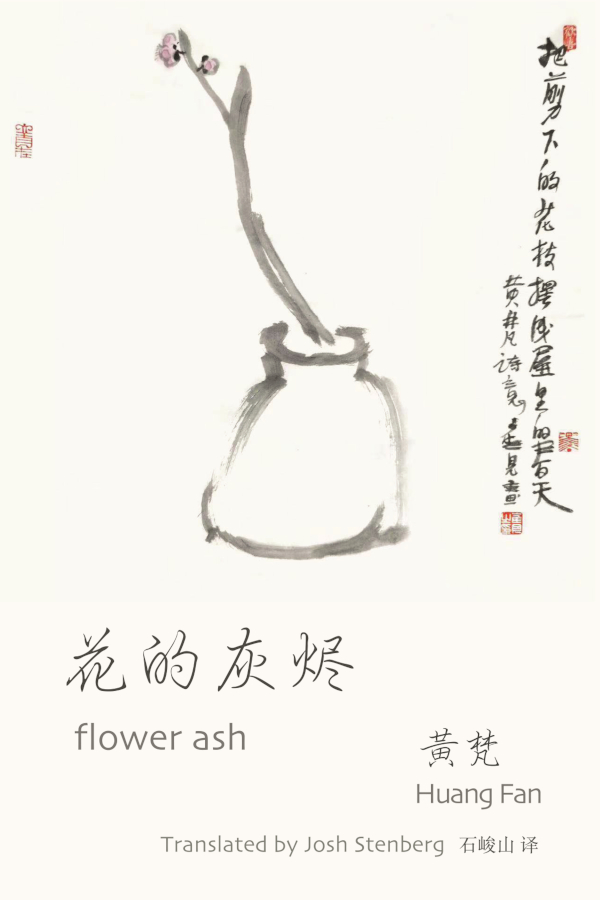
Huang Fan (author), Josh Stenberg (translator). flower ash, Flying Island Books, 2025. 120 pgs.
I came to know Josh Stenberg 石峻山 as an academic whose work on Southeast Asian Chinese poetry and drama has been trendsetting, reshaping our understanding of how language and art are articulated in migrant communities across diverse transnational contexts.
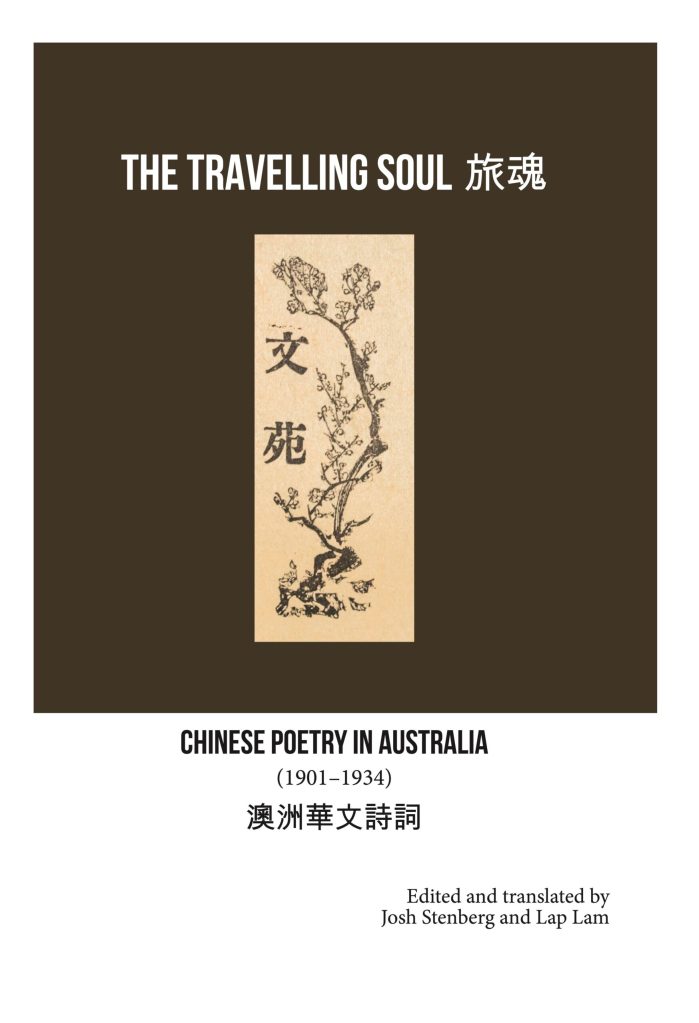
Stenberg’s co-edited anthology, The Travelling Soul: Chinese Poetry in Australia (1901–1934) (2026), excavates migrant voices captured at the margins of classical poetry. His prolific academic work and curatorial practice are closely allied with his sustained creative engagement in poetry writing and translation from Chinese into English.
Huang Fan’s 黄梵 flower ash 花的灰烬 is Stenberg’s most recent foray into translating Chinese poets, and it has already made an impact through its relay translation into Spanish as Cenizas de Flor by Ricardo Díez Pellejero. This book-length translation of Huang Fan develops from Stenberg’s earlier selected translations in “Five Nanjing Poets in Translation: Huang Fan, Malingshu Xiongdi, Sun Dong, Yu Bang, Dujia,” published in Perspectives in the Arts and Humanities Asia (2021).
The poet Huang Fan (b. 1963), born in rural Hubei province and now residing in Nanjing, is culturally significant for his commentary on everyday life in contemporary China, conveyed through lyrical and mordant wit. He has undertaken artist residencies in Göttingen and Florence, published nine volumes of poetry and prose, and received numerous literary prizes in China.
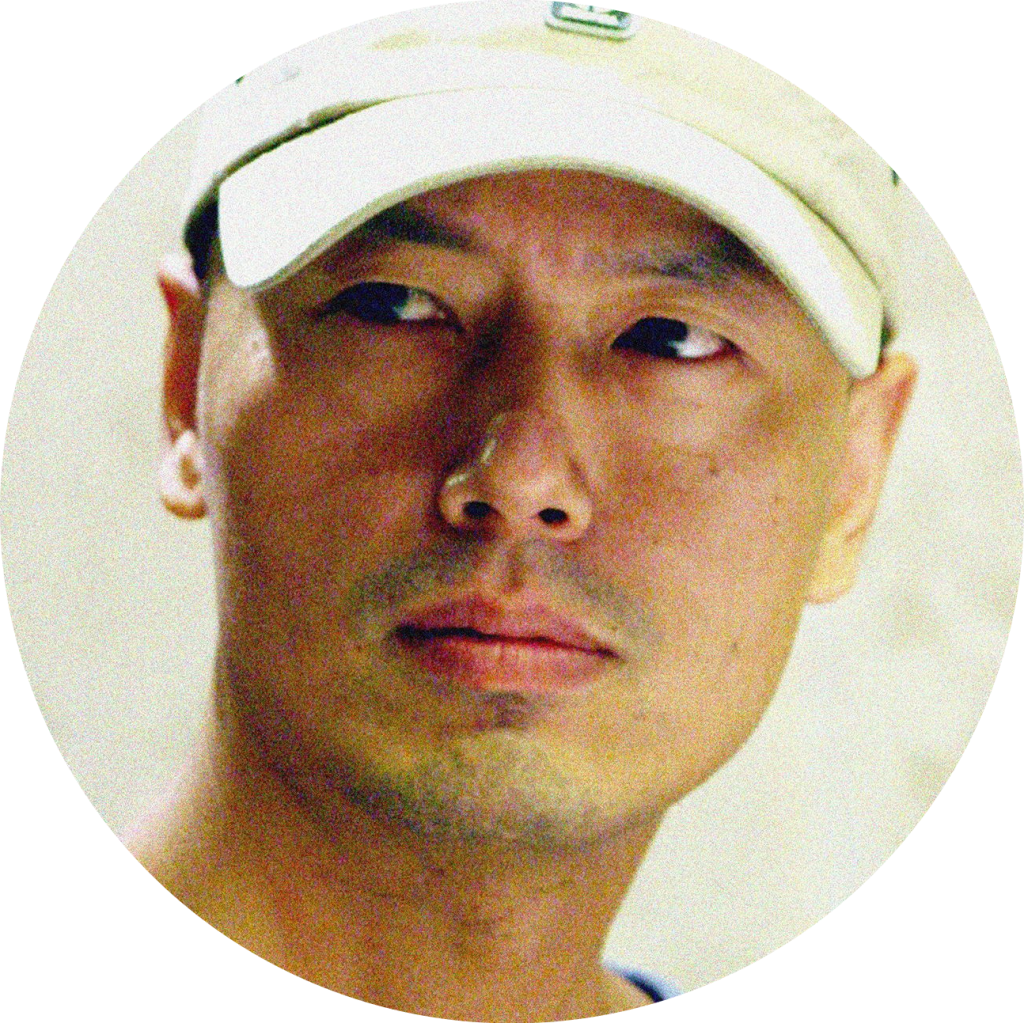
Huang Fan, picture by Liu Chang
Individual poems by Huang have been translated into English by other translators and published in venues such as Granta and Poetry. Stenberg’s book-length translation contributes to the global English-language poetry landscape in several ways. It nuances the prevailing notion that contemporary Chinese poets predominantly write in the wake of the Misty Poets generation, whose alienated use of language during China’s reform era challenged decades of state-directed linguistic practice. Huang Fan’s poetic experimentation does not primarily seek to unsettle our relation to language and meaning; rather, it anchors perception in material objects, such as vases, white masks, bats, mayflies, and beacon fires, interwoven with persistent questioning of method.
I was struck by Stenberg’s colloquial and breezy rendering, presented in small caps, of the poet’s pithy humour and solipsistic observations.
I was struck by Stenberg’s colloquial and breezy rendering, presented in small caps, of the poet’s pithy humour and solipsistic observations on memory, solitude, nature, and travel. Stenberg brings a distinct voice to the rendering of Chinese syntax into sinuous poetic lines in English. Other translators might render the topic-comment structure of a Chinese sentence into a direct subject-verb-object form, but Stenberg instead shapes Huang Fan’s speakers into wordsmiths who move fluently within their syntactic choices. For example, in “vocabulary list” (词汇表), Stenberg translates “morality: the axiom on which middle age cannot bear to gaze, yet from which derive wife, labour and smiles” (道德:中年时不堪回首的公理,从它可以推导出妻子、劳役和笑容, pp. 14-15). The translator opts for “from which derive” rather than beginning a new sentence with a more straightforward construction such as “from it we can infer that…”.
Stenberg also employs striking lexical choices in “so even my mother tongue is sedulously filtered” (我说出的母语,也应该被它好好过滤, pp. 50-51), thereby disrupting expectations of a distanced Chinese poetic speaker reflecting on the mother tongue. Poetic language here belongs simultaneously to poet and translator, forming a shared medium whose relation is realised in the act of articulation in the target language.
)
Having read the poems in flower ash, I assigned excerpts from Stenberg’s translations in two of my translation courses this year. In one course, students compared their own translations with Stenberg’s rendering of “to a bronze sculpture of vladimir holan” (致霍朗铜像). The poem opens with a stanza in which the speaker encounters a writer who is not Kafka in Prague: “ambling through the alleys in kafka’s hood / i paused suddenly where a silhouette was carved into the wall / he basked in the autumn sun but gave me the once-over from the corner of his eye / you got the feeling he wanted a chat with a poet” (我在卡夫卡住过的巷子附近 / 我突然站住,墙上嵌着一个人的浮雕 / 他晒着秋日,却一直用余光大量我 / 凭直觉,他想找一个诗人对话, pp. 88-89). In another course, students evaluated Stenberg’s translation techniques in three poems: “flesh flowers sent by courier to nanjing” (快递至南京的鲜花), “camels of singing sand mountain” (鸣沙山的骆驼), and “notes of a smog watcher” (观霾记). I am particularly interested to see how students interpret lines such as “smog even uses its milk liqueur to inebriate conspiracy / and with its gigantic cataracts stops life’s acceleration” (霾还会用它的奶酒,灌醉阴谋 / 用巨大的白内障,阻止生活越来越快, pp. 62-63).
All in all, Stenberg’s translation is precise and accurate, yet it does more than convey the poet’s thought from Chinese into English. He injects verve and vitality into Huang Fan’s voice, rendering each poem a compact and engaging narrative experience. Readers will find the collection both enjoyable and intellectually stimulating, with much to consider in its turns of phrase. The poems in flower ash are drawn from Huang Fan’s broader body of work and organised into thematic sections, including “Making Flowers,” “The Dry Brook,” “Piercing Birds,” “The Leaning Sky,” and “The Shimmering Age,” which lend the volume coherence and progression. flower ash thus serves as a compelling introduction to one of China’s most significant contemporary poets in English.
How to cite, Wong, Nicholas Y. H. “Mordant Wit and Material Imagination in Huang Fan’s flower ash.” Cha: An Asian Literary Journal, 31 Mar. 2026. chajournal.com/2026/03/31/flower-ash.

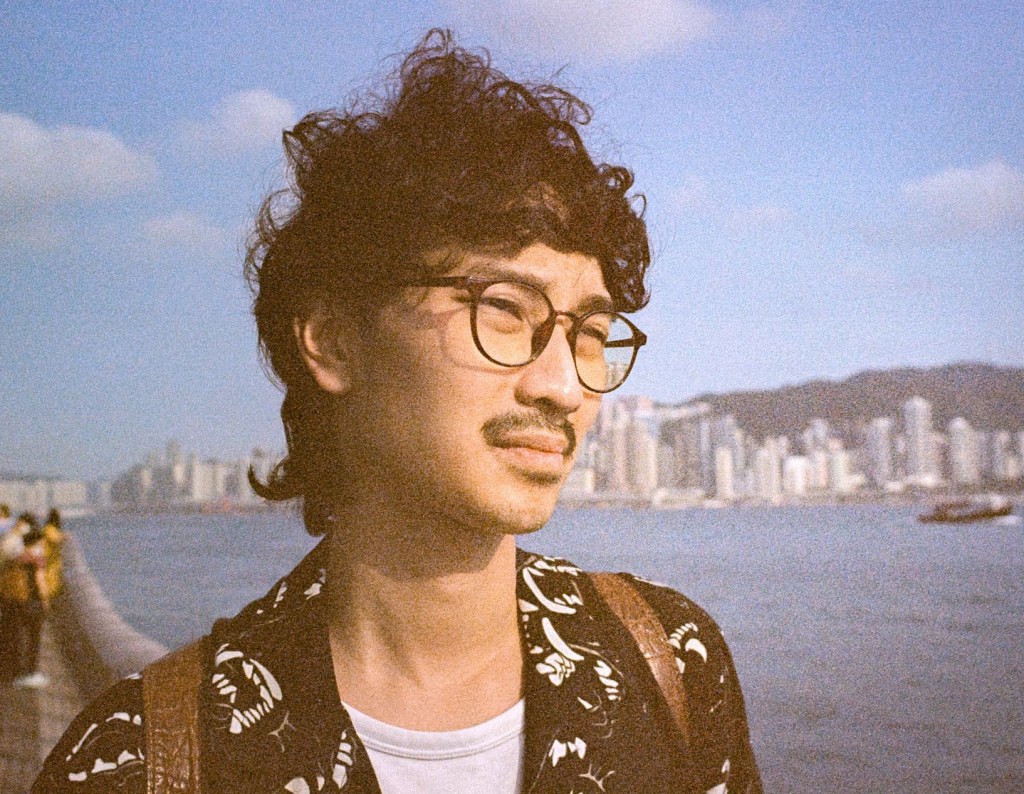
Nicholas Y. H. Wong is Assistant Professor in the School of Chinese at the University of Hong Kong. He teaches Chinese-English translation and researches Southeast Asian Chinese writing. He translated Daughters (Balestier Press, 2025) by Ling Yu, winner of the Newman Prize for Chinese Literature in 2025. As Zhou Sivan, he has published three poetry chapbooks that address poetic form (Zero Copula, Delete Press, 2015), Malaysia’s policies on refugees and migrants (Sea Hypocrisy, co-published by DoubleCross Press and Projective Industries, 2016), and trees as metaphor (The Geometry of Trees, Sputnik & Fizzle, 2022). Visit his website for more information.
 Cha
Cha 