
[ESSAY] “In Another Life, I Might Not Be A Better Self” by Lei Wang
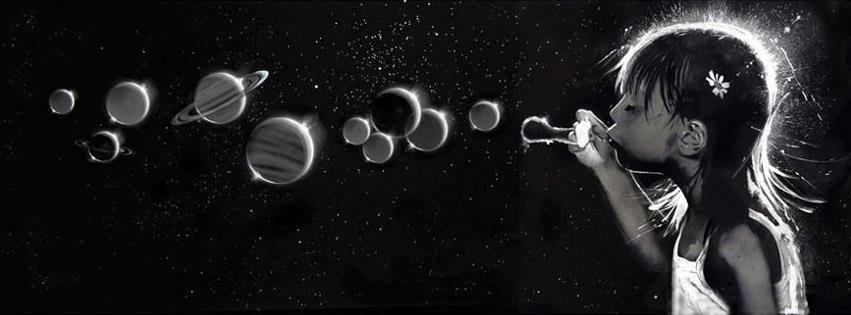
If not for COVID, I would have moved back to China after my MFA, rather than remaining in Iowa. Instead of spending three years apart from him, I would have married my fiancé at the time, an Italian kung fu master in Shanghai who had the peculiar fate of teaching Chinese people their own lost esoteric spiritual practices. I would then have moved with him to an island off the coast of Portugal, where he now lives and teaches at a martial arts retreat centre.
But because events unfolded as they did, I am not on an island off the coast of Portugal, enjoying what might be considered the best weather in the world. I am not writing while overlooking the Atlantic Ocean and reflecting on the travails of America from a European vantage point. I am not married.
I am here, yet even if I were there, I would still, in some sense, always be here, wherever I might be. Perhaps I would find myself dreaming of Iowa City, of living within five- to ten-minute walks of my friends, all artists of one kind or another, all expert cuddlers. It is equally possible that I would be bored and lonely in Portugal, as there is only so much good weather one can endure.
In a newsletter, the writer Suleika Jaouad describes a “What If” thought experiment, a game she plays with a friend in which they imagine the other lives they might have lived:
It usually starts when one of us says something like, Remember that guy who wore a lot of vests? and suddenly we’re spiralling: What if I married him and lived in a yurt in Montana, labeling mason jars of lentils in flowery live-laugh-love cursive? What if I had gotten that soulless business consulting job in Dubai and wore pantsuits the exact shade of despair and office lighting? What if I stayed in Vermont instead of moving back to New York City and became a homesteading influencer who films sourdough tutorials with my roommate, a potbelly pig named Meredith?
What if I had not, for some mysterious reason, gone down a notoriously financially unrewarding, delayed-returns path of writing and had instead become a corporate consultant like many other achiever-type humanities majors? On the one hand, oof. On the other, who knows? What if I had continued working for the newspaper in Hong Kong when I was 22, instead of quitting my first real adult job over a broken heart? What if I had simultaneously pursued writing alongside a career in therapy, or even interior decorating? What if I had studied neuroscience and now held my dream alter-ego job, teaching empathy to robots, which sounded far-off a mere few years ago? Who would I be?
Note too that I am not asking: What if I were the Prime Minister of Mongolia? What if I were a tiny baked-goods influencer? What if I were a professional opera singer or volleyball player? Because I do not see myself being me in those lives. I am simply not that interested in classical music, nor that freakish in my jumping ability. I do not see myself as a politician, or even a baker. “There are an unending number of lives I’m not leading, so why do I fixate on this one or that one? Why is this life the one I care about not living?” Andrew H. Miller writes in On Not Being Someone Else: Tales of Our Unled Lives (2020). “I’m not a podiatrist, not a landscape designer, can’t play the flute, and haven’t married a Canadian. I don’t live in Kansas. So what?”
What we seek, even in our imaginations, is not so far removed from who we are or wish to be. Not entirely parallel lives, but rather branching ones, what was once plausible, or at least possible, were it not for missed chances, forks in the road, and choices made. Yet because these what-if lives remain close to possibility, their absence feels all the more poignant. They are not pure fantasy, but near-realities. Is not the asymptote the saddest line in mathematics?
)
Because I fear missing out on the other lives I could have lived, I long for the solace of its opposite, yet it is difficult to determine what that might be. What is the opposite of FOMO? Sometimes I think this is why people devised the idea of reincarnation: you only have FOMO because YOLO.
Amy Weiss, the daughter of psychotherapist Brian Weiss, who for decades has worked with clients on past-life regression therapy, recounts a lunch with her father when she was 35, single, yet longing for children and in despair. He simply looked at her and casually remarked, “But you’ve had hundreds of children already.” He was referring to her past lives, which were entirely self-evident to him. Still, this offered her no real consolation in this life, and may offer none to us, even if, as a reader of this essay, you are likely living a fairly good life, whatever it is you still lack, whatever itch you cannot quite scratch. A friend of mine once said that if he had the option to be reborn, right now, he would not wish to play the lottery again. When I imagine an alternate life as a robot-love researcher, this same friend says, “But then you wouldn’t have met us.”
Why is it that when we imagine our unlived lives, we assume they are not only different, but in some way better?
Why is it that when we imagine our unlived lives, we assume they are not only different, but in some way better? Our paths not taken may very well be worse. Another friend of mine says that sometimes, on sleepless nights, she recalls a list of people she once envied for one form of genius or another, who later proved morally corrupt. An enviable mathematical mind who went on to murder a woman who had rejected him. Sam Bankman-Fried. Whoever Sarah Wynn-Williams writes about in that new best-selling Facebook exposé, Careless People: A Cautionary Tale of Power, Greed, and Lost Idealism (2025). It is a cautionary tale because, even if we believe we would not behave as they did in their positions, we might well have done so. In another life, I might not have been a better self, so perhaps it is just as well. The alternative to the What If game is the At Least You Didn’t game.
Meanwhile, the mindfulness club, of which I am a member, would likely say that the opposite of FOMO is the Power of Now. Yet the curious thing about the Now is that it is not an isolated moment at all. Both the past and the future are experienced within it. Indeed, that is the only way in which they can be experienced.
Whatever we are now includes all that we are not, all that we have chosen not to be. The world narrows with our choices, cutting away all the pieces of marble that are not David, except that we are not yet at the end of our lives, and so we cannot be certain of the final shape we shall take. I used to be, perhaps still am, afraid of this: the loss of pure potential, the untouched block. Even though I very much want to meet my life partner, there remains a certain comfort in the seeking stage, because in that state of potential there still exists a Platonic lover. The idea of the person, the idea of the life, as opposed to the very concrete person, the very concrete life, which possesses certain qualities and not others. To pursue anything at all is to move away from that Platonic state, to condemn ourselves to a kind of FOMO; yet not to pursue anything is to condemn ourselves not to live.
The same holds true for books as for lovers, as for lives. In The Condition of Secrecy (2018), Inger Christensen writes:
As the text is being written, it comes to seem more and more necessary, as it gradually develops rules, proportion, and order, while the finished text, laid out in final form, will appear random. Because it’s not until afterward, when the text is finished, that we can say with certainty that it could just as easily have been different. And to the degree that it could have been different, to that degree it is random. Everything that a writer writes could just as easily have been different, but not until it’s been written. As a life could have been different, but not until it’s been lived.
Life is only pure before it is lived, and afterwards it becomes a succession of “it could have been” moments.
Writing, or living, is inherently an “impure,” perhaps even inefficient, act, riddled with randomness, the very opposite of machinery. We may strive for control, yet we do not truly possess it. It is only in not acting at all that we can remain within the pure space of possibilities. With language, it is only once an utterance is made that one can say, “it could have been this other way.” In this sense, writer’s block, or avoidant attachment, becomes a refusal to commit to a single path or expression, a desire to remain within pure language. Yet it is only impure language that can initiate a creative act. Life is only pure before it is lived, and afterwards it becomes a succession of “it could have been” moments, without which one would not have lived at all.
)
My favourite living philosopher, Bernardo Kastrup, offers a consolatory device in the age-old debate between determinism and free will: to treat everything in the past as determined, and everything in the future as still open to choice. In a sense, whether determinism is true or not becomes irrelevant. Despite all that has been determined by our genes, our histories, and everything that has already occurred, life remains too complex to predict. The most reliable way to shape the future is still through action, or, as a psychic once told me, “The best way to predict the future is to create it.” Thus, regardless, we must live as though we possess free will.
I once met a Yoruban Ifá priest who told me that, in the Yoruban conception of destiny, one cannot escape one’s life lessons, yet the form in which they arrive remains within one’s control. That is to say, if you are destined to learn humility, you might learn it as a doctor, or as a homeless person. Even as a doctor, you might learn it the easier way, through being humbled by your patients, or the harder way, through malpractice suits. In either case, you will encounter your destiny, with no further guarantees and no promise of personal comfort.
The idea of destiny may be the ultimate antidote to FOMO. It explains why, in romantic love, we so desperately want to believe we have found “the One,” and why we are tempted to think our careers are somehow fated. We long for the right path because we believe there are wrong ones. We imagine that there might be a better life than ours that we are missing. But what if there is a worse one?
After a spinal injury at the age of 21, the Chinese writer Shi Tiesheng became paralysed from the waist down for the rest of his life. Thereafter, in both his writing and his life, he became preoccupied with time, decisions, and the arbitrariness and cruelty of fate.
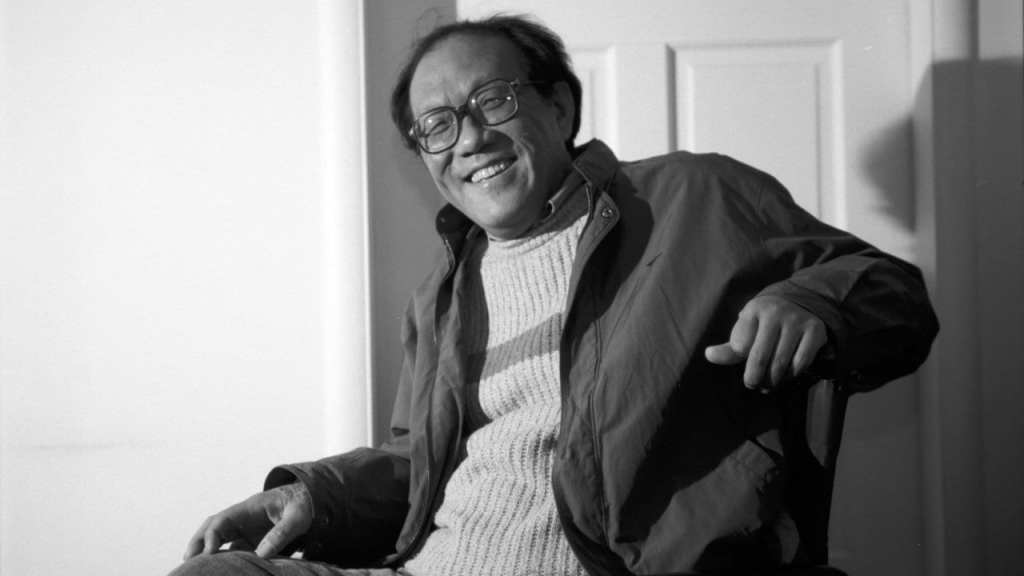
Shi Tiesheng
Shi writes of a boy he met in hospital at that time, from a distant mountain village. In that village, everyone rejoiced at the arrival of a new highway, and the children discovered that, by holding onto the tails of passing trucks, they could fly. One day, however, a boy lost his grip. He would never run after trucks again, though he did not yet understand this in hospital. He was seven years old, and when the adults asked him, “How did you get injured?”, he replied, “Because I was naughty.”
“Will you be naughty next time?” they asked.
Shi Tiesheng describes the scene:
The kid knew the deal as far as lenience or forgiveness was concerned: he shook his head vigorously, no, no, no, and sighed with relief. But it was different this time. How come this time there was no one to tell him everything would be fine, he’d learned his lesson, he was still a good boy? Opening his eyes wide, he looked at all the grown-ups around him. What he meant was: wasn’t that enough? To never be naughty again, isn’t that enough? He didn’t know, didn’t understand that there were some mistakes in life that you just had to make once, and then could never be undone; that there were some mistakes in life that weren’t even really mistakes, like being naughty, what kind of mistake is that, but even so, could not be forgiven.
How often did that boy, as he grew up, think: if only I had not had that single moment of fun? If only he had gone to the steamed-bun stand that day one minute earlier, or one minute later, his entire life might have been different. If only he had been caught by a stray thought, or not caught by one.
… a reckoning with the ways in which all human beings are, in some sense, disabled, and what we choose to do in response.
In his short story “Fate” (宿命), Shi writes of a character who, cycling at night, encounters a large eggplant in the road, which causes him to veer off course at the precise moment a car speeds past. A single eggplant can determine whether one lives with or without the use of one’s legs. This is a tragic figure in fiction, but even more so in life. Shi Tiesheng himself became known as the “writer in a wheelchair,” recognised for his reflections on disability and illness. “My profession is illness,” he quipped. “My part-time job is writing.” Yet his work does not offer a literature of triumph or transcendence over hardship. Rather, it is a literature of inquiry, and ultimately, a reckoning with the ways in which all human beings are, in some sense, disabled, and what we choose to do in response. Would he have become the writer he was without his particular fate? Or was it he who transformed his fate into art?
In Bernardo Kastrup’s most recent book, The Daimon and the Soul of the West (2025), he advances a conception of life that is not centred on the individual, on one’s personal narrative or comforts. Why should we regard ourselves as so exceptional, as though our individual lives mattered so greatly, when we are merely part of nature, part of the universe expressing itself? All other beings exist in this way. The apple blossom, he observes, does not know its role in the broader life of the tree. Friedrich Nietzsche did not know he would become Nietzsche. Indeed, in his autobiography, Ecce Homo (1911), he wrote, “I live on my own self-made credit, and it is probably only a prejudice to suppose that I am alive at all”, nor did Vincent van Gogh know he would become van Gogh. Neither achieved fame in their lifetimes. Instead of asking, “What do I want from my life?”, Kastrup suggests asking, “What does life want from me?”
Whatever it is that life asks of us, it is not something we can yet fully perceive or understand. Yet to sense that we are part of a larger web of being is not so much the Power of Now as it is the Power of Eternity. Many of our difficulties arise from being finite beings capable of imagining the infinite. To consider our lives from the perspective of nature, of infinity, to see ourselves as merely one among innumerable possibilities, is to feel a certain release of pressure, like being one child in a family of hundreds of billions. Let your brother be the cancer researcher, your sister the rock star. You may become whatever it is you become, even if it amounts to frittering; perhaps nature, too, seeks to experience the life of a fritterer. You need not be anyone else. Even if YOLO, there need be no FOMO.
At times, I imagine that my life is a book being read by higher-dimensional beings, much as I read novels. One does not want everything to unfold perfectly for the protagonist, that would be dull. Nor does one desire a wholly Platonic character, suspended in a vacuum, like an untouched block of marble. For now, in this one particular life, you are sufficient as you are.
How to cite: Wang, Lei. “In Another Life, I Might Not Be A Better Self.” Cha: An Asian Literary Journal, 29 Mar. 2026, chajournal.com/2026/03/29/another-life.

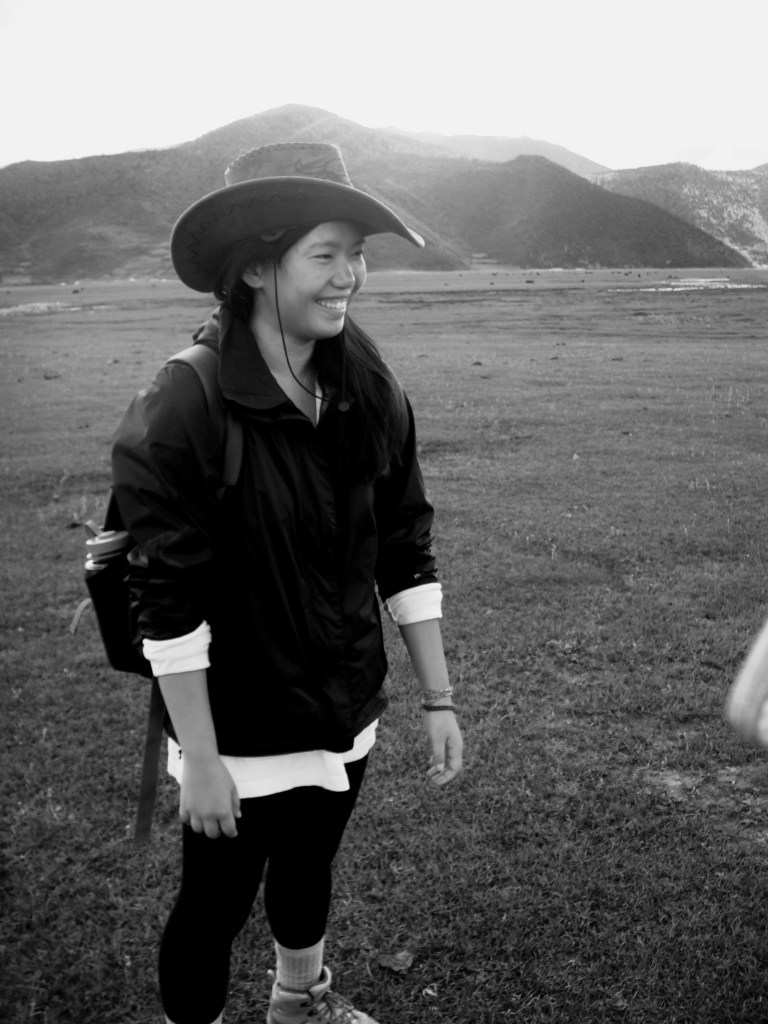
Lei Wang on a Tibetan grassland in Yunnan
Lei Wang has been a science journalist in Hong Kong, a private investigator in San Francisco, and a life coach in Shanghai. A graduate of the Iowa Nonfiction Writing Program and the Clarion Science Fiction and Fantasy Writers’ Workshop, she writes speculative prose that explores what-ifs rather than how-tos. Her essays have appeared in Ecotone, The Lifted Brow, The Reader Berlin, and The New York Times’ Modern Love column. She is currently at work on her first book of creative nonfiction, a secular myth-buster on spiritual enlightenment. A rational mystic, she believes that there is something fundamentally true in spiritual and religious teachings that has been lost in their language and dogma. If you are a thoughtful sceptic, she hopes to persuade you otherwise. Visit her website for more information. Email: leiiwaang [at] gmail.com
 Cha
Cha 