
[ESSAY] “Hong Kong: Once in a Million Years” by Simon Patton
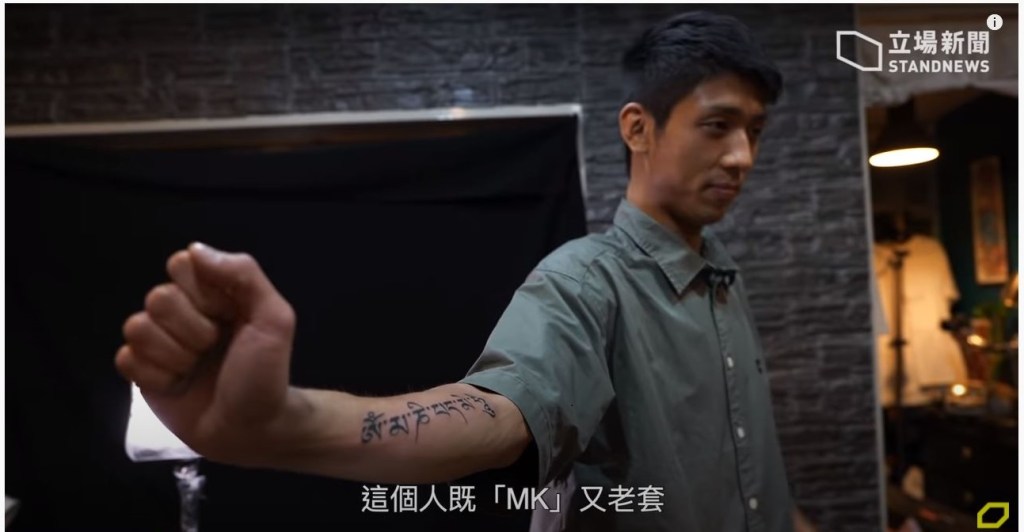
Owen Chow 鄒家成 and his tatoo
Between 2019 and 2021, Hong Kong was repeatedly in the international spotlight. A decisive clash between civilisations was the main reason for such global interest, the Chinese desperate to redress the wrongs inflicted by the British Empire in the nineteenth century, while Western nations strove to preserve a remnant of threatened democracy. Yet something else, and potentially far more important, was ultimately at stake.
In February 2021, Hong Kong’s Stand News produced a video entitled If This Were the Last Freedom (Chinese original,《假如這是最後的自由》), concerning a number of alleged “criminals” facing a maximum penalty of life imprisonment.
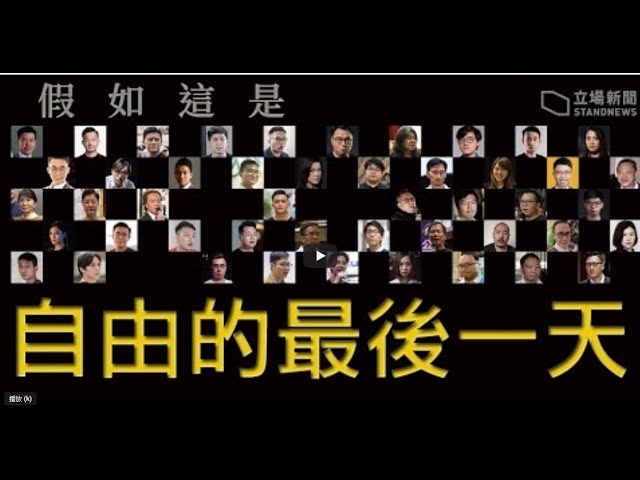
If This Were the Last Freedom 《假如這是最後的自由》
It begins with 24-year-old Owen Chow 鄒家成, who spent his last day of freedom watching a film and getting a new tattoo: “If I’m put away, maybe sometimes I won’t be in control of my feelings… Perhaps seeing this [tattoo] will calm me down a bit”. There is also Jimmy Shum 岑子傑 , who rolled his own cigarettes and wore rainbow-coloured shoelaces in his boots. Then there is Tiffany Yuen 袁嘉蔚, shown embracing her life-size Buzz Lightyear doll in anticipation of losing such comforts should she be taken into custody. Finally, there is Hendrick Lui 呂智恆, one of the few individuals granted bail. Ironically, he is shown working on the street, encouraging passers-by to write letters to other Hong Kong democracy activists already imprisoned.
These individuals were among the 53 people arrested on 6 January 2021 for allegedly “conspiring to commit subversion”, a grave violation of the then newly introduced National Security Law. Of these, some were released, while 47 were granted bail and instructed to report to their local police station on 8 April 2021. However, at the end of February 2021, they were required to report to the police five weeks earlier than originally scheduled. They subsequently appeared in court the same day and, after a protracted hearing, most were denied bail and taken into custody. At that time, they remained in detention awaiting trial, which was then scheduled for the end of September 2021.
What was their offence? They had all participated in peaceful and entirely lawful primary elections in July 2020, in an effort to identify the strongest candidates for the Legislative Council elections planned for later that year.
)
When Hong Kong reverted to the People’s Republic of China in 1997, it was stipulated in the Basic Law of the Territory that gradual progress would be made towards granting Hongkongers the right to elect their own lawmakers and, eventually, their Chief Executive. However, a counterfeit system was established, ensuring that most members of the Legislative Council were not directly elected and rendering it virtually impossible for pan-democrats to secure a majority. Nevertheless, following the million-people protest march of 9 June 2019 and the months of demonstrations that followed, supporters of Hong Kong democracy achieved a decisive victory in the November 2019 district elections. At that point, a pro-democratic majority in the Legislative Council became a realistic possibility. For this reason, shortly thereafter in 2020, the National Security Law was enacted and democracy was effectively criminalised. The promise of universal suffrage, long flouted and frustrated, was finally and explicitly broken.
The response from supporters of Hong Kong democracy was succinctly expressed by the writer Tang Siu Wa 鄧小樺 , Chief Curator of the House of Hong Kong Literature (at the time), in a video interview with Vision Times:
I hope that the international community will be able to make the Chinese people—and make China as a whole—regain some respect for what it means to make a promise. “One Country, Two Systems” is an international promise. Supposedly, it is a solemn promise. If a promise is being ripped to shreds, this can’t happen without any consequences, there ought to be consequences. Then all of us, [working] together, should make the people who broke their promise face up to the consequences. That’s how it ought to be.
)
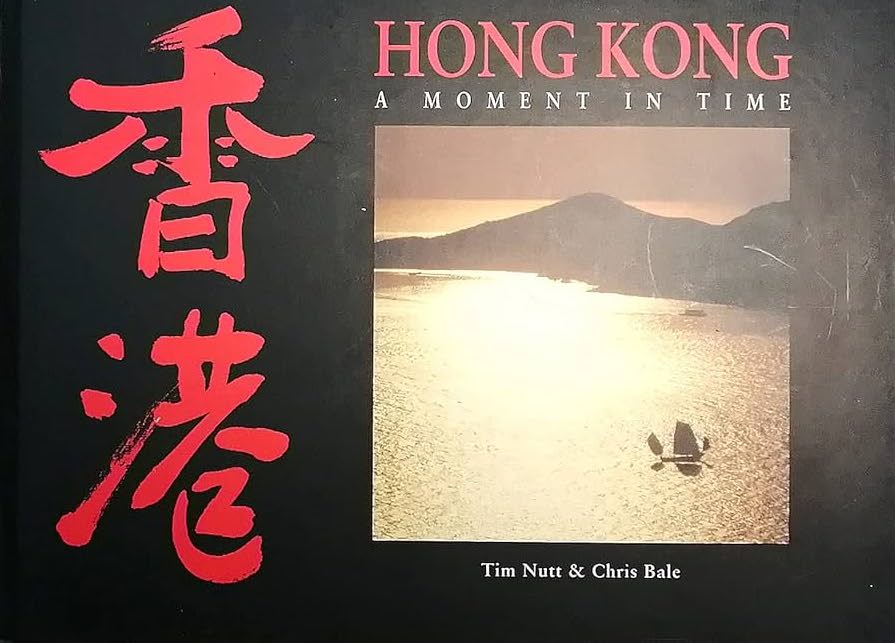
Have you ever wondered what Hong Kong truly is? On my first trip there in 1998, my mind was already filled with the usual misconceptions. The glossy Baedeker I purchased to guide me on my journey only served to reinforce these stereotypes: Victoria Harbour with its sky-scraping corporate architecture, and the shops of Kowloon, crowded, just as Ainslie Meares once described them, with groups of “jabbering tourists on their world cruise bent on buying junk”.
Without realising what was happening, I gradually came under the spell of the “Hong Kong Effect”.
Nothing could have been further from the truth. My small flat in the village of Cheung Shue Tan was situated just down the road from the pristine mountain streams and abundant wildlife of the Tai Po Kau Nature Reserve, and within easy travelling distance of the Ten Thousand Buddhas Temple in Sha Tin, where the gold-coated “diamond body” of its founder, Reverend Yuet-kai, may be seen in its glass case upon the altar. Without realising what was happening, I gradually came under the spell of the “Hong Kong Effect”.
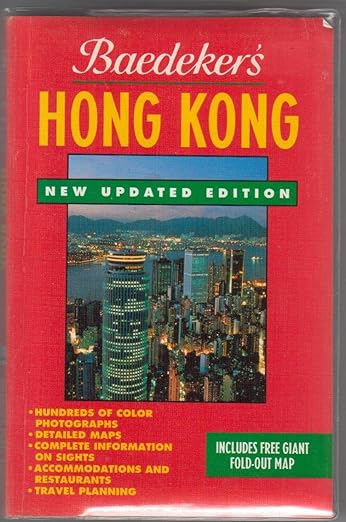
I spent the following ten years attempting to clarify this phenomenon as it affects people from English-speaking countries. In a book entitled Hong Kong: A Moment in Time (1997), there is a collection of one-line explanations gathered from many sources. For some, the appeal is primarily energetic, expressed in formulations such as “Hong Kong is all about living life to the full, work hard, play hard, make money, spend money, nothing in moderation”. This view is often supported by reference to fung shui, according to which the flows of ch’i concentrated in the Territory infuse this small corner with energy and vitality to a degree that perhaps nowhere else in China possesses, as Richard Gee suggests.
In some instances, Hong Kong even appears to transform individuals entirely.
Other explanations develop this idea further, proposing that the laissez-faire business ethos of the former colony has led to a high degree of social autonomy that is remarkably enabling: “A unique, multi-national pinprick on the map which gives everybody a chance in life”. In some instances, Hong Kong even appears to transform individuals entirely, leading them towards identities they could never have imagined for themselves in their countries of origin. Consider Gregory Rivers, from Gympie in Queensland, who developed a passion for Cantonese popular music while studying at the University of New South Wales. He eventually abandoned his medical degree and travelled to Hong Kong on a one-way ticket in 1987. He remained there, having reinvented himself as Ho Kwok-wing 河國榮, an actor, singer, and fluent Cantonese speaker, until his heart-break suicide in 2024.
However, the most compelling answer to this riddle may lie in the following cryptic statement: “Hong Kong is a privilege of the twentieth century”. Privilege? Some illumination is provided by Barbara Ward 莫華德 , another individual profoundly transformed by Hong Kong. In Chinese Festivals, a book she produced with the photographer Joan Law Mee Nar 羅美娜, she observes that contemporary, industrialised Hong Kong is also a centre of flourishing Chinese traditionalism, where the spectacular festival activities once forbidden in mainland China, including celebrations of the birthdays of the Sea Goddess Tin Hau and the Buddhist goddess of mercy, Goon Yam, have continued to thrive. It may be that the profound stability of the Chinese ritual cycle facilitates Hong Kong’s high degree of creativity, innovation, and resilience, providing an optimal channel through which social, environmental, and technological change may occur without excessive turmoil or dislocation.
Yet there is more to this than a conjunction of authentic tradition and sophisticated modernity. Another dimension of Hong Kong’s privilege lies in its having fused, over more than 150 years of continuous development, two great yet markedly different cultures. An enormous price has been paid for this, in terms of human suffering, social injustice, and stark inequalities in wealth, opportunity, and wellbeing. Nevertheless, the resulting hybrid is a priceless cultural form, at once Eastern and Western, and at the same time neither wholly Chinese nor Anglo-European, an entity unique in world history. It may be understood as an attempt to imagine what the future could resemble, beyond the self-enclosed, nation-obsessed, and toxically “patriotic” states in which many now find themselves.
)
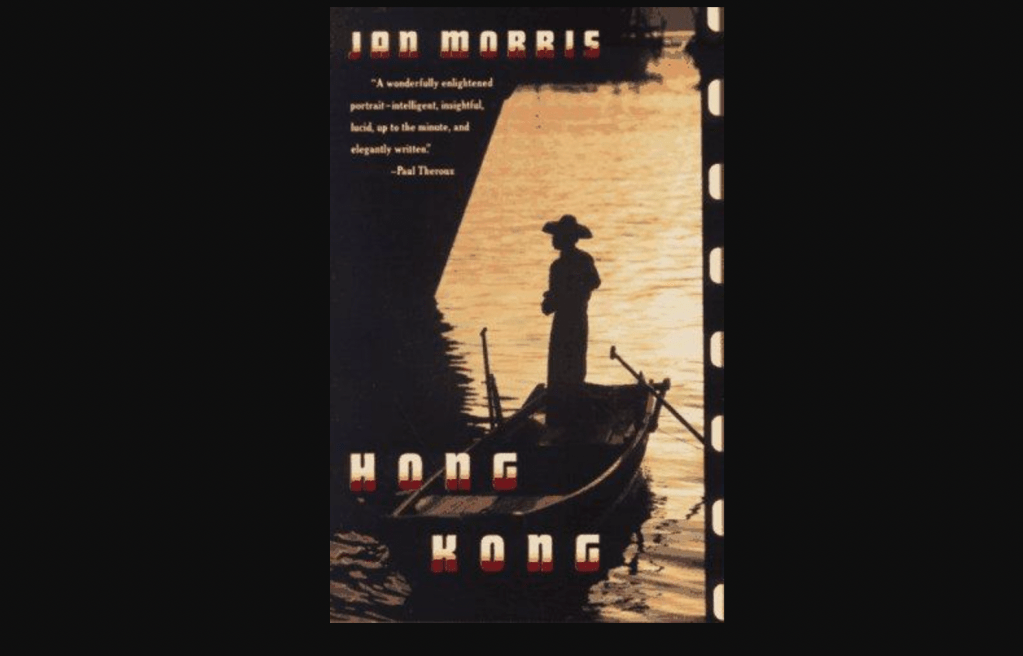
As Jan Morris observed in her 1998 book Hong Kong/Xiangang, China’s loss of territory to Britain as a consequence of the Opium Wars was profoundly devastating. The emperor Dao Guang, she writes, “was seen by courtiers, incredulously wandering his palace in the night, murmuring ‘impossible, impossible’, and repeatedly sighing”. Dao Guang’s lament continues to resonate within the Chinese psyche and remains clearly perceptible in the People’s Republic of China today. Yet, reasonable though such claims to lost territory may appear, they are open to question. The Hong Kong journalist Chan Bou-seun 陳寳珣 places them into perspective in his novel Love Song for a Sinking Island 沒島戀曲 (2015):
Some said that Ah Cho had left Hong Kong and gone to Europe somewhere, and that he had changed his field of research to the sovereignty of nations and the constitution. He was writing a thesis on the subject of the creation and break-up of ancient Rome, with the purpose of looking into the legal principles behind why Italy did not announce that much of Europe and the Middle East was its own innate territory on the basis of the fact that these places had once been part of the Roman Empire. Over the course of history, in Europe, the Middle East and in Turkey, a succession of empires had emerged straddling a number of regions, and they had all ruled for many centuries. Why didn’t they go on carrying the historical burden of a unified nation and insist on revitalizing the territory of a Greece, a Rome, or an Ottoman Empire, instead of choosing the way of break-up and self-rule?
Here, Chan suggests that the move towards “revitalisation” is both imperialistic and anachronistic, for history has already shown that the age of empires is over. What Owen Chow had tattooed on his right inner forearm on his last free day was the mantra Om mani padme hum in Tibetan script, a prayer for enlightenment and the cultivation of a new way of being. Rather than yearning for the past, let us continue to pray forwards for Hong Kong, neither “country” nor “system”, but an inspiring social possibility for the future that perhaps comes to us only once in a million years.
Let us continue to pray forwards for Hong Kong, neither “country” nor “system”, but an inspiring social possibility for the future that perhaps comes to us only once in a million years.
How to cite: Patton, Simon. “Hong Kong: Once in a Million Years.” Cha: An Asian Literary Journal, 28 Mar. 2026. chajournal.com/2026/03/28/million-years.

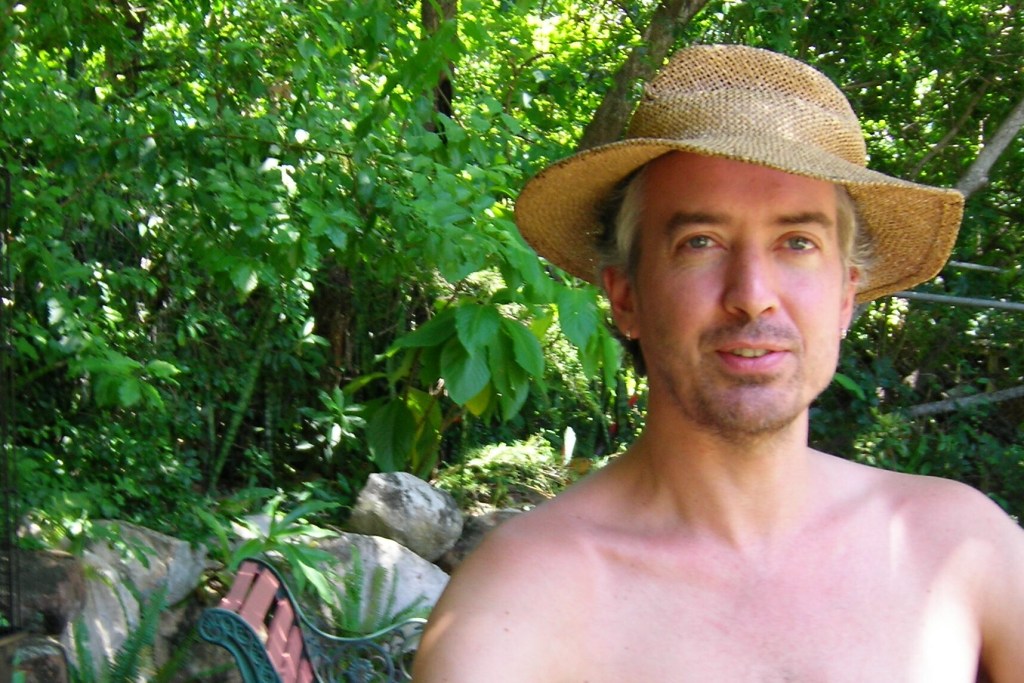
Simon Patton was born in suburban Melbourne, Australia, in 1961. Left-handed and temperamentally introverted, he developed an interest in poetry at about the same time that he began listening regularly to the radio. His first attempt at writing, composed at the age of fourteen, was a song titled “At the Beach Party”. In 1980 he entered university intending to study poetry, but in his second year he changed direction and began studying Chinese instead. This shift later shaped much of his literary work. In 1997 he received an invitation, sent by fax, to travel to Hong Kong to work as an editorial assistant at Renditions: A Chinese-English Translation Magazine. He held the position during three separate periods in 1998, 1999, and 2000. The experience proved formative and sparked a lasting interest in Hong Kong literature and culture. From 2002 to 2008 Patton co-edited the China domain of Poetry International Web together with the Chinese poet Yu Jian. During this period he helped introduce a range of contemporary Chinese poets to a wider international readership. In 2011 he left city life and settled in rural Central Victoria, where he continues to live with his partner near Chinaman Creek, sharing the landscape with a cat, chickens, goldfish, and a Sealyham terrier. [All contributions by Simon Patton.]
 Cha
Cha 