
茶 FIRST IMPRESSIONS
茶 REVIEW OF BOOKS & FILMS
[ESSAY] “Shelves, Stories, and Silence: Reading Zheng Liu’s Cultural Mavericks” by Laurence Westwood
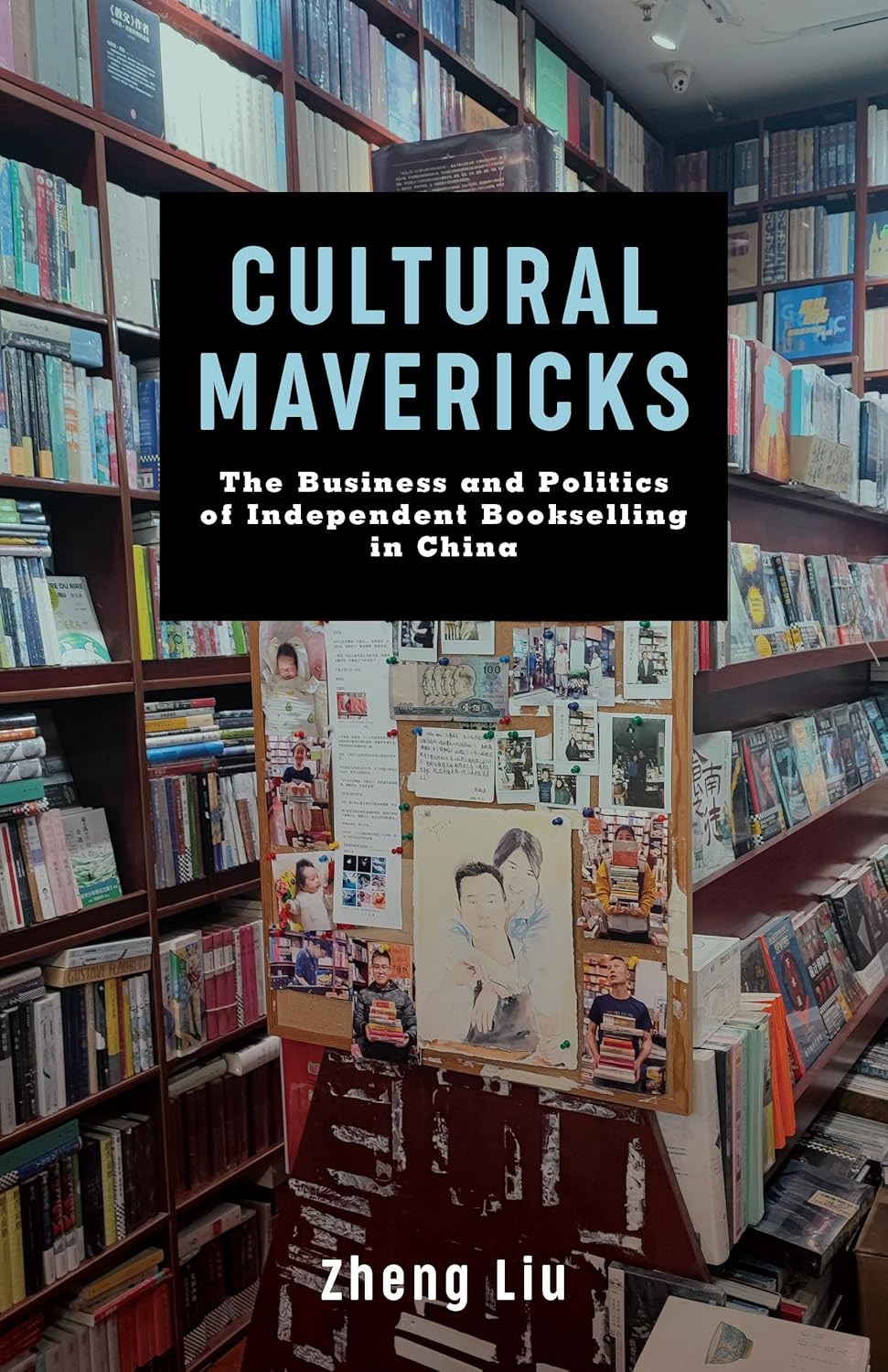
Zheng Liu, Cultural Mavericks: The Business and Politics of Independent Bookselling in China, Cambridge University Press, 2026. 280 pgs.
I loved that bookshop, and I spent, and sometimes wasted, a great deal of pocket money there.
Back in the 1970s, in my home city in the UK, there was a small used bookshop tucked away off a high street. It was one of those shops you had to be told about, otherwise you would never have known it was there. A schoolfriend told me about it. He said that I must visit, that the bookshop was full of all manner of old books, on every conceivable subject, and all in excellent condition. So, one day I took a short bus ride to that high street, followed my friend’s directions, and found the bookshop exactly where he said it would be. Inside, it was dimly lit. The owner, an elderly man to my young eyes, was dressed in a tweed jacket and tie. He sat at the counter, smoking a cigarette and reading a book. After a number of visits, I soon learned that he paid no attention whatsoever to his customers until it came time to take payment for whichever book they had selected. The shop was filled from floor to ceiling with books, mostly hardbacks, some very rare, and I bought a rarity myself that first day, and, as my friend had said, the majority were in excellent condition. Books were arranged by subject matter, but with the dim lighting, and given that the shop was narrow, confined, and extended some way back, finding what you were after, or simply stumbling upon an unexpected gem, required no small effort and a stout heart for exploration. But it was fun, and I loved that bookshop, and I spent, and sometimes wasted, a great deal of pocket money there. That bookshop is long gone now. Whether the owner succumbed to illness, retired from the trade, or whether, like so many small shops, rising rents and business rates rendered the bookshop economically unviable, I will never know.
I have no great knowledge of the book trade in the UK, except that I write novels and sell them via Amazon. I do know that online retailers such as Amazon are able to offer discounts on physical books that a brick-and-mortar bookshop could never sustain, and have changed the face of bookselling in the West, perhaps permanently. Large chain bookshops such as Barnes & Noble in the US and Waterstones in the UK have had to adapt in order to survive. Managers of these shops have been granted the freedom to run them almost like franchises, curating their stock according to local interests, selecting which books to display rather than allowing publishers to “buy window space”, and creating more of an “experience” for customers, where they can relax, browse available titles, and perhaps enjoy a coffee, tea, or light snack from an in-house café. In a sense, these chain shops have attempted to transform themselves into community centres, places for people to gather, their viability supported by stagnation in the e-book market and by significant cost-cutting, often achieved through the reduction of bookselling staff, leaving many of these stores operating with minimal personnel. Yet they are surviving, which is something. And physical books remain popular, very popular, which is something else.
The romantic aspiration, cherished by many bibliophiles, of owning a bookshop often dissolves under economic pressure.
The situation for small independent shops, which lack the financial resources of online retailers such as Amazon, and even of the larger chain stores, is more precarious. Like the chain stores, independent bookshops have had to develop an online presence in order to reach customers more widely. Many survive not only by promoting their connections to local communities but also by actively supporting those communities, involving themselves in local concerns, facilitating book clubs and literary festivals, and thereby becoming valued local institutions, places where people choose to buy their books even at a slightly higher price than they would pay online. Some independent bookshops also endure by specialising in highly focused or niche subject areas. These shops may offer expert guidance, helping customers discover books they might otherwise never encounter. Nevertheless, there is no doubt that, with rising business rates and rents, and the discouraging reality that some customers accept assistance from independent booksellers only to purchase the same book more cheaply online, the economic viability of small independent bookshops in the UK and the US remains finely balanced. Announcements of closures on social media appear all too frequently. The romantic aspiration, cherished by many bibliophiles, of owning a bookshop often dissolves under economic pressure, rising costs, the constant demand for visibility within a local market, and the unpredictability of consumer behaviour, turning what begins as a dream into something closer to a burden.
It was therefore with considerable interest that I noted the recent publication of Cultural Mavericks: The Business and Politics of Independent Bookselling in China by Zheng Liu (2026). Hardly a day passes on social media without some Chinese influencer or news feed showcasing a beautifully designed bookshop in Beijing, Shanghai, or Chengdu. I thought it would therefore be fascinating to discover how the experience of owning an independent bookshop in China compares with that of running a similar establishment in the UK or the US, if indeed there is any meaningful difference.
)
I suppose it is my own fault for not properly reading the blurb before purchasing the book. From the title, Cultural Mavericks, I had assumed that I would not only learn about the business of selling books in China, and how independent bookshops survive, but also how booksellers negotiate the delicate line of selling potentially sensitive material within an authoritarian regime. Who can forget the enforced disappearances of the five staff members of Causeway Bay Books in Hong Kong in 2015? Causeway Bay Books sold, among many other kinds of titles, political works critical of the Chinese regime, often banned in mainland China, and highly sought after by Chinese tourists. More recently, in March 2026, the owner of the independent Hong Kong bookshop Book Punch, Pong Yat-ming, along with three staff members, was arrested by national security police for allegedly selling “seditious” publications, including a biography of the imprisoned media figure Jimmy Lai, with copies seized during a search of the premises. Such developments suggest that the space for such bookselling practices has narrowed still further, reinforcing the sense that this is an area where commercial activity and political constraint remain closely entangled.
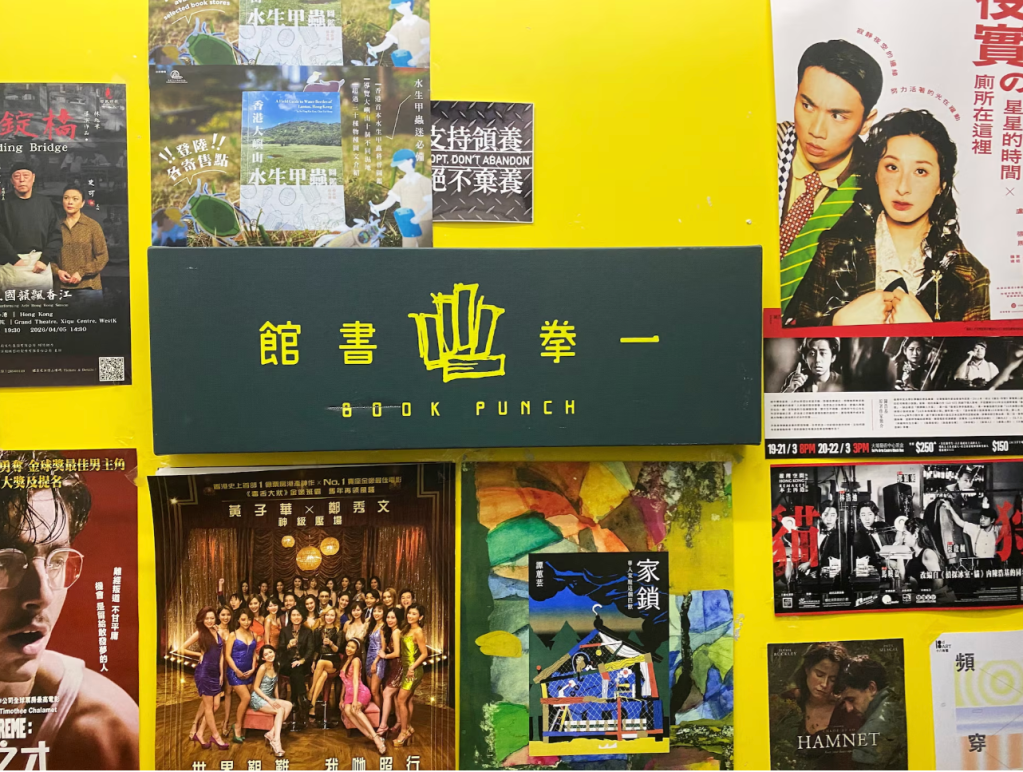
The exterior of the bookstore Book Punch. Hong Kong, 24 March 2026. REUTERS/Jessie Pang
The author of Cultural Mavericks, Zheng Liu, is a lecturer in business innovation at the University of Bristol Business School and holds a PhD in Sociology. She has published on the book industry in China for a number of years, and Cultural Mavericks represents the culmination of that research. It is, accordingly, an academic examination of the Chinese book trade, with all that this entails. It will not appeal to every reader, as the tone remains consistently dry and impersonal. Moreover, if, like me, you find discussions of Pierre Bourdieu’s theory of distinction or Thorstein Veblen’s theory of conspicuous consumption rather heavy going, certain sections may prove challenging. This is not to suggest that the book is poorly written or inadequately structured. On the contrary, for an academic work it is clearly organised and logically divided into five coherent sections: an overview of the Chinese book industry; an examination of what is meant by an “independent bookstore” in China, or duli shudian (獨立書店); the author’s concept of “culturally adapted strategies” as an analytical framework; an analysis of how these strategies are applied in practice; and, finally, a discussion of the economics of the independent book trade in China, and how such businesses manage to remain financially viable.
Questions of censorship and state politics are, for the most part, absent. This appears to be a deliberate choice on the part of Zheng Liu.
Although the research and analytical framework are based on qualitative responses drawn from interviews with booksellers, and although numerous excerpts from these interviews are included, the reader should not expect vivid personal narratives or any sustained exploration of what it means to operate a bookshop within an authoritarian system. It is simply not that kind of study. Questions of censorship and state politics are, for the most part, absent. This appears to be a deliberate choice on the part of Zheng Liu. In some respects, this is understandable. Qualitative responses on issues such as banned books and censorship may have been difficult to obtain, and raising such questions might have jeopardised access to interview subjects. It can also be argued that these topics are addressed elsewhere and fall outside the scope of this study. Nevertheless, as the author herself notes, this is the first in-depth study of the Chinese book industry written in English. It therefore seems somewhat surprising that the political context and the banning of certain books are not more fully examined. This omission, together with the relative absence of detailed personal accounts from booksellers, renders Cultural Mavericks rather anodyne, and, to some extent, undermines the promise suggested by its title.
)
It is the first section of the book, the overview of the Chinese book industry, that proves most illuminating for the Western reader. Throughout, I had the impression that the author was intent on asserting the distinctiveness of Chinese independent booksellers from their Western counterparts. Yet, contrary to this suggestion, it seems to me that the real point of difference lies not in the mind-set or strategies of individual booksellers, but in the structural organisation of the Chinese book industry itself.
In China, there are both state-owned and privately owned publishing houses, but only the former are permitted to apply for CSBNs, or China Standard Book Numbers.
In China, there are both state-owned and privately owned publishing houses, but only the former are permitted to apply for CSBNs, or China Standard Book Numbers. To publish a book without such a number is an offence. This has given rise to a number of pragmatic business arrangements between state and private publishers, to which the authorities generally turn a blind eye, a practice known as “collaborative publishing”, or hezuo chuban (合作出版). Beyond these arrangements, however, there is little in the day-to-day operation of either type of publisher that would surprise a Western observer. Planning, commissioning, contracting, editing, production, marketing, and distribution follow familiar patterns. Where China does differ is in its categorisation of publishing. Whereas in the West the industry is broadly divided into trade or general interest and non-consumer or professional sectors, in China publishing is organised into eight categories: social sciences; science and technology; literature and art; children’s books; Chinese classics; education; academic works; and reference materials. Each of these categories may be directed towards either a general readership or a specialist audience.
Book distribution and retailing follow a similarly bifurcated model, divided between state and private ownership. The largest bookseller in China, Xinhua Bookstore, which operates more than ten thousand outlets, is state-owned. Publishing houses distribute books directly to Xinhua outlets through what is termed the primary distribution channel. A secondary channel exists, whereby publishers supply books to privately owned distributors or online retail platforms, which in turn sell to local wholesalers and larger retail outlets. Smaller shops typically source their stock from these wholesalers as well as from online platforms. Despite competition from independent and online booksellers, Xinhua has retained its financial stability, owing largely to its near-monopoly over the school textbook and study-aid market, which represents the largest segment of book sales in China. In addition, Xinhua benefits from owning its retail premises rather than leasing them, and it has historically enjoyed preferential tax treatment not available to other booksellers. It also generates revenue by leasing space within its properties.
During the Opening-Up Era, demand for books in China rose sharply, and the number of independent bookshops increased significantly, reaching a peak in the 1990s. With the emergence of online bookselling and rising commercial rents, many of these shops were subsequently forced to close. Their market share fell from over 56 per cent in the early 2000s to around 30 per cent, where it has remained.
But what, precisely, constitutes an independent bookshop?
)
Zheng Liu makes the case that the definition of an independent bookstore differs in China from that in the US or the UK. Referring to Laura J. Miller’s study of the American book trade, Reluctant Capitalists (2006), she argues that it was the rise of book chain stores such as Barnes & Noble that gave independent bookstores a sense of identity, their defining features being a cultural commitment, a local focus, and non-corporate ownership. In China, however, from the mid-2000s onwards, those within the book trade began to use the term duli shudian, or “independent bookstore”, to refer to a particular type of shop that differed not only from the state-owned Xinhua outlets but also from conventionally owned private bookstores. For a bookstore to be considered duli shudian, it must be concerned primarily with the cultural value it offers its customers, rather than focusing solely on commercial interests. It is this distinction, Zheng Liu argues, that produces a meaningful difference between independent bookselling in China and that in the US or the UK.
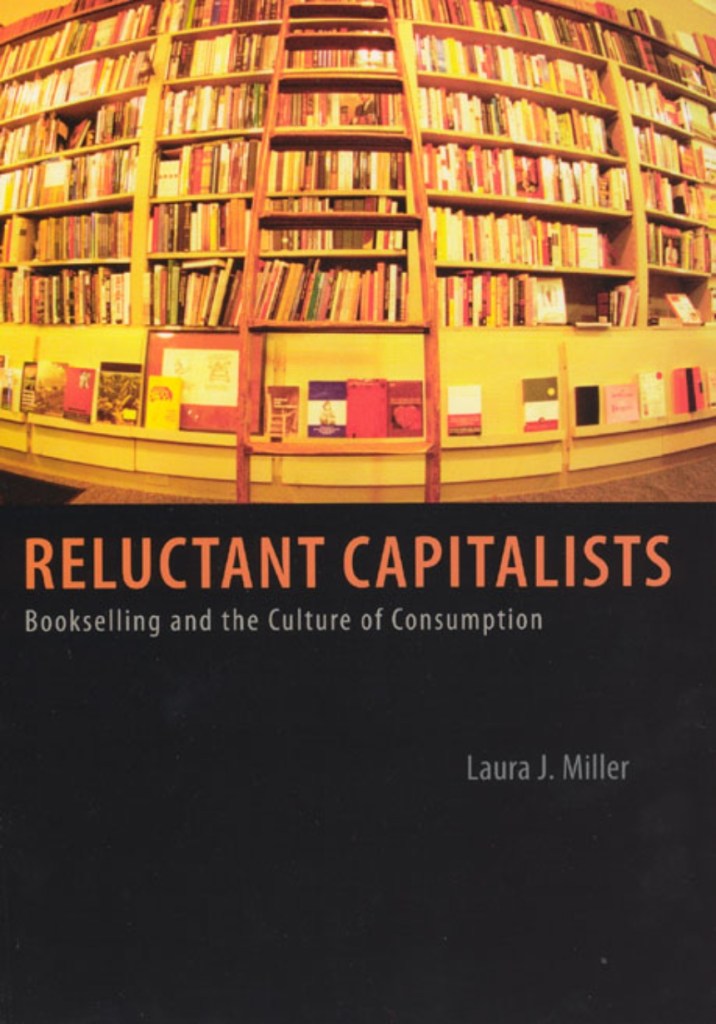
I must admit that this so-called distinction leaves me rather underwhelmed. As Laura J. Miller observes, there is already a considerable blurring of boundaries between chain stores and independent bookstores in the US. Indeed, as I noted earlier, Waterstones in the UK has made the commercial decision to treat many of its stores almost like franchises, allowing managers to curate stock according to local interests, to consider the needs of their communities, to host literary events, and to function as informal community spaces where customers can browse, sit, and converse. This, in turn, further erodes any clear division between chain stores and independent bookshops. Moreover, independent bookstores in both the US and the UK frequently prioritise cultural value over profit, often specialising in niche subject areas with little expectation of significant financial return. In the final chapter of Cultural Mavericks, which examines the economics of the Chinese book trade, Zheng Liu notes that a number of duli shudian operate at a loss, supported by booksellers with alternative sources of income, who maintain their shops primarily for the cultural value they believe they bring to their communities. Lam Wing-kee of Causeway Bay Books, now running his bookshop in Taiwan at a loss after his detention in China, might recognise this situation, as would many independent booksellers in the UK and the US who are similarly struggling to remain afloat.
It is the booksellers of these duli shudian that form the central focus of Cultural Mavericks: how they perceive themselves, how they are perceived by others in the Chinese book trade, how they curate their shops, the strategies they adopt to distinguish themselves in a crowded market, and how they express their individuality, or in Chinese, their gexing (個性). As Zheng Liu writes, “This emphasis on distinctiveness is specific to the Chinese understanding of ‘independent bookstore’ and is not found in the Western definition of this notion.”
What emerges, then, is a rather vague and subjective conception of independence, rather than any objective set of criteria. Privately owned bookstores that concentrate on selling bestsellers and generating profit are not regarded as duli shudian, or truly independent, despite the fact that they are not chain stores, are financially autonomous, and curate their own stock, often working tirelessly to serve their customers. I can understand the argument Zheng Liu is advancing, yet I remain unconvinced. It is difficult to imagine that many commercially minded private booksellers in China do not share a similar scepticism. It is therefore unsurprising that some view duli shudian booksellers as somewhat pretentious.
)
It is this effort to be distinctive that, according to Zheng Liu, sets duli shudian booksellers apart from other private booksellers in China, as well as from independent booksellers in the West. She argues that duli shudian bookstores differentiate themselves in three principal ways.
The first is political, though not necessarily in the sense of taking a stand against the Chinese regime. Very few booksellers, if any, are inclined to do so. Rather, it involves challenging what they perceive to be the homogenising effect of the state on the book trade. This political framing manifests itself in the stocking of books by authors with differing political perspectives and in the invitation of speakers who might be regarded as contentious. This is not, strictly speaking, an attempt to make an overt political statement or to oppose the state, but rather a strategy of differentiation, one that may appeal to a more discerning, open-minded, or affluent clientele, or at least to those who consider themselves as such. In this sense, it remains, to a considerable degree, a commercial decision, as do the other modes of differentiation.
These booksellers assume a degree of responsibility for guiding readers towards what they consider to be more intellectually valuable works.
The second way in which duli shudian booksellers seek to distinguish themselves is through what Zheng Liu describes as their moral positioning. Unlike more commercially driven outlets, these booksellers assume a degree of responsibility for guiding readers towards what they consider to be more intellectually valuable works, even if they do not explicitly see themselves as educators. Such a stance is not regarded as problematic in China, and Zheng Liu situates this within a broader cultural reverence for books. She contrasts this with the West by referring again to Laura J. Miller’s Reluctant Capitalists, in which it is suggested that a Western bookseller would not presume to advise customers on what is worth reading, such a position being viewed as condescending. This claim is somewhat surprising. It may reflect a specifically American context, or it may simply be outdated. In the UK, booksellers routinely recommend titles and guide readers towards what they consider to be worthwhile books.
The third mode of differentiation lies in what might be termed cultural positioning. Duli shudian booksellers prioritise quality over profit in the curation of their stock, host culturally oriented events such as poetry readings, tea tastings, and yoga sessions, and devote considerable attention to the aesthetic environment of their shops, including interior design, ambient music, warm lighting, and comfortable seating. Again, there is little here that would strike a Western bookseller as unfamiliar.
Despite its somewhat anodyne academic tone, there is much to commend in Cultural Mavericks, not least in the way it opens a window onto the Chinese book trade. The overview of the industry is particularly valuable, as is the discussion of the economic realities that shape bookselling in China, whether in state-owned Xinhua outlets, chain stores, commercially oriented private bookshops, or the more self-consciously independent duli shudian. This constitutes the book’s principal strength. That is not to suggest that the three modes of differentiation identified by Zheng Liu are uninteresting or unworthy of attention. They are both. However, the claim that independent bookstores in China diverge fundamentally from the Western model, which is central to the author’s argument, strikes me as rather unconvincing. It appears instead to rest on a somewhat manufactured sense of Chinese exceptionalism, a tendency into which Western observers of China have often fallen. The similarities, to my mind, are far more striking than the differences.
In my view, independent booksellers everywhere have always been, in their own way, political actors, informal educators, and custodians of culturally enriching spaces.
Though his customer-facing skills may have been lacking, my tweed-jacket-wearing, cigarette-smoking bookseller from the 1970s would have recognised all three of these modes of differentiation. His shop may have been dimly lit and devoid of comfortable seating, but it was an Aladdin’s cave of books, carefully curated to appeal to his local readership and meticulously arranged by subject, from history and philosophy to religion and culture. I am certain that, had I possessed the confidence to ask for a recommendation, I was only a boy at the time, he would have set aside his book, perhaps even extinguished his cigarette, and offered some considered guidance. In my view, independent booksellers everywhere have always been, in their own way, political actors, informal educators, and custodians of culturally enriching spaces.
)
In her book, Zheng Liu also seeks to dissuade the Western reader from viewing independent bookstores in China as oases of political resistance to the state, challenging what she terms the “dominant resistance narrative in English language literature on Chinese cultural production”. I understand her point. The majority of bookstores in China, whether duli shudian or otherwise, are engaged in selling books as a means of livelihood, and perhaps also for the simple pleasure of participating in the trade. Yet it seems to me that the author underestimates the reasons why this “dominant resistance narrative” exists. It is difficult to see how there could not be forms of resistance, whether political, moral, or cultural, within an authoritarian system.
In recent years, in mainland China, censorship has not focused heavily on bookshops. This helps to explain why works such as Orwell’s 1984 can still be found in Chinese bookstores. Instead, the state has directed much of its regulatory effort towards the Internet, where both accurate information and misinformation can spread rapidly, and where expressions of public dissatisfaction can escalate in ways that might threaten political stability. Although large volumes of educational and study materials are sold, it remains the case that, on average, reading levels are relatively modest. Bookshops, whether duli shudian or otherwise, have therefore not been perceived as posing a significant threat.
There are, however, indications that this situation may be changing. In November 2024, reports indicated that a number of bookstores across China had been forced to close, with their owners detained, suggesting a more assertive approach to regulation. At the same time, Chinese-language bookstores have begun to emerge in other countries, continuing to serve Chinese-speaking communities while operating beyond the reach of domestic restrictions. Within China itself, conditions are not uniform. In the China Book Review, Tabitha Speelman has noted the relatively accommodating stance adopted by local authorities in Chengdu towards independent bookstores. Even there, however, closures have occurred, and the long-term prospects for such businesses remain uncertain. It is therefore regrettable that Zheng Liu does not examine in greater depth the state’s approach to independent bookselling and the publication of sensitive material. This, it seems to me, is a central constraint on the operation of such businesses, and arguably the most significant point of divergence between independent bookstores in China and those in the West, rather than the political, moral, and cultural positioning of duli shudian bookstores.
Zheng Liu concludes on an optimistic note, citing the example of an independent bookstore that achieved six-figure monthly sales through book sales alone, without relying on supplementary income streams such as cafés or stationery. The owner is described as carefully curating stock, leveraging bulk purchasing for improved margins, and maintaining contact with customers through multiple WeChat accounts managed across several mobile devices. This is, of course, encouraging, as is the continued emergence of new independent bookstores in China, reflecting the enduring aspirations of Chinese bibliophiles. Yet the author’s reluctance to address directly the role of the state, and her insistence on a meaningful distinction between Western independent bookstores and Chinese duli shudian, leaves one with a lingering sense of incompleteness.
How to cite: Westwood, Laurence. “Shelves, Stories, and Silence: Reading Zheng Liu’s Cultural Mavericks.” Cha: An Asian Literary Journal, 25 Mar. 2026, chajournal.com/2026/03/25/cultural-mavericks.


Laurence Westwood is a retired criminal investigator and security consultant with a long-standing fascination with the history of China—with a special focus on Chinese legal and military history. He currently writes the Philip Ye crime novels set in contemporary Chengdu, Sichuan, and the Magistrate Zhu mysteries set during the Song Dynasty. He can be found on twitter/X at @LWestwoodAuthor and his website. [All contributions by Laurence Westwood.]
 Cha
Cha 