
Editor’s Note: “Digital Distances: Social Media, Intergenerational Conflict, and Female Visibility in Contemporary China” is the third in a series of three essays, together entitled “Glimpsing the Other Shore: Distance, Difference, and the Feminist Gaze in Contemporary Chinese Women’s Writing”, by Caterina Petroselli. The series examines the theme of distance in An Anthology of Short Stories by Chinese Women (2019), the landmark annual anthology of Chinese female literature curated by Zhang Li. Through close readings of three short stories, the series traces the multiple forms that distance takes in contemporary China: the distances of class and rural migration, of displacement and colonial inheritance, and of the vast, ungoverned spaces of digital life. The essays argue that in the hands of these writers, distance is never merely geographical. It is always a question of power.

[ESSAY] “Digital Distances: Social Media, Intergenerational Conflict, and Female Visibility in Contemporary China” by Caterina Petroselli
Zhang Li 张莉 (editor). An Anthology of Short Stories by Chinese Women in 2019 (2019 nian Zhongguo nüxing wenxue xuan [2019年中国女性文学选]), Tsinghua University Press (Qinghua Daxue Chubanshe [清华大学出版社]), 2020. 498 pgs.
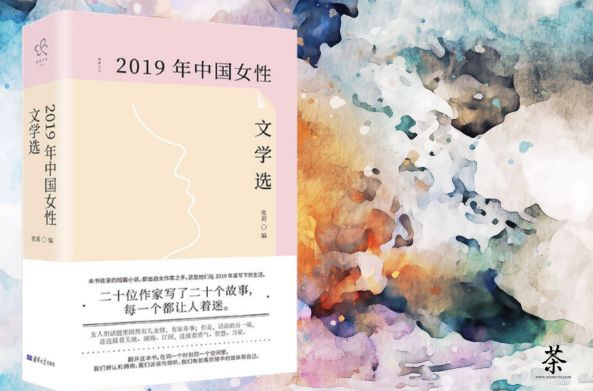
This essay concludes the tripartite inquiry into the yuanfang 远方 (distance) section of An Anthology of Short Stories by Chinese Women, the inaugural volume of Zhang Li’s annual anthology series established in 2019. The first essay approached distance as a conceptual and transcultural framework through which difference may be articulated, whilst the second examined the body as the primary site upon which such differences are inscribed within relations of class, migration, and gender. The present analysis extends this trajectory by turning to the digital sphere, where distance is no longer grounded in physical or social space, but mediated through technological infrastructures that reshape visibility, communication, and power.
Here, distance is not located in geographical displacement, but in rapidly evolving cultural institutions that leave older generations disoriented.
The meaning of “distance” appears in a more elusive form in the story “Toutiao gushi” 《头条故事》 (Headline Story) by Qiao Ye 乔叶. Here, distance is not located in geographical displacement, but in rapidly evolving cultural institutions that leave older generations disoriented. The protagonist, Su Zi, works as editor-in-chief of a magazine devoted to the promotion of theatre, entitled Zhongyuan Qiangdiao 《中原腔调》 (Melodies of the Central Plains). The name, which evokes the region considered the cradle of Chinese civilisation, signals the magazine’s editorial orientation: a niche publication with a limited readership that seeks to preserve the Confucian tradition. Yet because of this attachment to the past, the journal is gradually losing its cultural authority. The story thus explores the paradoxes of communication in the contemporary technological era, where past and present become sites of generational conflict, leading to the fragmentation of communities and the increasing isolation of individuals.
The magazine Zhongyuan Qiangdiao constitutes a narrow and tightly controlled environment in which the protagonist has secured a position of authority and is recognised as a cultural expert. One day, she is contacted by Yue Yue, an editor working for the social media platform Toutiao 头条 (Headline), who persuades her to open an account in order to enhance the platform’s intellectual content. Su Zi is reluctant to accept, as she has little interest in cultivating an online presence and remains unfamiliar with digital technologies. Initially, she resolves to “cultivate her own field,” maintaining a distinctive personal style. However, her language appears outdated and fails to resonate with contemporary trends, preventing her from reaching a wider audience. Only after she becomes attuned to “netizen” culture and begins to produce more engaging and humorous content do her view counts increase significantly. The first post she publishes consists of an image accompanied by the following caption:
看到图一师傅正在路边给树刷白,跟他聊,他说刷石灰水可以杀菌防冻。嗯,这个我是知道的。又见图二师傅在给电线杆刷白,难道电线杆也需要杀菌防冻?请教他,他沉默。我不耻下问,他终于答:上头说了,路边跟树干长得差不多的,都得刷。仔细一看,果然。
In the first image, a worker is painting the trunk of a tree by the roadside. When I speak with him, he explains that applying lime helps to disinfect it and protect it from the cold. Of course, this I already knew. In the second image, however, another worker is painting a lamp post. Could it be that lamp posts also require protection from frost? I ask him, but he remains silent. Not wishing to appear ashamed of seeking instruction, I persist, and he finally replies: “Those above have said that anything by the roadside that resembles a tree trunk must be painted.” On closer inspection, this does indeed seem to be the case.1
The post contains a mild political critique; Su Zi is particularly intrigued by the use of the expression “from above” (shangtou 上头) and by the first-person plural pronoun, both of which reveal the condition of workers’ subordination and a sense of alienation from their own labour. The phrase buchi xiawen 不耻下问 describes the humble attitude of a person in a position of authority who is willing to learn from those below. The protagonist is eager to employ this expression, as it signals her growing familiarity with social media, having encountered it earlier that same day among netizens.
Diversity of opinion ought to be valued, but users, shielded by the screen, are frequently drawn into futile quarrels and harsh criticism.
When the photographs are published, however, the caption provokes a heated discussion among users, centred precisely on this expression. The following day, the comment section is flooded with criticism: some correct her grammar, others accuse her of discriminating against workers from a position of cultural superiority, whilst others question her intellectual competence. Social media thus becomes a metaphor for a world in which individual differences are so pronounced that they give rise to paradoxical dynamics. Toutiao is a crowded space, yet not a safe one: diversity of opinion ought to be valued, but users, shielded by the screen, are frequently drawn into futile quarrels and harsh criticism. At the centre of this dynamic lies an intergenerational conflict, intensified by the collision between new and traditional media. Su Zi emerges as the figure through whom this paradox is enacted:
苏紫感慨不已。她忽然觉得,自己这块小小的地,其实更像是一个开放式公园,无门无墙,无障无碍,任凭是谁,想进就进,想出就出,想说就说,且全可潜隐。唯有她,宛若站在公园中心的小广场上任人观瞧。既是众目睽睽之下,就得小心翼翼,不能出乖露丑。
Su Zi was deeply struck. It suddenly occurred to her that the small plot she had taken to be her own was in fact more like an open park, without gates or walls, without barriers of any kind. Anyone could enter or leave at will, speak freely, or remain hidden from view. She alone stood as if in the small square at the centre of the park, exposed to the gaze of all. Under such constant scrutiny, she had to proceed with the utmost caution and avoid any misstep.2
The website is presented as a space diametrically opposed to the magazine: the dense flow of users transforms it into a platform for mass publication, where anyone with an internet connection may interact and express an opinion. In this boundless virtual environment, Su Zi appears to possess complete freedom over the content she publishes, provided that it concerns her everyday life. Yet her inexperience brings her into contact with vast amounts of clickbait, and this seemingly infinite range of choices becomes an obstacle, ultimately diminishing her capacity to act. The story thus exposes a central paradox of the digital era: social media, ostensibly free from official censorship, are nonetheless constrained by the judgements of users themselves. In the popular imagination, the internet may appear safe, since the body and face are shielded by the screen; in reality, however, it constitutes a fertile ground for the intensification of human conflict. That “small plot of land,” which initially seemed a secure space, becomes saturated with gossip, and what might have appeared a minor misunderstanding gives rise to a torrent of unsolicited abuse.
Qiao Ye’s story offers a profound critique of the loneliness and indifference that social media have introduced into everyday life. These platforms rely on personalised algorithms that enable users to consume content aligned with their own interests. This mechanism is explained in the story:
什么是流量福利呢?悦悦说,头条推送的机制是:机器识别了内容后,觉得哎呀不错,就会推给比如一百个人先看看,假如有五十个人看完了,机器就会觉得,哦哦真不错,我再给一千个人看看,然后再计算打开人数,假如又有四五百人打开了,机器就会再给比如一万人看看,就这样一直螺旋扩大,直到过了时效性,或者传播疲软了方罢。所谓的福利,就是平台会让机器把她发的内容在首页上多推送几次,在首页上停留的时间也要长一些,努力让更多人看到,这样她的粉丝就有可能增加得比较快,阅读量就有可能会高起来,在不远的将来,就有可能会有广告收益。
“What is meant by traffic benefits? Yue Yue explained that Toutiao’s recommendation mechanism operates as follows: once the system identifies a piece of content as promising, it is first shown to, say, one hundred users. If fifty of them read it to the end, the system then judges it to be successful and pushes it to a further thousand users. It then calculates how many people open it; if four or five hundred do so, the content is shown to perhaps ten thousand. In this way, its circulation expands in a spiral, until its timeliness expires or its dissemination begins to weaken.
The so-called ‘benefit’ lies in the platform allowing the system to promote her content several times on the homepage and to keep it visible for longer, thereby increasing its exposure. This, in turn, may lead to a more rapid growth in followers and higher readership, which, in the near future, may generate advertising revenue.”3
The algorithm operates in a dual manner: on the one hand, it is highly personalised and enables users to pursue their individual interests; on the other, it isolates them from the broader community. Contemporary technological devices, smartphones in particular, thus function simultaneously as a remedy for loneliness and as its very cause. The story further reveals that the social divisions generated by the algorithm operate at both intergenerational and intragenerational levels. Social media produce differences not only between generations but also within the community of netizens itself.
All these differences, whether intergenerational, communicative, or institutional, are reproduced through the same systems of power. Distance becomes possible only when a division is established between two subjects who, consciously or otherwise, seek to prevail over one another. In this sense, regimes of social division are fundamentally grounded in conflict. As in “Liangge banyue” and “Youmadi,” the author of “Toutiao gushi” is likewise concerned with the exploration of gender conflict as a manifestation of power relations from a feminist perspective. Su Zi recounts a recent incident that gained widespread attention on Toutiao, attracting millions of interactions: a well-known actor had been unfaithful to his wife and subsequently reported her to the authorities in order to rid himself of her. When the news appeared on the platform, a wave of speculation flooded the comment section:
说着说着,便说岔开来,有人感叹的是女主的衣裳、包包、耳环、腕表,辨别着是真品还是假货。有人关注的是女主坐的私人飞机,揣测着飞机的价格。有人在说女主看秀时合影的大咖,有人在说女主照片的背景是哪处名胜,同时期是否男主在那儿。
As the discussion unfolded, it quickly veered off course. Some focused on the woman’s clothes, handbags, earrings, and watches, attempting to determine whether they were genuine or counterfeit. Others turned their attention to the private jet on which she had travelled, speculating about its cost. Some identified the celebrities with whom she had been photographed at a fashion show, whilst others examined the backgrounds of her images, seeking to establish where they had been taken and whether her husband had been present at the same time.4
Users initially comment on the actor’s infidelity but soon shift their attention to the private lives of the two women, his wife and his lover, scrutinising what they wear, where they travel, and with whom they associate. The constant surveillance of other people’s daily lives emerges as a defining feature of social media platforms, one that users are compelled to accept as a condition of participation. Scholars of media and culture have examined this phenomenon in relation to privacy and gender relations. According to the model developed by Foucault, “Panoptic surveillance involves top-down, imbalanced power relations in which authorities regulate people by monitoring their behaviours.”5
In the virtual sphere, however, this system is inverted, as power is exercised from the bottom up and along horizontal lines. Contemporary philosophers have therefore introduced the term “omnioptic surveillance.” According to Kelsey, “omnioptic surveillance refers to ‘the-many-watching-the-many,’ describing how users consciously or unconsciously monitor one another through their access to shared online information.”6
The obsessive scrutiny of women’s lives constitutes a new form of control that is diffuse, non-localisable, and impersonal.
The obsessive scrutiny of women’s lives constitutes a new form of control that is diffuse, non-localisable, and impersonal, as power is exercised by individuals who may remain anonymous. The “privacy paradox,” produced by the tension between the desire to share personal information and the need to protect one’s private life, does not operate uniformly. Users with greater visibility are more exposed to criticism, since observers are not required to disclose their own identities. Within the framework of gender relations, when women become the objects of observation, followers acquire the power to investigate their personal lives; in doing so, they generate a state of anxiety that constrains women’s capacity for action. At the conclusion of the story, after exposing herself to the world of Toutiao, the protagonist becomes increasingly insecure, constantly preoccupied with the lives of others. As a response to this pervasive cruelty, the narrative proposes kindness. Reflecting on the condition of social media, Su Zi remarks with irony:
什么是友善?对熟人友善不是真友善,对生人友善才是真友善。对于生人,确实容易刻薄。是啊,又不认识你,干吗还要顾及你的心情,我只要自己爽就可以了。像这样肆无忌惮地怼人,最爽。
“What is kindness? Being kind to those we know is not true kindness; true kindness lies in how we treat strangers. Towards strangers, it is all too easy to be harsh. After all, if I do not know you, why should I concern myself with your feelings? My own satisfaction is all that matters. To attack others without restraint in this way, that is the greatest pleasure.”7
Su Zi’s story offers an explicit critique of contemporary, rampant individualism, which contributes to the fragmentation of individuals and the intensification of difference. It conceives of kindness as the boundary between freedom and abuse. On the internet, however, such a boundary is absent, as the detailed exposure of daily life encourages users to pass judgement on the experiences of others. Jealousy lies at the centre of this system, generating uninvited cruelty that both expresses and amplifies personal and collective insecurities.
The “producers of culture,” an ironic expression used by the protagonist to refer to incessant gossip, who appear to possess the power to shape public opinion, are themselves subjected to judgement within the virtual sphere. This lack of control proves detrimental to individual self-esteem, as it generates a constant fear of failure and reinforces a pervasive sense of insecurity: everyone has access to the internet, everyone may express an opinion, and no one is exempt from judgement.
The story concludes when Yue Yue informs Su Zi that Toutiao has introduced a new “edit” function, which would allow her to resolve the misunderstanding and return to her ordinary life. This feature marks a further point of divergence between Toutiao and the magazine Zhongyuan Qiangdiao: whilst, in the digital sphere, words may be erased in order to protect reputations, the harm inflicted by such attacks remains, in the protagonist’s mind, irreversible. Even after deleting the post, she continues to doubt both herself and her judgement. Ultimately, she realises that the role of “guardian of culture” is inherently unstable. Comparing herself to Confucius, whose authority has endured for over two millennia, Su Zi feels as though she stands on fragile ground, where even the slightest error may cause her to fall into a torrent of hostile commentary.
0
CONCLUSIONS
Through the analysis of three short stories, “Liangge banyue” 《两个半月》 (Two and a Half Months) by Lin Nabei 林那北, “Youmadi” 《油麻地》 (Yaumatei) by Zhou Jieru 周洁茹, and “Toutiao gushi” 《头条故事》 (Headline Story) by Qiao Ye 乔叶, I have sought to uncover the patriarchal dynamics that underpin even the most seemingly minor forms of discrimination.
At a recent conference on gender violence at my university, a remark made by one of the students has remained with me. Reflecting on the notion of micro-violence, she asked, “can any violence be called micro?” I invoke this perspective when asking whether any form of discrimination can truly be considered minor.
The stories I have discussed in “Glimpsing the Other Shore: Distance, Difference, and the Feminist Gaze in Contemporary Chinese Women’s Writing” expose the pervasive violence and discrimination that women encounter in their everyday lives. In contemporary China, women’s writing is increasingly recognised for its acute attention to individual experience. In contrast to traditional male-authored literature, these narratives attend closely to speech, bodily expression, shifts in mood and behaviour, and the seemingly minor acts through which broader systems of discrimination are gradually constructed.
In “Liangge banyue” 《两个半月》 (Two and a Half Months) , “Youmadi” 《油麻地》 (Yaumatei), and “Toutiao gushi” 《头条故事》 (Headline Story), the authors explore questions of distance and difference from a feminist perspective. This framework does not refer solely to the gender of the writers, nor does it merely privilege a focus on women’s lives. Rather, the feminist gaze reveals the dynamics of discrimination and oppression as products of patriarchal and colonial systems of power. It is important to note that “Liangge banyue” and “Youmadi” centre on the experiences of rural or migrant women, whilst “Toutiao gushi” shifts the focus to the digital sphere, where new forms of visibility and control emerge. This progression demonstrates that Chinese mainstream literature, visible in libraries and bookshops alike, also engages with more marginal and sensitive themes.
It is remarkable that a work such as An Anthology of Short Stories by Chinese Women could be compiled by an academic and receive such wide recognition whilst maintaining its prestige. This represents a case of navigating the tension between visibility and repression. One might ask whether this is due to its engagement with so-called “smaller issues.” Such a reductive view of women’s writing as inherently less significant may itself be appropriated by these authors as a strategy for negotiating the constraints of censorship. Whether this strategy may lead to forms of emancipation remains an open question. If systems of power persist in dividing us, might we nevertheless find moments of connection in fleeting acts of recognition? One might speak of a “peeking literature,” through which struggles and forms of suffering are gradually brought to light, those who remain unseen relying upon the brief, attentive gaze of others. The imperative, then, is to continue reading.
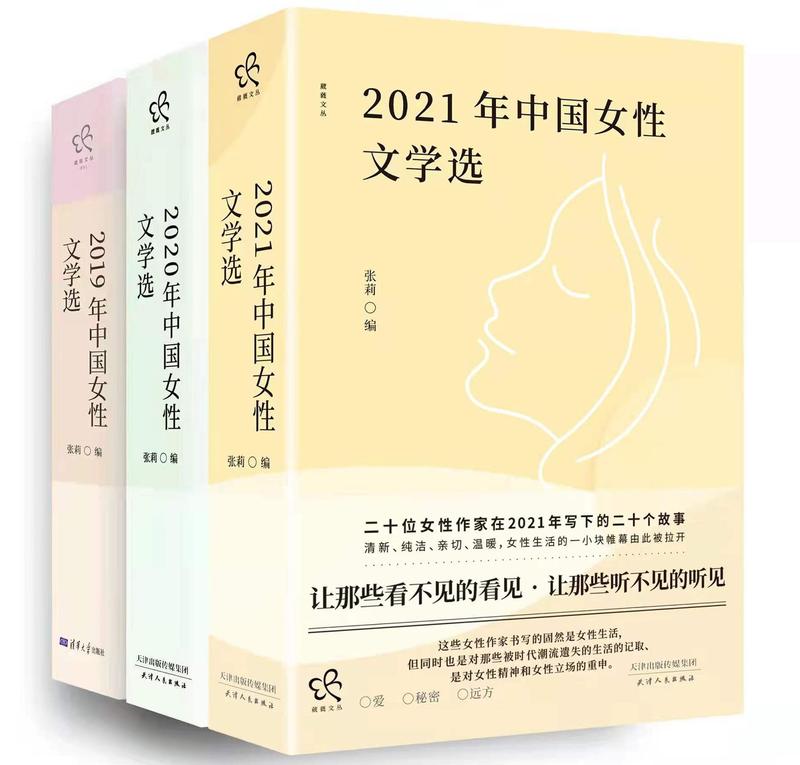
The complete 2019 to 2021 series, after which both the format and the publishing house changed. It is now published by Jiangsu Publishing.
- Zhang Li 张莉, An Anthology of Short Stories by Chinese Women, cit., p. 362. All translations are mine. ↩︎
- Ibid., p. 361. ↩︎
- Ibid., p. 358. ↩︎
- Ibid., p. 373. ↩︎
- Foucault, Michel, Discipline and Punish: The Birth of the Prison, translated by Alan Sheridan. New York: Vintage Books, 1977, p. 201. ↩︎
- Kelsey, Darren, “Discourse, Affect and Surveillance: Gender Conflict in the Omniopticon,” Journalism and Discourse Studies, 2015, vol. 1, no. 2, p. 8. ↩︎
- Zhang Li 张莉, An Anthology of Short Stories by Chinese Women, cit., p. 376. ↩︎
How to cite: Petroselli, Caterina. “Digital Distances: Social Media, Intergenerational Conflict, & Female Visibility in Contemporary China.” Cha: An Asian Literary Journal, 23 Mar. 2026, chajournal.com/2026/03/23/distances3.


Caterina Petroselli holds a Master’s degree in Chinese Studies from Ca’ Foscari University of Venice. She previously obtained a double-joint Bachelor’s degree from Ca’ Foscari University and Beijing Capital Normal University (北京首都师范大学). She also holds a minor in Economic Studies, as well as a Master’s degree in Foreign Relations from the Italy-USA Foundation. In 2022, she received the Young Graduates Award from the Foundation, a prestigious recognition promoting outstanding Italian university graduates. Her principal research interest lies in contemporary Chinese women’s literature, which was the focus of her Master’s thesis. She remains actively involved in university life. She is a volunteer at Radio Ca’ Foscari, where she has published interviews with writers and artists, including Shelby Wynn Schwartz, the dance group Bullyache, and the Lebanese filmmaker Lama Tauk. She is also a volunteer with the feminist association Femminismi Contemporanei (Contemporary Feminisms). Petroselli is one of the organisers of the Department of Asian Studies book club, which promotes monthly discussions on East-Asian authors; participants have included Ma Jian, Zhang Li, and Tammy Lai-Ming Ho. She is currently planning to pursue a PhD in Chinese women’s literature at Ca’ Foscari University of Venice. [All contributions by Caterina Petroselli.]
 Cha
Cha 