
Editor’s Note: “Distance & Difference: Feminist Frameworks in Zhang Li’s An Anthology of Short Stories by Chinese Women” is the first in a series of three essays, together entitled “Glimpsing the Other Shore: Distance, Difference, and the Feminist Gaze in Contemporary Chinese Women’s Writing”, by Caterina Petroselli. The series examines the theme of distance in An Anthology of Short Stories by Chinese Women (2019), the landmark annual anthology of Chinese female literature curated by Zhang Li. Through close readings of three short stories, the series traces the multiple forms that distance takes in contemporary China: the distances of class and rural migration, of displacement and colonial inheritance, and of the vast, ungoverned spaces of digital life. The essays argue that in the hands of these writers, distance is never merely geographical. It is always a question of power.

[ESSAY] “Distance & Difference: Feminist Frameworks in Zhang Li’s An Anthology of Short Stories by Chinese Women” by Caterina Petroselli
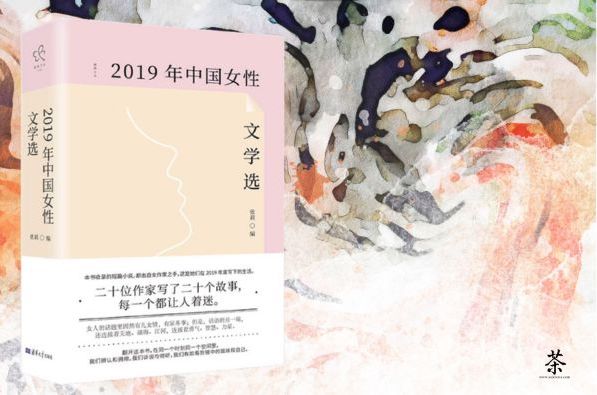
Zhang Li 张莉 (editor). An Anthology of Short Stories by Chinese Women in 2019 (2019 nian Zhongguo nüxing wenxue xuan [2019年中国女性文学选]), Tsinghua University Press (Qinghua Daxue Chubanshe [清华大学出版社]), 2020. 498 pgs.
It is official: across Europe, North America, and East Asia, women have become the subject of renewed attention. In China, this process began with literature; in Quebec, women’s art exhibitions occupy the main headlines; in Taiwan, politics and society have been submerged by a wave of pink-washing. The world has entered the ta shiji 她世纪 (She Century), a consumerist era in which the objectification of the female subject is masked by the promise of equality. It appears as though the Greek oracle Trophonius has risen from the underworld only to lead us back to his cave in a terrifying ritual of descent. Our destiny is cast upon us by a system of prophetic male deities who have once more stripped us of the power to speak.
Since the beginning of the twentieth century, literature produced from marginalised positions has served as a means of resisting oppression, both in Europe and in China.
Since the beginning of the twentieth century, literature produced from marginalised positions has served as a means of resisting oppression, both in Europe and in China. Some women possessed the power and insight to resist submission to patriarchal forces, from Virginia Woolf to He Yinzhen and Xiao Hong. In contemporary postmodern China, certain authors and literary critics have appropriated the female voice, cautiously navigating the boundary between instrumentalisation and liberation.
Some works articulate the profound malaise experienced by women within a violent patriarchal society, whilst simultaneously portraying their bodies as objects of voyeurism, from Chen Ran 陈然 and Lin Bai 林白 in the 1990s to Zhou Weihu 周卫慧 and Mian Mian 绵绵 in the early 2000s. Their explicit style and recurrent sexual scenes may be read as attempts to reclaim female desire and subjectivity; yet these same features render the texts susceptible to appropriation within a patriarchal economy of the gaze. Male critics have thus interpreted such representations as acts of submission, not necessarily in error, but as part of a broader critical framework that reabsorbs transgression into familiar structures of meaning.
In the new century, as China acquired greater spending power and established itself as one of the titans of the global economy, women’s literature has been increasingly confined to chic, independent Shanghai bookshops, displayed alongside Aesop “International Women’s Day” campaigns and the proto-feminist European authors Simone de Beauvoir and Susan Sontag. Among these books, one in particular caught my attention, its pink cover emphatically proclaiming its aim to collect and represent contemporary Chinese women’s writing, An Anthology of Short Stories by Chinese Women in 2019 (hereafter An Anthology of Short Stories by Chinese Women).
The curator of this anthology is Zhang Li 张莉, a professor of Chinese literature at Beijing Normal University (Beijing shifan daxue 北京师范大学) and a member of the jury for the Mao Dun Literary Prize. In 2019, she undertook the demanding project of collecting short stories by women writers, thereby inaugurating an annual anthology series dedicated to contemporary Chinese women’s literature. The volume comprises twenty short stories written and published in 2019, organised into three principal themes: ai 爱 (love), mimi 秘密 (secrets), and yuanfang 远方 (distance). The collection exemplifies the ways in which feminist and female literary criticism intersect with market forces in shaping the editorial landscape of contemporary China, whilst also responding to the expectations of the reading public. This process unfolds within an unpredictable literary climate marked by blurred censorship boundaries.
The first two sections of An Anthology of Short Stories by Chinese Women focus on love and secrets. They recount the experiences of women and men navigating personal and romantic relationships, whilst exploring the pressures of modern life in China. These themes are intertwined with questions of political history, collective trauma, and the emotional illiteracy of a population living under the constraining power of a patriarchal system. In response to this identity crisis, Zhang Li states in her introduction that she hopes readers will be inspired by the protagonists to explore both themselves and the world around them. Literature is thus envisioned as an instrument of self-discovery and self-creation, since through writing and reading people “digest themselves, they cure themselves” (在讲述中,我们自我消化,自我疗愈).1
In what follows, I seek to delineate the anxieties of three Chinese female writers as they engage with themes of social, economic, and territorial difference. I focus on the third section of the 2019 anthology, Distance. I have chosen to analyse this inaugural volume, which marks the beginning of an annual anthology series established in 2019, because my work commences here as a critical inquiry into these anthologies and their development over time. This constitutes only one part of a broader argument that I intend to pursue in subsequent articles. It is, arguably, the most significant point of departure, the beginning.
0
Defining Distance
from a Feminist Perspective
Whilst the first two sections of the collection, ai 爱 (love) and mimi 秘密 (secrets), focus on emotions and their role in shaping personal and collective identity, the final section, yuanfang 远方 (distance), leads the authors to interrogate the self in relation to the Other. As the theme of distance does not belong to the semantic field conventionally associated with the feminine sphere, the authors are able to move beyond strictly gendered concerns. These stories address physical and emotional distances between romantic couples; the writers traverse spaces defined by temporal and cultural difference, often finding themselves in supernatural worlds governed by technological autarchies.
The theme of distance thus calls for a shift in perspective, from a female-centred view to a transcultural approach, which in turn reveals the full scope of the feminist critique. These considerations inevitably raise further questions: how can difference be defined from a feminist perspective, and how does such a definition enable a broader approach focused not only on women but also on minorities and oppressed individuals? How do the authors respond to these questions through writing and storytelling?
Diversity might be understood as an objective characteristic. Every individual is intrinsically different, since no other resembles them completely; each is unique and impossible to duplicate. Difference constitutes one of the essential conditions that ensure the survival of humanity. George Bataille describes these concepts as follows:
[B]etween two subjects, defined as one and two there is an abyss. There is discontinuity. This abyss is obvious, for example, between me who speaks and you who listens. We attempt to communicate, but no communication between us will ever succeed in suppressing a constitutive difference. What happens to you does not happen to me. All of us, you and I, are fragmentary beings.2
Difference is both the consequence of action and a natural condition; it manifests itself in individual choices and human behaviours, as well as in physical appearance. Contrary to what we are taught as citizens of an oppressive system, recognising diversity does not necessarily assign a negative connotation to an object. The attribution of value based on difference is a human response to fear. In order to escape the undefined, we divide it; by naming it, we create categories such as right and wrong, good or bad. The negative attribute often describes an object that is unknown and designated as the Other.
Nevertheless, it would be incorrect to claim that this is the work of a single individual, or that the system of differences operates solely within the personal sphere. On the contrary, as Audre Lorde observes, the classification of differences according to the principles of “negative” and “positive” is the work of a predetermined society that seeks to perpetuate itself, along with its flaws and virtues. The scholar urges us to abandon hostility towards the concept of difference, recognising that it is not the existence of the Other that divides us, but rather the distortion of its meaning and its illegitimate use by systems of power. This assertion makes it possible to recognise diversity as an instrument of domination. In her own words:
[I]nstitutionalized rejection of difference is an absolute necessity in a profit economy which needs outsiders as surplus people. As members of such an economy, we have all been programmed to respond to the human differences between us with fear and loathing and to handle that difference in one of three ways: ignore it, and if that is not possible, copy it if we think it is dominant, or destroy it if we think it is subordinate. But we have no patterns for relating across our human differences as equals. As a result, those differences have been misnamed and misused in the service of separation and confusion.3
Lorde identifies difference in accordance with Foucault’s view, as a form of knowledge production established by systems of power.
Lorde identifies difference in accordance with Foucault’s view, as a form of knowledge production established by systems of power. By recognising difference as a fabrication, she reveals its dynamic and ever-changing nature, subject to the principles of time and place. This same political perspective can be found in the collection An Anthology of Short Stories by Chinese Women. In these seven stories, Zhang Li seeks to unveil the power dynamics through which difference is defined in contemporary China, using gender as a framework of analysis. Her approach leads to an exploration of questions of class, ethnicity, geographic origin, and language.
We thus find ourselves within a complex configuration of voices, a dialogue in which individuals articulate a profound sense of oppression imposed by regimes of difference.
In what follows, I aim to analyse three stories from the yuanfang 远方 (distance) section of the collection: “Liangge banyue” 《两个半月》 (Two and a Half Months) by Lin Nabei 林那北, “Toutiao gushi” 《头条故事》 (Headline Story) by Qiao Ye 乔叶, and “Youmadi” 《油麻地》 by Zhou Jieru 周洁茹. Each of these narratives presents difference from a distinct perspective, social, geographical, and generational. By bringing these three dimensions into relation, Zhang Li guides the reader towards recognising the multiple forms of women’s oppression in contemporary China. My selection enables a broader understanding of the theme of distance, revealing the mechanisms through which multiple systems of power operate simultaneously and intersect in the construction of difference.
The following essays develop these lines of inquiry in greater detail. The second essay, “The Body as a Site: Class, Migration, and Geographic Distance in Contemporary Chinese Women’s Fiction”, examines the body as a site upon which class, migration, and geographic difference are inscribed, with particular attention to the intersections of gender and social hierarchy. The third essay, “Digital Distances: Social Media, Intergenerational Conflict, and Female Visibility in Contemporary China”, turns to the digital sphere, analysing how social media, intergenerational conflict, and new forms of visibility reshape the experience of distance and difference in contemporary China.
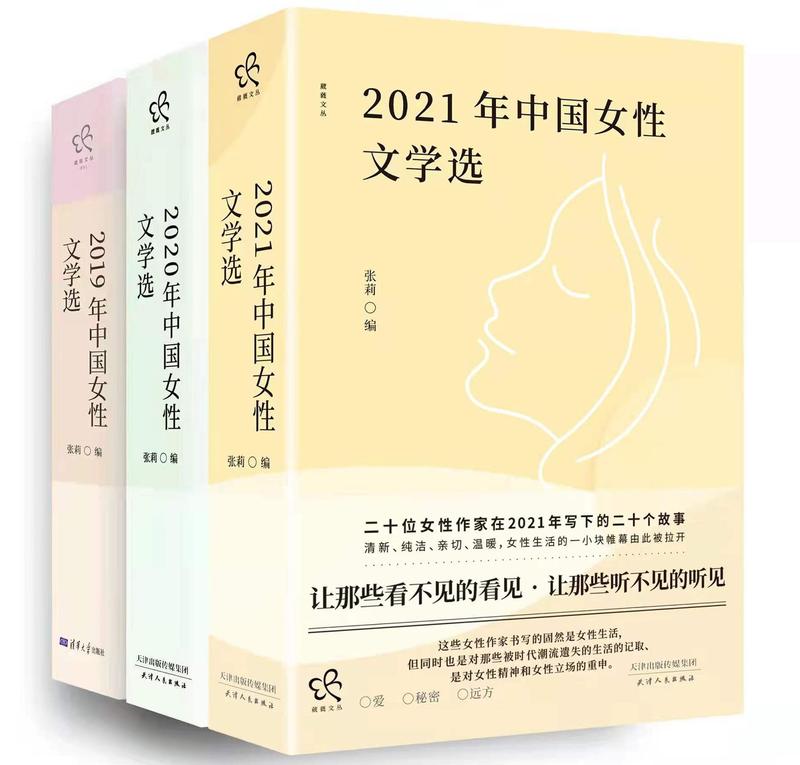
The complete 2019 to 2021 series, after which both the format and the publishing house changed. It is now published by Jiangsu Publishing.
- Zhang, Li (张莉), ed. An Anthology of Short Stories by Chinese Women in 2019 (2019 nian Zhongguo nüxing wenxue xuan [2019年中国女性文学选]). Beijing: Tsinghua University Press (Qinghua Daxue Chubanshe [清华大学出版社]),
2020. All translations are mine, unless otherwise indicated. ↩︎ - Bataille, George, Erotism: Death and Sensuality, translated by M. Dalwood. London: Calder, 1962. ↩︎
- Lorde, Audre, “Age, Race, Class and Sex: Women Redefining Difference,” Sister Outsider, Crossing Press, 1984, p. 1. ↩︎
How to cite: Petroselli, Caterina. “Distance and Difference: Feminist Frameworks in Zhang Li’s An Anthology of Short Stories by Chinese Women.” Cha: An Asian Literary Journal, 23 Mar. 2026, chajournal.com/2026/03/23/distances1.


Caterina Petroselli holds a Master’s degree in Chinese Studies from Ca’ Foscari University of Venice. She previously obtained a double-joint Bachelor’s degree from Ca’ Foscari University and Beijing Capital Normal University (北京首都师范大学). She also holds a minor in Economic Studies, as well as a Master’s degree in Foreign Relations from the Italy-USA Foundation. In 2022, she received the Young Graduates Award from the Foundation, a prestigious recognition promoting outstanding Italian university graduates. Her principal research interest lies in contemporary Chinese women’s literature, which was the focus of her Master’s thesis. She remains actively involved in university life. She is a volunteer at Radio Ca’ Foscari, where she has published interviews with writers and artists, including Shelby Wynn Schwartz, the dance group Bullyache, and the Lebanese filmmaker Lama Tauk. She is also a volunteer with the feminist association Femminismi Contemporanei (Contemporary Feminisms). Petroselli is one of the organisers of the Department of Asian Studies book club, which promotes monthly discussions on East-Asian authors; participants have included Ma Jian, Zhang Li, and Tammy Lai-Ming Ho. She is currently planning to pursue a PhD in Chinese women’s literature at Ca’ Foscari University of Venice. [All contributions by Caterina Petroselli.]
 Cha
Cha 