
Editor’s Note: “The Body as a Site: Class, Migration, & Geographic Distance in Contemporary Chinese Women’s Fiction” is the second in a series of three essays, together entitled “Glimpsing the Other Shore: Distance, Difference, and the Feminist Gaze in Contemporary Chinese Women’s Writing”, by Caterina Petroselli. The series examines the theme of distance in An Anthology of Short Stories by Chinese Women (2019), the landmark annual anthology of Chinese female literature curated by Zhang Li. Through close readings of three short stories, the series traces the multiple forms that distance takes in contemporary China: the distances of class and rural migration, of displacement and colonial inheritance, and of the vast, ungoverned spaces of digital life. The essays argue that in the hands of these writers, distance is never merely geographical. It is always a question of power.

[ESSAY] “The Body as a Site: Class, Migration, & Geographic Distance in Contemporary Chinese Women’s Fiction” by Caterina Petroselli
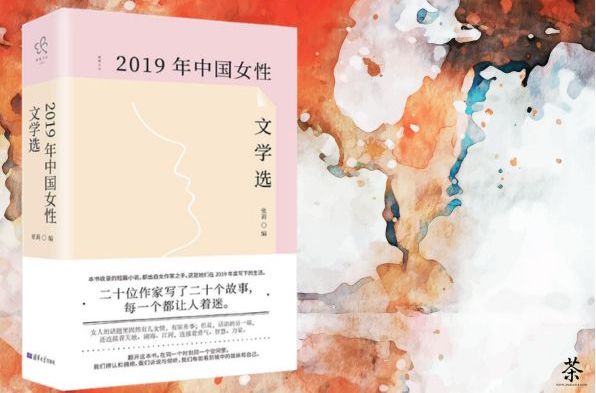
Zhang Li 张莉 (editor). An Anthology of Short Stories by Chinese Women in 2019 (2019 nian Zhongguo nüxing wenxue xuan [2019年中国女性文学选]), Tsinghua University Press (Qinghua Daxue Chubanshe [清华大学出版社]), 2020. 498 pgs.
0
The Body
as a Site of Social
& Geographical Distances
This essay continues the inquiry initiated in the preceding study of the yuanfang 远方 (distance) section of An Anthology of Short Stories by Chinese Women, the inaugural volume of Zhang Li’s annual anthology series established in 2019. If the previous essay examined distance as a conceptual and transcultural framework through which difference may be articulated, the present analysis turns to the body as the primary site upon which such distances are inscribed and made visible.
In the short story “Liangge banyue” 《两个半月》 (Two and a Half Months) by Lin Nabei 林那北, distance appears in multiple forms, physical, temporal, generational, cultural, and social. The protagonist is a fifty-nine-year-old woman, Xu Li, who, after the death of her husband, decides to move in with her daughter Li Weiwei and her son-in-law Du Bing. From the outset, it becomes apparent that the decision to leave her small suburban village for the city of Xiqi brings her a sense of unease. The mother struggles to abandon her rural life, where she had developed sincere relationships and stable habits.
The small town had represented a space of ease: she had formed a small dancing group of women who admired her, and she was protected by simple power relations based on hierarchy and clientelism. In contrast, in the city she is unable to establish genuine connections, and in Li Weiwei’s home she feels like a burden. Although the geographical distance between mother and daughter is ostensibly bridged by their cohabitation in the same city, social and cultural differences persist between them. This limit is embodied by the husband, Du Bing. He complains about the meals that Xu Li prepares, her frugal approach to grocery shopping, and the artificial flowers she buys to decorate the house. In turn, the mother-in-law rejects his behaviour: his constant squandering of money, his eating habits, his physical appearance, and his laziness are perceived as indulgences typical of a rich and pampered man.
The relational difficulties between the protagonist, her daughter, and her son-in-law’s family arise from class differences and broader social conditions. These distortions stem from Xu Li’s geographical background: the reality of the small village clashes with that of the large city, where her rural identity prevents her from forming stable bonds. In contemporary China, however, social discrimination does not operate solely from the top down, as it is also shaped by traditional norms and social standards. The body becomes the physical site upon which these differences are inscribed. Li Weiwei’s father conveys a harsh judgement of Du Bing’s physical appearance:
李泰丰当时最不满的就是这一点,文化人不做做商人,整天一身酒肉味,身子也横着长,越长越显得矮。好好做生意也就罢了,却好像和半城人都是朋友,朋友每天一堆涌去酒楼胡吃海喝,吃过喝过嘴巴一抹不给钱就走了,人家就是给杜兵也不肯收,这样能赚到钱?
Li Taifeng’s greatest dissatisfaction lay precisely in this: a cultured man who had abandoned his intellectual pursuits to become a businessman, perpetually reeking of food and drink. His body spread outwards, growing broader by the day, so that he appeared increasingly short. It would have been one thing had he applied himself seriously to his trade, yet he seemed intent on befriending half the town. Each day, crowds of companions would pour into his restaurant to feast and drink, only to wipe their mouths and leave without paying. Worse still, even when they offered money, he refused to accept it. How could he possibly make a living in this way?1
Despite his high economic standing, Du Bing’s physical appearance and occupation convey the image of a sloppy and indolent man, incapable of securing a better future for his wife. He represents the descendant of a well-off family who has regressed from intellectual to restaurant owner, embodying the indolence of a dominant class that has reached the peak of the social ladder and ceased to strive. The shape of his body becomes a disturbing element, as it does not correspond to that of a prosperous urban man. In contrast, Li Weiwei is a beautiful and intelligent woman who, having come from the countryside, has secured a prestigious position in the city. Husband and wife thus represent two opposing figures: Li Weiwei embodies the economic sacrifices of her rural parents, who, through deprivation, provided her with the means to achieve upward social mobility. The man’s laziness is offset by his economic condition; despite remaining at home throughout the day, he can afford expensive, high-quality food. The perplexity of Xu Li and her husband Li Taifeng when they first encounter their daughter’s husband is only resolved when they become aware of his economic capacity:
李唯薇第一次把杜兵带回西旗镇时,李泰丰也不满意。好好的一个女孩,长得清清秀秀,一朵花为什么要和一泡牛粪在一起?结婚时来城里,看到新装修的三百多平方米婚房,李泰丰才稍稍舒一口气。
The first time Li Weiwei brought Du Bing back to Xiqi Town, Li Taifeng was far from satisfied. Such a fine young woman, delicate and refined, why should she be paired with a lump of cow dung? It was only at the time of the wedding, when he came to the city and saw the newly renovated apartment of more than three hundred square metres, that he allowed himself a slight sigh of relief.2
In China, body politics is closely linked to the concept of suzhi (素质), literally “basic quality” or “inherent quality,” which emerged at the end of the twentieth century. The term is often translated as “quality,” yet it refers more precisely to a system of evaluating the perceived cultural, moral, and social worth of individuals, encompassing education, behaviour, and bodily comportment. According to Ann Anagnost,
… as economic reforms increased privatisation and dismantled the institutions and entitlements of state socialism, suzhi appeared in new discourses of social distinction and the discursive production of middle-classness. Suzhi’s sense has been extended from a discourse of backwardness and development (the quality of the masses) to encompass the minute social distinctions defining a ‘person of quality’ in practices of consumption and the incitement of a middle-class desire for social mobility.3
The concept of suzhi thus becomes essential for understanding the relational difficulties between the two families, as well as between mother and daughter. Anagnost defines it as an instrument that encodes value, serving an ideological function and operating through antithesis, that is, through difference: “the antithesis is inherently a coercive figure in the divide it enforces; it constructs a ‘grid of abstract categories’ that works as a ‘proliferating series of exclusive disjunctive syntheses adding up to a system of value judgment (Massumi 1992: 76).’”4
Xu Li’s experiences demonstrate that the balance of power to which Anagnost refers operates along irregular and often horizontal axes, intersecting with other issues, most notably gender. The body establishes an insuperable boundary between Xu Li and Du Bing’s mother. Ding Xiang is an upper-class woman who takes pride in her dancing career, which keeps her figure slim and toned, and who espouses a modern view of women’s professional aspirations. The protagonist constantly compares herself to her, envious of her life and of the opportunities that the city has afforded her. The body becomes a symbol of two opposing social conditions: their differing suzhi is manifested in Xu Li’s soft curves, the result of a rural past that prevented her from pursuing her dream of becoming a dancer. The discomfort Xu Li feels towards her own body, when compared with Ding Xiang’s, is symptomatic of an irreconcilable disparity. By assuming a physical form, the concept of suzhi becomes a naturalised condition and a visible marker of social inferiority.
These dynamics also emerge within the broader social context. One of Xu Li’s dance companions, after watching a video in which she was dancing with her friends in the small village, remarks:
“你们学校老师气质都不错啊,一点都不像农村的。”
“The teachers at your school have a refined bearing; they do not seem rural at all.”5
Body politics operates along multiple axes of power; for women, however, this condition is further exacerbated by gender.
The adjective “rural” acquires a new meaning that exceeds its geographical origin, as it comes to designate a physical form associated with specific social and economic characteristics. The body thus assumes a social dimension, becoming a construction that embodies the experience and history of individuals. As noted above, body politics operates along multiple axes of power; for women, however, this condition is further exacerbated by gender. Beauty constitutes one of the systems through which women are subordinated, in that it assigns social value to their bodies according to norms that are presented as universal yet remain unattainable. Xu Li’s story exposes the fictitious nature of such dynamics, since her perception of her body shifts according to the social context in which it is situated. At the beginning of the narrative, she takes pride in her movements, her agility, and her flexibility, paying little attention to the slight protrusion of her belly, a reminder of her age. Only upon arriving in the city does her perception change, as her body comes to represent the tangible limit of difference. These shifts in perspective reveal that diversity is not inherently a mark of discrimination; rather, it is produced by a discourse that naturalises the Other as a deficiency in relation to an ideal. Audre Lorde would describe this standard as the “mythical norm,” thereby underscoring its inconsistency.
The conclusion of the story leaves the reader with a bitter aftertaste. Owing to her evident low social status, Xu Li is unable to form new relationships outside the home. Although she initially succeeds in joining a dance group, the other women present themselves as friends only to betray her later. When she asks one of them to assist her daughter in obtaining a promotion, the woman instead causes Li Weiwei to lose her job. In doing so, they become emblematic of the hypocrisy that governs urban life. Following this episode, the relationship between mother and daughter deteriorates: Li Weiwei accuses Xu Li of having revealed her family background, something she had always sought to conceal, and begins to ignore her. Xu Li realises that, since her daughter’s move to the city, the distance between them has become both physical and cultural. Li Weiwei’s relationship with money, her friendships, and her attitudes have all changed; they now reflect someone who has ascended the social ladder through education. The story concludes with the protagonist’s return to her village, symbolising the definitive separation between these two modes of life.
0
Narrating
the Migrant Body
“Liangge banyue” 《两个半月》 (Two and a Half Months) is a story of migration that recounts the social discrimination faced by rural women. Although Xu Li’s daughter possesses an excellent professional background and appropriate qualifications, she is denied the position of deputy director because she is perceived as a “rural” woman. A similar situation is experienced by the protagonist of “Youmadi” 《油麻地》 (Yaumatei) by Zhou Jieru 周洁茹. Ah Zhen is a woman from mainland China who lives in Hong Kong, in the district of Yaumatei, which lends its name to the story. The narrative recounts the lives of three women, Ah Zhen, Ah Fang, and Li Li, who have fled the harsh conditions of rural life in search of a better future in the city.
Ah Zhen is the owner of the beauty salon where the three women work. She comes from a poor family and was forced by her father into marriage as the result of a bet. In order to avoid this fate, she fled to Shenzhen, where she was kidnapped but managed to escape. She eventually moved to Hong Kong, where she married a local man. Prior to meeting her future husband, she had already begun to build an independent life and had earned enough money to sustain herself. She would not have married had the man not coerced her by threatening to take his own life. From the outset, the oppression that permeates Ah Zhen’s domestic reality is evident: her husband assumes the patriarchal role of head of household and compels her to live with her mother-in-law, who treats her like a servant and refers to her as dalumei 大陆妹 (“mainland girl”). Even after establishing a family of her own, Ah Zhen continues to feel like a fugitive, constantly seeking to escape both traditional gender roles and social discrimination. She opens a massage shop, which becomes a refuge where she can experience a fleeting sense of freedom; yet she finds no lasting solace even there, as the exhausting hours alienate her from both herself and her children.
The second protagonist is Li Li, Ah Zhen’s employee. Although they share a similar background, she represents a contrasting trajectory. She too moved to Hong Kong from mainland China and was compelled to marry after becoming pregnant. For her as well, marriage was a sentence imposed by her husband, who persuaded her through threats of self-harm. However, once married, the man’s behaviour changed, and their relationship became relatively harmonious. Li Li is able to balance work and family life, preserving a degree of personal autonomy whilst fulfilling her domestic responsibilities. She refuses overtime shifts in order to spend time with her children.
The third woman, Ah Fang, moved to the island at the age of seven, as did her husband. Since they both came from the mainland, their marriage is founded from the outset on mutual affection and understanding. However, despite having lived in Hong Kong for most of her life, Ah Fang continues to face discrimination from other citizens. In a conversation in which she reflects upon her sense of exclusion, she articulates the underlying dynamics of this discrimination. She observes that such divisions apply primarily to individuals from lower-middle-class backgrounds:
有的人二三十岁才到香港工作学习,很快就是新香港人了嘛。阿芳说,我又没有受过香港的教育,我跟我老公都是,我们都是街上长大的,我们没上过政府学校,港英政府不管你嘛,家里又穷,就在街上上学啰。阿芳大笑起来,真的一点都不香港人。
“There are people who only come to Hong Kong in their twenties or thirties to study or work, and before long they are considered new Hongkongers.” Ah Fang said. “Neither my husband nor I received a Hong Kong education; we both grew up on the streets. We never attended government schools, and the colonial administration paid no attention to you if you were poor, so we learned on the streets. She burst out laughing, saying that she did not feel like a Hongkonger at all.”6
Those seeking to escape poverty are not recognised as citizens but are instead perceived as a burden to be exploited.
Ah Fang realises that belonging to a place is not a question of time or citizenship, but of money and class. Although all migrants share the same journey from the mainland to the city, they do not remain the same once they arrive. This exemplifies how the meaning of difference is distorted in order to conform to prevailing systems of power. It also demonstrates how discrimination operates along multiple axes, shaped most significantly by class and economic status. Those who move to Hong Kong to study at prestigious universities and work in elite companies are not labelled as migrants; they are recast as new citizens who contribute to economic growth. By contrast, those seeking to escape poverty are not recognised as citizens but are instead perceived as a burden to be exploited.
A further example of how difference is structured through unequal relations of power can be seen in the fact that both Ah Zhen’s and Li Li’s marriages are the result of male coercion. Li Li justifies this condition by observing that “in this respect, many Hong Kong men were the same: their marriage proposals always came with a threat to their own lives.” Hong Kong thus emerges as a site of contradiction: whilst mainland citizens imagine it as a promised land and a space of liberation from the Communist regime, women who arrive there encounter another domain shaped by patriarchal domination. From a gendered perspective, the story leaves a bitter impression. Men appear able to pursue a better life beyond their place of origin, whereas women remain bound to prescribed roles. Traditional duties and patriarchal expectations follow them wherever they go. Marriage becomes a predetermined condition for women, founded on coercion rather than affection; rather than constituting a social or economic contract, it emerges as the product of violence and perpetuates itself through ongoing forms of abuse.
This “gender trouble” also permeates the public lives of the three protagonists. Social integration is depicted as a process that produces difference, as individuals move from a familiar and stable context into the unknown. In this new environment, they encounter the Other, who redefines them by assigning reductive and simplifying categories. The term “mainland girl” functions as an instrument of classification: it redefines the woman according to her origin and imposes a new identity upon her. In doing so, it fulfils the need to divide and position individuals within a social hierarchy. Language itself becomes an instrument of power. As Rosi Braidotti observes, “language is an ontological precondition for the constitution of the subject and in some ways ‘external’ to it, while at the same time it is constitutive of the subject.”7
By moving from the mainland to Hong Kong, Ah Zhen acquires a new identity that is at once externally imposed and internally recognised, marking her difference from the citizens of the island. According to Braidotti, “subjectivity is a socially mediated process of entitlements to and negotiations with power relations. Consequently, the formation and emergence of new social subjects is always a collective enterprise, ‘external’ to the individual self while it also mobilizes the self’s in-depth and singular structures.”8
If the construction of the self is indeed a reflexive process, as Braidotti suggests, the protagonist initially assumes the identity of the migrant. She becomes a work-driven individual who seeks to accumulate wealth in order to overcome a condition of social inferiority; she endures her mother-in-law’s insults, tolerates her husband’s behaviour, and surrounds herself with other dalumei. Yet the capitalist promise of social advancement through economic accumulation soon proves to be illusory. Ah Zhen immerses herself in work in an attempt to escape domestic constraints, only to find herself exhausted and alienated. The discrimination experienced by the three protagonists is shaped by the intersection of gender, economic and social status, and geographical origin. Distance thus emerges as a cognitive distortion produced by regimes of power, through which structures of oppression are continually reproduced. The protagonist’s eventual liberation arises from her confrontation with her husband and from her resistance to entrenched inequalities of power:
然后阿珍给老公打了个电话:奶奶房子装修要到我们家里来过渡,你没有同我讲过一声就拿了主意,你没有当我是一个屋里人,这是一个问题。老公在电话那头一句话没说出来,大概是呆住了。我六点准时下班,我们必须谈一谈。阿珍又跟了一句,油麻地站,A出口,你来接我下班。
Ah Zhen then called her husband. “Your grandmother’s house is being renovated, and you decided she would stay with us without saying a word to me. You did not treat me as a member of this household. That is a problem.”
Her husband was unable to utter a single word at the other end of the line; he seemed stunned.
“I finish work at six o’clock. We need to talk,” she added. “Yau Ma Tei station, exit A. Come and pick me up.”9
The end of the story demonstrates that the only way to endure oppression in new social contexts is through the creation of community. Difference, understood as a loss of unity, must not deprive us of hope. The characters in these stories resonate with Rosi Braidotti’s theorisation of “nomadic subjects,” a figure capable of “blurring boundaries without burning bridges,” and one that embodies a critical consciousness resistant to being subsumed within established social codes of thought and action. The protagonists begin to free themselves from constraining categories when they recognise a shared humanity with the Other. Ah Zhen is able to confront her husband only through the support of her colleagues, Ah Fang and Li Li, themselves “mainland girls,” who encourage her to make her voice heard. Collectivity thus emerges as a form of resistance to modern individualism: even in unfamiliar environments marked by discrimination and abuse, the protagonists forge affinities and sustain networks of mutual support.
Yet this fragile collectivity also reveals its limits. As the following essay will demonstrate, the conditions that make solidarity possible in physical and social spaces are profoundly altered within the digital sphere. In environments structured by visibility, surveillance, and algorithmic circulation, distance is no longer negotiated through proximity or shared experience, but through the unstable and often hostile interactions of online life. The question that remains is whether such spaces permit new forms of connection, or whether they instead intensify the very divisions that these narratives seek to overcome.
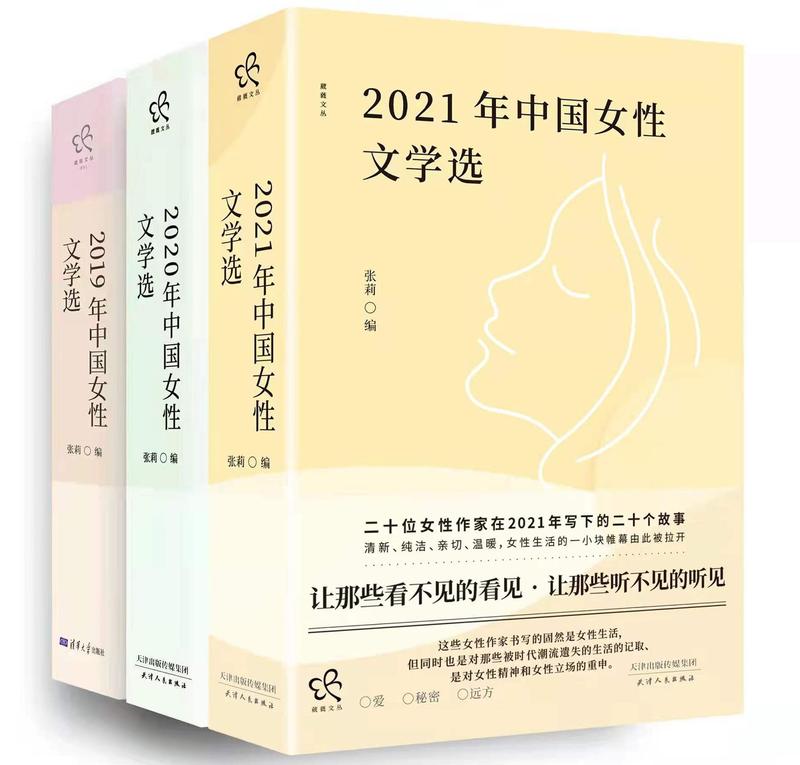
The complete 2019 to 2021 series, after which both the format and the publishing house changed. It is now published by Jiangsu Publishing.
- Zhang Li 张莉, An Anthology of Short Stories by Chinese Women, cit., p. 331. All translations are mine. ↩︎
- Ibid. ↩︎
- Anagnost, Ann, “The Corporeal Politics of Quality (Suzhi),” Public Culture, vol. 16, no. 2, p. 190. ↩︎
- Anagnost, Ann, cit., p. 195. ↩︎
- Zhang Li 张莉, An Anthology of Short Stories by Chinese Women, cit., p. 347. ↩︎
- Zhang Li 张莉, An Anthology of Short Stories by Chinese Women, cit., p. 386. ↩︎
- Braidotti, Rosi, “Writing as a Nomadic Subject,” Comparative Critical Studies, 2014, vol. 11, no. 3, p. 164. ↩︎
- Ibid., p. 168. ↩︎
- Zhang Li 张莉, An Anthology of Short Stories by Chinese Women, cit., p. 399. ↩︎
How to cite: Petroselli, Caterina. “The Body as a Site: Class, Migration, & Geographic Distance in Contemporary Chinese Women’s Fiction.” Cha: An Asian Literary Journal, 23 Mar. 2026, chajournal.com/2026/03/23/distances2.



Caterina Petroselli holds a Master’s degree in Chinese Studies from Ca’ Foscari University of Venice. She previously obtained a double-joint Bachelor’s degree from Ca’ Foscari University and Beijing Capital Normal University (北京首都师范大学). She also holds a minor in Economic Studies, as well as a Master’s degree in Foreign Relations from the Italy-USA Foundation. In 2022, she received the Young Graduates Award from the Foundation, a prestigious recognition promoting outstanding Italian university graduates. Her principal research interest lies in contemporary Chinese women’s literature, which was the focus of her Master’s thesis. She remains actively involved in university life. She is a volunteer at Radio Ca’ Foscari, where she has published interviews with writers and artists, including Shelby Wynn Schwartz, the dance group Bullyache, and the Lebanese filmmaker Lama Tauk. She is also a volunteer with the feminist association Femminismi Contemporanei (Contemporary Feminisms). Petroselli is one of the organisers of the Department of Asian Studies book club, which promotes monthly discussions on East-Asian authors; participants have included Ma Jian, Zhang Li, and Tammy Lai-Ming Ho. She is currently planning to pursue a PhD in Chinese women’s literature at Ca’ Foscari University of Venice. [All contributions by Caterina Petroselli.]
 Cha
Cha 