
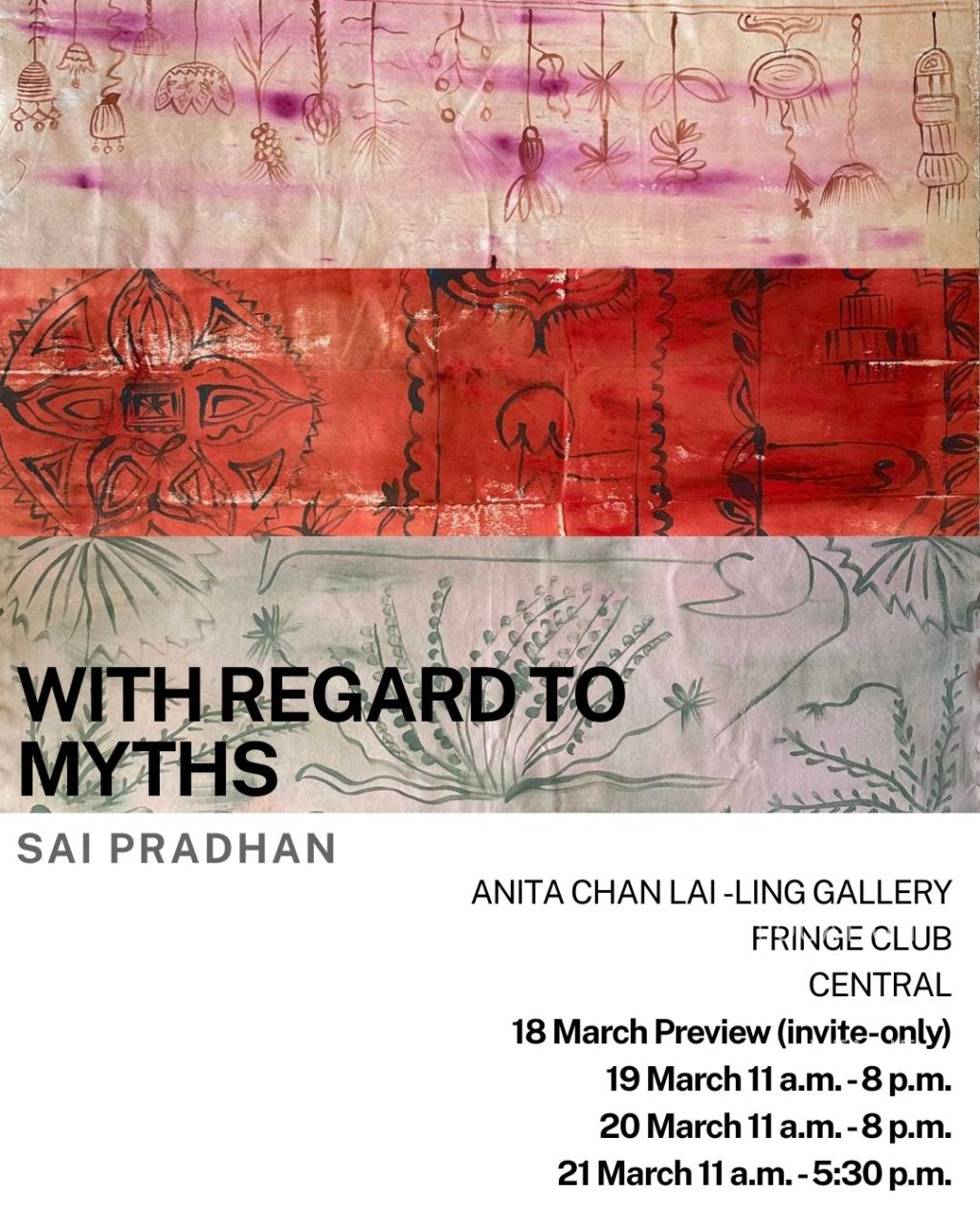
Editor’s note: Sadie Kaye interviews artist Sai Pradhan on her forthcoming Hong Kong exhibition With Regard to Myths, exploring identity, myth, and materiality. Working on raw, stained fabric, Pradhan evokes symbols, dogs, geckos, eggs, to reflect love, loss, and time. Her layered practice resists polish, elevating everyday forms into contemplative, timeless narratives that challenge contemporary artistic expectations.

[CONVERSATION] “Art & Soul” by Sadie Kaye and Sai Pradhan
Sadie Kaye’s introduction: Sai Pradhan, a trailblazing Indian-American writer, artist, and former corporate executive, commands attention within Hong Kong’s vibrant creative scene. Renowned for her incisive explorations of identity, visibility, the female gaze, and South Asian heritage, her work challenges convention and invites profound reflection.
In the spirit of the poet Mary Oliver’s words, “The most regretful people on earth are those who felt the call to creative work, who felt their own creative power restive and uprising, and gave to it neither power nor time,” Pradhan chose to devote both power and time to her art, resolutely re-centring it as a primary pursuit after years spent in entrepreneurial and corporate roles across the technology, media, and communications sectors in New York, Los Angeles, and Hong Kong.
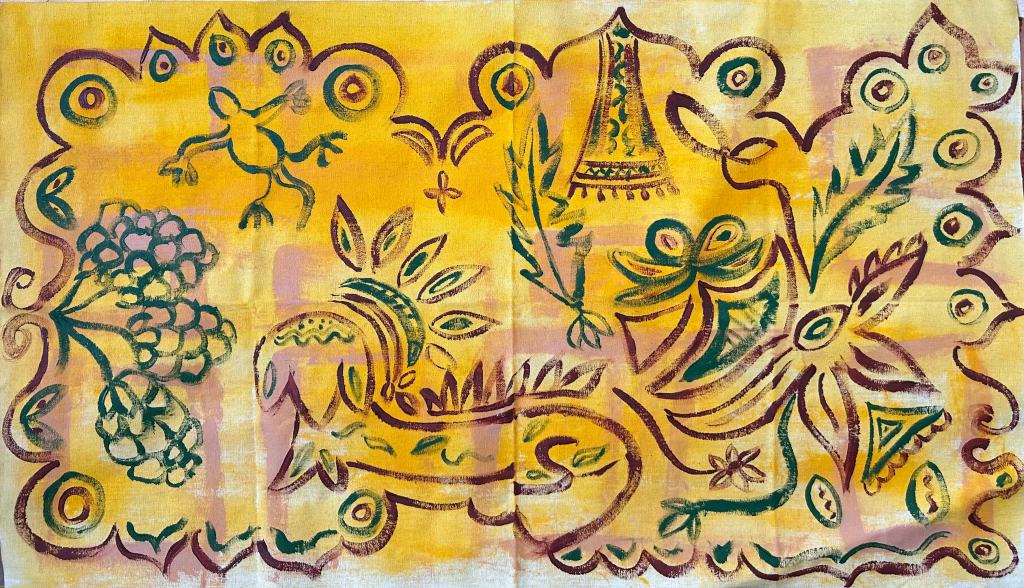
For Pradhan, art emerges from intentional curiosity, a means through which to examine, experiment, process, and communicate. It becomes a form of dialogue in which artists participate and through which they find a sense of belonging. Her practice is characterised by organic movement and a tactile engagement with materials, employing sculptural approaches to paint, bold fluidity, a deliberate disregard for photorealistic precision, and a distinctive lyricism of perspective.
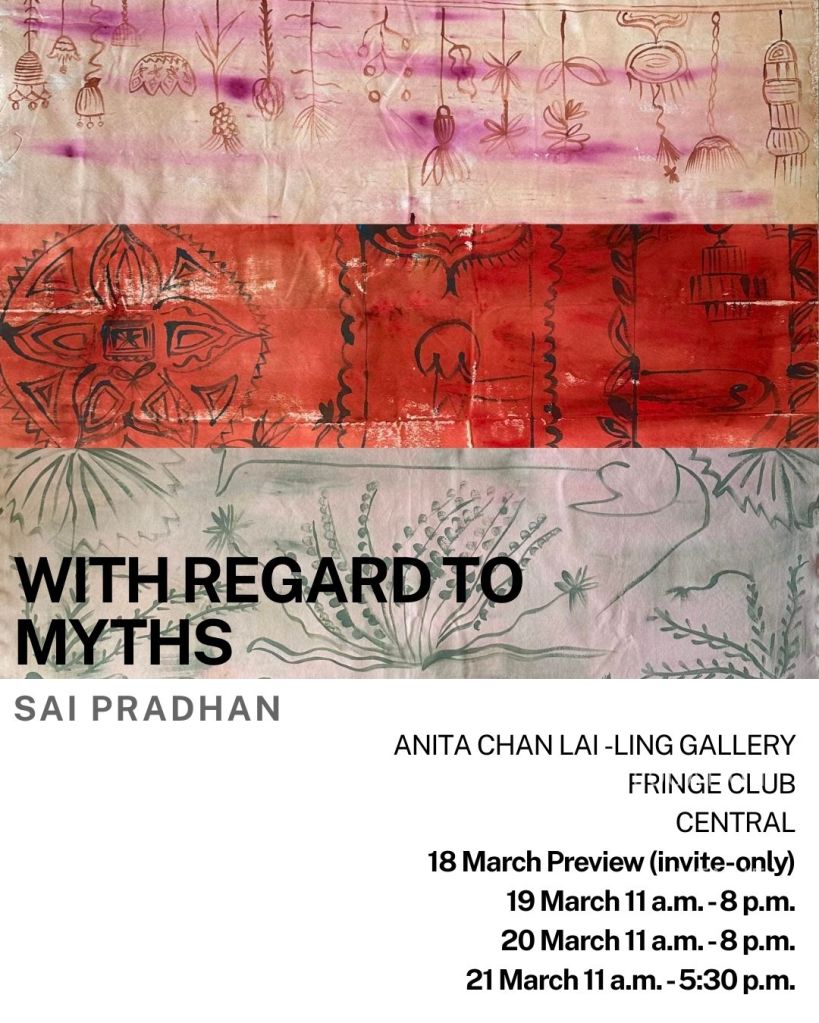
I had the pleasure of sitting down with her to discuss her eagerly anticipated solo exhibition, With Regard to Myths (18 to 21 March 2026, Anita Chan Lai-ling Gallery, HK Fringe Club), an event poised to captivate audiences and redefine artistic boundaries.
)
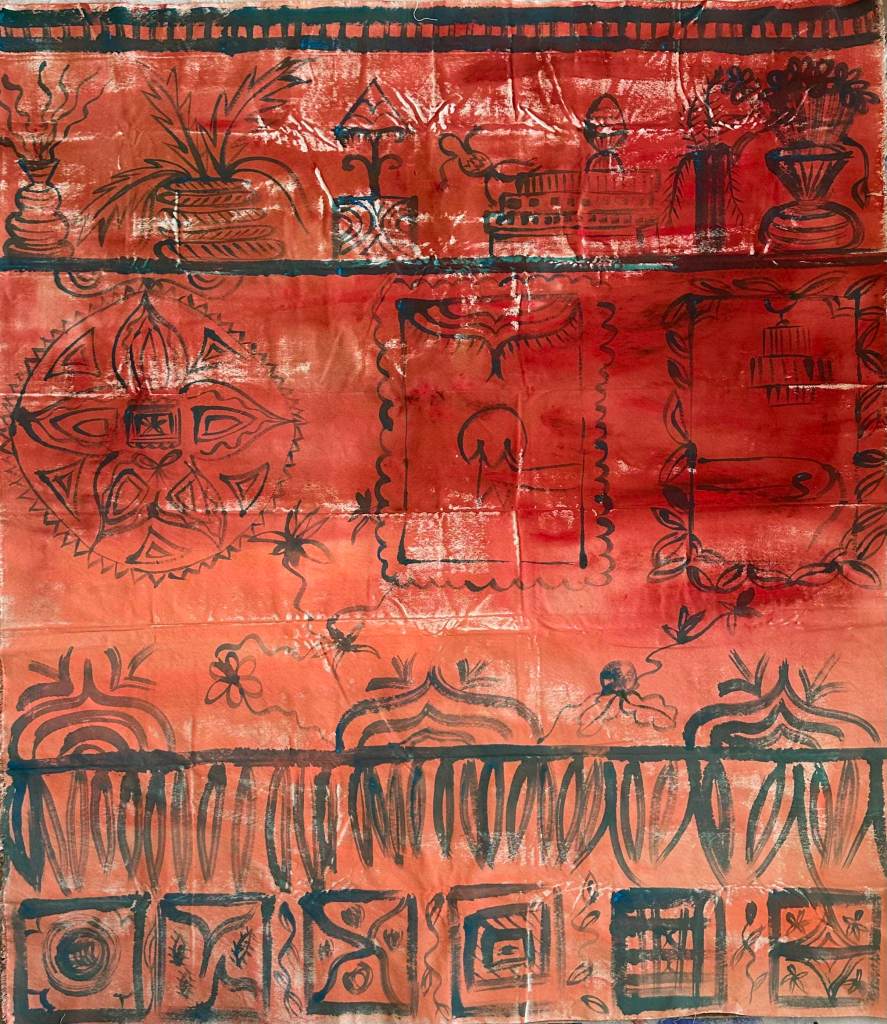
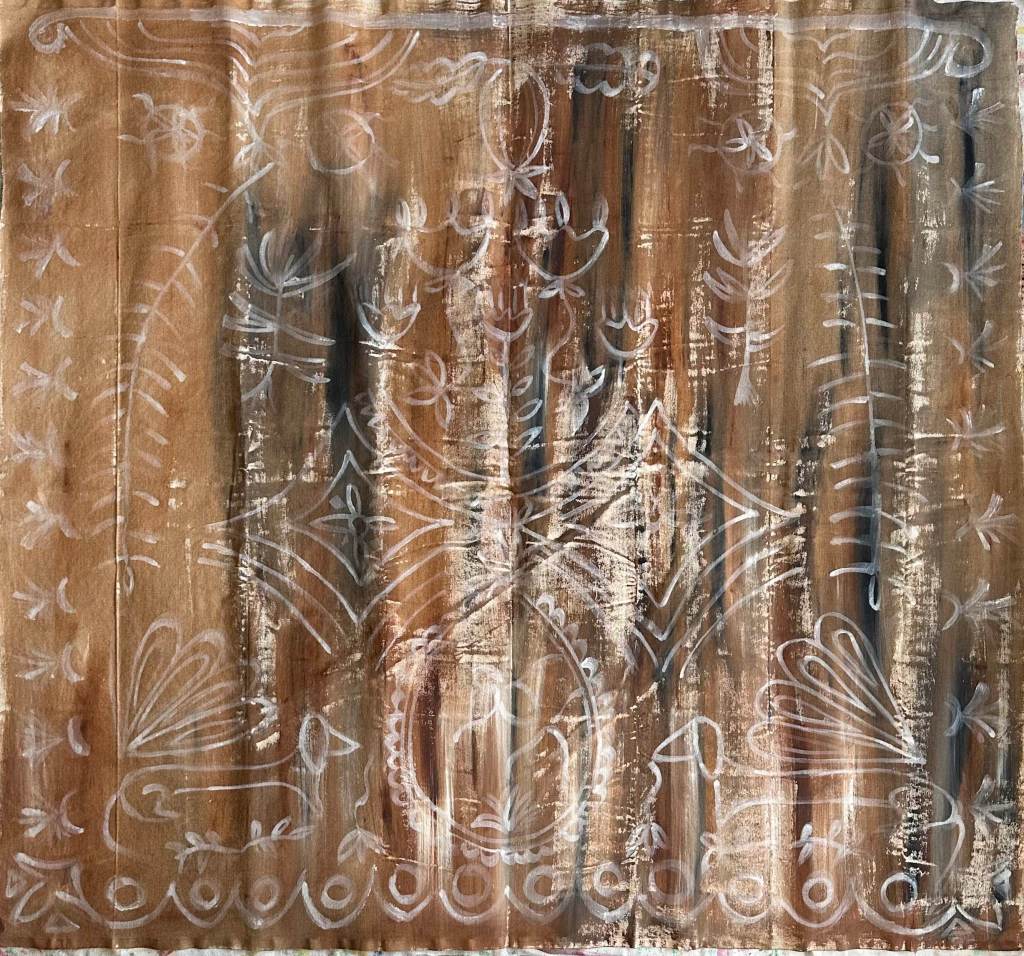
Sadie Kaye (SK): You have chosen to work with large-scale, unframed paintings on stained, raw fabric. How does the silky, crumpled nature of this medium influence the way you wish viewers to experience these works physically, in comparison with traditional framed canvas?
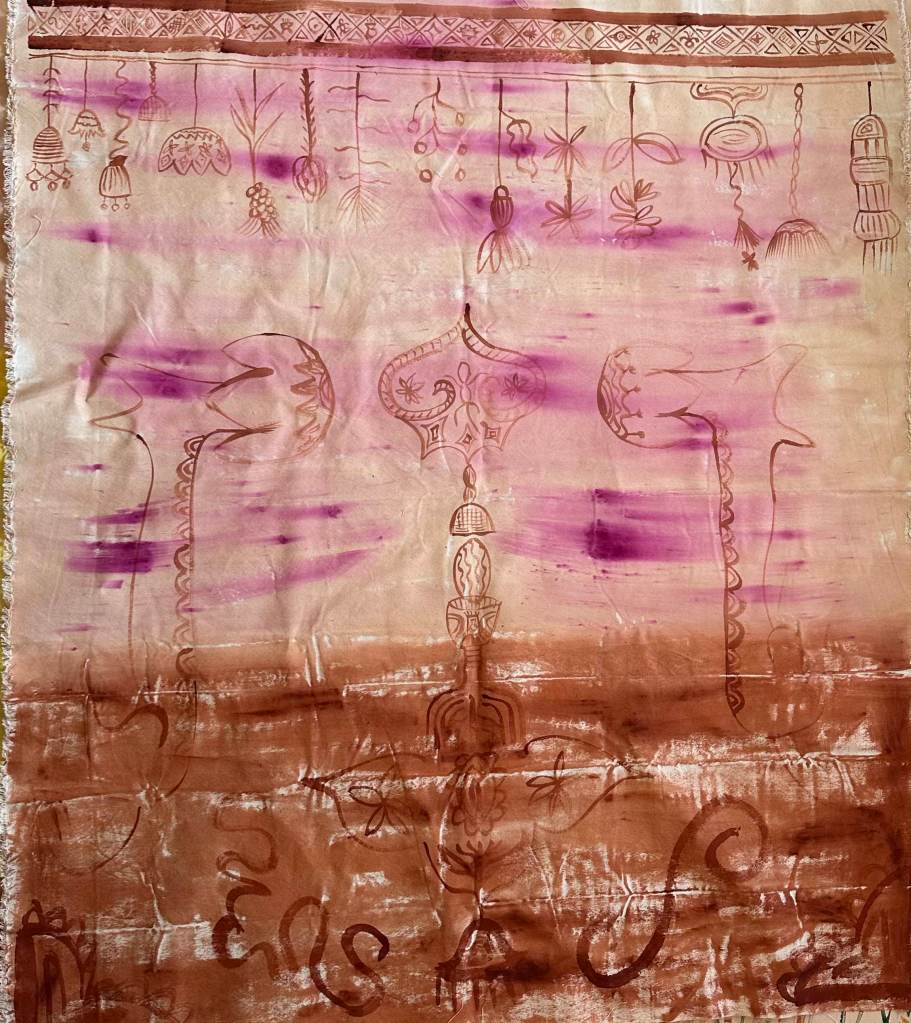
Sai Pradhan (SP): I wanted these paintings to look and feel as though they were timeless, but also to withstand the contemporary pressure to appear polished and digital. I hope people who interact with them feel a sense of unfamiliar delight alongside familiar comfort. I hope they enjoy the scale.
SK: Your work is often described as possessing many layers. Could you talk me through your process of building these layers on raw fabric? How do you determine when a piece has reached its final meaning?
SP: It’s as much a trust-and-gut game as it is about developing experience with aesthetic quality. I know it’s finished when I feel it’s finished.
SK: This exhibition frequently features images of dogs, geckos, and eggs. What personal or cultural myths do these particular animals and objects represent for you?
SP: The dog is my late, beloved rescue dog, who represents love and loss. The gecko is from a story my grandmother told me, about its chirp heralding death. I reinterpreted the story, to see these household creatures as kindly reminders of using our time the way we wish to while we are alive. The eggs stem from my older work, which depicts women in contemplation of them, as a remark on expiry, productivity, and reproductive choices. Appreciated as an already ubiquitous, multicultural symbol of origin and possibility, but also as something that is literally on our plates and inside some of our bodies, I place it alongside the dog and gecko to form a deeply personal, yet perhaps very relatable mythology of love, loss, and contending with the passage of time.
SK: A central theme of the exhibition is how myths “elevate the everyday into the sacred”. Could you share an example of a mundane object or moment from your life in Hong Kong that served as the catalyst for one of these “mythic” paintings?
SP: The pandan trees that dot the coastline near where I live, and the patterns in the window grills I see in older Art Deco-influenced buildings are two examples that come to mind. Like demi-gods, they sit within grand arches and depictions of nature, a nod to my fondness for how creatures often surreally mix with humans and flora in a global, historical art and architectural context.
SK: You often weave lyricism into your visual work, both as an artist and as a writer. For this series, did any particular literary myths or your own written narratives directly inform the paintings, or do the two practices remain distinct for you?
SP: The two practices are quite unified. I have written about my dog, about what those eggs symbolise, as well as about the gecko myth within fiction.
SK: Some of your recent series, such as Unproductive, engage with labour and social roles. Does With Regard to Myths continue this critique of productivity, perhaps by attending to the “slow” temporality of myth-making?
SP: As audacious as the intention may be, I wanted these works to feel timeless. In that attempt lies a critique of the “fast” and the “trendy”.
SK: The Anita Chan Lai-ling Gallery possesses a very distinct character. Did the architecture or history of this location influence the way you choreographed the display?
SP: I am drawn to buildings with stories, and this felt like the right space in which to present work tied to the making of Hong Kong’s own narratives.
SK: You often leave the edges of your raw fabric exposed and unframed. Is this an act of resistance against the neatness of the white-cube gallery, or does the painting feel more like a living skin to you?
SP: Raw fabric lends itself to paint seeping through it rather than resting upon the surface. The way the pigment stains or seeps demands a respect for its own agency, not merely the hand that guides it. It evokes the sensibility of an old sari or a cherished rug, while also situating the work within older, grand hand-made traditions found in architecture across the world. Collectors may choose to frame the pieces, which I fully understand for reasons of preservation, yet I also value how a moving piece of fabric interacts with its surroundings.
SK: You use the dog as a recurring motif. In myth, dogs are often guardians of the underworld, yet in Hong Kong they are more commonly pampered companions. Where do your painted dogs sit on this spectrum? Are they protectors or observers?
SP: Both. Beyond that, my own dogs have been pure love in my life. There is a measure of wishful thinking and hope involved in adopting older dogs, as some of mine have been and are, and that informs the fatalistic, somewhat grand, and perhaps gently delusional quality of their depiction.
SK: Working on stained and crumpled fabric suggests a history of touch. If your paintings were discovered in a hundred years, what story might their texture tell someone unable to see the colours?
SP: I would hope they might convey something akin to the feeling we carry in our bones when encountering very old architecture or art, a sense that invites curiosity alongside a quiet, comforting recognition that someone once made something meaningful, something that might still reach across time.
SK: You move between words and pigment. When a myth feels too expansive for language, how do you know it is time to turn to fabric? Does painting begin where writing falls short?
SP: Not so neatly. I think both forms of creativity can be entirely fulfilling in their own right.
SK: People often seek myths in ancient temples, yet your work locates them in the everyday. If you were to designate one seemingly mundane street corner in Hong Kong as a sacred site, which would it be, and why?
SP: It could be anything that holds meaning for an individual. For instance, a particularly unassuming plant known as a “Turn in the wind”, which I encountered on walks with my dog, became a meaningful metaphorical point of departure in an essay.
SK: Myths are meant to endure, yet raw, stained fabric feels fragile and ephemeral. Do you perceive a tension in using a perishable medium to explore enduring narratives?
SP: There is such a tension, but it is one I value. Everything frays, everything ends, and that is all right.
SK: Your work features many dogs. If a tong gau were to wander into the gallery, which painting might it approach first, and would you take that as a compliment or a critique?
SP: Most certainly a compliment. My own tong gau, Sophy, is always nearby, often napping just a few feet from where I work. She is far more interested in the prospect of treats than in paint.
SK: You speak of “many, many layers”. Is there a hidden layer within these paintings, perhaps something private, that viewers will never see?
SP: I shall not say.
SK: If you were to wear one of your paintings as a garment to a Hong Kong gala, which would be the most fashion-forward, and which would be the most pyjama-like?
SP: The two are not mutually exclusive. I would argue that pyjamas can be entirely fashion-forward. I am currently developing a scarf based on one of the paintings, and I can easily imagine these works translating into garments. There may well be more to come.
“This or That”
Artist Edition
(answer in under three seconds)
SK: Material, stained fabric or fresh canvas?
SP: Fabric that I have stain-painted myself
SK: Process, layering or scraping back?
SP: It depends
SK: Studio atmosphere, silence or a 1990s hip-hop playlist?
SP: Neither
SK: Palette, bold fluidity or monochromatic restraint?
SP: It depends
SK: Tool, a specialised brush or your fingers?
SP: Both
Corporate v Creative Clash
SK: Schedule, a 9-to-5 routine or 2 a.m. inspiration?
SP: Neither
SK: Document, a 50-page strategy deck or a single raw tapestry?
SP: I am quite accustomed to both, for better or worse
SK: Meeting, Zoom with Netflix or a dialogue with a gecko?
SP: Ha
SK: Stress relief, LinkedIn scrolling or mixing a new shade of indigo?
SP: LinkedIn scrolling does lend itself to sarcastic memes, but working with paint would prevail
Hong Kong & Home
SK: Commute, Star Ferry views or a crowded MTR?
SP: The ferry
SK: Snack, dai pai dong egg waffles or a gallery canapé?
SP:: Sesame egg waffles
SK: Landmark, The Peak at sunset or a neon-lit alleyway?
SP: Neither, a rocky beach or my favourite cha chaan teng
Mythic Wildcards
SK: Legend, an ancient Greek myth or a Hong Kong urban legend?
SP: Neither
SK: Shape, a perfectly round egg or a jagged gecko tail?
SP: Both
SK: Wardrobe, a silk scarf or paint-splattered overalls?
SP: Both
SK: Superpower, the ability to converse with your dogs or to freeze time to complete a painting?
SP: Dogs, always. One might argue they already speak, simply in another language. If I could freeze time, I would spend it with my dogs and those I love most.
SK: You have spent years building layers and exploring myth. If you could return to your earlier self in the corporate world and show her this exhibition, what do you think she would say?
SP: I am not fundamentally different now. I was simply devoting my time to something else. I think my younger self would recognise and appreciate the courage required to pursue work that demands such self-belief.
How to cite: Kaye, Sadie and Sai Pradhan. “Art & Soul.” Cha: An Asian Literary Journal, 18 Mar. 2026, chajournal.com/2026/03/18/sai-pradhan.

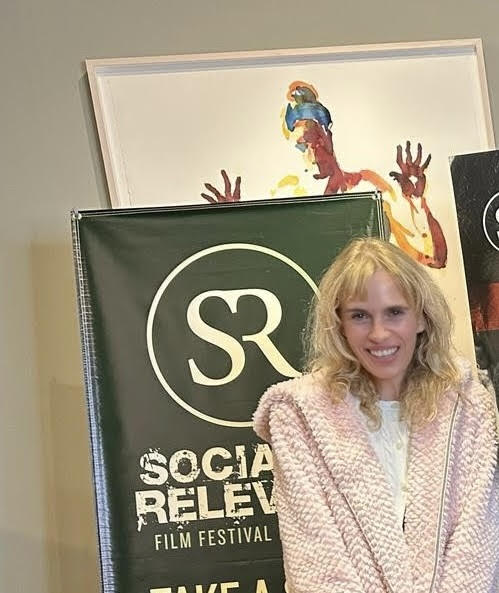
Sadie Kaye is a storyteller from Hong Kong who creates quirky podcasts, offbeat documentaries, and independent films. Her humour columns for RTHK Radio 3 and essays on mental health have been published by the South China Morning Post and featured in numerous anthologies by the Hong Kong Women in Publishing Society and the Hong Kong Writers Circle. She has produced two feature films for Contro Vento Films: the first, Transference (2020), went viral on YouTube with over 29 million views, while the second, To Love a Narcissist, is set for release in North America on 19 May 2026. [All contributions by Sadie Kaye.]

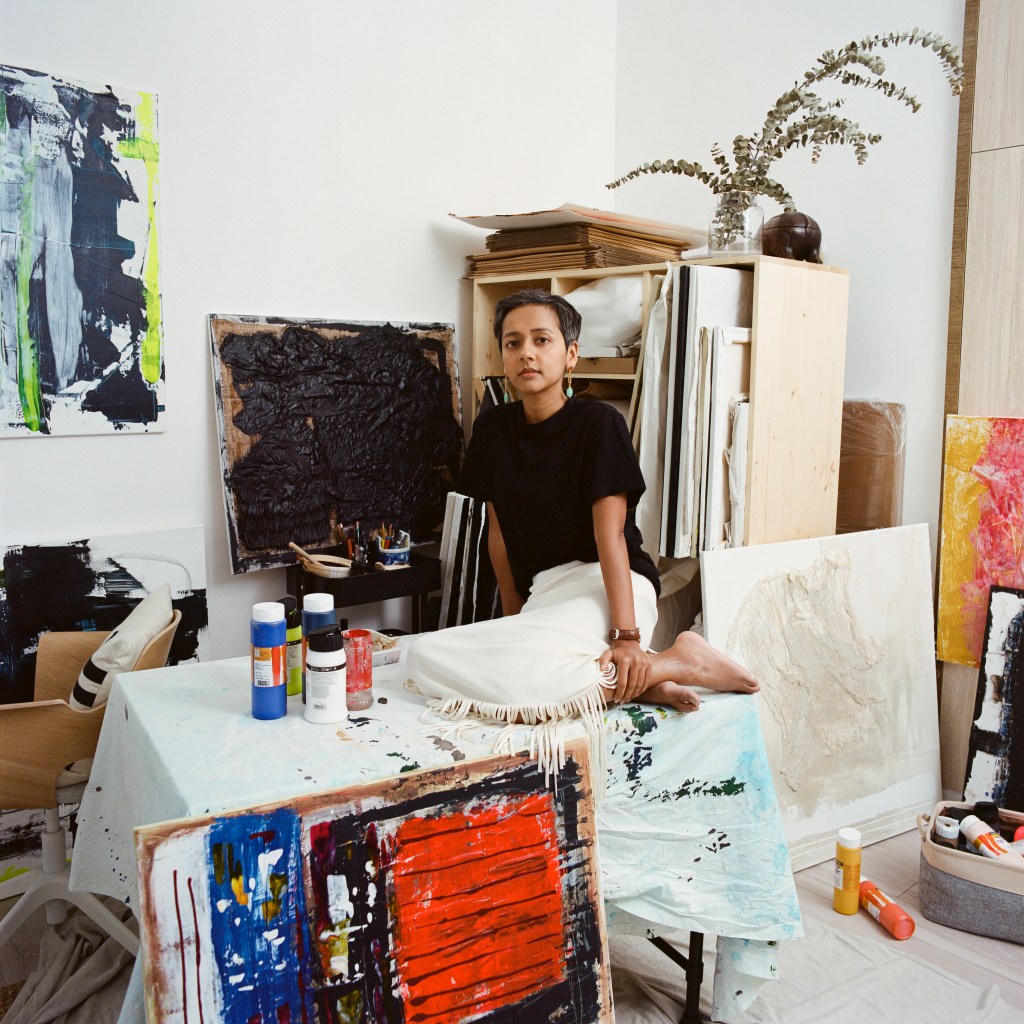
Sai Pradhan is a writer and artist. An Indian-American, she was born in Mumbai, India, and raised there as well as in various parts of the United States. She now lives and works in Hong Kong. She holds a BA in International Affairs from George Washington University and an LLM in International Law from the University of Edinburgh. She has also studied at the School of Oriental and African Studies, University of London, undertaken courses at the Rhode Island School of Design and the Insight School of Interior Design, and pursued policy and leadership studies through Harvard’s executive education programme. Visit Pradhan’s website for more information. Connect with Sai: Instagram | X | Bluesky
 Cha
Cha 