
茶 FIRST IMPRESSIONS
茶 REVIEW OF BOOKS & FILMS
[ESSAY] “The Three Teachings in Action: Wayne Wong’s Martial Arts Ecology” by Mario Rustan
Wayne Wong. Martial Arts Ecology: Aesthetics, Philosophy and Cinematic Mediation, Edinburgh University Press, 2026. 304 pgs.
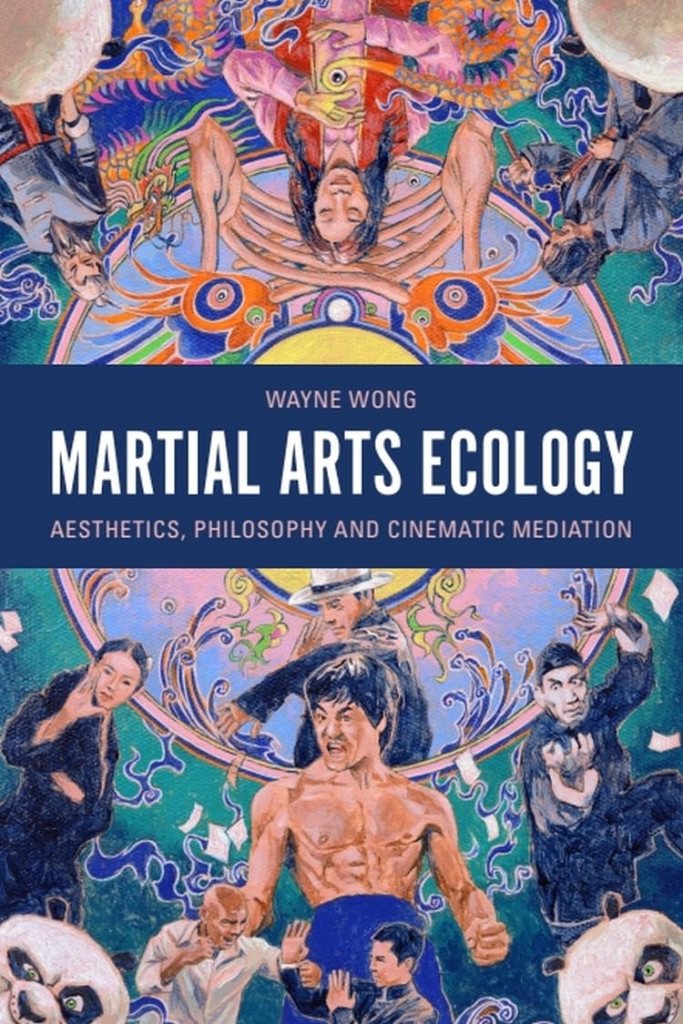
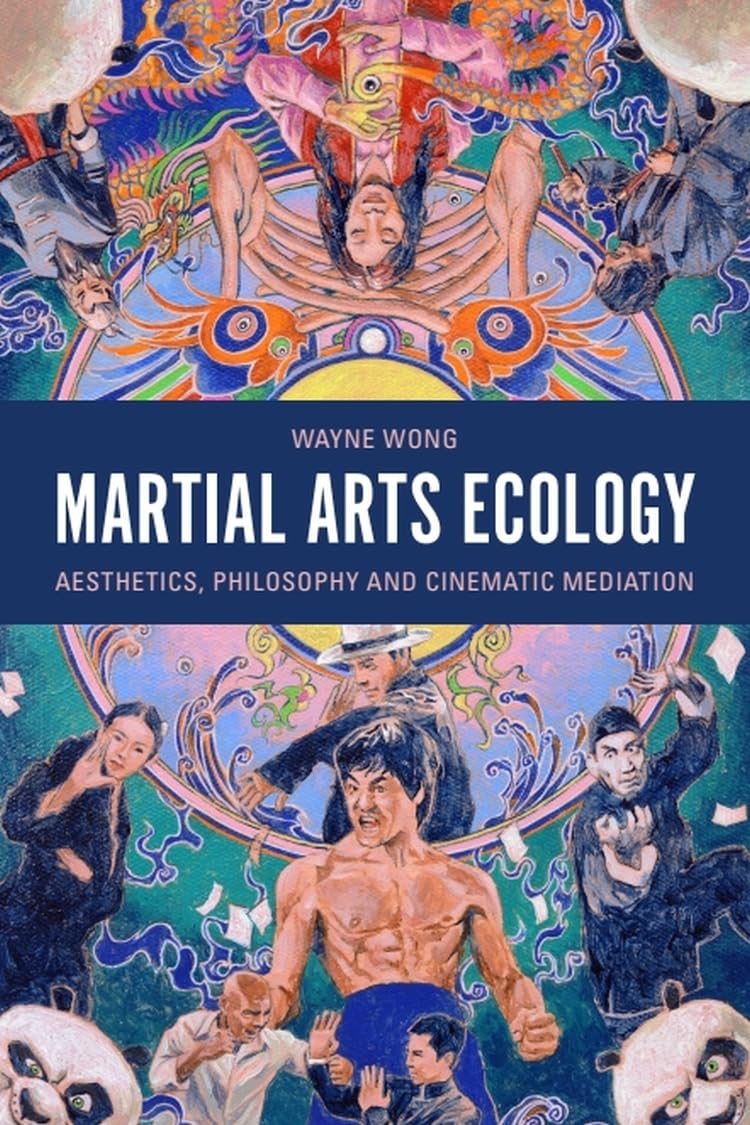
After reviewing several books on action movies, I looked forward to reading Wayne Wong’s recent book on the subject. The cover image features actors from films discussed in the book, most notably an upside-down Michelle Yeoh, referencing her Oscar-winning Everything Everywhere All at Once (2022). This is a book about twentieth-century and twenty-first-century martial-arts films.
I generally expect academic books to be heavy with theory and analysis, and Martial Arts Ecology introduces several additional elements, namely the inner knowledge of martial arts, Chinese poetry, and three values associated with Chinese religions, Buddhism, Taoism, and Confucianism.
Wayne Wong teaches East Asian Studies at the University of Sheffield and edits the Martial Arts Studies journal. The book examines a shared theme in the climactic moments of The Matrix (1999) and Everything Everywhere All at Once: the tranquillity that accompanies full control, not only of the situation but also of the film’s universe.
Wong identifies several other similarities between the two films, such as the Wing Chun technique of deflecting attacks with the forearms, the Hong Kong action-film convention of the continuous long shot used to demonstrate authentic fighting choreography, and expressive clarity established through the pause-burst-pause rhythm that emphasises the impact of blows. He also highlights the theme of revenge and the ethics of violence.
Here is where Wong’s focus as an author may differ from my own perspective as a reader. Instead of concentrating on the conventions and production of martial-arts films, he examines their ecology through Buddhist, Confucian, and Tao aesthetics and philosophies, and considers how these components are communicated not only through cinema but also through animation and video games.
Although these aesthetics and philosophies are largely Chinese in origin, Wong prefers to avoid defining them strictly in national terms, instead presenting them as more universal elements of martial-arts ecology. The central concepts of this ecology, however, remain distinctly Chinese: yi (意), ideation, which complements xia (俠), chivalry.
Therefore, the book can be read as a study of martial-arts philosophy, particularly Chinese martial arts, explored through examples drawn from cinema and from a modern video game. The films examined originate from Hong Kong, China, and the United States, while the video game discussed is a French production.
)
The Old Masters
In Chinese painting and poetry, ideation is the goal, the unity between the observer and the observed. This is why Chinese paintings emphasise empty space and atmosphere rather than a single central point. Wong defines ideation as the cultivation of tranquillity beyond the imitation of physical forms and the amplification of emotion. In martial ideation, the protagonist finds tranquillity amid chaos.
While typical viewers of martial-arts films may group all fighting films into the same category, Chinese viewers and martial-arts practitioners often distinguish between wuxia films, which draw on classical tales and are set in the past, and the more action-oriented kung fu films. Wong defends the latter and attempts to challenge the dichotomy between Hong Kong and mainland Chinese productions on the one hand and American ones on the other, the latter sometimes regarded as less pure or authentic.
Part One of the book examines three legendary figures in southern Chinese martial arts, Wong Fei Hung, Bruce Lee, and Ip Man. All three are historical figures whose myths and tales of intense training and legendary fights have been perpetuated through films, magazine articles, and oral narratives. Their global fame is closely tied to their Cantonese origins and their association with twentieth-century Hong Kong.
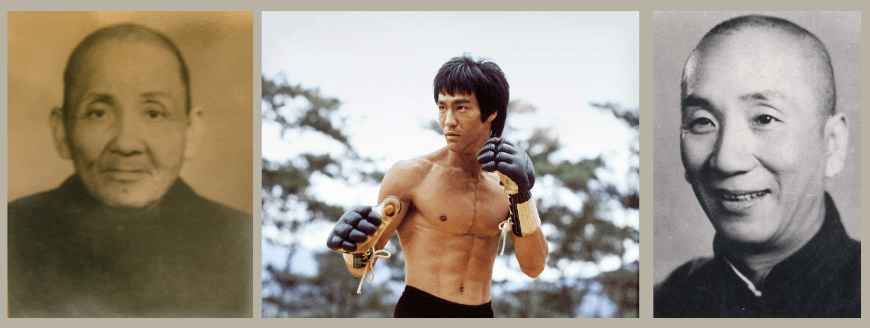
Wong Fei Hung, Bruce Lee, and Ip Man
Wong Fei Hung was a physician as well as a martial-arts instructor in nineteenth-century Guangzhou and is regarded as a grandmaster of Hung Ga, better known among English speakers as southern Shaolin kung fu. The first films in which he appeared as the protagonist were released in 1949, when Hong Kong had become a refuge for many Chinese migrants.
Kwan Tak-hing portrayed him in more than seventy films and holds the world record for the same actor portraying the same character. In the single year of 1956 alone, more than twenty films about Wong Fei Hung were released, nearly two per month. Jackie Chan later offered a comic interpretation of the legend in his Drunken Master duology (1978, 1994), before Jet Li became closely associated with the role of Wong Fei Hung in the 1990s.
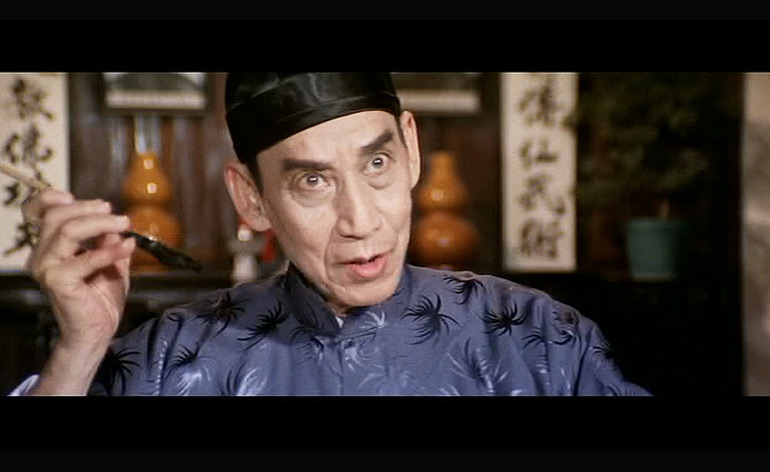
Kwan Tak-hing as Wong Fei Hung
This chapter concentrates on Kwan’s performances, especially in the earliest films. Wong presents Kwan’s Wong Fei Hung as an avatar of Confucian humanness, ren (仁). The physician-fighter subdues his opponents while keeping his actions, and therefore his moral character, balanced and firm.
Bruce Lee, by contrast, represents the Daoist concept of wuwei (無為), effortless inaction. Like the number zero, it does not signify passivity but potential. Lee learned Wing Chun as a teenager before migrating to the United States, where he participated in duels between martial-arts schools on the Pacific Coast. Supporting Wong’s argument that martial-arts ecology extends beyond traditional Chinese practice, Lee recognised the advantages of American boxing and bodybuilding, as well as the American emphasis on directness and efficiency in movement.
The American master who inspired him was Muhammad Ali, whose footwork Lee studied and imitated. Lee also adopted weight-training methods and nutritional practices associated with boxing. In 1967 he introduced Jeet Kune Do, which he described as the only martial art proven effective on American streets. He also incorporated the Filipino martial art of eskrima through his Filipino-American friend Dan Inosanto.
Frustration with stagnation in Hollywood led Lee to return to Hong Kong, where he became a symbol of Chinese masculinity as an action star. Ironically, his screen characters are presented as traditional Chinese martial artists. Despite the conservative imagery of his films, which often depict training in the Shaolin Temple or confrontations with foreigners who insult the Chinese people, his techniques are not strictly traditional. Even his famous flying kick contradicts his own principle of practicality. His use of the nunchaku, however, reflects the Daoist principle of circularity.
Ip Man completes the trio of old masters. His name re-emerged prominently in the twenty-first century, when Hong Kong films increasingly became joint productions with mainland Chinese studios and institutions under the Closer Economic Partnership Arrangement (CEPA).
Ip Man learned Wing Chun in Foshan, Guangdong, and later moved to Hong Kong to study at St. Stephen’s College. He returned to Foshan to work as a police officer and fled to Hong Kong as a refugee in 1949. After enduring poverty during the 1950s, he regained his reputation in the 1960s and famously became Bruce Lee’s Wing Chun instructor. The two men died within seven months of each other.
Like Wong Fei Hung, Ip Man was a real historical figure who lived in the relatively distant past, fought genuine duels in his youth, and later became a figure of folklore. As with many folk heroes, it has proven easy to place him within fictional narratives that connect his exploits to Chinese history, Hong Kong identity, and ideals of Chinese masculinity.
Donnie Yen became the public face of Ip Man in a series of films released between 2008 and 2019, alongside other productions starring Tony Leung, Anthony Wong, and Dennis To. These films demonstrate the principles of Wing Chun and its relationship with Buddhist sensitivity and mindfulness, expressed through listening, contemplating, holding, and adapting. Ethically and strategically, these stages are essential for a martial art centred on close-quarter engagement.
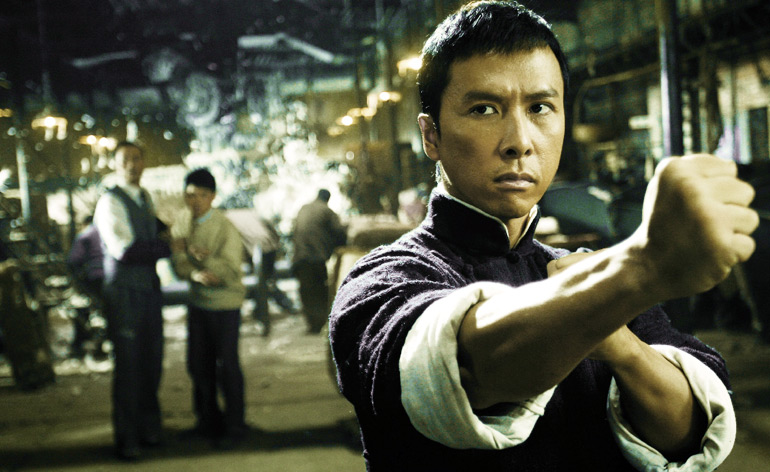
Donnie Yen as Ip Man
}
The Universal Ecology
Part Two of the book examines how martial-arts ecology influences three forms of entertainment beyond Hong Kong, Hollywood action films, feature animation in both the United States and China, and video games.
The two American films discussed are the John Wick series (2014, 2017, 2019, and 2023) and Everything Everywhere All at Once. Both are set in fantastical worlds, one a nocturnal realm ruled by assassins, the other a multiverse that unfolds when a Chinese-American family confronts the realities of taxation and identity.
Hollywood has incorporated martial-arts choreography and consultants since the 1980s, and Wong argues that The Matrix (1999), with fight choreography by Yuen Woo-ping, introduced martial-arts ideation to a global audience. This science-fiction narrative, in which battles take place within a virtual world, combines Buddhist serenity, Daoist fluidity, and Confucian stability, embodied by Keanu Reeves as Neo.
Reeves later developed another iconic image as a martial-arts master in the role of John Wick. The character’s fighting style combines Japanese and Brazilian jiu-jitsu, judo, and military close-quarter combat. These styles were chosen not only because they offered something novel but also for practical reasons related to filming. Convincing punches and kicks often require numerous camera angles, whereas jiu-jitsu and judo holds or throws can be filmed more efficiently. They also appealed to audiences in the 2010s who were already familiar with mixed-martial-arts competitions.
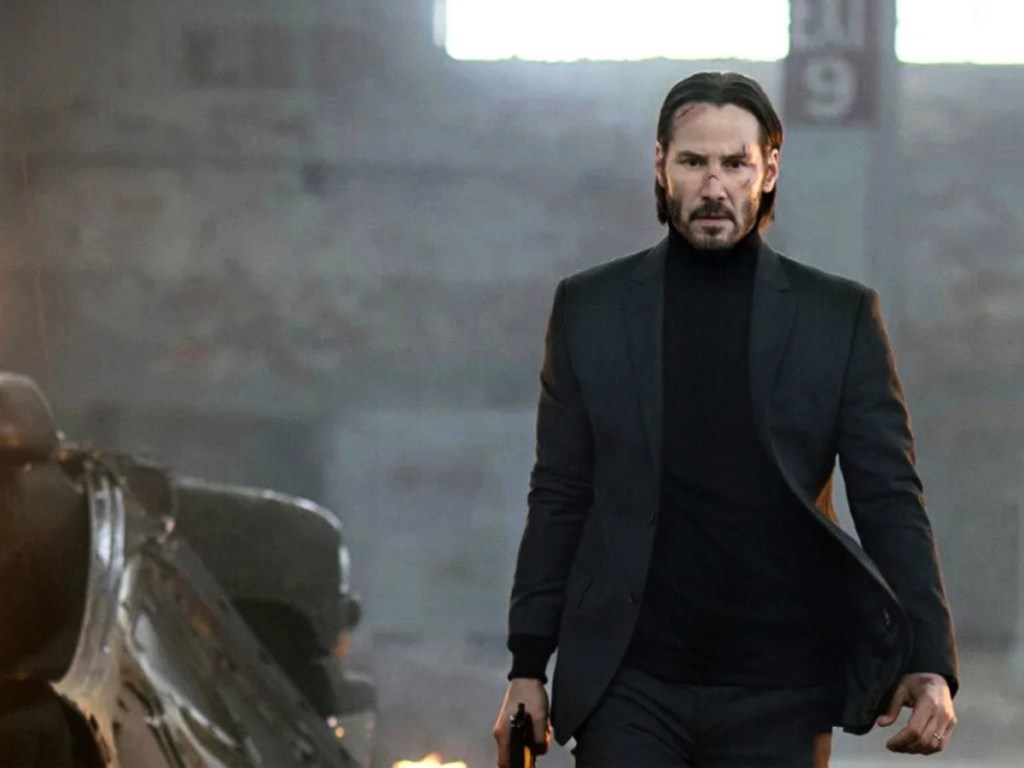
Keanu Reeves as John Wick
The chapter on digital animation examines the Kung Fu Panda series (2008 to 2024) and the Chinese coming-of-age animation I Am What I Am (2021). Wong also discusses films heavily enhanced with computer-generated imagery, from Stephen Chow’s Shaolin Soccer (2001) and Kung Fu Hustle (2004) to Marvel’s Shang-Chi and the Legend of the Ten Rings (2021).
Wong defends the use of digital animation, which in the 2000s was sometimes regarded as a Hollywood dilution of wuxia cinema, as was the case with Ang Lee’s Crouching Tiger, Hidden Dragon, (2000) which proved less popular in China. Critics also argued that such techniques simplified martial-arts authenticity and diminished creative production practices. Wong likewise defends the Kung Fu Panda series against accusations that it perpetuates Orientalism or trivialises Chinese philosophy and geography. For him, the martial-arts ecology of Kung Fu Panda is as valid as that of Hong Kong and mainland Chinese productions, and the American individualism expressed in the series does not differ greatly from the Hong Kong cinematic idea of jian ziji (自己), self-discovery.
Martial arts have long been integral to video games, from late twentieth-century titles such as Double Dragon franchise (from 1987 to 2025) and the Street Fighter series, especially since the introduction of Fei Long from Hong Kong in Super Street Fighter II in 1993, both series drew inspiration from Bruce Lee. Wong focuses in particular on Sifu, a French independent video game released in 2022. The game introduces a distinctive mechanic in which the player ages after each defeat, with increasing age granting greater power but reduced health. As in many martial-arts narratives, the protagonist begins with a mission of revenge, yet the game gradually encourages the player to follow the path of wude (武德), martial virtue, ultimately leading to enlightenment.
Wong also addresses the controversy surrounding early reviews of the game. Critics noted that the development team was largely non-Chinese and that the game included merchandise inspired by Chinese culture and martial-arts imagery, from joss sticks to business seals. Wong rejects the accusation of cultural appropriation and instead praises Sifu for its focus on martial ideation, particularly the values of humanness, the circularity of life, and cultivated sensitivity.
Although this essay emphasises the historical figures discussed in the book and the production contexts of the films, Wong’s work itself is primarily concerned with the philosophy of martial arts and the religious traditions embedded within the media examined. The author devotes considerable space to detailed descriptions and analyses of fighting scenes, relating them closely to the concept of martial ideation. The book is therefore recommended for practitioners of martial arts and for students interested in the Chinese Three Teachings, who will most readily encounter it in an academic library.
How to cite: Rustan, Mario. “The Three Teachings in Action: Wayne Wong’s Martial Arts Ecology.” Cha: An Asian Literary Journal, 15 Mar. 2026, chajournal.com/2026/03/15/martial-arts.


Mario Rustan is a writer and reviewer living in Bandung, Indonesia. [All contributions by Mario Rustan.]
 Cha
Cha 