
茶 FIRST IMPRESSIONS
茶 REVIEW OF BOOKS & FILMS
[REVIEW] “Gods, Ghosts, and the Lunar Year: Reading Joan Law and Barbara E. Ward’s Chinese Festivals” by Simon Patton
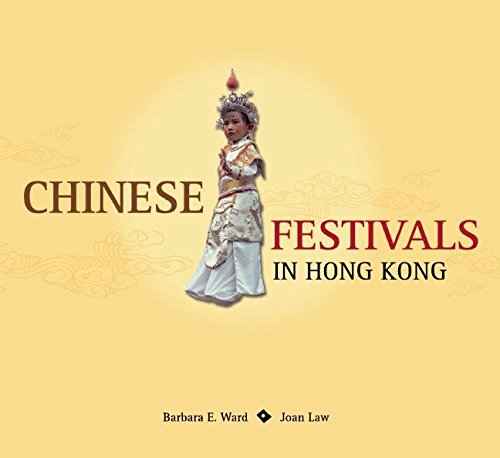
Joan Mee Nar Law and Barbara E. Ward. Chinese Festivals: Hong Kong, South China Morning Post Ltd., 1982. 95 pgs.
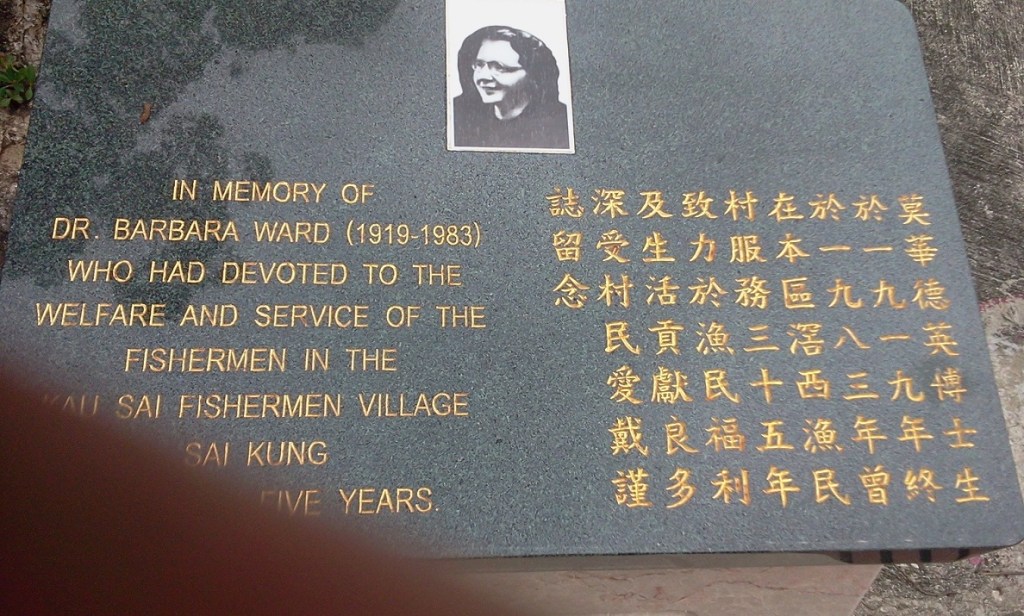
From Sai Kung, it takes about three-quarters of an hour to reach the island of Kau Sai Chau. If you are fortunate, the skipper will make the time pass more quickly by pointing out features along the coastline, such as the gaping Elephant Trunk Cave. Once on land, near the very fine Hung Shing Temple by the village, visitors can see the memorial to the English scholar Barbara E. Ward.
Ward, an anthropologist who first went to Hong Kong in 1950, spent much of her life studying the local boat people, or Tanka. She devoted herself to improving the lot of this marginalised group and, in the process, gained an enormous amount of knowledge, involvement, and personal insight with regard to both the people and the territory. One could hardly wish for a better guide.
In Chinese Festivals: Hong Kong, Ward distils something of her rich, first-hand experience for a general readership. Together with her gifted collaborator, the photographer Joan Mee Nar Law, she has created a book that sheds much-needed light on Hong Kong’s most important festive occasions and encourages readers to become well-informed and actively curious “festival-watchers” in their own right.
Why do so many people from the English-speaking world develop such a fascination for a place once described as a “barren rock”?
Why do so many people from the English-speaking world develop such a fascination for a place once described as a “barren rock”? Ward goes some way towards providing an answer when she reminds us to think of modern Hong Kong as “a centre of Chinese traditionalism” (p. 13), a fact perhaps most conspicuous in the New Territories.
I count myself fortunate in my own connection to the place. On my first visit in 1998, I lived in Cheung Shue Tan (“Camphor Tree Beach”), a village situated down a very steep slope on the road between Sha Tin and Tai Po. Having prepared myself for towers, shopping centres, and crowds, I instead found myself in close proximity to nature, ritual, and a lingering echo of village life not yet entirely eradicated by waves of industrial revolution. In other words, I was given the opportunity to experience a rhythm of life that my own culture had largely abandoned by the middle of the nineteenth century.
The book is divided into eleven chapters, one for each of the lunar months, or “Moons”, of the traditional Chinese calendar (Moons Ten and Eleven are combined because little happens for the festival-watcher at this particular time, apart from weddings).
Ward makes an intriguing decision. She begins her account with Moon Twelve, right at the end of the lunar year. This allows her to present an overview of the elaborate preparation and build-up that precedes the celebration of the New Year. She does a wonderful job of conveying to the reader the significance of this event for those who celebrate it:
It is not always easy for a non-Chinese to understand the full moral, social, personal, and, indeed, cosmic significance of Chinese New Year.
Morally the keynote is renewal. The old year goes, and with it go old misfortunes and old wrongs; the new year comes and brings the chance for starting afresh. Socially it signifies reunion, the end of strife, the renewal of harmony. Personally and in business one hopes to pay off one’s debts, tidy up all loose ends, and turn over a new leaf.
It is impossible to overestimate the importance of these ideas and the strength of the feeling that supports them. (17)
Thanks to Ward, we can gain a clearer sense of the way Chinese culture thinks, ritually and poetically, about human life through its concrete customs and festivities. For example, the belief that the Chinese New Year offers a chance to refresh one’s store of good luck is expressed in various unusual prohibitions, including the rule that knives or scissors should not be used for two days. This custom is clearly concerned with avoiding any damage to one’s renewed stock of fortune, as is the sensitivity regarding the use of “bad” language at this particular time of year. It would seem from Ward’s account that certain words in Cantonese have their origin in precisely such prohibitions. She gives the example of the word 舌 sit, meaning tongue, which is pronounced exactly the same as the character 蝕 sit, meaning “loss”. To speak of “tongues” without risking misfortune, Cantonese generally refers to this part of the anatomy using 脷 lei, a character composed of two parts: the flesh radical on the left-hand side and the element 利, a character in its own right, with the undeniably auspicious meaning of “advantage”, “benefit”, or “profit”, although perhaps its inventors also, tongue in cheek, quietly enjoyed the fact that it can also carry the sense of “sharp”.
After the clamour of the New Year, Moon Two is a quieter period, mainly focused on a number of important birthdays. These include those of T’o Tei Kung, the Earth God, Hung Shing Kung, a patron of seafaring people, and Sham Shan Kwok Wong, the gods of three famous mountains in the Ch’iu Chau region in northern Kwangtung. Earth-God shrines can be seen almost everywhere in Hong Kong, since every residence, shop, and field is meant to have one. On this subject, I am reminded of a memorable report of a group-village séance held fifty years ago, in the 1960s. In an intriguing essay, Jack Potter recounts how a “modern young couple” is castigated by the spirits for failing to honour a range of domestic gods, including T’o Tei Kung:
A young couple had just built a modern-style house in the village without installing the paper images that represent the traditional guardian deities of village houses. The spirits of the new household spoke through the medium. They said they had nothing to eat and no permanent place of their own, and so had to flit around restlessly. The spirit generals of the doors, the guardian spirit of the house, and the kitchen god all said that if a suitable resting place and proper worship were not arranged for them, the household would soon meet with disaster. So effective was this warning that the modern young couple installed the traditional deities and began to worship them the very next day. (“Cantonese Shamanism”: 215)
Not far from the old walled village of Sheung Cheung Wai in Ping Shan, a short walk from Tin Shui Wai MTR station, there is a very fine grey-brick shrine to the Earth God situated beside a pool of water. The two stones on this altar, one blockish with a piece of lucky paper pasted to it and the other somewhat conical, indicate that the Earth God is in attendance. By contrast, another grey-brick shrine on the road that passes the Christian church at Shung Him Tong and leads to the entrance of the walled village of Ma Wat Wai, about a quarter of an hour from Luen Wo Hui Market in Fanling, features a delicately carved and coloured image of the god.
More modern versions of such shrines often make room for other gods. I saw one near one of the Cafeteria Beaches in the vicinity of Sam Shing Hui that comprised three floors. A plaque to the Earth God, closest to the earth, occupied the ground floor. A figurine of the Goddess of Mercy, Koon Yam, stood on the first floor, and above her was a niche reserved for the martial deity Kwan Tai, his bristling black beard waving to and fro in the stiff sea breeze.
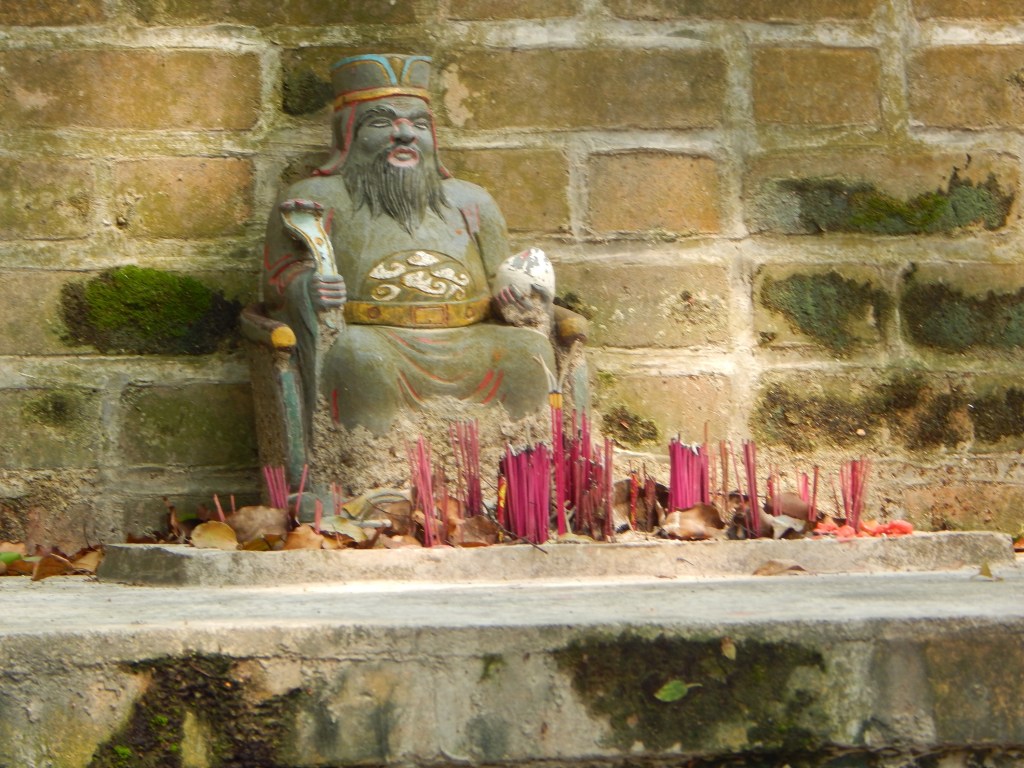
Earth God, Fanling
Moon Three is also often the month in which Ch’ing Ming, or Clear and Bright, takes place. This is a day for remembering the dead: graves are visited and repaired, and deceased family members are worshipped with incense, candles, rice, wine, tea, and many kinds of food, as well as paper clothing and spirit money. When these formalities are dutifully completed, however, the occasion transforms into something quite extraordinary, a lively family picnic in which the living and the departed both partake. Naturally, Ch’ing Ming is a private affair, but we can gain a clearer sense of the ritual from the vivid eyewitness description that Martin Booth included in his memoir:
Following the coast to Tai Po, the train then headed north to Fanling, where we disembarked. Once we were all gathered together, the party headed into the low hills to the south. It was a long walk, first up a disintegrating concrete road then along a path through brush and scattered trees. Finally, we arrived at our destination: three graves and a row of a dozen or so golden pagodas. The women—including my mother—swept the semi-circular platforms before the graves. A man with a tin of red paint touched up the characters on the grave doors. This done, joss-sticks were produced and burnt with everyone, including my mother and me, kow-towing to the ancestors.
After this, the food was produced, including, incredibly, a whole suckling pig. Bowls of hot rice ladled from a thermos were placed before the entrance to each grave with a piece of pig, some steamed vegetables and a little bowl of rice wine. The label on the bottle read Sam Sheh Jau—Three Snake Wine. Pickled in the bottle was a small nondescript snake. On the top of the graves, thick wads of Hell’s Banknotes were weighted down with a stone. Next to them was placed a car made out of tissue paper stretched over a split bamboo frame. This was set alight, the ashes blowing away on the breeze and adhering to the crackling on the pig.
“The money is to pay the ancestors’ bills in heaven,” my mother whispered in explanation.
“And the car?”
“They haven’t got one in heaven, so…”
Two of the men approached with armfuls of human bones. Behind them, one of the golden pagodas was open. The bones were placed on the ground where several women were dusting them down and set about buffing them up with light tan Cherry Blossom shoe polish. I watched utterly mesmerized, wondering what it would be like to dig up my grandfather and give him a shine.
While the contents of all the nearby ossuaries were cleaned, a picnic was laid out. The human bones were then arranged around the picnic cloth. Every skeleton was set a place. I found myself sitting between my mother and a skull carefully balanced on a heap of its associated bones, the lower jaw dropped as if the ancestor who owned the bones was having a damned good laugh at the rest of us. (Gweilo: 360-1)
If you have ever come across rows of lidded pottery urns in some out-of-the-way place in Hong Kong, you have encountered the 金塔 gam taap, or “golden pagodas”, compact receptacles for human remains.
Moon Three is also memorable for two other birthdays. The first, celebrated on Day 3, belongs to a shadowy figure by the name of Pak Tai, the Ruler of the North. Ward helpfully provides his full official title, “Superior Divinity of the Deep Dark Heaven, True Soldier of the North”, and tells us that he was appointed commander-in-chief by the Great Gods to attack the Demon King who, in the days long before the dawn of Chinese history, was wreaking havoc in the universe. A curious detail connected with Pak Tai is that he always fought barefoot, perhaps to demonstrate his close bond with the earth. In addition, he wore a black robe, a colour traditionally associated with the north in Chinese culture. Needless to say, after many harrowing battles, Pak Tai eventually vanquished the demon hordes, which included a magic serpent and a tortoise. In temple images, look out for these two, as they generally accompany representations of the shoeless True Soldier.
Tin Hau, Queen of Heaven, is a much more conspicuous deity in Hong Kong, with more than forty temples dedicated to her. Her official birthday falls on Day 23. Chinese accounts refer to her as an actual person who lived in the tenth century, the daughter of a poor fisherman surnamed Lin. Before her birth, a red light was said to descend upon the fisherman’s shack and, even as a baby, Miss Lin was an exceptional being who never cried. As a young woman she was believed to have rescued many sailors in trouble at sea, something she continued to do after her untimely death at the age of twenty-eight. It is for this reason that replicas of Chinese junks are often found in Tin Hau temples. Near the town of Tuen Mun, for instance, there is quite a large wooden model in the temple on the site of the old market at Hau Kok. A less eye-catching but common feature of Tin Hau temples is the mirrors, basins, and towels provided for the Goddess, sometimes accompanied by sternly worded notices reminding visitors that they are for Her exclusive use only.
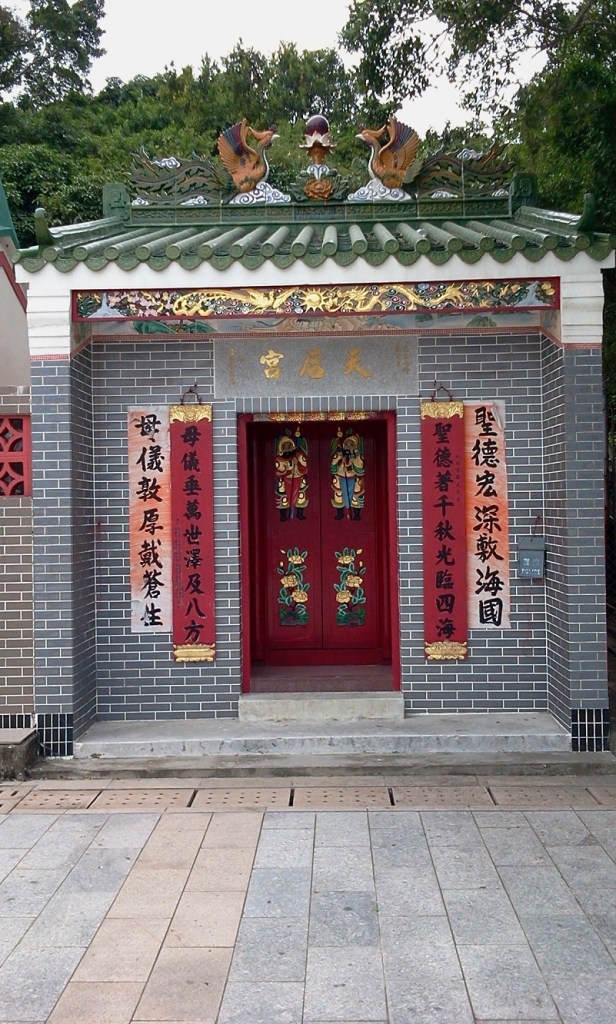
Tin Hau Temple, Sha Lo Wan
Divine birthdays are the main feature of Moon Four. Apart from the Birthday of the Lord Buddha on Day 8, marked by a public holiday as well, there are anniversaries dedicated to a range of lesser-known figures, including T’am Kung, a deity able to calm violent storms by tossing up a handful of peas, Lu Tung-pin, one of the Eight Immortals, Kam Fa, the goddess responsible for the delivery and care of babies, and, finally, Wah T’oh, the patron saint of traditional Chinese doctors and herbalists. Moon Four is also the month in which the unique Cheung Chau Bun Festival was once held. The highlight of this festival was an extraordinary bun scramble, an event that Ward describes in memorable detail:
The central feature of this festival are three huge conical bamboo and paper towers—about sixty feet tall—each one covered all over with layer upon layer of pink and white buns. Each bun is a part of the grand offering to the ghosts which is one of the main purposes of the festival, and also a symbol of good fortune and a talisman against sickness for whoever is lucky enough to obtain it.
The towers dominate the festival and the distribution of the buns at midnight on the last night is the climax towards which everything moves. At midnight, after the ghosts have had their fill of the spiritual essence of the buns, the congregation is invited to scramble for the material remains. A concerted rush by all the young men present carries some right to the top and leaves others spread-eagled across the surface of the towers, stripping buns as fast as they can. In about three and a half minutes there is nothing left but scaffolding and torn paper. (48)
Moon Five is the month when the Dragon Boat Races take place. Less well known is the fact that the festival commemorates the death of a great poet, Wat Yuen, whose long poem entitled “On Encountering Trouble” is still read today, thereby making China one of the few places on earth that has an annual holiday connected with poetry. Perhaps to complement this literary element, known as man in Cantonese, Day 13 of Moon Five is also traditionally celebrated as the birth of a paragon of martial, known as mou, arts, the God of War, Kwan Tai. The next time you visit a chaa chaan teng for a meal, look around and see if you can spot the red-faced general peeping out from his personal shrine in a corner somewhere. Ward describes him “as a kind of blend of King Arthur, Robin Hood, and Frederick Barbarossa” (!) and informs us matter-of-factly that he rides a horse called Red Hare. Apart from restaurant proprietors, Kwan Tai is also the patron saint of pawn shops and the Hong Kong police, a fact that contributes to his high profile in daily life.
The last emperor of the Sung dynasty landed briefly in the vicinity of Kowloon after the successful conquest of China by the Mongols. In Moon Six, the birthday of his loyal attendant, a man with the surname Yeung, is remembered to this day on Day 6, such was the impression his honesty, courage, and loyalty made on the local people. Another exceptional figure from history and the patron saint of carpenters, Lu Pan, celebrates his birthday on Day 13, and he has a temple in Kennedy Town. According to Ward, before the Second World War the carpenters of Canton were famous for the memorable processions held in his honour. Among Lu Pan’s great achievements are the repairing of the Pillars of Heaven, a feat that prevented the sky from falling in, and the invention of the kite, an object that the ancient Chinese used for centuries as a military device somewhat akin to today’s drones before becoming a popular leisure activity. Finally, in Moon Six the enlightenment of Koon Yam is remembered on Day 19, four months after her birthday in Moon Two and three months before the anniversary of her death in Moon Nine.
Yue Laan, or the Festival of the Hungry Ghosts, is the main festival of Moon Seven, the name deriving from Ullambana, a Buddhist sutra. I had never thought of ghosts as being “dirty” before, but I recently came across the Cantonese expression 污糟嘢 wu jou ye, which roughly translates as “ghosts, spirits, dirty stuff”. According to Chinese belief, the gates of the Underworld are opened on Day 15, giving the ghosts a chance to roam where they will. In order to minimise any contamination or unwanted attention from these “underprivileged dead”, unfortunates who receive none of the ritual food, paper clothing, or spirit money bestowed on venerated ancestors, special efforts are made at this time to placate them with offerings.
On a brighter note, Moon Seven is also the month of the Ts’at Tse Mooi, or Seven Sisters Festival. Celebrated on Day 7, this occasion is held in honour of the Weaving Girl, who happens to be one of the seven daughters of the Kitchen God, and her husband, the Cowherd. Separated by celestial forces and doomed to live on opposite “banks” of the Milky Way, in Chinese the Silver River, this is the one day of the year when the two can finally enjoy one another’s company. Ward describes their meeting as follows:
There they remain to this day, within sight of one another yet quite unable to communicate except one day a year, on the Double Seventh. On that day all the magpies in the world fly up to Heaven and make a bridge with their wings for the Weaving Girl to cross over to visit her husband. (67)
This living bridge of feathers is an enchanting detail, but I cannot help wondering why the magpie, of all birds, was chosen to perform such a quintessentially romantic duty.
As Hong Kong shifts into autumn, the beauty of the moon in Moon Eight becomes the subject of a special festive occasion. Its perfect, shining fullness is hinted at in the circular mooncakes eaten at this time, although I have occasionally encountered square ones, as well as in the well-rounded fruit usually eaten in outdoor feasts on the evening of the Mid-Autumn Festival. Ward reminds us that this lunar festival is also a celebration of the yam, or female principle, as opposed to the male yeung, and this makes it an occasion especially associated with women. Another feature of Mid-Autumn is the display of lanterns, and in these days of electricity one cannot help thinking back to a time when whole Chinese cities would light up with a myriad of flickering flames protected from the air by translucent, fancifully shaped paper shades.
You may not have heard of the Han-dynasty scholar Woon King, but his curious story inspires the Ch’ung Yeung, or Double Ninth, festival in Moon Nine. In some ways this event is a counterpart to Ch’ing Ming back in Moon Three, and similarly emphasises the reunion of family and the renewal of ancestral graves, the Chinese sense of family embracing in a very fundamental way both the living and those who have departed from this earth. As an autumn festival, Double Ninth perhaps seeks to offset the sadness of decay and death with a reminder of fortunate survival, exemplified in the scholar’s brush with disaster:
A story of the Han Dynasty tells how a virtuous scholar was warned one day of an impending disaster. Being a prudent man (like Noah in somewhat similar circumstances) he took care to heed the warning and hastened with his family to a high place in the nearby hills, taking food and a jug of chrysanthemum wine. When they returned home at the end of the day they found all their cattle and poultry lying dead and duly gave thanks for their escape. (79)
Apart from this quiet gratitude for the gift of life, Ch’ung Yeung also encourages that persistent ambition for self-improvement. In commemoration of the sagacious Woon King, families climb up into the hills, enjoying the scenery of the “heights” at the end of their ascent. These “heights” (高 gou in Cantonese) are echoed in special cakes, also pronounced 糕 gou, the eating of which is supposed to help a person gain promotion to the top of their profession. One cannot help feeling that much of the haang saan, or “hiking”, done in Hong Kong is also partly motivated by this desire to take oneself in hand and become a little better in the art of climbing the ladder of work and life. Ch’ung Yeung offers people in Hong Kong the chance of a final outdoor excursion before the approach of winter, a season that includes the ritual celebration of the solstice, a day on which some people, according to Ward, make offerings to spiritually powerful trees and rocks.
By the end of this book, Joan Law and Barbara Ward have brought the Chinese calendar vividly to life with their account of the major festive occasions celebrated in Hong Kong over the course of a year. Much of the joy of the book, however, lies in the small snippets the reader encounters along the way. For instance, many ritual events in Hong Kong make use of what are known as faa paau, or “flowering rockets”. These are essentially ornate, board-like floral shrines made of bamboo, which forms the underlying frame, to which coloured paper and various auspicious objects are added. They provide a very down-to-earth example of the Hong Kong genius for elaborate decoration, a genius also evident in the intricate paper objects burned for the dead, including paper clothing and “royal” paper robes. Another curiosity is the “invitation post” photographed by Law on (p. 37). The function of this “post”, attended by various Taoist priests dressed in purple and blue robes, is to alert hungry ghosts to the fact that special offerings have been prepared for them by the local village.
Another intriguing detail concerns the Float Procession held on Cheung Chau in Moon Four in honour of Pak Tai, our barefoot Ruler of the North. In this procession, children between the ages of five and eight are dressed with meticulous care to represent a particular illustrious figure from history, literature, or mythology. They are then carried above shoulder height by bearers, supported on frames and balancing with perfect control along the streets of the town in thanks to the god, who once curtailed an outbreak of plague on the island when his image was paraded in similar fashion more than one hundred years ago.
In a poignant passage towards the end of his memoir Gweilo (2004), Martin Booth remembers how his childhood self once visited the Man Mo Temple in Sheung Wan, dedicated to the God of Literature, Man Cheung, and to Kwan Tai, the red-faced God of War:
Turning, I came face to face with an elderly Chinese man wearing a long black robe to his ankles and a skull cap with a red button on the top. He sported a wispy beard and, in one hand, he held a closed fan. He resembled a character from a biography of Confucius. I just stared at him, dumbstruck, sure that he was either an apparition or a wizard.
“Can you not speak?” he went on. He spoke slowly, pronouncing each word exactly, as if imitating a teacher.
“Yes,” I stammered, “and I like the temple very much.”
“But do you understand it?”
I shook my head and answered, “No, sir. Not really.”
“So I will teach you.” (Gweilo: 267)
Chinese time spirals into the future through a never-ending series of remembrances of things past.
For me, Chinese Festivals takes the place of Booth’s obliging apparition. Thanks to Joan Law and Barbara Ward, so many things that once appeared inexplicable to me now make some sense, and I am beginning to see how, with the cyclical round of festivals, their specific rituals, and their associated foods, Chinese time spirals into the future through a never-ending series of remembrances of things past. Even as the present recedes second by second into oblivion, 2018, 2078, 2138, the people of Hong Kong are constantly provided with reminders and echoes from a vast treasure house of timeless cultural moments.
Watch carefully and you may catch a glimpse of Kwan Tai’s sword Green Dragon, said to outshine the moon, or see village children creep beneath the raised foot of the terrible Taai Si Wong in order to gain health and courage. Listen and you may hear the footsteps of the Weaving Girl as she goes, naked and wet from her bath, looking for her stolen clothes, or the sound of rice thrown into the Miluo River to discourage the fishes from eating Wat Yuen’s drowned body. Hold your breath for a few moments and you may feel a faint flicker of the spiritual power of the Three Pure Ones, great Taoist spirits said to “dwell in the stars, at the true source of life, beyond the reach of change or decay”, or you might feel a tickling against the soles of your feet, that Bridge of Feathers the magpies make on their one magical day in Moon Seven.
How to cite: Patton, Simon. “Gods, Ghosts, and the Lunar Year: Reading Joan Mee Nar Law and Barbara E. Ward’s Chinese Festivals.” Cha: An Asian Literary Journal, 14 Mar. 2026. chajournal.com/2026/03/14/chinese-festivals.

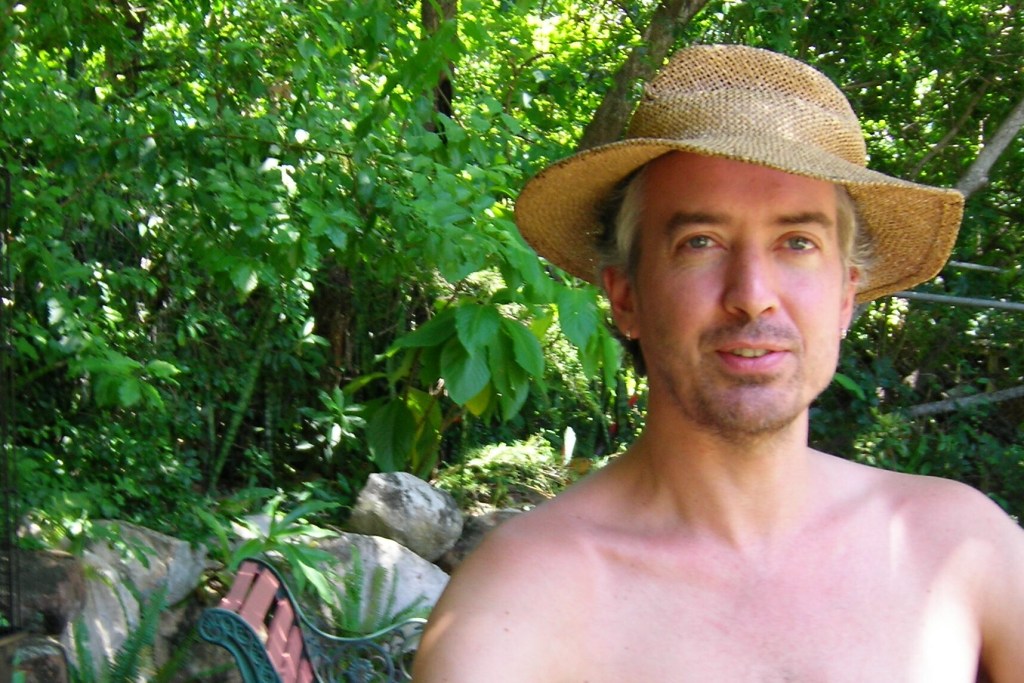
Simon Patton was born in suburban Melbourne, Australia, in 1961. Left-handed and temperamentally introverted, he developed an interest in poetry at about the same time that he began listening regularly to the radio. His first attempt at writing, composed at the age of fourteen, was a song titled “At the Beach Party”. In 1980 he entered university intending to study poetry, but in his second year he changed direction and began studying Chinese instead. This shift later shaped much of his literary work. In 1997 he received an invitation, sent by fax, to travel to Hong Kong to work as an editorial assistant at Renditions: A Chinese-English Translation Magazine. He held the position during three separate periods in 1998, 1999, and 2000. The experience proved formative and sparked a lasting interest in Hong Kong literature and culture. From 2002 to 2008 Patton co-edited the China domain of Poetry International Web together with the Chinese poet Yu Jian. During this period he helped introduce a range of contemporary Chinese poets to a wider international readership. In 2011 he left city life and settled in rural Central Victoria, where he continues to live with his partner near Chinaman Creek, sharing the landscape with a cat, chickens, goldfish, and a Sealyham terrier.
 Cha
Cha 