
茶 FIRST IMPRESSIONS
茶 REVIEW OF BOOKS & FILMS
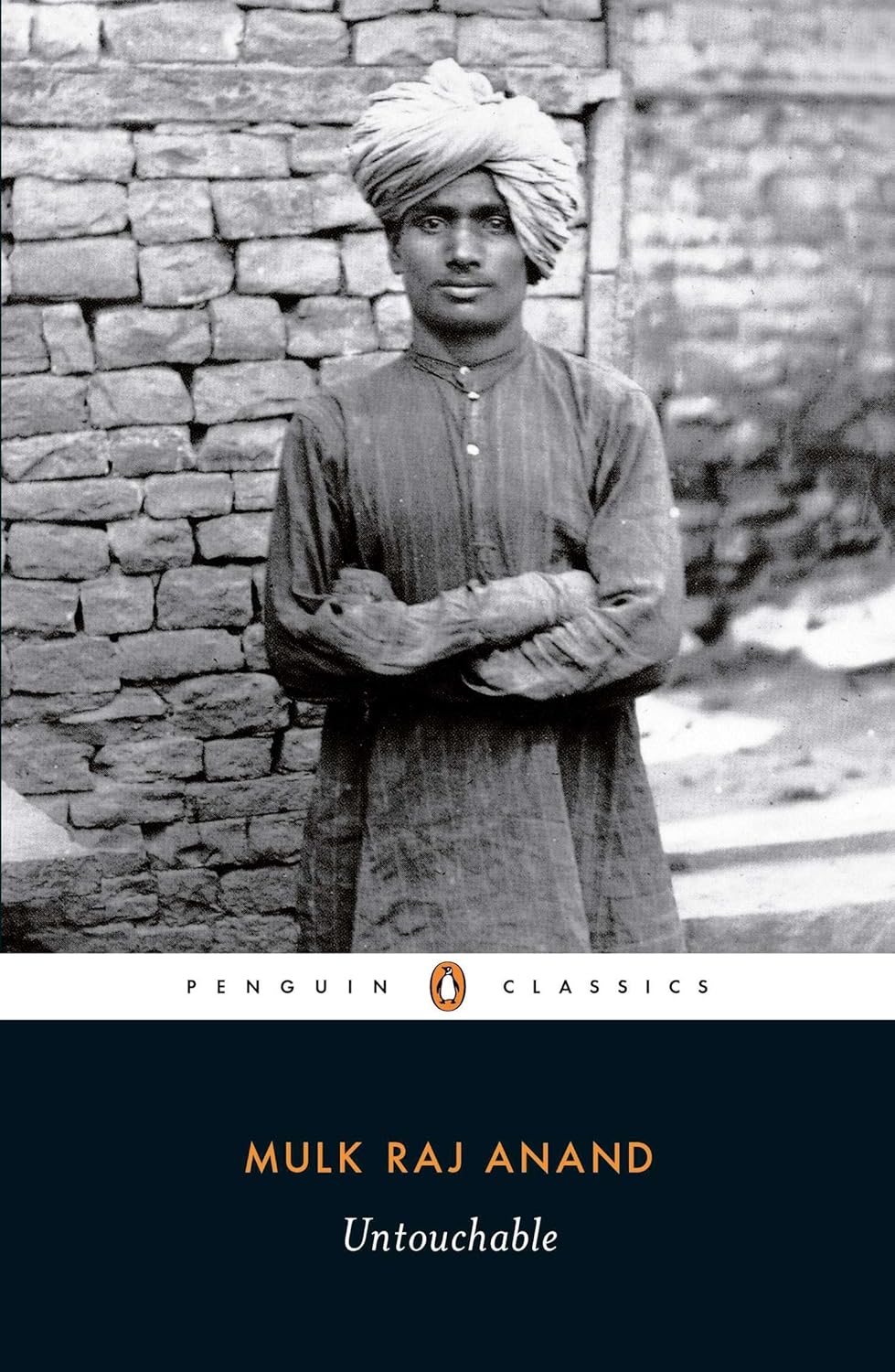
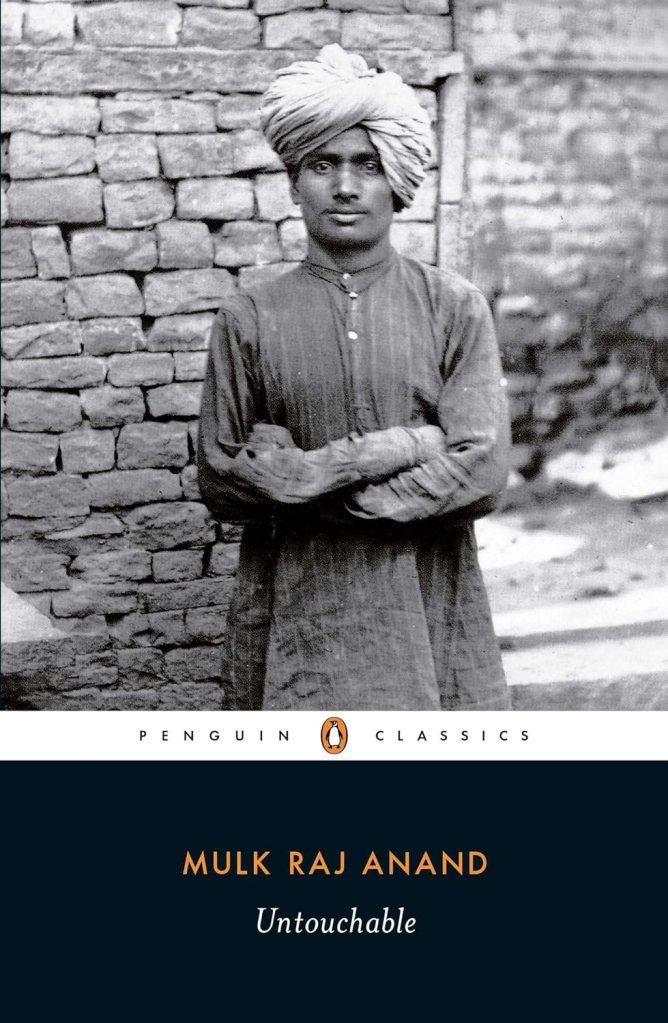
[REVIEW] “The Shame Economy: Caste as Currency in Mulk Raj Anand’s Untouchable” by Abhinav Tulachan
Mulk Raj Anand, Untouchable, Wishart Books Ltd., 1935. 160 pgs.
“In a country where caste is assigned at birth, for a dalit to be a ‘Nobody’ is a repository of inventions and new possibilities.”—Shripad Sinnakaar, a Dalit poet
For many in the West, the term “Dalit” may be unfamiliar, perhaps encountered only once or twice as a passing news headline or as a vague term in an anthropology reading. But for those like me, raised in India or Nepal, it is a word that carries immense stigma, often treated as a mark of inherent impurity or a deeply rooted taboo. It is the worst thing you could call someone: an untouchable, the lowest of the low.
It is the worst thing you could call someone: an untouchable, the lowest of the low.
To be an untouchable means to occupy the lowest rung in a system that measures a person’s worth in society by virtue of their blood. For those fixed within this category, life is difficult, to say the very least. From the moment they are born into this world, the mere act of living is made humiliating. For how can you truly “live” when the instant you touch a well, the water is suddenly considered contaminated? How can you find a place in society when the mere act of entering other people’s houses is considered sinful?
Absurd as it sounds, people are deprived of their most basic necessities on the basis of lineage. To judge a person by blood rather than merit may seem like a ridiculous notion, yet it remains an unfortunate reality of our society that many are assigned labels the moment they enter this world.
Such is the world into which Mulk Raj Anand drops the reader.
}
Mulk Raj Anand’s Untouchable is a compelling and beautiful, yet painfully tragic, work of fiction that depicts the lives of people who have been ostracised since birth, to the extent that their mere existence is treated as a sin, an offence against life itself.
Call them whatever you may, untouchable, impure, polluted, among other terms I would rather not repeat, but it does not change the fact that faith has condemned these people to be treated as less than dogs.
The story of Untouchable unfolds over the course of a single day and follows the life of one such ostracised individual, Bakha. He is a young man whose only option in life is to scrub the filth from public latrines because he was born into a bloodline considered sinful by the very people whose toilets he tirelessly cleans. Throughout the novel, across this one singular day, we witness precisely how vilely people treat Bakha as he is repeatedly thrust into situations in which his community discriminates against and abuses him simply because someone like him exists, or dares to rise above his station.
People cast him from their property as though he were the plague, punishing him for the simple act of entering. You will see him spend his meagre earnings for the chance to buy some jalebis, only for a “higher” man to slap him and send the sweets tumbling into the dirt for the offence of “touching him”, while the surrounding crowd watches in silence. After all, who would dare raise their voice for a mere untouchable?
Even his own sister, which pains me to recount, is not spared such indignities. She is deceived by a lecherous priest into cleaning his temple, where he gropes her. When she resists, he falsely accuses her of defiling sacred ground. She would likely have been beaten by a mob had Bakha not arrived to rescue her.
It is difficult to comprehend how much punishment one man can endure. Even more striking is the fact that this novel predates the present by almost a century, yet it depicts a reality that has not been confined to the past. The same humiliations and the same violence persist today, a stark reminder of how deeply this “shame economy” is embedded in our society.
Anand actively attempts to place the reader in Bakha’s position by showing the problems he faces and asking, implicitly, whether one could remain sane if subjected to such punishments day after day.
Bakha himself is a fascinating study in contradiction. He is proud of small things yet humiliated by public ones. He is bright in moments of wishful imagining, yet trapped by names he was never given the freedom to choose. He yearns to improve his lot in life because he believes that if he were to become a “sahib”, an English soldier, the abuse he suffers might finally cease. What else can one believe when one has been trained to hope through scraps of approval, when one has learned only to fawn upon one’s “betters” in the desperate search for a shred of dignity?
And that hope is both tender and heartbreaking to witness, because Anand shows that regardless of how harsh the abuse Bakha endures may be, he licks his wounds and continues to wag his tail under the belief that, so long as he does so, the dream he covets will eventually fall into his hands.
Yet, as we come to see, and as Bakha himself slowly begins to realise, such a goal is impossible. No matter how hard he strives to rise above this darkness, no matter how servile he becomes in the hope of currying favour, those above him continue to push him back into the pit from which he desperately seeks to crawl.
Bakha receives a hockey stick from Charat Singh, an ex military man and one of the few people who allows the untouchable youth into his house and permits him to handle his possessions despite knowing his status, simply because he recognises the young man’s enthusiasm for the sport. A hockey game soon follows in the neighbourhood, during which Bakha scores many goals, just as he had boasted earlier in the novel. For once, the reader glimpses a place where Bakha belongs, a place where he is regarded in the same way as everyone else around him.
But tragedy soon follows. An argument between players erupts into a brawl, punches thrown, sticks swung, stones hurled, until a stray rock strikes a spectating child, leaving him unconscious and bloodied on the ground.
Bakha, moved only by concern for the child’s safety, immediately rushes the injured boy to his home. The reader already understands the consequences of such an action before Bakha himself does. Still, it is too late. The child’s mother immediately blames Bakha, his “sinful” status as an untouchable becoming the supposed cause of her son’s injury, even before she shows proper concern for the boy’s condition. And poor Bakha begins to believe himself at fault, because when a group has been subjected to discrimination for so long, many come to accept the accusation that they are impure, even when they cannot understand why or for what reason.
It becomes difficult to continue reading whenever Bakha convinces himself that he is responsible for the misfortunes that seem to surround him. There were moments when I felt my own face tighten in pain and pity as Bakha shifted blame onto himself without resistance, regardless of whether he had any involvement in the matter at all. It is precisely this quality that makes the writing of the novel feel so raw and so truthful. I know from personal experience that many of the humiliations depicted in this narrative closely resemble the treatment that people like Bakha endure in reality.
No European writer, regardless of sympathy or good intentions, could fully capture these experiences, because they have not lived within the conditions that shape them.
To capture these lives and these struggles in the most truthful and accurate manner possible, the preface to the novel argues that Anand himself was uniquely suited to write such a work. As the preface explains, no European writer, regardless of sympathy or good intentions, could fully capture these experiences, because they have not lived within the conditions that shape them. At the same time, Dalits themselves have historically faced immense obstacles should they attempt to speak openly, since, as Bakha’s experiences illustrate, society rarely tolerates such defiance from those it has condemned to silence.
For a writer with Anand’s insight, however, someone who grew up alongside these children within Indian society and who became known for portraying the lives of the oppressed, the task becomes possible. Drawing upon his own observations of the society in which he was raised, Anand writes the painful and sorrowful life of Bakha with striking honesty. The result is a narrative so vivid that many readers, unfamiliar with such realities, may find it almost impossible to imagine. It is therefore no surprise that the novel is widely regarded as a masterpiece.
In the end, Bakha does not achieve the dreams he cherished, nor does he attain the life he longed to live. The caste system, together with the profound consequences that follow from it, is so deeply embedded within society that removing it outright would threaten to unsettle the foundations of Indian culture itself. And yet Bakha continues. He walks home, ready to perform the same mundane and dehumanising labour the next day, because what else can an untouchable do but endure?
Anand offers Bakha no easy escape. Instead, he asks the reader to bear witness, and in doing so to recognise that a system which forces a man to blame himself for his own humiliation has already committed the deepest violence of all.
How to cite: Tulachan, Abhinav. “The Shame Economy: Caste as Currency in Mulk Raj Anand’s Untouchable.” Cha: An Asian Literary Journal, 8 Mar. 2026, chajournal.com/2026/03/08/untouchable.



Abhinav Tulachan is an undergraduate student in the Department of English Language and Literature at Hong Kong Baptist University. He loves reading, writing, and sharing the knowledge he has gained through his academic journey. [All contributions by Abhinav Tulachan.]
 Cha
Cha 