
茶 FIRST IMPRESSIONS
茶 REVIEW OF BOOKS & FILMS
[REVIEW] “Contradictions Amidst a Nation Aborted in Jun Robles Lana’s Sisa” by Lorence Lozano
Jun Robles Lana (director), Sisa, 2025. 115 min.
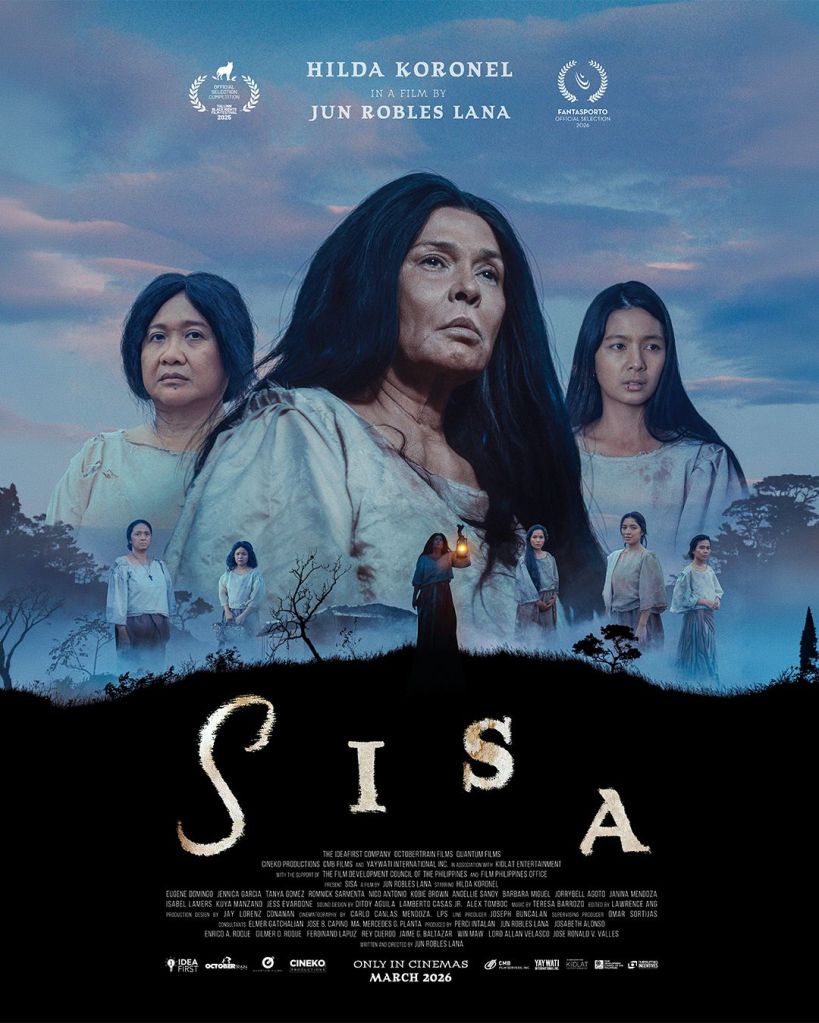
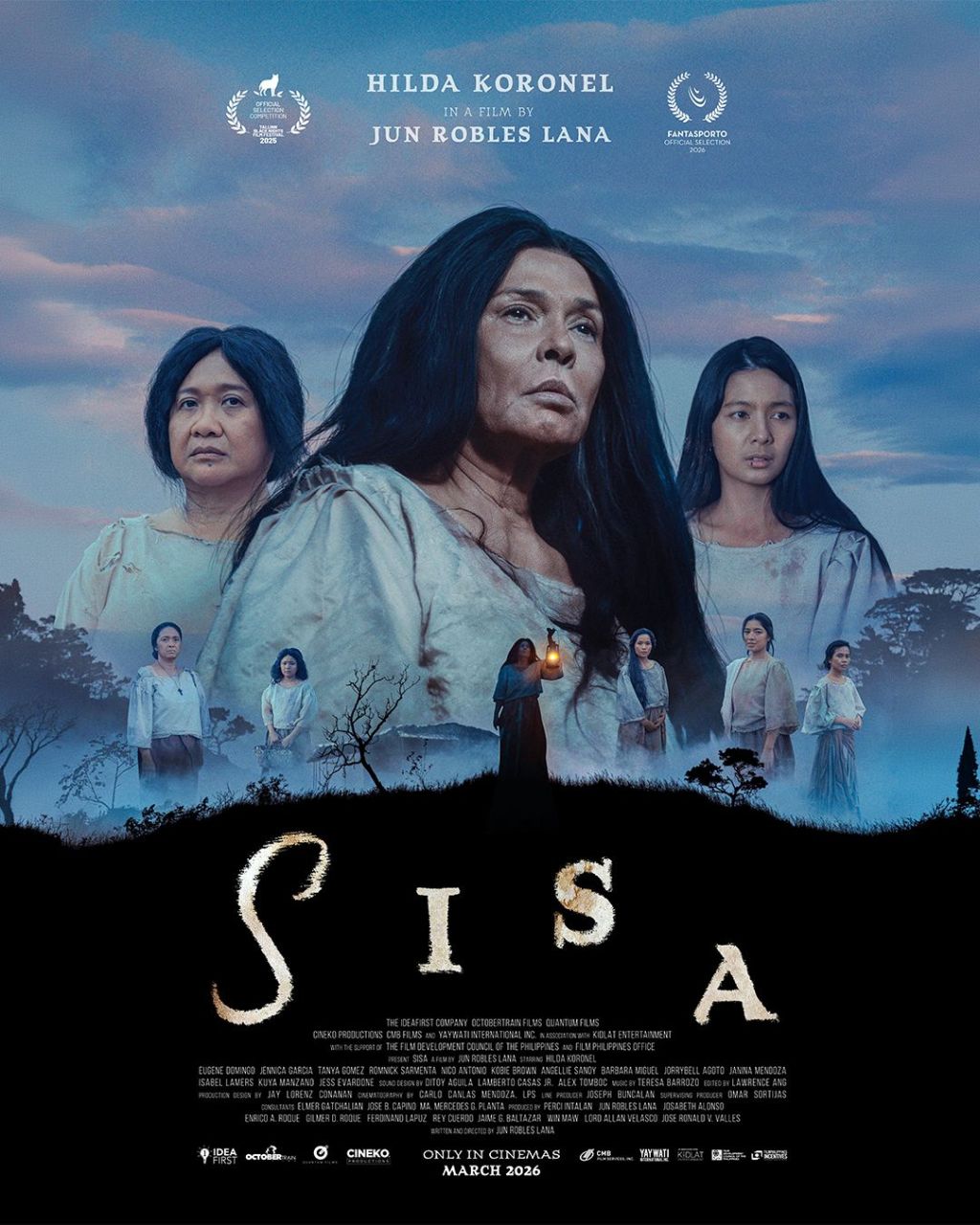
After its world premiere last year at the 29th Tallinn Black Nights Film Festival, Sisa, directed by Jun Robles Lana and beautifully shot by Carlo Mendoza, was finally released theatrically in the Philippines this year. The film also recently won Best Screenplay at the 46th Fantasporto Internacionale de Cinema do Porto.
Haunting, profoundly haunting indeed, is Lana’s rendering of Sisa. While operating outside the Sisa of José Rizal’s Noli Me Tangere (Touch Me Not, 1961), Lana’s film is richly allusional, reimagining madness as a deliberate act of defiance against American rule. Like his 2013 film Mga Kuwentong Barbero (Barber’s Tales), the narrative of Sisa unfolds through the eyes of women in a reconcentrado camp, particularly the titular character, Sisa, the lone survivor of the killing of her family at the hands of American colonisers. The opening establishes the premise. A shot of the mountain reveals Sisa, impressively portrayed by Hilda Koronel, walking barefoot, her appearance dishevelled and her mind seemingly gone. As she looks toward the sky, reminiscent of Elsa in Ishmael Bernal’s Himala (1982) when she sees the Virgin Mary, she eventually urinates on herself. A few minutes later, she grabs a handful of sand and hurls it at the American soldier guarding the camp, a loud act of disrespect toward the power of imperial America.
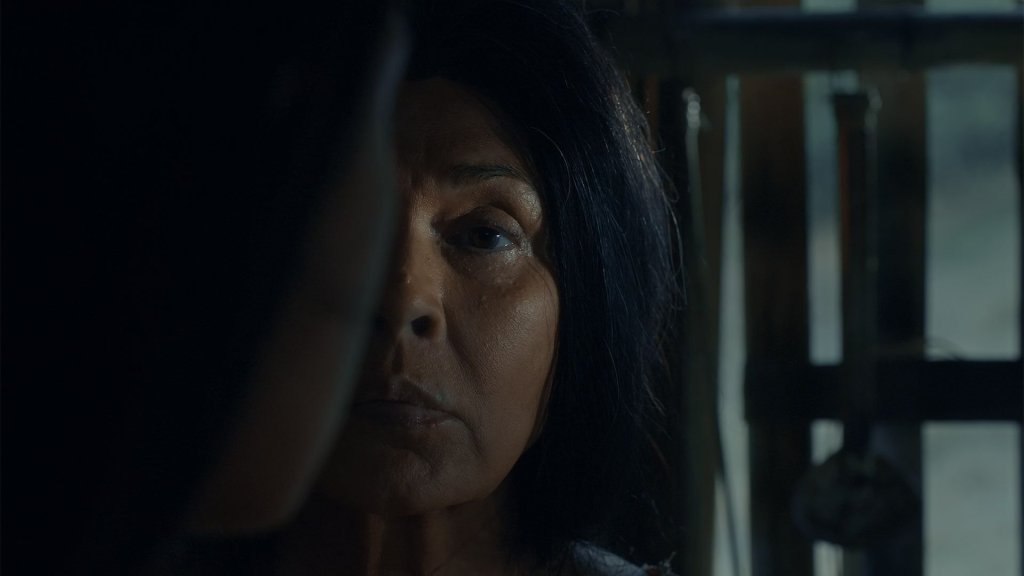
Leonor and Sisa in a frame reminiscent of Lino Brocka’s Insiang (1976). Still from Jun Robles Lana.
The film navigates the Philippine-American War, a period often framed by the American agenda of reform and societal advancement. Sisa, organising a quiet revolt within the reconcentrado camp, disguises herself as a lunatic to avoid suspicion. As her plan unfolds, the film reveals the internal conflicts among the women in the camp. As the genocide of American colonisation continues, the women in the reconcentrado camp lose their loved ones and, more devastatingly, the basic necessities required for survival. Before leaving the camp, Leonor is a close member of a circle that includes Delia, Rita, Cedes, and Gloria. However, she becomes the subject of their gossip when she becomes the mistress of Commander Harrison.
Through this, Sisa strategically uses Leonor’s position to extract vital information from the Americans. There is a specific frame that masterfully encapsulates the two ideals the film simultaneously challenges and depicts, hauntingly reminiscent of a shot in Lino Brocka’s Insiang. The camera positions itself at Leonor’s side, keeping her out of focus and partially obscured. Into the other half of the frame emerges Sisa’s face, completing the composition.
This conflict intensifies when the film reveals that the one who defiles Leonor is Santiago, a revolutionary and spy like Sisa. As chaos unfolds, the film brilliantly uses the kitchen lighting, which flickers as everything spirals downward, almost in favour of the American colonisers, until Sisa decides to poison her. However, this narrative pivot does more harm than simply challenging the movement’s moral grounds; it inadvertently perpetuates America’s narrative and myth-making. Because the situation is handled without nuance or care, it suggests that Leonor’s fate is merely the result of betraying her own people, thereby falling into the trap of America’s benevolent assimilation. Ultimately, it compels the audience to question the film’s own politics.
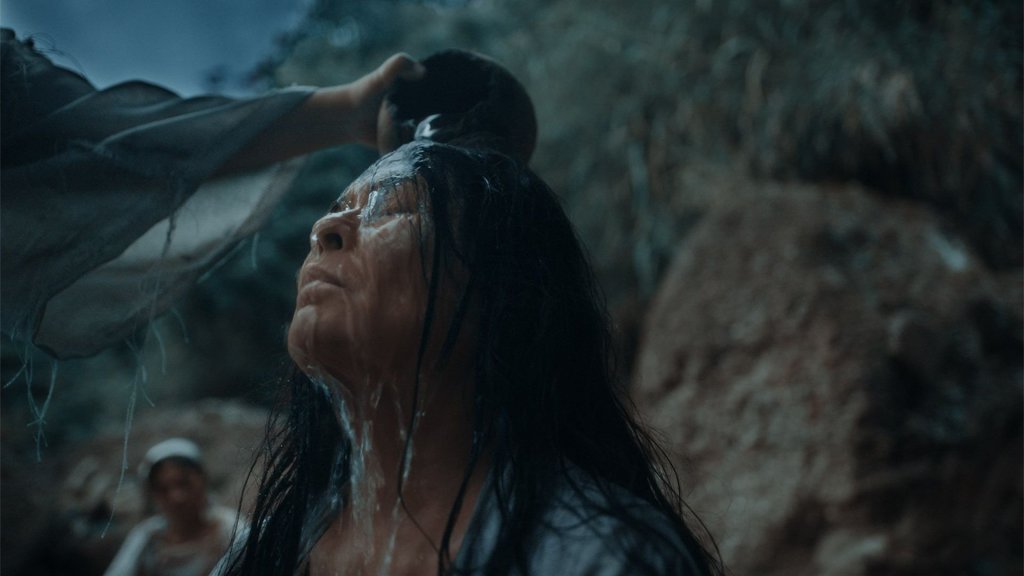
Sisa at the river with other women of the reconcentrado camp. Still from Jun Robles Lana.
Lana insisted that the work is not “anti-American but anti-amnesia.”
In an anecdote shared by a friend who attended a talkback session for the film, Lana insisted that the work is not “anti-American but anti-amnesia.” While it is true that the film serves as a vehicle for remembrance, especially given how the modern-day Philippines grapples with state-sponsored propaganda of collective amnesia, what Lana fails to realise is that these two stances can coexist. A film can function as a tool of memory while simultaneously taking a firm, critical stance against the structures of American imperialism.
While this intention is evident in certain scenes, particularly through the dialogue and through Sisa’s recollections of trauma that insist we should not forget the genocide caused by American colonisation, the trajectory of the film’s narrative still falls into the trap of the American narrative of that period. A contradiction emerges here. If anything is clear within the material, particularly regarding its female characters, it is their conscious effort to reject imperial language and to assert their own sense of nationhood and identity. This stands as a defiant reclamation, even as it clearly emerges from the shadow of prolonged Spanish rule before the subsequent malevolent and benevolent colonisation by America.\
Beyond this, the film reveals a dilution not only of its own internal politics but also of its perspective on the movement. This stands in stark contrast to Barber’s Tales, which underscored the necessity of the people’s war and traced Marilou’s evolution as she resolved to meet the exigencies of her time, though one might still re-examine its depiction of the armed struggle, given its subtext and the cameo of Nora Aunor at the end, especially when considered within the political climate of the era. In contrast, Sisa depicts the people’s war as unsustainable, framing its participants as traitors to their community and, by extension, to the nation.
The film offers no prior insight into the decisions made by the commanders of the people’s war. The truth, as presented through Sisa, remains fragmented. A rift opens between the consciousness of the female characters, Sisa in particular, and the necessary path toward severing America’s burgeoning hegemony, set against the movement’s goal of national liberation. This calls into question not merely which narrative deserves emphasis, but what the film ultimately intends to signal. By depicting the revolutionary forces surrendering to President Theodore Roosevelt’s amnesty in order to end the Philippine American War, the film risks reinforcing the notion that Filipinos are easily deceived, and that the people’s war is as fragile as the desire to liberate the nation from the imperial power of America. While these events are indeed anchored in history, they demand a more nuanced, dialectical approach, one that interrogates contradictions in order to do justice to the internal conflicts at play.
In the course of these unfolding events, we encounter the expected “lunacy” of women existing on the margins of history. The true lunacy, however, belongs to Delia, who suffers the aftermath of her daughter’s death. She avenges her daughter, who was manipulated and impregnated by the same soldier whom Sisa disrespected in the film’s opening, while also consciously and resolutely rejecting the power of imperial America over her own consciousness. Then there is Leonor, whose sorrows become unending as she is blinded by the effects of America’s benevolent assimilation.
The film highlights the solidarity of the women in the reconcentrado camp as they unite to end the fraudulent rebuilding of the nation under colonial rule.
One can easily focus on the film’s feminist tone. It is indeed feminist in its approach, centring women’s narratives and their subversion of power. Ultimately, the film highlights the solidarity of the women in the reconcentrado camp as they unite to end the fraudulent rebuilding of the nation under colonial rule. Take, for example, Rita, portrayed by Barbara Miguel, who cares deeply for Leonor following her traumatic rape. Additionally, Delia, impressively portrayed by Eugene Domingo, and Ofelia, played by Tanya Gomez, prove crucial in uplifting and uniting both the women and the people of the camp, most notably in helping Sisa execute her plan.
One must also examine the contradictions the film presents. Specifically, the internal conflict fails to do justice to the underlying reasons for this madness. It is also compelling to observe how the film, operating within a disrupted temporal continuity, attempts to reconcile historical realities, the rejection of imperial power through revolt and language, and the critique of a national narrative written solely for the benefit of the powerful.
Yet a central question arises. Is there even a possibility in which the internal conflict of the Filipino people in a time of war can be handled with such intricacy that it does not inevitably force them to turn against one another? Can we imagine a nation shaping its own nationhood outside the shadow of its colonisers, an identity neither copied from nor patterned after the imperial American dream? Ultimately, is there a more nuanced cinematic language capable of articulating the question of a nation aborted?
For if the wars in the Philippines have left any lingering wounds, it is the nation’s enduring bondage to American influence, the manner in which it dictates not only political mobility but also the very fabric of culture. If this conflict instils anything, it is the perpetual fragmentation of a country still searching for its soul, caught in an endless pursuit of identity and true liberation.
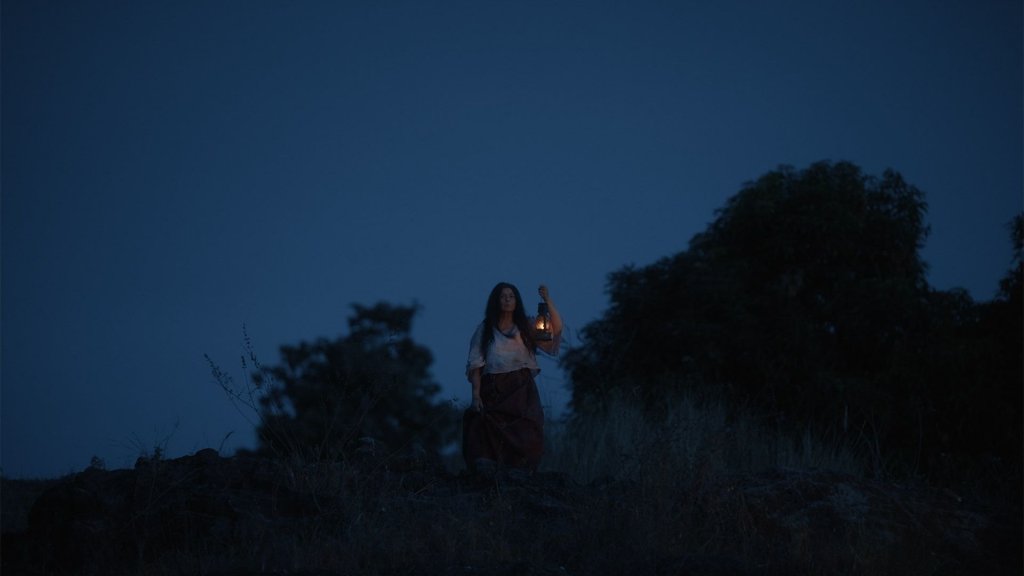
Sisa stands on the mountain, long before the chaos ensues. Still from Jun Robles Lana.
How to cite: Lozano, Lorence. “Contradictions Amidst a Nation Aborted in Jun Robles Lana’s Sisa.” Cha: An Asian Literary Journal, 8 Mar. 2026, chajournal.com/2026/03/08/sisa.



Lorence Lozano is a film critic based in the Philippines. They have contributed to various student short films as a script consultant. Their interests lie at the intersections of gender, politics, and temporalities within Southeast Asian cinema. [All contributions by Lorence Lozano.]
 Cha
Cha 