

茶 FIRST IMPRESSIONS
茶 REVIEW OF BOOKS & FILMS
Editor’s note: Beth Adams approaches Do You Like Brahms?, a Korean TV drama set within a prestigious Seoul music school, through her enduring interest in Asian television that explores artistic vocation, and through her own formation as a lifelong amateur musician. Setting the series alongside her experience of lessons, choirs, and auditions, she reflects on aptitude, fatigue, and the complex emotional costs that attend sustained musical ambition.

[ESSAY] “Music, Ambition, and Quiet Longing in Do You Like Brahms?” by Beth Adams
Young Min Jo (director), Ryu Bo-Ri (writer), Do You Like Brahms?, SBS TV, 2020. 16 episodes.
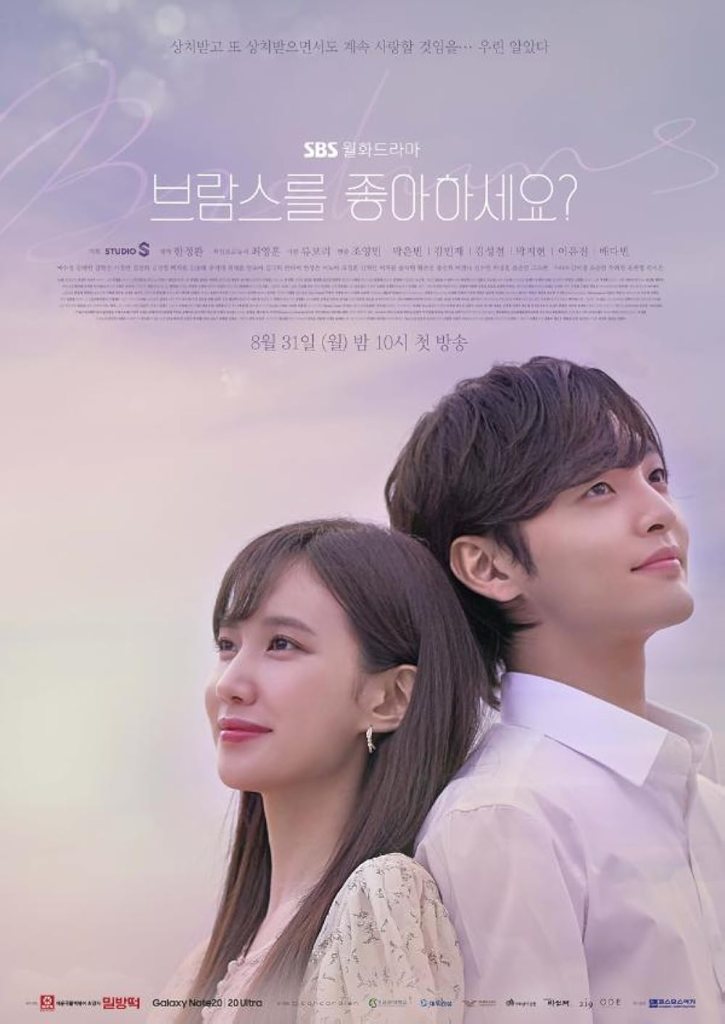
As an admirer of Asian TV dramas, and a lifelong serious amateur musician, I noticed the title of this series right away when it came up on my Netflix recommendations list.
Over the past few years, I have been especially interested in Asian series that have an arts component, such as It’s Okay Not to Be Okay (2020), about a children’s fantasy book writer; Navillera (2021), in which an elderly man pursues his lifelong dream to dance ballet; When the Weather Is Fine (2020), about a bookshop and a book group; Romance Is a Bonus Book (2019), about a secret writer and the publishing industry; Can This Love Be Translated? (2026), which turned out to be more about romance and travel than the lead character’s profession of translation; and the Japanese series Quartet (2017), which follows four young people who meet in a Tokyo karaoke bar, form a string quartet, and move together to a remote town.
I have appreciated the window these series have given me into parts of Asian culture that are parallel to my own world of writing, publishing, art and music. Even though they often focus on young people just starting out in their careers, with their work environments as background for a romantic plot, the multi-episode format gives ample time and opportunity for us to meet a wide range of characters in addition to the leads: teachers, professors, mentors, families with their own expectations and problems, friends with greater or lesser success.
)
So it is in Do You Like Brahms? The story concerns Chae Song-Ah, a business school graduate who returns to college to follow her passion, classical violin, at a prestigious music school. There, she meets Park Joon-Young, a Korean piano prodigy who won second place in the Chopin Competition and has spent a number of stressful years touring Europe giving concerts. He has now returned to Korea to finish his degree and take a year’s sabbatical from performing.
Song-Ah loves the violin, but lags behind the students who have been studying twenty years to her own ten. As she nears the end of her senior year, she wants to continue for her graduate degree, but wonders sadly if her goal is realistic. Park Joon-Young’s agent puts it bluntly: “It doesn’t really matter how much ability you have, you simply can’t catch up to people who have been playing twice as long as you.” Joon-Young, on the other hand, has a rare talent and years of experience, but he is completely exhausted by the stress of competitions and performing, and frustrated by his irresponsible father’s demands for money that have forced him to perform far more often than his body can handle. These two are drawn together although, and perhaps even because, their trajectories seem opposite. Introverted and quiet, they both enjoy long walks, and sitting together in silence. This romance takes a great deal of time to develop, and then fall apart, and we wonder for many episodes if it will ever come back together. Joon-Young, in particular, finds it difficult to put his emotions into words or to be upfront about the difficulties in his life, while Song-Ah minimises the problems she is having in school as well as the ways she is hurt by Joon-Young’s verbal reticence.
There are university professors with their own jealousies, rivalries, and insecurities.
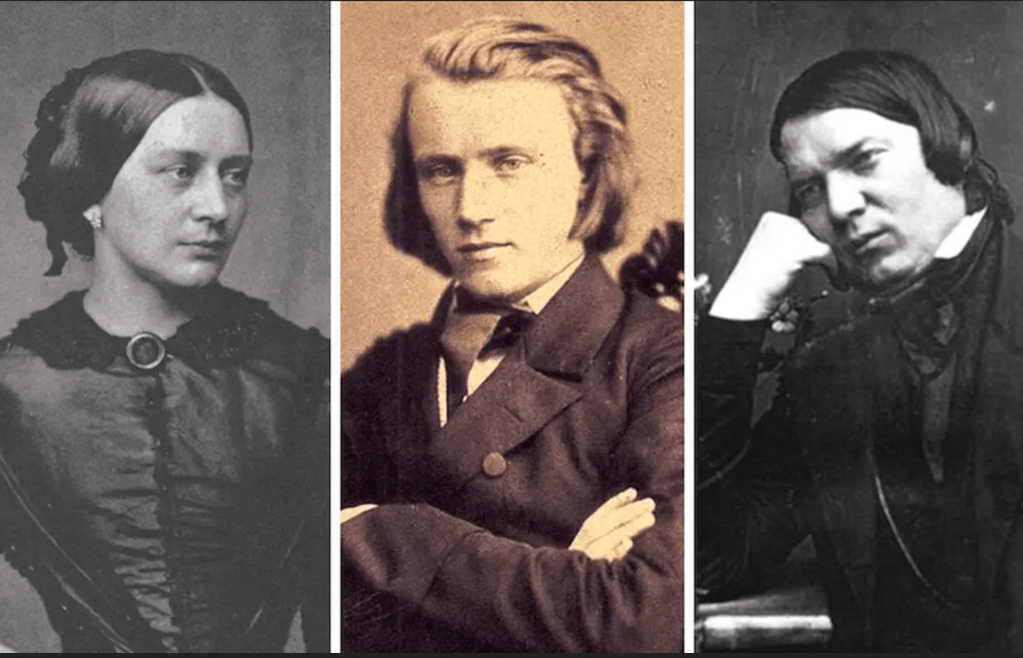
Surrounding this pair is a strong cast of characters. We meet the ageing director and staff of a cultural foundation which has sponsored Joon-Young’s career, and Song-Ah’s group of friends, several of whom have given up music for other careers. There are university professors with their own jealousies, rivalries, and insecurities; agents, promoters, and benefactors; the lead characters’ very different families; and a young violin whiz and her demanding stage mother. The major supporting characters are Han Hyun-ho, a cellist, and his longtime girlfriend Lee Jung-kyung, once a child prodigy on the violin, who is the granddaughter of the foundation’s director. These two have just returned to Korea as well, after attaining graduate degrees at American schools. Previously, they had played together for years with Park Joon-Young in a chamber trio. But, as in the famous triangle of Johannes Brahms and Robert and Clara Schumann, unrequited love is going to wreak havoc between these three friends and complicate the budding romance between Joon-Young and Song-Ah.
Do You Like Brahms? has many typical K-drama clichés, the handsome couple shot repeatedly in profile, standing three feet apart, staring into each other’s eyes and saying nothing for interminable minutes; the first hands held; the inevitable moment when she puts her head on his shoulder and falls asleep; being together, or not, during the first snowfall; and finally a confession of love and a first kiss, but never anything more risqué than that. However, unlike many, this series does not ask us to accept one implausible coincidence after another, just a few too many conversations overheard by people who walk into proximity unexpectedly.
Park Eun-bin, as Song-Ah, made this series two years before her astonishing performance as the autistic savant in The Extraordinary Attorney Woo (2022) . While her character in Do You Like Brahms? has to remain introverted and understated, she navigates Song-Ah’s struggles with dignity and grace, and we are soon rooting for her. The actress had some prior experience playing the violin, but worked hard to regain the facility required to pull off the scenes in which she is practising and performing. More recently, she has released a number of singles. In real life, she clearly cares about music.
Kim Min-jae was entirely believable as a piano prodigy. He studied piano and composition in middle school and attended Seoul Performing Arts High School, and actually began his performing career as a rapper. He keeps all of that energy tightly coiled in Do You Like Brahms?, embodying the intensity of a world-class performer as well as the extremely good looks and enigmatic distance of a celebrity artist.
I was also particularly impressed with Park Ji-hyun’s performance as Lee Jung-kyung, the once-famous child prodigy who has received a Juilliard degree but lost her mother, her lover, and her talent. Her growth from an anguished, lonely, angry, and manipulative young woman to someone who gradually finds strength, compassion, and a path is perhaps the most understated but moving aspect of the whole drama.
This series presented a far more accurate and sympathetic portrayal of classical music and musicians than hyped but emotionally exaggerated recent films such as Tár or Maestro.
Throughout the 16 episodes of Do You Like Brahms? I appreciated the nuanced explorations of different people of varying circumstances and degrees of ability, and their deep relationships with music. All of that rang very true to my own experience. I felt this series presented a far more accurate and sympathetic portrayal of classical music and musicians than hyped but emotionally exaggerated recent films such as Tár (2022) or Maestro (2023). It gave me a glimpse into the highly competitive Korean classical music world, but it was universal in showing the pressures and stress on gifted people who love music, are driven by various reasons, and sometimes have great difficulty maintaining healthy relationships and emotional states while giving themselves fully to their study and performance careers.
)
Here in my own city of Montreal, I have been privileged to come in contact with a number of Asian music students who are here to study, or compete in the Canadian International Organ Competition. Several of these fine musicians have been organ scholars at the Anglican Cathedral where I chair the music committee, along with other advanced-degree students from Canada, the U.S., and other countries. It is obvious how talented all of these young people are, and how hard they work.
Competitions require dedication and persistence at the highest level. This past October, I watched the International Chopin Competition, which is live streamed from Warsaw, Poland every four years. Impressively, of the 162 candidates juried into the preliminaries, 106 were from China, Japan, and the Republic of Korea, and many of the other candidates were of Asian origin but living in other countries. Ultimately, nine of them made it to the finals, along with one pianist from Georgia and one from Poland, and they won all six of the top awards.
A fascinating subtext in Do You Like Brahms? is the question of what one has to do to win competitions. Park Joon-Young’s teacher has a formula for training winners, and it does not include playing “as one wishes”, but in a way that will garner a medium-high score from all of the judges. When Joon-Young returns to Korea, he considers entering the Tchaikovsky Competition, mainly because he needs the prize money, but his heart is not in it. He can no longer bring himself to play the way his teacher demands. He has grown into an adult, and wants to express how he feels as an artist and a human being. He suggests, to his teacher’s disdain, that he would rather receive a “10” from one judge than “7”s and “8”s from all of them.
Interestingly, my favourite competitors did make it to the finals of the Chopin Competition last fall, but they did not place among the top five. They were both older than much of the field and played with a mature and personal vision, which is what I liked. A majority of the judges apparently did not. When I listened to a post-competition interview with the head of the jury, Garrick Ohlsson, it was clear that there had been heated debate among the jurists about who should win.
)
In the series, a young girl points to Song-Ah’s violin case and asks her what it is. “It’s a violin,” she answers.
“Are you good at playing the violin?” the girl asks.
After a long pause, Song-Ah replies, “I like it a lot.”
I like making music very much too. After starting on piano at age five, I played piano and flute in school. While I was encouraged by teachers to keep going with music after high school, I thought about the difficult life of my aunt, who was a professional musician, and considered all the hours of practice that would be required, as well as the not inconsiderable stage fright I already dealt with during auditions and performances. In the end, I decided to keep music as an avocation. I have been involved in study and performance ever since, but as an amateur, continuing with voice and piano lessons as an adult. For sixteen years I sang in the mixed choir of professionals and volunteers of the Anglican Cathedral here in Montreal, and when that lapsed during the pandemic, I returned to the flute after a hiatus of nearly fifty years. Many of my best friends over the years have been professional musicians. I vividly recall one of them, a composer who had been a piano prodigy as a child, telling me, “I envy you. You’re able to love and enjoy music, while I’m always agonising over every mistake, every performance, even now.”
The question of “what next” hovers over all the central characters in Do You Like Brahms? Can Park Joon-Young begin to play for himself? Should Chae Song-Ah continue on the violin if she gets into grad school, or should she finally give it up? Has Lee Jung-kyung really lost her gift? For many of these young Koreans, it seems to be an all or nothing decision, and that made me very sad.
“Music is profoundly important to you, and whatever you do, you must keep it in your life.”
Early in the series, Song-Ah suggests to her friends that the reason for doing music is “to give comfort to someone”. But what about comforting herself? How can a person who has loved music so deeply, and devoted so much of their young life to it, simply stop playing? The moment that made me weep had nothing to do with the romance; it was when Song-Ah says goodbye to her violin. It reminded me of the day, in my late 40s, when I told my teacher I had decided to stop taking piano lessons. I dissolved in tears, not at my own announcement, but at her gentle response, full of truth: “Music is profoundly important to you, and whatever you do, you must keep it in your life.”
How to cite: Adams, Beth. “Music, Ambition, and Quiet Longing in Do You Like Brahms?.” Cha: An Asian Literary Journal, 8 Mar. 2026, chajournal.com/2026/03/08/brahms.

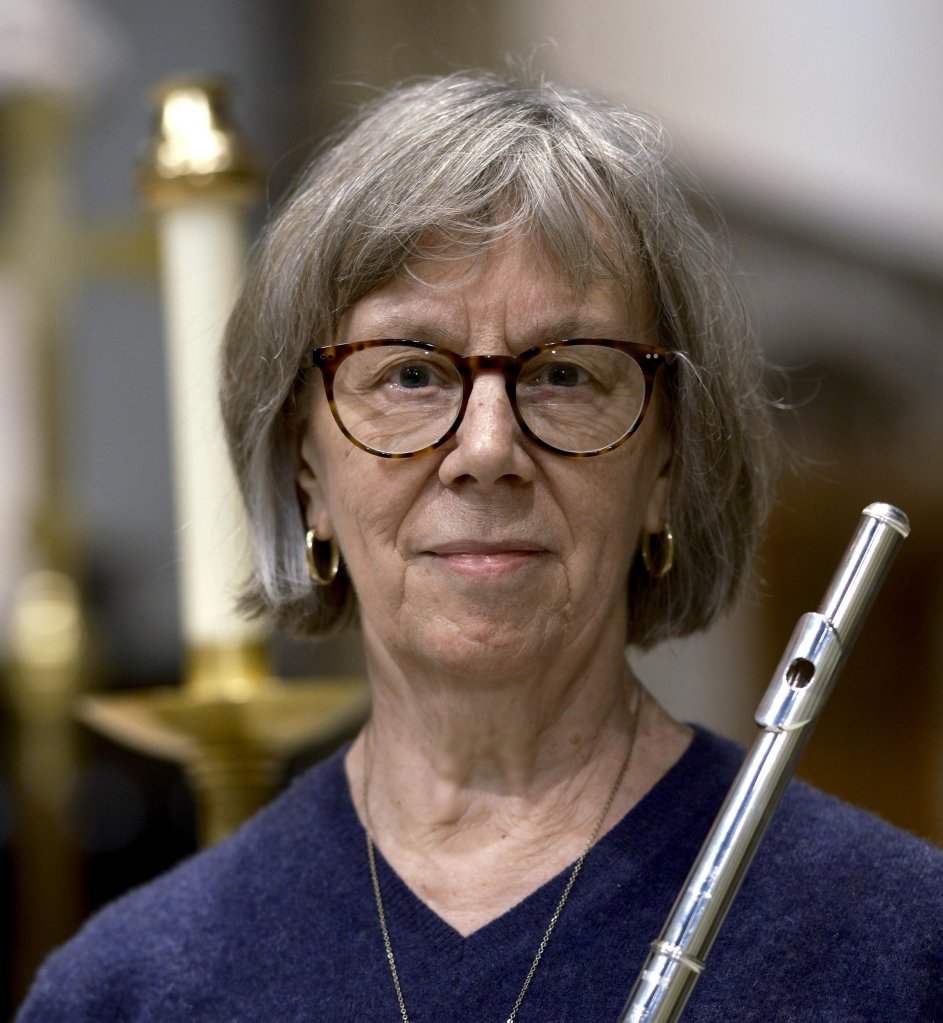

Elizabeth (Beth) Adams is a writer, artist, and publisher. She is a dual Canadian-American citizen, and has lived in Montreal since 2005. Her biography of Bishop Gene Robinson was published in 2006, and Snowy Fields, a book of her drawings and essays has just come out. She was a founder/co-managing editor of the former e-zine qarrtsiluni, is founder/editor of the independent press Phoenicia Publishing, and her blog, The Cassandra Pages, has considered questions of arts&letters, culture, and spirit since 2003. She is a member of PEN Canada. [All contributions by Beth Adams.]
 Cha
Cha 