
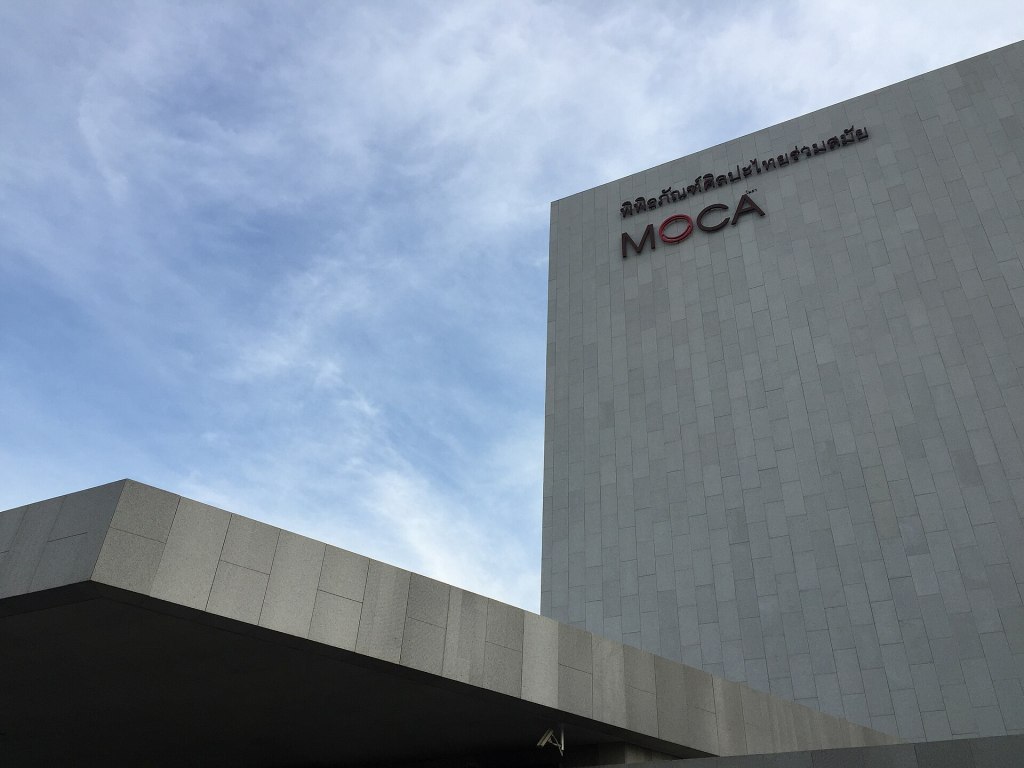
[ESSAY] “Does MOCA Bangkok Have a Soft Porn Problem?” by Daniel Gauss
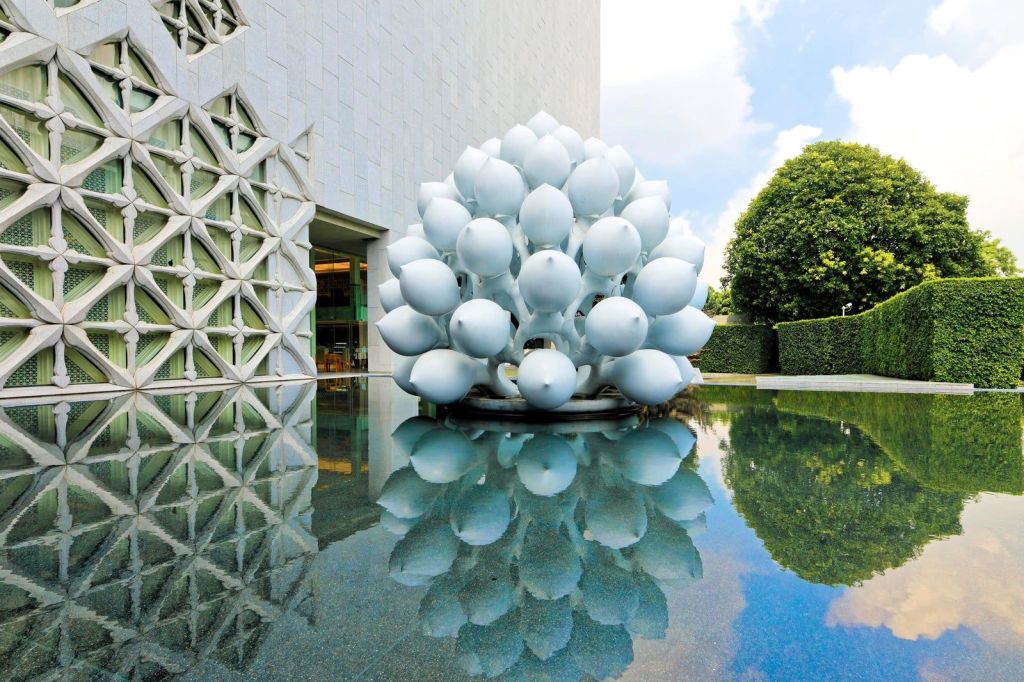
It is time for museums, especially those dedicated to contemporary art, finally to understand the objectification of women. It is also time to ask why one of Asia’s major contemporary-art museums, the Museum of Contemporary Art (MOCA) in Bangkok, so clearly does not appear to understand it.
A visit to MOCA Bangkok can be a disheartening experience for anyone concerned about the ways power structures and biases are reinforced through imagery. The problem is not the depiction of nudity. The problem is the nature of those depictions. Throughout the museum’s collection, one encounters a significant number of gratuitous paintings and sculptures of naked women.
Too often, these women appear posed for the implied viewer, a heterosexual man.
Too often, these women appear posed for the implied viewer, a heterosexual man. They recline in ways that maximise their availability to the eye, their bodies smooth and flawless, their expressions often conveying a vacant invitation. They resemble soft porn dressed in the language of fine art, and they appear throughout the museum.
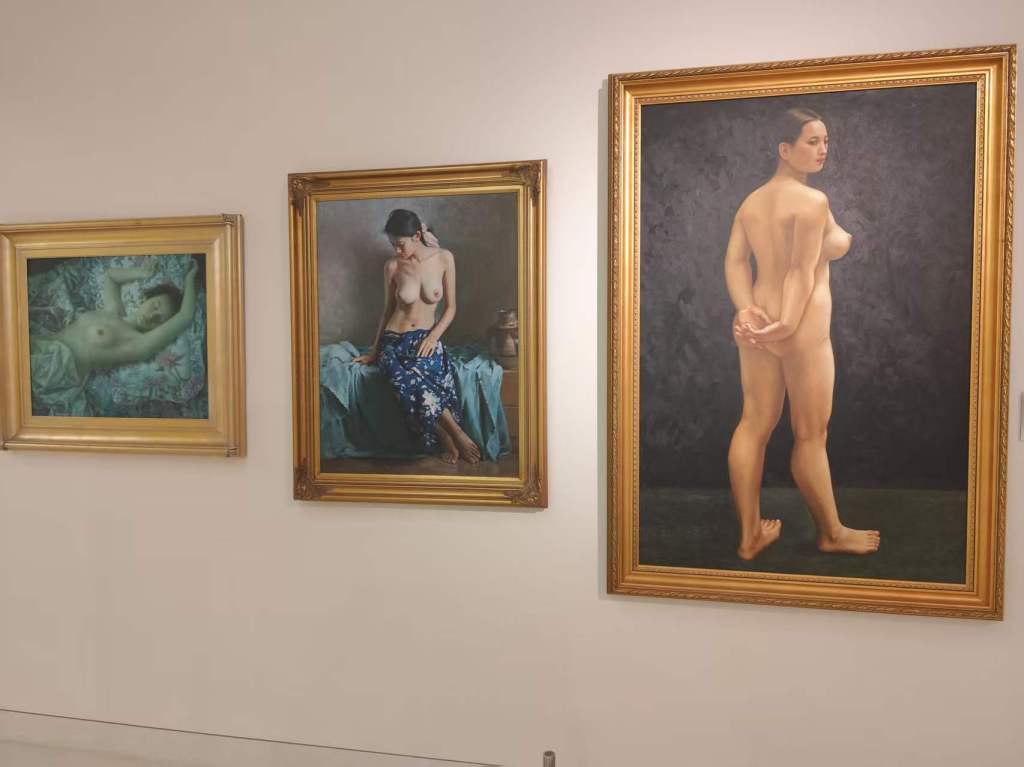
Paintings of reclining topless women. Paintings of women sitting partially clothed, breasts exposed. Sculptures of female bodies carefully polished into smooth erotic surfaces. The imagery is often technically accomplished and framed with museum seriousness. Yet we are repeatedly presented with images of idealised female nudity intended for male visual consumption.
In a contemporary Asian museum, one that receives school groups, this seems deeply inappropriate. It raises a simple question: why does this museum contain a collection of images that look suspiciously like soft porn?
}
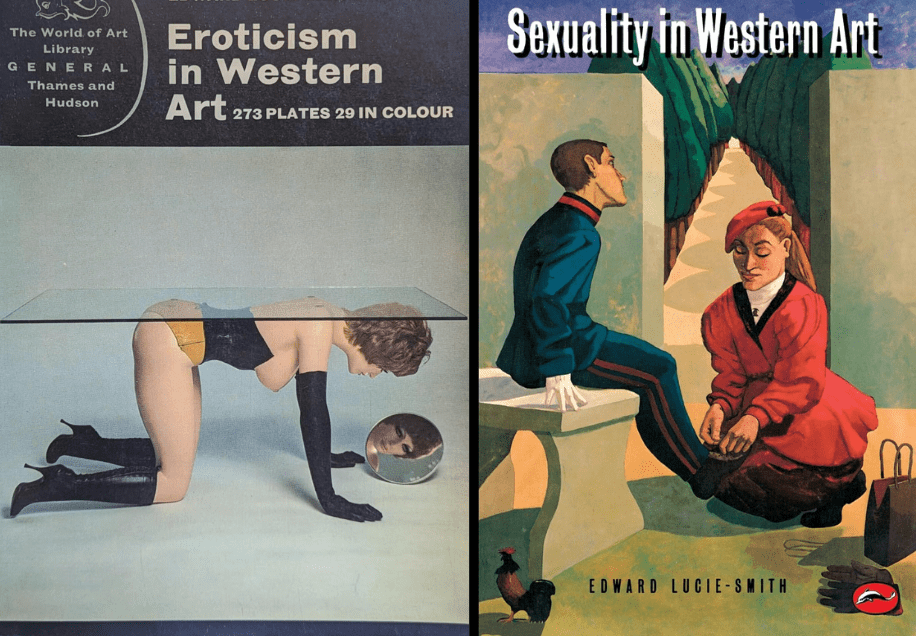
Of course, much of the history of Western art reflects the desires and assumptions of a predominantly heterosexual male artistic and patronage culture. Edward Lucie-Smith’s Sexuality in Western Art (1991) provides a useful framework for examining how such desires are embedded within broader social attitudes toward sex, gender, and representation. At the same time, as Lucie-Smith’s earlier Eroticism in Western Art (1972) makes clear, a substantial portion of this imagery operates within a recognisable erotic tradition. The female bodies depicted are often filtered through allegory, mythology, or other cultural conventions that soften or legitimise their erotic charge. Yet the underlying dynamic frequently remains straightforward: sensual images produced largely by heterosexual male artists for a similarly male audience, even when those desires are reframed through the language of high art.
Museums across the world still display these works without comment or shame. We stand before paintings in which a male artist persuaded an attractive woman to disrobe for his prurient interests, and the result is elevated to the level of high culture. Visitors are encouraged to gaze respectfully, as though the erotic element were merely incidental. School groups at MOCA were looking at erotically charged art as though the eroticism were accidental or integral to the meaning. Frankly, the meaning seemed to be titillation.
}
A few years ago, the gay American artist Jack Balas wrote a satirical letter to Artforum (the magazine did not have the courage to print it). He counted the number of images of naked women, as opposed to naked men, in a single issue and discovered a striking disparity. Balas suggested that the magazine establish a “boobs-to-balls ratio”. He simply argued that it was unfair to titillate straight men while gay men and straight women were denied the same measure of arousal that heterosexual male viewers were receiving.
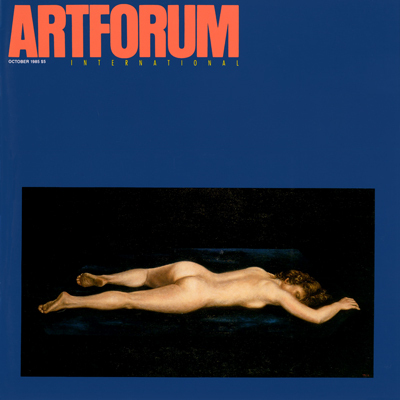
October 1985, VOL. 24, NO. 2
Stephen McKenna, Dead Nude, 1982, oil on canvas, ca. 31½ x 39”.
Jack Balas’s joke conveyed a serious point: whose desire is being represented, and whose is ignored?
Female nudity has long been normalised as “art”, while male nudity often remains controversial or even taboo.
The imbalance in visual culture is staggering. Female nudity has long been normalised as “art”, while male nudity often remains controversial or even taboo. Balas once explained that the American male must apparently be depicted in his power suit, dignified and fully clothed. He cannot become the object of desire because he is the one whose desires are fulfilled.
This is precisely why walking through MOCA Bangkok feels so strange. The museum contains a great deal of work that presents the most traditional manifestation of the male gaze: passive, naked female bodies displayed for visual pleasure.
In some galleries of MOCA Bangkok, the nude woman appears in poses that evoke submission, vulnerability, or erotic invitation. She lies on a bed. She turns her back towards the viewer. She exposes her breasts while looking demurely away.
)
Where, then, are the male nudes? If the claim is that the human body is beautiful and worthy of exhibition, where are the male bodies? Where are the works that investigate desire rather than merely catering to it? Where are the women artists presenting their own visions of sexuality?
Instead, the viewer encounters the repetition of a very old artistic script: the woman as object.
This becomes even more troubling when one considers the audience. On the day of my visit, schoolchildren were walking through the galleries. I am not a prude. Museums should not sanitise art history, and children do not need to be shielded from the human body. The issue is not nudity. The issue is humane values.
When a museum repeatedly presents images of women as erotic objects, it communicates something troubling about gender and power. It suggests to young viewers, boys and girls alike, that women exist to be looked at. It sets an implicit expectation for children, that they must grow up to conform to the bodily and aesthetic expectations of men.
Museums are cultural authorities. They do not merely display art, they shape the ways societies interpret it. Contemporary-art museums, in particular, should recognise this responsibility. For decades, scholars have analysed the concept of the “male gaze,” a term popularised by film theorist Laura Mulvey to describe how visual culture frequently positions women as objects for male viewing pleasure.
One might expect a twenty-first-century museum to grapple with this issue rather than reproduce it uncritically. Yet MOCA Bangkok appears strangely unaware of the conversation.
This is not merely a curatorial oversight. It is a missed opportunity to present art in a meaningful and enriching manner that contributes to human development. Thailand possesses a vibrant contemporary-art scene filled with artists exploring gender, identity, and social change. A museum of contemporary art could become a place where these debates unfold openly. It could contextualise the history of erotic imagery while presenting alternative perspectives.
Some galleries too often resemble a high-end boys’ lounge decorated with tasteful soft porn.
Instead, some galleries too often resemble a high-end boys’ lounge decorated with tasteful soft porn. The irony is that many of the paintings themselves are skilful and even beautiful. Yet beauty alone is no longer sufficient to justify a curatorial decision. Museums must ask what their collections communicate about the world in which we now live.
If MOCA Bangkok wishes to be taken seriously as a major contemporary-art institution, it should begin by asking a simple question: who, precisely, is all this nudity for?
Until the museum confronts that question, the unspoken answer remains uncomfortable.
It looks remarkably like the familiar story of horny male artists, horny male collectors, and everyone else, including children, politely pretending that the view from the gallery wall is somehow neutral. It is not.
How to cite: Gauss, Daniel. “Does MOCA Bangkok Have a Soft Porn Problem?.” Cha: An Asian Literary Journal, 7 Mar. 2026, chajournal.com/2026/03/07/moca-bangkok


Daniel Gauss was born in Chicago and studied at UW–Madison and Columbia University. He has worked in the field of education for over twenty years and has published non-fiction in 3 Quarks Daily, The Good Men Project, Daily Philosophy and E: The Environmental Magazine, among other platforms. He has also published fiction and poetry. Daniel currently lives and teaches in China. See his writing portfolio for more information. [All contributions by Daniel Gauss.]
 Cha
Cha 