
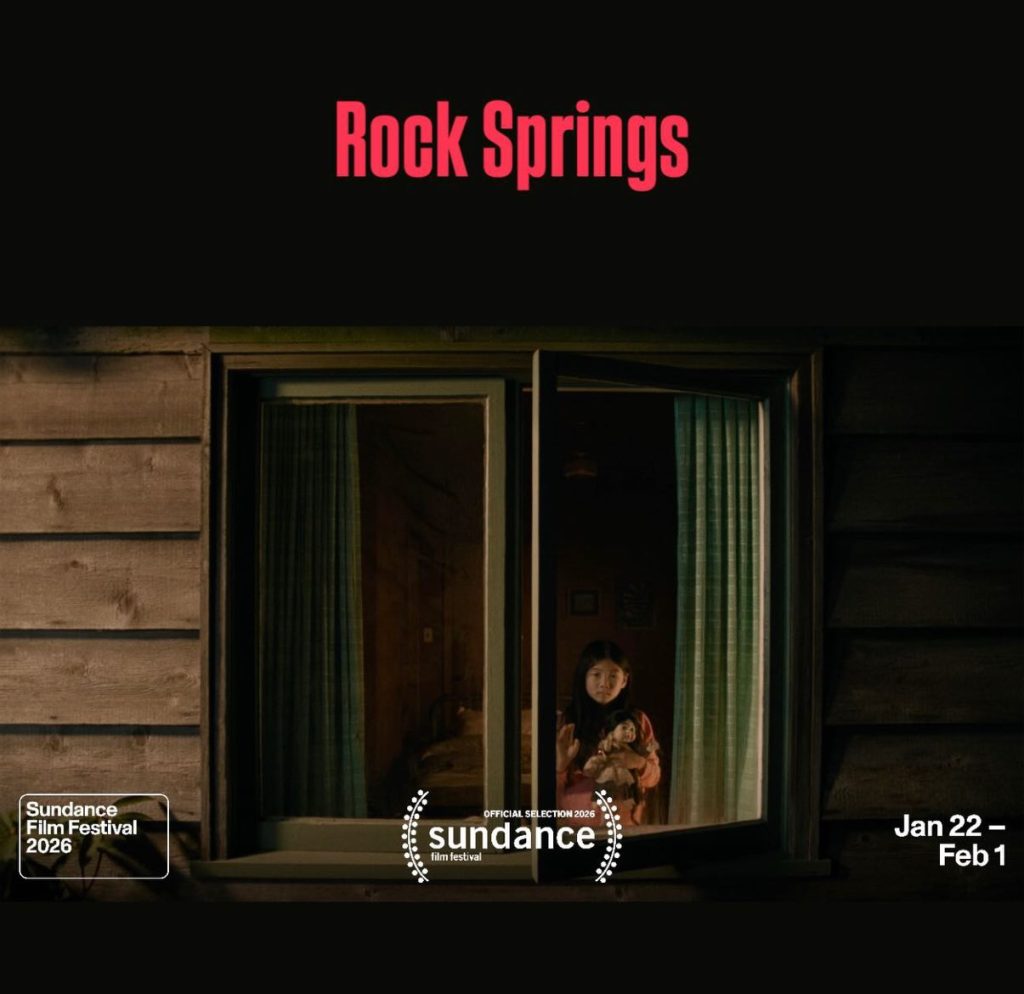

[SUNDANCE 2026] “Three Perspectives on a Haunting: Vera Miao’s Rock Springs” by Nirris Nagendrarajah
Vera Miao (director), Rock Springs, 2026. 97 min.
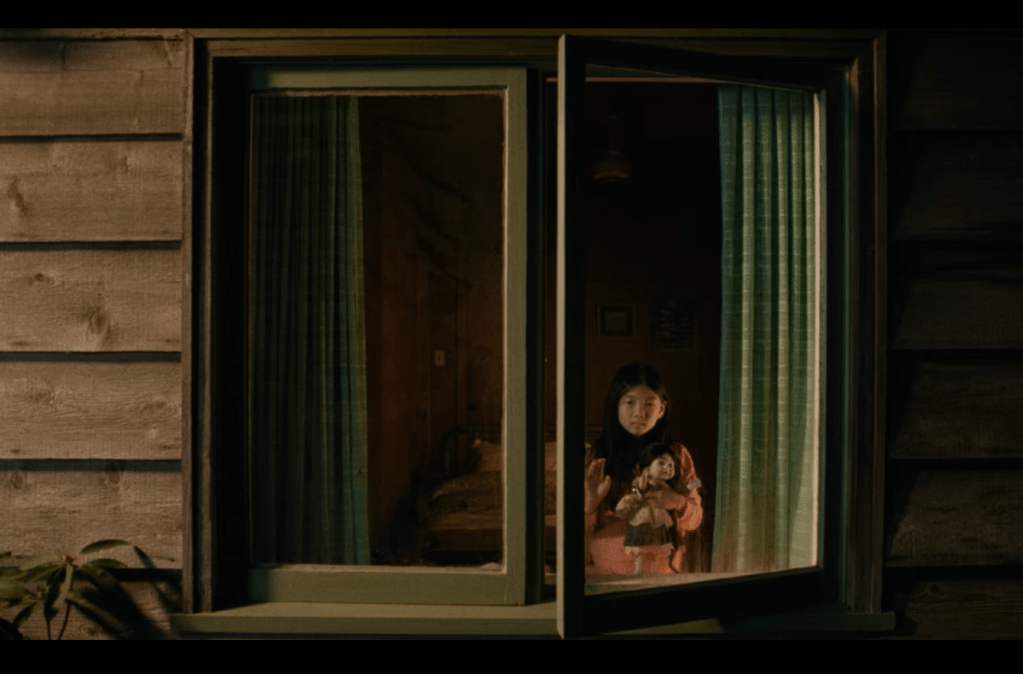
Gracie, played by Aria Kim
One leaves Rock Springs with two impressions: that Vera Miao is a natural director, and that the real-life Rock Springs Massacre of 1885 remains a scarcely acknowledged atrocity.
The massacre, which followed the Chinese Exclusion Act, was a brutal assault on Chinese miners, some of whom had helped to build the railroads, by European immigrant miners, resulting in the deaths of at least twenty-eight people.
As the film initially presents itself as horror, it withholds this historical context. Our point of entry is Emily, played by Kelly Marie Tran, a recent widow who moves to a remote house with her mother-in-law Nai Nai, portrayed by Fiona Fu, and her young daughter Gracie, played by Aria Kim, who appears able to perceive what others cannot.
It is through Gracie, in keeping with the conventions of the genre, that the three-chapter structure builds towards a re-creation of the massacre, among the most harrowing and engrossing sequences I have seen.
Gradually, earlier details acquire coherence: Chinese currency buried in the soil, the sudden flash of a braid suspended in mid-air, a human eye glimpsed among the leaves. Miao’s direction proves far more controlled than first assumed.
No moment stands alone but is bound to the living and to those whose spirits remain tethered to the earth.
With its striking visual revelations and layered alternative realms, the film invites comparison with Get Out (2017), Under the Skin (2013), and The Substance (2024). The ingenuity of Miao’s script lies in her re-casting of key scenes from three distinct perspectives, ensuring that no moment stands alone but is bound to the living and to those whose spirits remain tethered to the earth, never properly laid to rest.
Gracie is drawn to the figure that emerges in the woods, a proxy for her father’s ghost and a composite embodiment of lives extinguished by racial hatred. She recognises him as a fellow bearer of grief, her own life having been uprooted and left unresolved.
“But he’s somebody’s Baba,” she tells her mother. Such radical empathy underpins the film’s vision, granting voice to a history reclaimed through imaginative means. Rock Springs is an assured debut, a redemptive work of racial horror.
How to cite: Nagendrarajan, Nirris. “Three Perspectives on a Haunting: Vera Miao’s Rock Springs.” Cha: An Asian Literary Journal, 11 Feb. 2026, chajournal.com/2026/02/11/rock-springs.


Nirris Nagendrarajah is a writer and culture critic from Toronto. In addition to Metatron Press, his work has appeared in MUBI Notebook, Little White Lies, The Film Stage, Ricepaper, Notch, Polyester, Intermission, Ludwigvan, and In the Mood Magazine. He is currently part of Neworld Theatre’s Page Turn program and at work on a novel. [All contributions by Nirris Nagendrarajah.]
 Cha
Cha 