
Editor’s note: Pál Dániel Levente, a guest of honour at the 2026 Brahmaputra Literature Festival, proposes a poetics of butterflies, stones, and blades. The five poems move within that range. India, New Delhi, Agra, and the Ganges become sites of exile and return. Sacred cows and monsoon heat register diasporic longing. Beauty, social force, and incision stand together, asking for a reader who accepts difficulty without seeking comfort.

[ESSAY & POETRY] “Butterflies, Stones, and Blades” by Pál Dániel Levente
I hold a clear conviction: there are three distinct types of poetry: butterflies, stones, and blades.
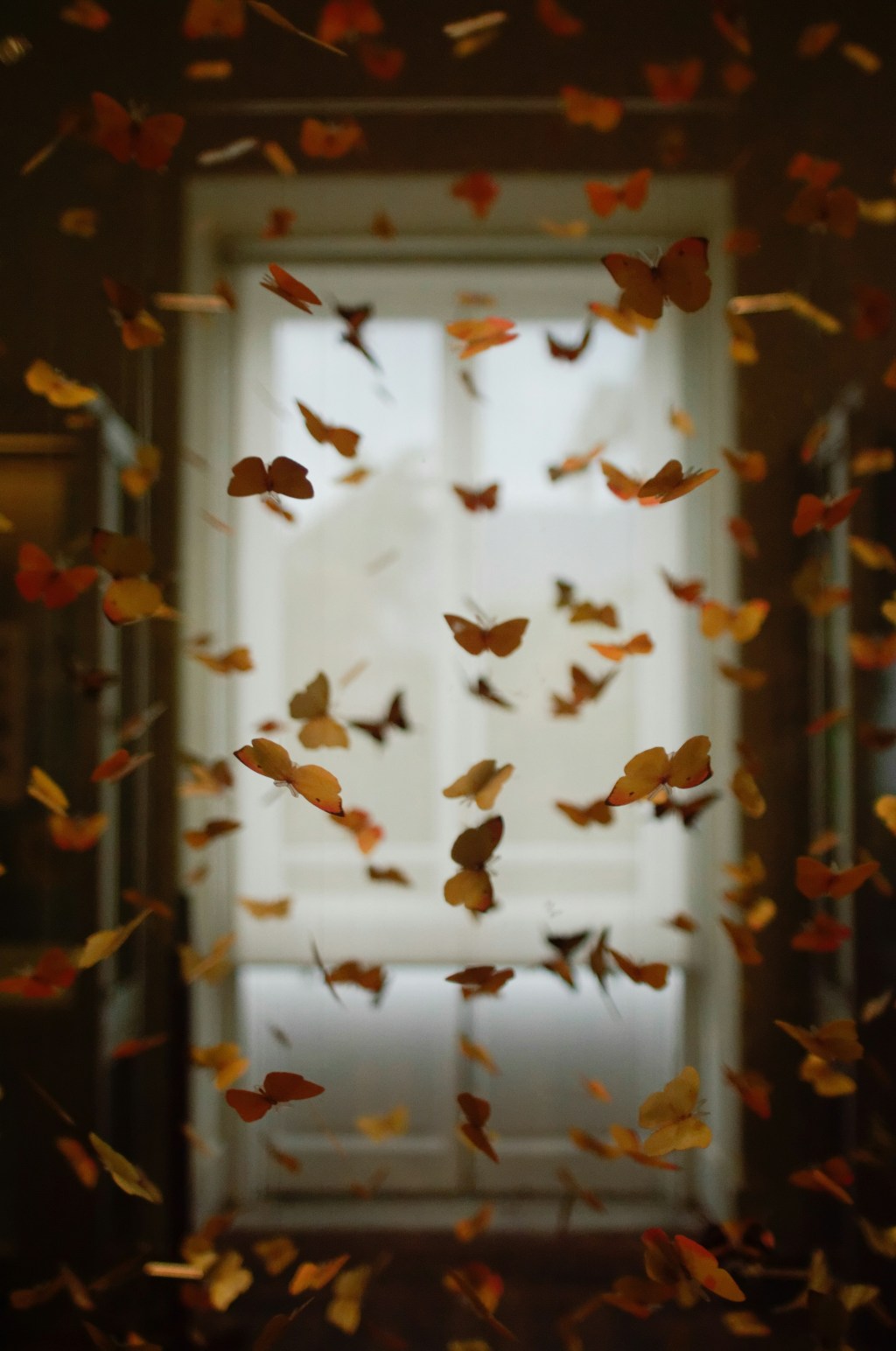
Poems of the butterfly kind incline towards beauty and grace. Like a transformed caterpillar, the poet blossoms into a butterfly, and the poem in turn radiates luminous beauty. Such poems refine the reader’s experience, and the day assumes a soft, tenuous quality. Butterflies carry an air of elegance and lightness, and poems within this mode evoke balance, wonder, and quiet delight.
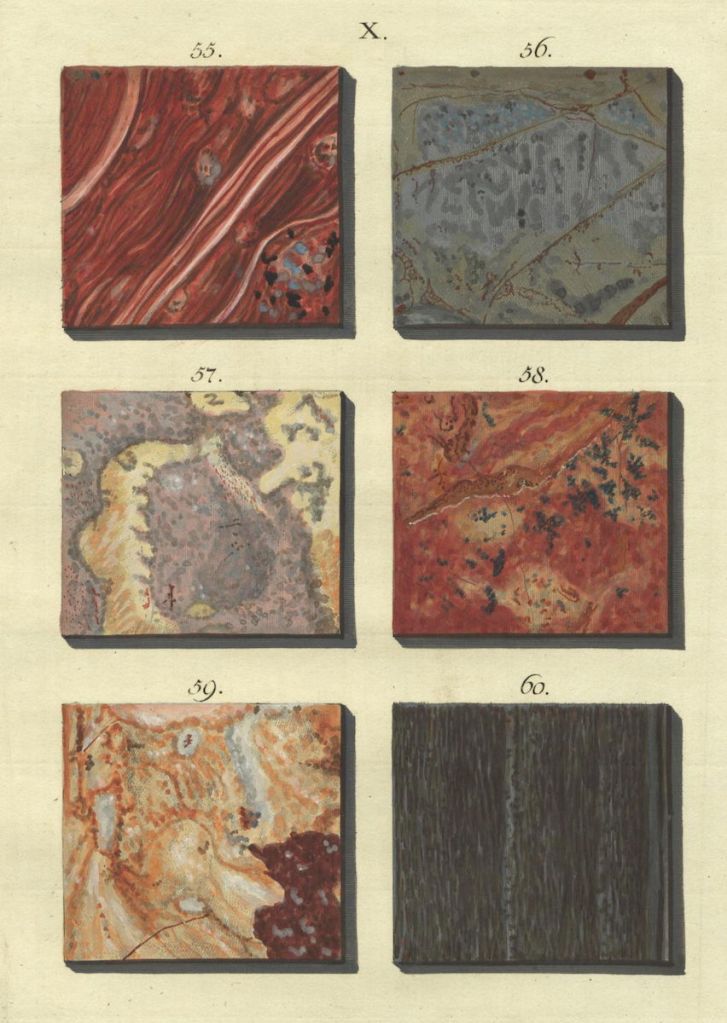
Stone poetry concerns the force exerted upon society. If we imagine a poet casting a stone into the pond of the social world, the poem releases a surge of energy, alive with vigour. As the reader continues and reflects upon life’s events, images of shifting, colliding, and widening circles, blurred yet persistent, rise before the mind’s eye. Although the water may later return to calm, the resounding thud of the stone, marking its impact in the stillness, has irrevocably altered its state.
Poems that take the form of blades expose truths within society that we neglect or shamefully avoid. Like the raw and unfettered aspect of the human spirit, such poems cut deeply. They reveal the grinding arms of a cruel machine and the silence thick with fears that erode a human being from within. As with the incision of a scalpel, the cut reaches the tender skin. The wound may in time heal, yet the pain inflicted leaves an enduring scar.
All three have always dwelt within the house of poetry. There is no need for them to contend for the same seat. On good days they meet with curiosity: the butterfly bringing light, the stone bringing change, the blade bringing clarity.
My own poems flicker across these three states, and this is deliberate. I do not wish them to soothe without ambiguity, nor merely to make a single, clean splash, nor to excise the cataract from a conscience with surgical certainty. The world through which we move can be, at once, butterfly, stone, and blade. On good days a poem may contain that same complexity. What follows belongs to the reader: to their accumulation of days and scars, to scenes I cannot imagine or scarcely dare to envisage. The poem opens a space; the reader supplies the light.
I travel widely and present new texts to varied audiences. Afterwards, we converse. Out emerge affinities and distances in every shade: how the colour of a sunset alters from one latitude to another; what rain signifies when it cools the skin, and what it signifies when it is only a sentence; whether we possess the appetite and the patience to allow symbols to unfold into a more-than-literal field. We speak of profound differences that even the most ardent love cannot dissolve, and of the oldest desire within us: to cross over, to assume another shape, whatever that may entail.
For all this, there remains a startlingly simple and inexhaustible material: language. Anyone’s language. Simple, because it lies ready to hand; intricate, because the same words refuse to remain unchanged. A single still or yet can tilt an entire sentence. A small hinge clicks, and the door swings towards an embrace or towards a conflict that cannot be undone. Language is common clay, yet every touch leaves a distinct imprint.
As for which category, butterfly, stone, or blade, these five poems inhabit, I leave that to the reader. When a poem encounters its reader, I am present only in part. What matters more is what it awakens in them, and in what manner. The three forms, or aesthetic qualities, do not constitute a hierarchy but a spectrum, a fellowship of companions. On the day of reading, one may step forward.

FIVE POEMS
Pál Dániel Levente
BIRDS
Decades of nights
settle like crows
round the once-upon-a-time of our hopes,
pick the old ones clean,
leave the newborn be.
Yet life is more than this—
an old crone strews
betrayal-crumbs
among the shivering pigeons;
homeward she turns,
and the birds, left to themselves,
swell and die.
Come morning, a hazel-eyed child
gathers their stiff bodies on his way to school—
clean death out of yourself;
your life still lies ahead.
We sit on one bough,
just above the path;
our severed wings meet.
If you grow cold, my breath shall hold you;
if fear comes, on the zither of dry leaves
I’ll hum to you;
if you would fly with the birds of passage,
I’ll bear you on the wings of my tales—
I’ll bear you,
I’ll bear you,
I’ll bear you
away from here.
At last the sun rises;
long shadows freeze into the ground;
with you, even unlived time is fair;
after every winter, spring comes.

NAIVE EMIGRANT PRAYER
We were kids, yearning for a home,
a door where the soft knocking
echoes like the hush around a held heartbeat.
How long can you hold your heartbeat
beneath seas that never speak?
How long can you endure the dive
into exile’s silence?
We were kids, but the blind wind
didn’t blow our homes after us.
We burned cloves in vain—
our sweet mother tongue
refused to caramelize over the flame.
We waited, simply hoped
to be carried by the paper-wing lift
of a stamped resettlement permit,
or caught in the Basilisk gaze
behind an immigration officer’s smile.
After all, we were kids,
we swam,
we hunted shells,
we rode the waves,
and we danced in the wakes
of happier countries.
We thought that if we ever surfaced,
we’d breathe the scent
of our mothers’ or grandmothers’ cooking
filling the air all around us.
But we were kids, impatient—
we didn’t even notice when we lost
our senses of smell and hearing
somewhere in the ocean currents.
We confused the call to come home
with the siren song.
We were just kids, after all,
and wherever we washed ashore,
we longed for a home:
a lap to rest our heads,
hands to soothe our salt-crusted skin,
a heart to still our shivering,
and a place to rinse from our eyes
the salt of unshed tears.
AN EGG CALLED DANIEL
I imagine someone who might write this,
and the objects around me twitch with life;
even wounds are objects—
raw wounds of people torn apart.
I’d rather write what I know:
“don’t fake it—write it true.”
Passion is a tangle of nerves,
and under this brutal stitching in my belly
my organs lie stacked—
jumbled, slick, alive.
A membrane: an egg, swinging by a thread—Daniel.
The world would be perfect around it
if it could learn to fit.
Until sunlight tears the terrace in two.
Let’s go to India.
I’ll give birth to Daniel
in the holy churn of the Ganges,
bathe him in the ocean off Goa—
then a sacred cow will gore him,
a sacred monkey will snatch him,
he’ll catch some ancient disease.
So—
I don’t want a child anymore.
After drugs and Nietzsche, the fork returns:
carry the world or compost it.
But understanding the world?
Pointless.
Better to map the next room—
the one flooded with white heat.
I’d rather crouch behind the tub,
pressed into the grout,
so no one sees me;
I slip out after dark—
next day, off to India.
I can’t lever anyone out of this room’s amber.
Better—every time—
to wedge in a new beginning, then an ending,
keep the reel rolling,
so there’s no moment left
to watch the shell thin
between start
and stop.
NEW BUDA IS FAR FROM HERE
New Delhi, India
From here, New Buda is far—
new bourgeoisie, new housewives;
from here Delhi is only a dream,
one last gin and tonic before sleep,
and I sleep it all—
the layovers, two continents—
until a sunlit lounger lifts me
and I wake in an embrace
that only passes for safety.
No sound reaches here from the ruin
of ex-husbands shoved aside;
nor from fathers of many children, mute
at bedroom doors that bar them;
nor from the calories burned to ash
by after-dinner anti-everything posts;
no sound from Europe,
outmatched, losing ground
in its toxic entanglements.
Here, only this arrives:
the whisper of my dirty clothes
as I undress among foaming shadows
in the gaslight of your eyes,
and a few hard memories rattling in my pocket—
I no longer wish to wash them in rivers
like murderous women,
nor pave them into a thousand-year road
like the Romans,
nor lodge them beneath my tongue
to answer all your questions
without a stutter.
WHOEVER THE SUN SHINES ON MUST TELL THE TRUTH
Agra, India
All morning we played a game:
whoever the sun shines on
must tell the truth.
We sat on a rooftop terrace
on the outskirts of New Delhi;
the palm fronds set their shadows swaying,
and heat and city noise poured down on us.
The air shimmered with humidity,
our confessions floated between us
like slow leviathans through coral gardens.
“I don’t want to sit in the sun any longer,”
you said, tired of telling the truth.
“Let’s go inside, then,” I said.
“We’ll continue tomorrow morning,
when the sun rises again.”
You rose above the chair,
your numb wings
almost tangled among the hibiscus blossoms.
“Come, sleep with me,” you said,
“and shut the window behind you,
so neither the curious house geckos
nor the thieving macaques can disturb us.
Don’t let the honest words
we left on the terrace
be blown back into the apartment
by the night wind.”
Even in broad daylight the room was dim—
as it must be to survive a lifetime.
“Come, sleep with me,” you said.
Your unbound hair blanketed the room.
“Come, let’s dream that we’re alive.”
Soft lies coiled round my ankles,
and pulled us into the long depths of our sighs.
As if I resisted.
I didn’t.
How to cite: Levente, Pál Dániel Levente. “Butterflies, Stones, and Blades.” Cha: An Asian Literary Journal, 11 Feb. 2026, chajournal.com/2026/02/11/butterflies.

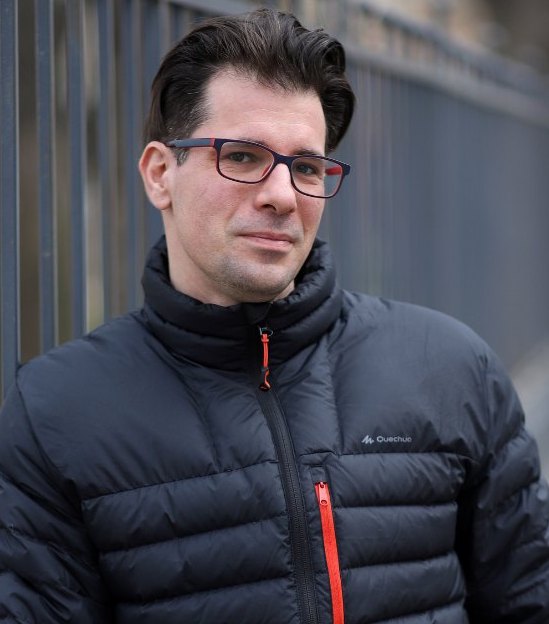
Pál Dániel Levente is a poet, writer, literary translator, and dramaturge for both theatre and circus. He is the author of eight books, which have been translated and published abroad fifteen times. He won the MUSEPAPER Poem Prize (USA, 2023) and was longlisted for Frontier Poetry’s “2024 Portrait Prize” (USA). In the same year, he received the Grand Prix at the Spring of Poetry International Poetry Festival (Romania), the Molla Panah Vagif Medal (Azerbaijan), and the Salvatore Quasimodo Special Award for Poetry (Hungary).
 Cha
Cha 