
Editor’s note: In Gutierrez Mangansakan II’s essay, growing trees in red-clay pots becomes a metaphor for exile, love, and impermanence. Through memories of family, cats, and lost homelands, he reflects on denied inheritance and chosen distance, arguing that care, memory, and grief are ways of living meaningfully without fixed belonging.

[ESSAY] “Reflection on Exile, Impermanence, and Red Clay Pots” by Gutierrez Mangansakan II
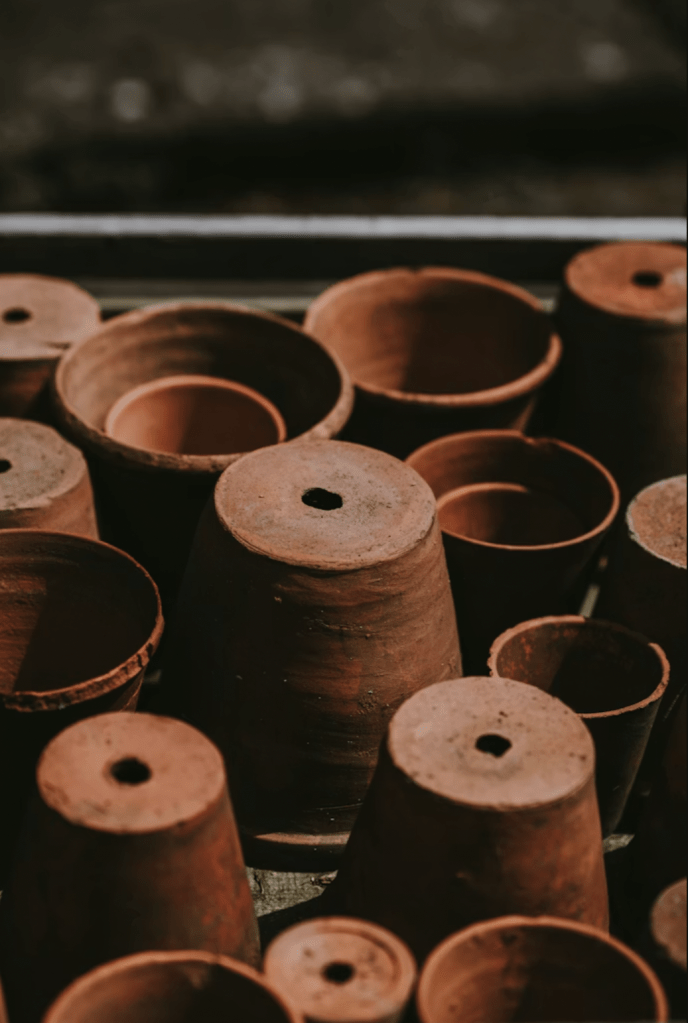
I stopped planting trees directly into the soil once I became keenly aware of what it meant to carry life from one place to another. I began buying large red clay pots, the kind that require two arms and a firm grip to lift, so that I could grow trees without binding them permanently to the earth. The best pots come from Tantangan, northwest of General Santos, the city where I currently live in Mindanao. I love knowing that a tree can grow strong without giving itself completely to any single patch of earth. You can move it, start over, try again somewhere new.
During a trip to Batam Island in Indonesia, I smuggled home longan seeds wrapped in a napkin, carefully tucked into the folds of my luggage. There was no assurance they would sprout. I have never seen the fruit anywhere in Mindanao, only in grocery stores alongside imports like kiwi and pear. Still, I planted them in the clay pots, under the careful gaze of my longtime partner, Moises, and our cats, who sat nearby as if they were part of the plan. They are trees now, tall and spindly, but they still do not bear fruit. Perhaps, like me, they are suspended between places, never truly belonging, only finding ways to keep growing.
The bungalow we inhabit in General Santos, however temporary, carries the weight of permanence. Moises and I arrived here not as wide-eyed newcomers, but as people already in the middle of a story that began twelve years earlier, in a rented house in Davao, 138 kilometres away. Twenty-five years together. That number always surprises me. It feels too large for our small, everyday routines, pushing the supermarket cart side by side, choosing red clay pots for new plants, slipping into the cinema to catch the last full show.
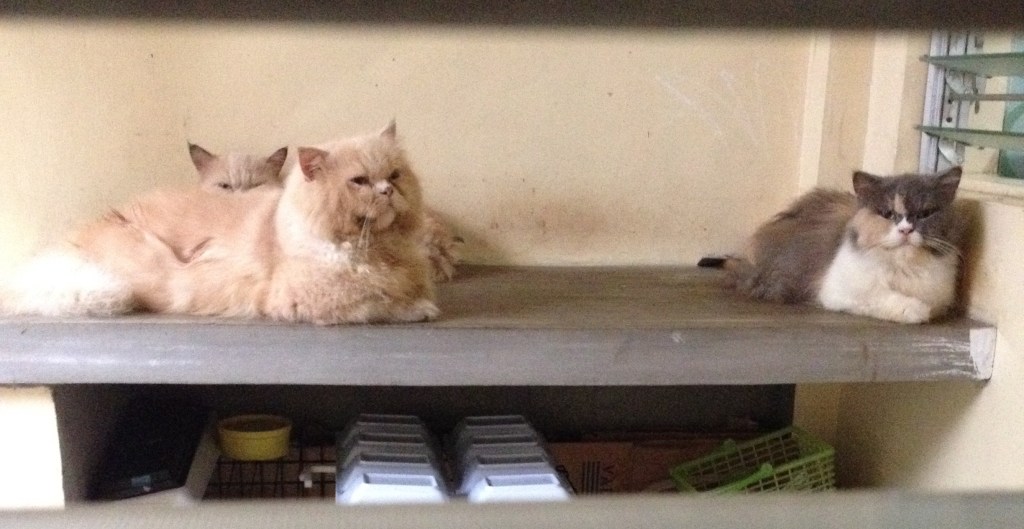
Our house is crowded with bits and pieces gathered over the years. There is a battered kettle from a night market in Kota Kinabalu, a conch shell from an excursion to Samal Island, a chipped dragon statue rescued from a dusty shelf in Taipei. And the cats, always the cats. I recite their names like a quiet chant. Padme, who sleeps only in sunlight. Shelly, who needs to be cradled like a baby. Venice, staring through the window screen as if she is waiting for the world to change.
In the mornings, just after the sun lifts its thin veil over this southern city, faint meows cut through the stillness. One of the cats, Chewie, named after the shaggy character in Star Wars, calls for breakfast, nudging a ceramic bowl near the back door. There are ten cats now, all descended from the first two we brought from Davao. Aslan, with his wild mane and regal air. Buffy, a calico who drifts through rooms, not fierce but graceful, named for the way she seems to defy gravity.
Nothing that grows can remain rooted when the heart is always half-packed.
Still, I will not plant trees straight into the ground. Not because the soil here is poor, but because I know this house is not forever. No house is. Nothing that grows can remain rooted when the heart is always half-packed, never certain where it is meant to land.
So I choose large, heavy pots, planters made from the same red clay my grandmother once polished with coconut husks in Pagalungan, my Maguindanao hometown. In them, I bury my hopes. And my dead.
There is a question that hangs in the air, somewhere between Epicurus and Sufism. If everything is transient, if life is a river that never stops moving, why cling to what will vanish? Why love cats who will die, or raise trees that will not outlast you?
The answer is something I have yet to learn. Perhaps it is this: we do not cling because we are foolish or in denial. We cling because we understand. The more we know, the harder we love. The sharper our grief.
To plant, then, is an act of faith. And faith, I think, is the only thing that makes impermanence bearable.
Pagalungan, Maguindanao, my hometown, has not seen me as it once did. I grew up there, sweating through its sticky nights, wrapped in old stories under mosquito nets while my grandmother’s voice drifted through the dark. She died in 2005, but her words still cling to every story I tell. My mother left in 2011, her goodbye drawn out by lung disease and a slow fading. They are buried beside each other, in the land we once believed would be ours forever.
After my mother died, her half-siblings, my grandfather’s children from his other wives, circled like vultures. They claimed what she left behind, and what would otherwise have been our birthright. In large Muslim families like ours, love is rarely simple. Affection must share space with hierarchy, with unspoken rivalries, with the quiet calculations of who belongs more and who inherits less. Polygamy may be lawful, even sanctified, but it multiplies not only children, but also envy, suspicion, and the long memory of slights. What happened to my mother was not an exception; it was the predictable fracture of a family stretched too wide, where blood alone could not protect her from being outnumbered. That she could be erased as easily as one scratches out a line of ink made Pagalungan a place of ache.
Exile, I learned, does not begin with leaving, but with inheritance denied, when even the soil refuses to claim you, and the only way to carry what is yours is to place it in pots you can lift and take with you.
I go back sometimes. Now and then. But returning is not the same as belonging.
I go back sometimes. Now and then. But returning is not the same as belonging. Each visit is brief, like a stranger checking in on a house once rented. I speak of Pagalungan often, evoke it in my films, my essays, even my dreams circle back to it. It is where everything started, and in some ways, it is the wound that never closed. My work cannot help but bleed its geography. And yet, when I walk its roads, I feel something loosen, a tie that was once unbreakable. My childhood is buried there, under the same soil that now holds my mother and grandmother, but something, whether time or grief or betrayal, has changed what belonging really means.
)
Today, the trees I planted in the red clay pots are taller than I imagined. Their roots curl around the walls of the vessels, searching for a way out. They have not borne fruit. Not yet. Maybe they never will. Maybe they need to be planted in the earth to do so. Maybe I do, too. Maybe I have outgrown the pot I made for myself.
I understand that everything is temporary. I am not immune to the wisdom of the surahs of the Qur’an. I know that the world is not ours to keep. That houses fall, and cats die, and trees uproot themselves in storms. That even love, at times, can evaporate like dew in the morning sun. But what does knowing all that mean? What is truth compared to the smell of a cat’s fur, warm from sleep? I do not let go because I cannot. Or because, perhaps, I believe in something more enduring than permanence: the right to remember, to grieve, to carry things forward.
I have always understood that life is temporary. And yet I hoard memories like old postcards. I gather up my dead cats and raise them into metaphor. I cry for Buffy every time I water the tree that marks her grave. I talk to Rajesh in the mornings, touching his pot for luck. What kind of faith allows this kind of tethering?
Maybe it is faith in love. Faith in holding on. Faith that things can keep going, even if everything ends.
Moises, gentle as always, sometimes tells me we need to let go. He says it softly, like someone who has learned to tuck grief away in a small drawer. I nod. I know he is right. But then Shelly jumps into my lap and begs for ear scratches. I remember Aslan’s purr, the low rumble that calmed me during our early years in Davao. I remember Buffy curling up next to Moises during thunderstorms, both of them pretending not to be scared. And I just cannot let go. Not yet.
It is strange to think how cats, not people, have become my compass.
It is strange to think how cats, not people, have become my compass. Each feline has marked a chapter of my life, showing up, getting sick, bringing joy, dying, leaving me with grief, then giving me space to heal, over and over. They have grounded me when the rest of the world feels as though it could simply vanish. Perhaps I have not returned to Pagalungan because I am afraid. Afraid that it will no longer recognise me. That it will reject my name, my longing. Or worse, that it will welcome me and I will feel nothing.
What remains of my beloved Pagalungan now exists mostly in my head, and in a few lines I recite at film screenings or writing workshops. “I am from Pagalungan,” I say, and people nod, perhaps picturing a town with a dramatic name that once made headlines. The birthplace of the Moro revolution in the 1960s, where my grandfather founded the Mindanao Independence Movement. The battleground between Moro separatists and government troops in the 1970s. A sanctuary to refugees during the all-out war in 2000. But they do not know about the bitter fights over land and inheritance, the way family can turn on you after someone dies. After my mother passed, I could not fight my aunts and uncles, not when grief had rendered me mute. I turned instead to stories, to films, but the resentment lingers.
So I do not return. Or I return, but only in metaphors. In the slow arc of a camera. In the way light falls on a face. In the ritual of storytelling. Pagalungan will always be where I began, but I have become its exile. Not because I chose to leave, but because it no longer holds space for me. Still, I hold space for it. I carry it, like the pots, like the cats, like the bones of Buffy, Kylo, and Rajesh, wrapped in my own sacred cloth.
My exile does not resemble the kind history prefers to record. I did not leave under gunfire or threats. I did not flee in the dark with only fear as my companion. I left quietly, carrying grief instead of urgency, choosing distance as a form of survival. I told myself it was temporary, that I was only stepping away to breathe, to soften, to find a version of myself that could one day return without resentment.
In some alternate life, I would have stayed. I would have built a house on the land my family has always known. I would have let the trees tangle their roots deep in the soil. But history has a way of shoving us off course. The Jabidah massacre, my grandfather’s decisions, the Moro revolution, the leaving, the return. None of it sits quietly in the margins for me. It is the ink in my veins. And maybe, just maybe, it is my destiny to wander, to carry my garden in clay pots and bury my dead in vessels I can lift when the time comes to leave.
And yet, I dream of a day when all the bitterness is gone. When Pagalungan’s earth no longer presses betrayal into my skin. When I can plant the Batam tree into the ground and let it grow wild and fruitful. When I can finally exhume the pots and let the cats rest somewhere permanent, somewhere they can never be moved again.
When Buffy died in 2019, her body gave up slowly, like a candle burning itself out. Cancer consumed her from the inside. I wrapped her in a white cloth and buried her in a red clay pot, the same way we buried Rajesh in 2022, after his kidneys failed and he could no longer purr without pain. These pots now sit quietly by the wall, shaded by longan trees, quiet reminders that love does not know how to let go. I keep them close because leaving them behind would break me. The thought of someone digging them up, not knowing what is inside, shakes me to my core. So I take them with me. They are more than graves. They are vessels of memory. Their roots, their weight, their invisible breath keep me anchored while the world keeps telling me to let go.
The longan trees continue to grow, taller than before. Their leaves are firm and glossy. But they do not fruit. Maybe they know they are in exile too, caught between places, held in clay but dreaming of richer soil. Maybe they are waiting for me to heal. Maybe they are waiting for me to forgive. Maybe one day I will get there. Maybe then I will walk back to Pagalungan without anger, with a heart ready to plant something new. Maybe the trees will fruit then. Maybe I will, too.
For now, I live in a decaying house with broken plumbing and ghosts in the ceiling.
For now, I live in a decaying house with broken plumbing and ghosts in the ceiling. I sweep the floor where my cats nap, boil water for coffee, and write stories no one asked for but I must tell anyway. The cats, descended from Aslan and Buffy, stretch out in the corners, watching quietly, as if they know what is unfolding. They are my silent witnesses to this slow drift of impermanence.
We do not know how long we will be here. But we are here now. And that, for this moment, is enough.
Until then, I will keep planting in pots. I will keep loving the cats that come to me. I will continue mourning the ones who have gone. I will write about them, speak their names, trace their paw prints on my soul. I will tend to what I love. Because that, too, is a form of prayer.
And maybe that is enough.
How to cite: Mangansakan, Gutierrez II. “Reflection on Exile, Impermanence, and Red Clay Pots.” Cha: An Asian Literary Journal, 7 Feb. 2026, chajournal.com/2026/02/07/clay-pots.

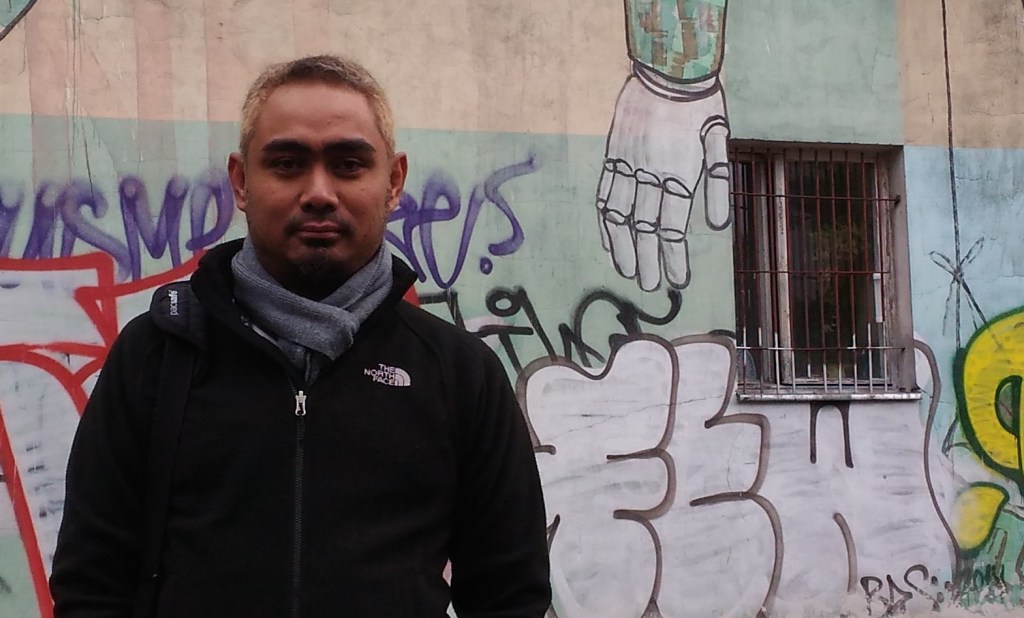
Gutierrez Mangansakan II is a filmmaker and writer. He has published a collection of essays, Archipelago of Stars, and a collection of short stories, Closing Party and Other Stories, and has edited three anthologies on Bangsamoro literature. He was a writer in residence at the University of Iowa’s International Writing Program in 2008, and a fellow of the University of the Philippines National Writers Workshop in 2015. He lives in General Santos City, in the southern Philippines, with his ten cats and a beagle. [All contributions by Gutierrez Mangansakan II.]
 Cha
Cha 