
茶 LEEDS
茶 FIRST IMPRESSIONS
茶 REVIEW OF BOOKS & FILMS
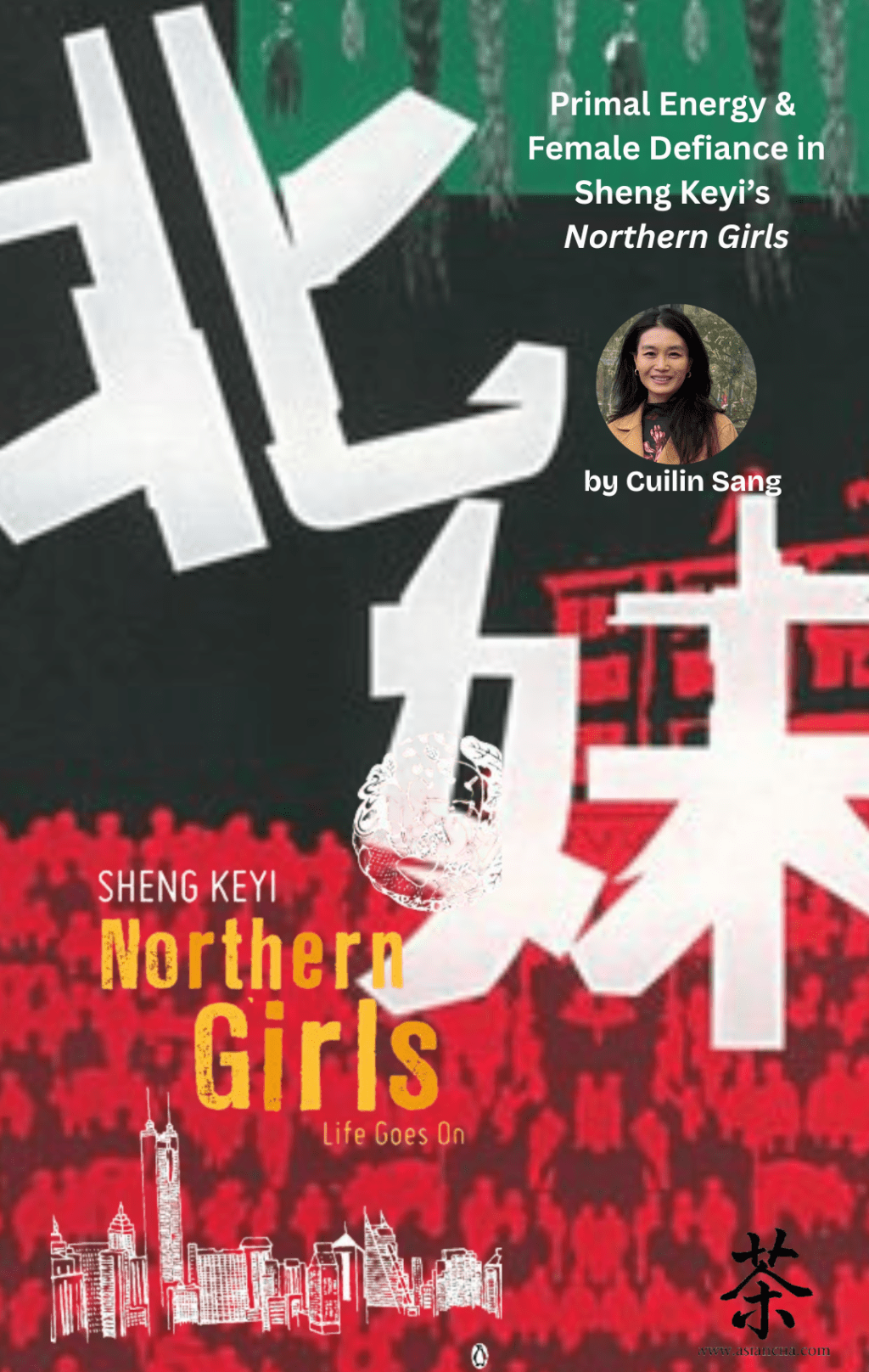
[LEEDS | REVIEW] “Primal Energy and Female Defiance in Sheng Keyi’s Northern Girls” by Cuilin Sang
Click HERE to read all entries in Cha
on Northern Girls.
Sheng Keyi (author), Shelly Bryant (translator), Northern Girls: Life Goes On, Penguin, 2012. 320 pgs.
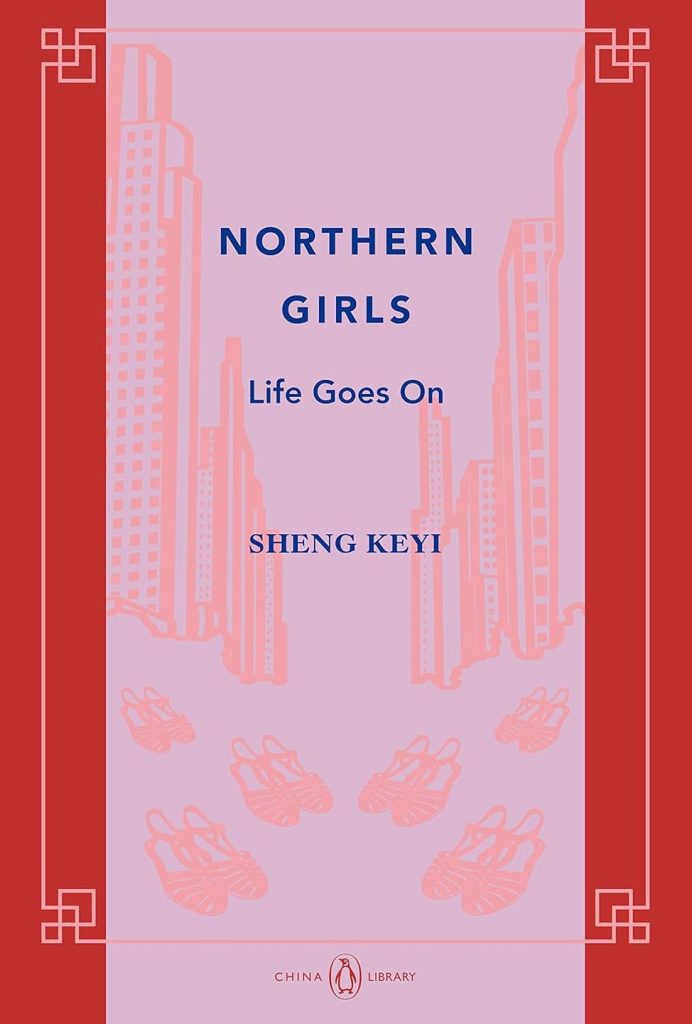
Sheng Keyi’s debut novel, Northern Girls (original Chinese 2004; English translation by Shelly Bryant, 2012), is replete with a primordial energy. Compared with her other well-known works—such as Death Fugue (original Chinese 2012; English translations by Shelly Bryant, 2014) and Shui Ru (Water and Milk, original Chinese 2003; not widely available in English translation)—Northern Girls is less designed than “eruptive,” to use her own word, and thus adopts a curiously energetic, untamed shape.
It is a story that begins with breasts and ends with breasts.
It is a story that begins with breasts and ends with breasts, the most prominent body parts through which a person’s female identity is ascertained. Yet it is not a lascivious story, not in any sense of that word. Nor is it a story about sex, or even sexuality. It is, rather, a documentation of an unnamed species of impulsive energy, and of its doomed frustrations and failures in China in the 1990s, when parochialism in economically less-developed areas clashed with the fledgling moneyism of the country’s special economic zone, Shenzhen.
Xiaohong, the protagonist of the novel and the host of this energy, draws incessant attention to her extraordinary breasts from her early adolescent years to her mid-twenties, when the story ends on an indecisive note. The obsessive fixation on breasts might be puzzling to a reader from a sexually more-liberal context, but it is understandable in 1990s China. It is not only that Xiaohong’s breasts are large or protruding enough to raise eyebrows; it is also that she unflinchingly lets them be. As the author affectionately observes in the afterword, Xiaohong leads an “honest” life and “possesses an impregnable vigour and vitality”. Xiaohong’s loyalty to her own principles, and her defiance of social prejudice and pressure, render her life adventurous, both in her hometown village and in the big city.
In many ways, Xiaohong is a character both before and beyond conventional theoretical frameworks. She embodies so many conflicting qualities that it is almost impossible to categorise her as anything other than a girl who genuinely values friendship. On the one hand, her moral restrictions are unbounded when it comes to the primal energy that guides her behaviour. She will not sell her body, yet she does not hesitate to sleep with her brother-in-law, knowingly hurting her sister. As a teenager, she is physically intimate with her father of her own volition. She can enjoy sex without emotional strings attached and chooses abortion when faced with an unexpected pregnancy. On the other hand, she cherishes her friendship with other “northern girls”, who work menial jobs in the southern city of Shenzhen, to such an extent that she sacrifices her own interests for their benefit. She rescues and takes in a suicidal girl, cares for her best friend, and helps to solve the murder of one of her former co-workers. Her sense of responsibility and compassion appears more readily reserved for the “northern girls” than for her sister, who is portrayed as the epitome of a village culture with which Xiaohong cannot identify.
“Northern girls” is a derogatory term used by locals in the 1990s to refer to female workers from anywhere north of Guangdong Province, where three out of five of China’s “Special Economic Zones” were located. Although it is used as the title of the novel, the xenophobic connotations of the term are not explicitly explored. The hardships and injustices these “northern girls” endure do not stem from the locals themselves, but from the broader context of economic and social transformation in Shenzhen, the nation’s model special-economic-zone city in the 1990s. Compared with the village from which Xiaohong comes, Shenzhen monetises everything, including ambition, sex, and relationships. This all-encompassing monetisation both stimulates and enervates Xiaohong in ways that differ markedly from the emotion-ridden antagonisms of her hometown, such as mockery, gossip, and jealousy. The fact that Xiaohong ultimately chooses to remain in Shenzhen indicates that, for her, the money-driven counterforce to her nature is the lesser of two evils when compared with the emotion-driven one she leaves behind.
The only force seemingly immune to this cold, engulfing moneyism is the friendship between Xiaohong and the other northern girls. It is a bond formed out of necessity, a survival instinct rooted in Xiaohong’s primal energy. Sheng Keyi describes Xiaohong and her companions as “the women on the lowest rung of the social ladder, the real working class”. For Xiaohong, however, social classification proves more complicated. In her hometown, where her father supported the family as a well-to-do contractor, she was not exactly “on the lowest rung of the social ladder”.
As the term “northern girls” itself implies, geography was a determining factor in women’s social status in 1990s Shenzhen. There, Xiaohong’s original social network and social capital are nullified, and she nearly becomes a “bare life”, to appropriate Giorgio Agamben’s term, stripped of political significance and suspended between mere survival and a fully lived life. Her fierce attachment to friendship thus manifests both the force of her primal energy and her instinctive resistance to the dehumanising violence of the money economy.
This energy and resistance are also reflected in the novel’s linguistic domain. Beneath the dominance of Mandarin Chinese as the principal literary medium, undercurrents of regional dialects compete with one another. The Hunan dialect, Xiaohong’s mother tongue and her secret code with fellow townspeople in the big city, remains half concealed and erupts only when genuine emotion surfaces. Meanwhile, Cantonese, the local language of Shenzhen and a bearer of greater economic and social weight, surfaces intermittently to fracture and reshape the northern girls’ sense of belonging. For the most part, Shelly Bryant’s accomplished translation successfully captures and transposes this linguistic power struggle into English, although the half-homophonic, half-figurative rendering of a name such as “Zhu liye” 朱丽野 as “Julia Wilde” may prove culturally disorienting for the English-speaking reader.
How to cite: Sang, Cuilin. “Primal Energy and Female Defiance in Sheng Keyi’s Northern Girls.” Cha: An Asian Literary Journal, 5 Feb. 2026, chajournal.com/2026/02/05/northern-girls.

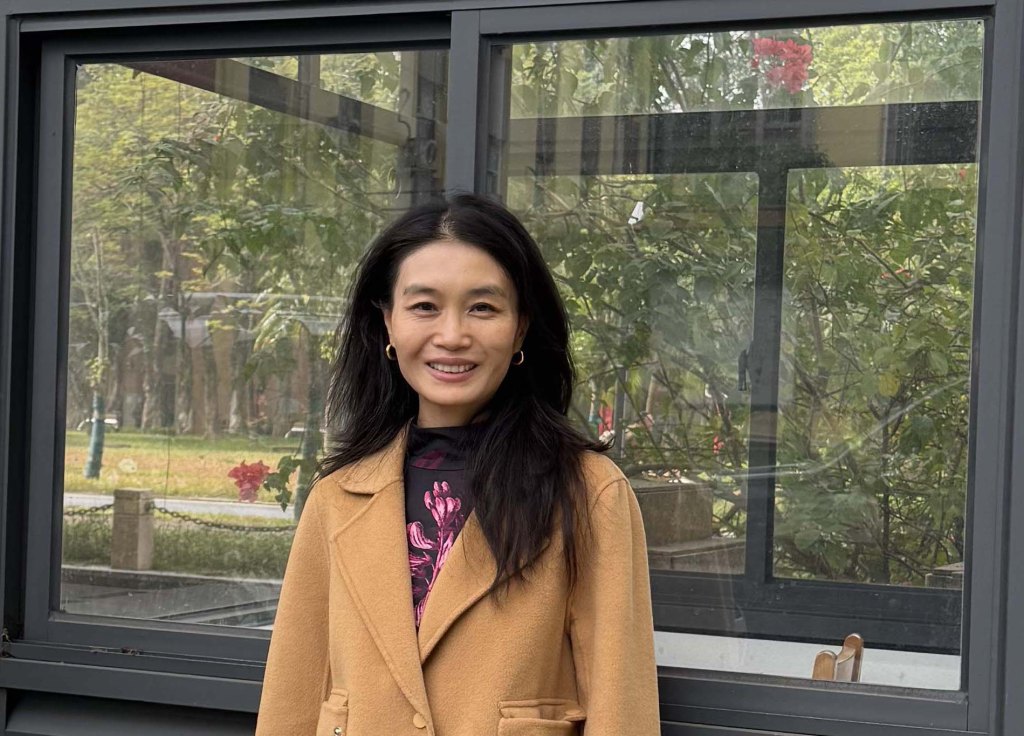

Cuilin Sang is a professor of American literature and comparative poetics at Guangdong University of Foreign Studies. She holds a PhD in English from the University of St Andrews, UK. Her research and teaching focus on contemporary English poetries, comparative poetics, and intermedial studies. Over the past three years, she has also introduced a wide range of poetic voices to Chinese readers, including through her translations of poems by the American poet Jorie Graham from Runaway and To 2040, which have been featured in Poetry Periodical [Shi kan] and World Literature [Shijie wenxue].
 Cha
Cha 