

[SUNDANCE 2026] “‘I Want to Make Films for Teenagers Forever’: A Conversation on BURN” by Nirris Nagendrarajah & Makoto Nagahisa
Makoto Nagashia (director), BURN, 2025. 103 min.
INTRODUCTION
Nirris Nagendrarajah
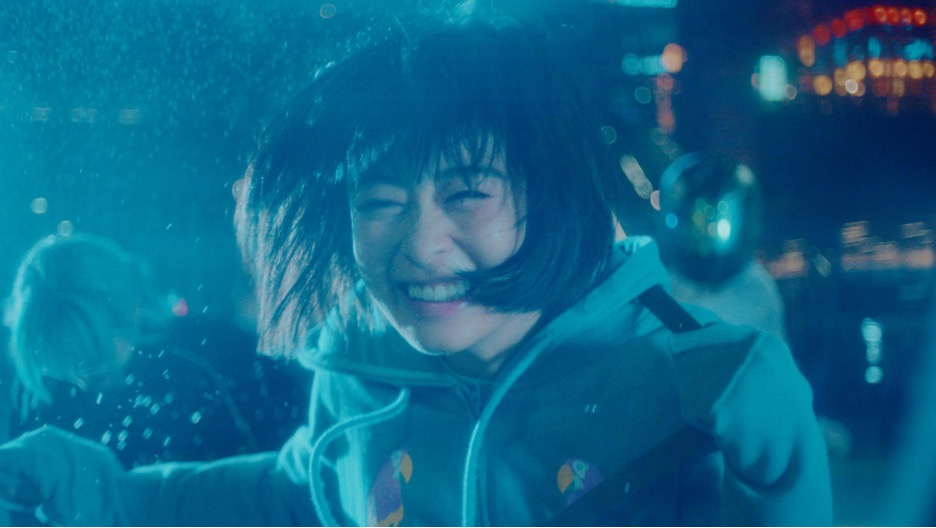
W-w-why do people do what they do? It is the question that structures BURN, the newest feature from Sundance darling Makoto Nagahisa, which opens on the glittering, pink-lit face of its narrator and protagonist, Jeurié (the remarkable Nana Mori). She tells us that she has set Kabukicho (the red-light district in Shinjuku) on fire, and buckles us in for the story of how she arrived at this point. What follows is an account of an abusive childhood in a religious household, defined by a violent father whose doctrine of “collective punishment” haunts her psyche. Marked by a stutter that renders her an outcast, Jeurié comes of age by sustaining and fortifying an interior dialogue, looking in on a world that has never allowed her the space to be accepted, a world that insists on a hopeful light yet denies the existence of shadows.
Running alongside this personal history is her entrance into an orbit of misfit kids, watched over by the despicable Kami (Wataru Ichinose), where sexploitation, narcotics abuse, and harm become normalised as means of survival and of finding a sense of freedom for oneself. Nagahisa charts these systemic and generational forces with an innovative style that elevates the material beyond its grim subject matter. Through stark close-ups, we see the assuaging sensation Jeurié feels when she befriends Mitsuba (a standout Aoi Yamada, known for her role in Perfect Days [2023]); when she is welcomed into the group, who mirror her inner and outer wounds, and finally experiences a sense of belonging; and when the camera, unafraid to remain at a distance, tilts just so, its essences amplified by Rice Iwai’s resplendent score. After she suffers an assault, the narration temporarily ceases, creating an unsettling silence that requires her to tell us what happened through text drawn from her diary entries.
Though steeped in an unerring nihilist perspective, BURN never mines suffering for pathos. Jeurié endures with optimism, with a belief that God may exist despite all evidence to the contrary, and with a purpose too, namely to make enough money to return and save her sister from solitary torture. The mystery posed at the outset, the why of it all, draws us into a procession of beautiful yet paradoxically ugly images, but it is Jeurié’s sunny disposition that keeps us engrossed. Even as the film shines light on lives lived at the fringes of society and easily ignored, it avoids becoming a social parable, instead asserting itself as a site of cinematic intervention that makes one want to live in this world, even if it is actually h-h-hell. Moreover, it might be the only film of the year in which a character is murdered by a pink dildo.
On the eve of its premiere in the NEXT category of the 2026 Sundance Film Festival, Nagahisa took the time to answer a few questions over email about his development process behind BURN.

A Conversation
on Burn
Nirris Nagendrarajah & Makoto Nagahisa
I feel that something like a “magnet” or a “hand” exists that has a purpose in moving life, destiny, and the world.
Nirris Nagendrarajah (NN): The film begins with a question: why did she light the city on fire? Only at the end do we learn the answer, yet the suspense this delay evokes keeps us engaged. During the screenwriting and editing process, how did you arrive at this structure?
Makoto Nagahisa (MN): The “result” of “setting the fire” was not important to me. I did not make the film so that people would be surprised by the goal of the story. The most important question was “why?”, so I decided to use this structure (stating the result first). Initially, I planned to start with a scene of questioning after the arrest, but this was too long, so I changed it to an abstract expression. This structure of stating the conclusion at the beginning was not something I changed during the editing stage, but something that was decided upon at the scriptwriting stage.
NN: To explore nihilism, one must view it through the lens of optimism. How did Jeurié (also known as Ju-Ju) come to mind? What were some of the conversations you had with Nana Mori to better understand the resilience of her character?
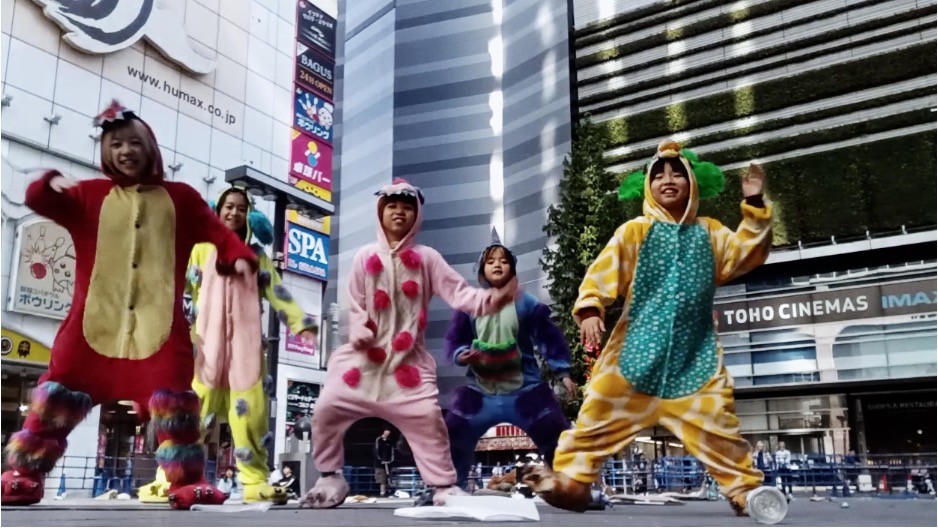
MN: As you say, nihilism and optimism have an important relationship. I believe that optimism is the most important thing for surviving harsh circumstances. I interviewed the people involved and came up with this character as a fantasy. To amplify the fiction, I was also inspired by the protagonist of Marquis de Sade’s The 120 Days of Sodom and the actual Kinkaku-ji Burning Incident that occurred in Kyoto in 1950 (NN’s note: also the inspiration for Yukio Mishima’s The Temple of the Golden Pavilion [1976]). I shared this background with Mori-san. She spent time in the nearby Shinjuku area during filming, and I heard that she was keen to live in that square.
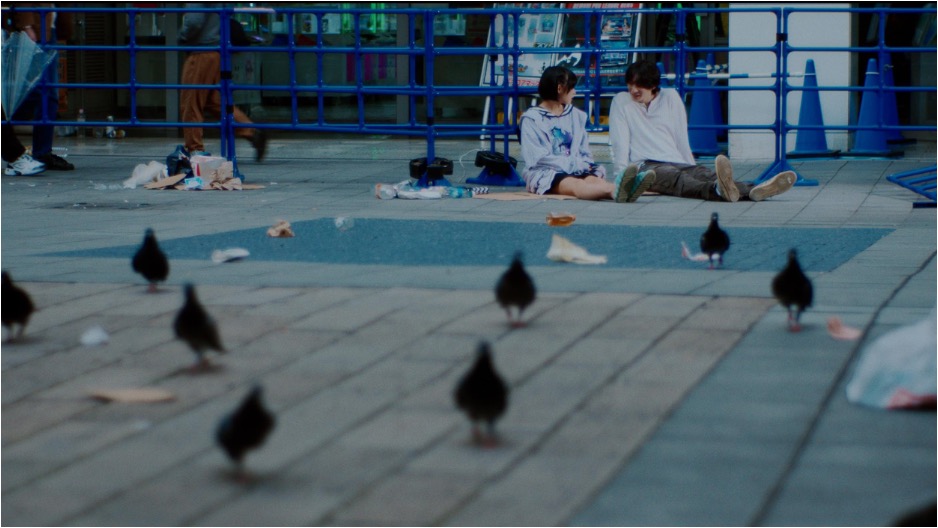
NN: You have said that you wanted to shine a light on misfit kids who might be invisible to tourists. When did you encounter these kids, and during the development of the film, did you speak with any of them?
MN: I have known about them for about seven or eight years because they were featured in the news as a social issue. I interviewed them a few years ago through a non-profit organisation that supports them locally.
NN: From the beginning of your career, and especially through your history at Sundance, you have been recognised for your original style, which here emerges through your collaboration with cinematographer Hiroaki Takeda and editor Syunichi Sone. Could you speak about what each of these collaborators brought to the realisation of this vibrant, innovative style?
MN: Hiroaki Takeda serves as DP for all of my work. He and I are always talking about camera positions and angles. We often discuss the meaning of a “shot” in the story, and we spend a lot of time on that when scouting locations. His sense of colour is heavily incorporated into the film. Syunichi Sone is a free-spirited video editor. His editing is as flexible as slime and sticks to your heart. It is largely thanks to the magic of these two that my scripts are so strong.
NN: A fascinating aspect of this film is its use of digital effects, which can make it feel like a video game or a virtual reality experience. This approach is used primarily when Ju-Ju’s trauma resurfaces or when she experiences violence, yet it never feels abrupt because you weave in so many different forms of visual media, including camcorder footage, photographs, title cards, and animations. There is even a moment in which you create a picture within a picture. Your films resemble an intricately woven tapestry of media. Do you storyboard these sequences in advance? How much is planned, and was there an instance in which you innovated on the spot?
MN: Storyboards are created in advance for every shot. A two-hour sample video is then created, combining the rough sketches with narration by the staff, and filming begins in a refined state. If better ideas or shots emerge on set, we will use those. This is why we are fully prepared. Digital effects are an important technique for me. I feel that ‘low-resolution’ things are important to teenagers. Reality is too “high-resolution.” For teenagers, reality is too data-heavy to be burdened with as it is. The same goes for past trauma. In order for the characters to somehow manage to accept these things, perhaps they need to be converted into low-resolution images like emojis or digital effects.
NN: Your past films have examined the lives of children and adolescents and, as a result, your approach has always retained a sense of play. Cinema is full of bright children who illuminate the dark world handed to them. Realising that your parents are fractured people, wanting to die, doing whatever you can to maintain a hold on freedom, having a soft spot in your heart, desperately wishing for your dream to come true, these are all emotions I have experienced too. These themes are universal. Why do you think you remain preoccupied with this stage of life that everyone passes through, and, as this film prepares for its world premiere, do you think you will return to this period for your next film?
MN: My teenage years were extremely important in my life. The things that happened there have had a huge impact on my life ever since, both good and bad. Perhaps that is why I am so attached to those emotional experiences. I also have a 14-year-old daughter. Perhaps I make films about these topics so that I do not become insensitive to her inner workings. Because teenagers’ worlds are so narrow, they have the potential to make bad choices, like suicide. I want to be there for them and, if possible, ease their worries through my films (though that is extremely difficult). I want to make films for teenagers forever from now on.
NN: Finally, in keeping with a recurring theme in the film, do you believe God exists?
MN: I do not believe in any particular religion, because what I intuitively grasp does not match the religions that exist today. About God, I do not know if it is a “God,” but I feel that something like a “magnet” or a “hand” exists that has a purpose in moving life, destiny, and the world. I feel that this ‘purpose’ is very animalistic, nonsensical, and capricious.
How to cite: Nagendrarajan, Nirris and Makoto Nagahisa. “‘I Want to Make Films for Teenagers Forever’: A Conversation on Burn.” Cha: An Asian Literary Journal, 30 Jan. 2026, chajournal.com/2026/01/30/burn.



Nirris Nagendrarajah is a writer and culture critic from Toronto. In addition to Metatron Press, his work has appeared in MUBI Notebook, Little White Lies, The Film Stage, Ricepaper, Notch, Polyester, Intermission, Ludwigvan, and In the Mood Magazine. He is currently part of Neworld Theatre’s Page Turn program and at work on a novel. [All contributions by Nirris Nagendrarajah.]

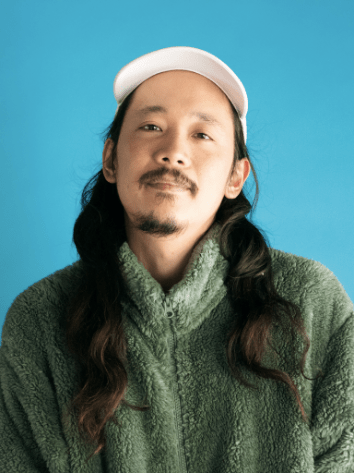
Makoto Nagahisa is a Japanese filmmaker who began his career in advertising. His previous films have received awards at the Sundance Film Festival and the Berlin International Film Festival. Known for his inventive visual techniques, he excels at portraying the emotional lives of young people in films such as We Are Little Zombies (2019 Sundance Film Festival), And So We Put Goldfish in the Pool (2017), and his most recent short, Pisko the Crab Child Is in Love (2024 Sundance Film Festival).
 Cha
Cha 