
Editor’s note: Chris Song offers a rigorous meditation on the Fleurs des lettres Issue 118 cover controversy, where a grieving teenager’s image appeared without consent. Reading the intervention of Hong Kong Readers’ Bookstore, the magazine’s board of directors, and the defence advanced by former editor-in-chief Hong Ngan 紅眼, the essay insists on consent as a constitutive ethic separating literary publishing from journalistic licence itself.

The recent controversy surrounding the cover of Issue 118 of Hong Kong’s Sinophone literary magazine Fleurs des lettres 字花 began with the magazine’s decision to use a photograph taken at a memorial site outside Hung Fuk Court in Tai Po: a clear, close-up portrait of a tearful teenage boy.
After receiving the new issue, Hong Kong Readers’ Bookstore 序言書室 publicly stated that Fleurs des lettres did not know the boy and had used his identifiable likeness on the cover without obtaining his consent. On that basis, the bookshop decided to suspend sales and questioned whether turning private grief into a cover “hook” amounted to the commodification of pain.
Subsequently, the magazine’s board issued a statement acknowledging that concerns had been raised about the publication process, and that the issue should not have been put on sale without written consent. The board apologised for inadequate oversight and announced an internal investigation. Meanwhile, the (now former) editor-in-chief of the magazine, Hong Ngan 紅眼, defended the cover decision in a personal account, citing factors such as the photograph having been taken in a public setting and the absence of specific statutory regulation of portrait rights in Hong Kong. He ultimately tendered his resignation.
}
As these three narratives intersected, the incident quickly expanded beyond an ethical dispute over a single cover image. It became a broader reckoning with the distinction between a literary magazine and news reportage, the absence of a robust culture of consent, and the ways in which publishing power is publicly scrutinised when it bears upon vulnerable individuals.
The Issue 118 cover incident is therefore no longer merely an argument about whether the cover is “beautiful” or “shocking” enough. It marks a more serious dividing line: whether a literary magazine, when confronted with another person’s grief, can distinguish between what it is able to do and what it ought to do, and whether an editor-in-chief occupying a position of power can restrain the editorial impulse of “wanting to provoke discussion” within the bounds of respect for concrete, particular individuals.
Has a “culture of consent” in Hong Kong’s cultural section truly matured?
More broadly still, the episode compels us to confront a wider and more enduring concern: has a “culture of consent” in Hong Kong’s cultural sector truly matured? When “lack of consent” can still be routinely shielded by appeals to legal loopholes, public-space photography, artistic freedom, or even assertions such as “I believe he wouldn’t mind”, we are effectively permitting a habituated practice, one in which power overrides the vulnerable, to intensify across these domains. Once such a practice is carried under the banner of a “literary magazine”, its harms often become more concealed and more difficult to constrain through institutional mechanisms.
}
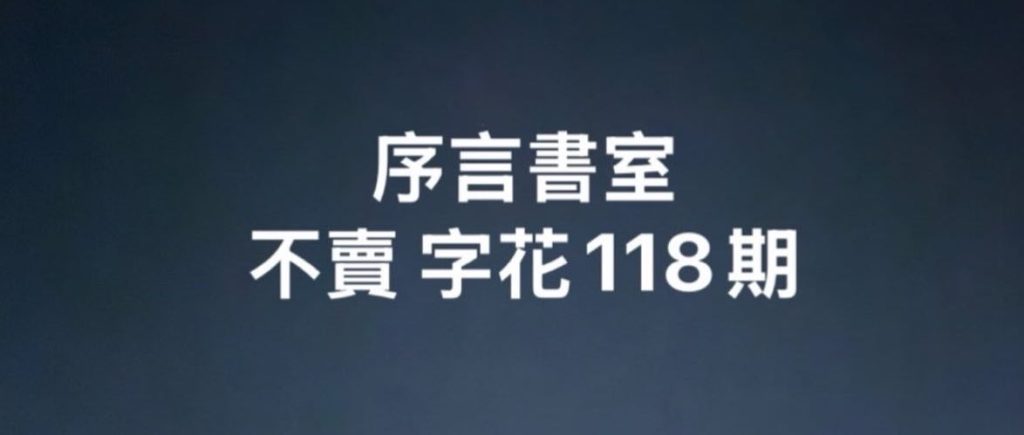
What makes the Hong Kong Readers’ Bookstore’s post so illuminating is precisely that it is not sensationalist. Indeed, it is almost restrained. It begins by setting out the facts clearly: the cover of Fleurs des lettres Issue 118 features a sharp, close-up image of a crying teenage boy, photographed at a memorial site outside Hung Fuk Court in Tai Po; Fleurs des lettres did not know the boy, and it placed his face, clearly identifiable, on the cover without obtaining his consent. The post then articulates a set of criteria: grief belonging to the private sphere should not become a media focal point unless justified by the public interest; authentic suffering, unless it is one’s own lived experience or is used with the subject’s consent, should not be deployed as a selling point.
These statements are neither a form of moral fastidiousness nor a rejection of documentary writing. Rather, they reassert a boundary that is most often neglected in the day-to-day practices of literary magazine publishing, yet is precisely the boundary most deserving of respect: when an “identifiable portrait” intersects with a “condition of vulnerability”, the publisher’s duty of care does not diminish; it intensifies.
The bookshop could have chosen silence; after all, it is merely a retail channel. Instead, it chose to speak publicly because it understands “cultural recommendation” as a value-laden act rather than a purely logistical matter of shelving and distribution. More crucially, the bookshop did not begin its statement by ending with a decision to suspend sales. It first attempted good-faith communication, waiting for the editor-in-chief’s response, hoping that the magazine might remedy the situation, offer a reasoned justification, or even identify blind spots in the bookshop’s position, so that the two sides could at least converse within a shared ethical vocabulary.
Yet before any reply arrived, Fleurs des lettres had already initiated its promotional campaign, and the name of the Hong Kong Readers’ Bookstore no longer appeared in the magazine’s list of sales outlets. This detail shifts the nature of the incident from a “divergence of principles” towards a “rupture of trust”. When a distribution partner raises an ethical concern, and the publisher nonetheless allows promotional momentum to override dialogue, it effectively signals that it cares more about getting the issue onto shelves than about the potential harms you have identified.
}

The statement issued by Fleurs des lettres’s board of directors exposes a further problem: institutional braking was applied too late and with insufficient resolve. The board acknowledged that it had repeatedly expressed misgivings and, upon learning that the issue had already gone to print, issued administrative instructions, including the requirement that “this issue must not be put on sale before written consent is obtained from the person concerned.” It then immediately appended a qualification: “Because the editor-in-chief stated that he could not be persuaded, and because the board respected the principle of editorial autonomy, it did not forcibly prohibit publication and distribution.” This passage lays bare an almost unvarnished contradiction. Once the board had judged the risk to be serious enough to warrant a directive of “no distribution,” the matter could no longer be framed as a dispute over aesthetics or editorial direction. It had become an issue of risk management and responsibility allocation. To retreat at that point under the banner of “editorial autonomy” effectively shifts responsibility back onto the market and public reaction, allowing controversy to function as the de facto regulator, only to retroactively authorise institutional response after the fact by promising that an “investigation” and “contingency discussions” would follow.
The more limited a literary publication’s resources, the more essential it is to safeguard non-negotiable ethical baselines.
Cultural institutions behind Hong Kong literary magazines often take pride in being “small teams” grounded in trust. Yet trust is not a liability waiver. The more limited a literary publication’s resources, the more essential it is to safeguard non-negotiable ethical baselines; otherwise, each “I thought it would be acceptable” risks hardening into an irreversible fracture. The board’s statement also highlights another sobering detail: the editor-in-chief appears not to have proactively reported the dispute. Instead, the board learned of Hong Kong Readers Bookstore’s post only through social media, and only then became aware that the bookshop had attempted to communicate with the editor. This is not merely a communication lapse; it is a failure of the escalation mechanism for risk events. When an external partner raises a serious ethical concern, there should be an internal pathway for immediate reporting, temporary suspension, review, and decision-making. In the absence of such a pathway, what is described as “editorial autonomy” can easily devolve into an “editorial island,” leaving external public pressure, in practice, to perform the punitive and corrective functions that internal governance failed to execute.
}
What renders the personal account of the magazine’s (now former) editor-in-chief, Hong Ngan, more deeply unsettling is not that he attempted a defence, as defence is, after all, part of public deliberation, but that the manner of his defence reflects a dismissive attitude towards the very concept of “consent,” and may even be described as a structural intuition of “anti-consent.” His central argument operates on roughly three levels. First, he claims that, unlike certain jurisdictions, Hong Kong has not enacted specific statutory regulation of portrait rights, and that therefore neither photojournalism nor creative work requires authorisation. Second, he argues that the memorial site was a “public” space: if photographers at large-scale cultural events or marathons may freely photograph passers-by and record their emotions, why should photographing a flower-laying memorial be deemed unethical? Third, he asserts that the subject and the photographer made eye contact, and that on this basis he believed the image was not offensive. The most serious danger in this line of reasoning lies in its substitution of “not necessarily unlawful” for “ethically consented to.” Even if Hong Kong does not formally recognise a standalone doctrine of portrait rights, that fact speaks only to whether a particular independent legal right exists as a matter of doctrine. It does not amount to an ethical endorsement of the publisher’s conduct, nor does it licence editors, precisely because they command platforms and resources, to treat another person’s vulnerability as material to be freely mobilised at will.
More importantly, Hong Ngan repeatedly situates his decision within the framework of news photography, as though conformity with journalistic convention would allow a literary magazine to inherit the same justificatory logic without remainder. This is precisely the central category error at stake. Newspapers and literary magazines are different genres of publication. Their aims, the implicit “contract” they hold with audiences, their ethical obligations, and the modes through which images are circulated and consumed are not the same. A core task of journalism is to provide information under conditions of temporal urgency, to establish a factual context for public understanding, and to ground its legitimacy primarily in the public interest. Even where journalism is subject to ethical constraints, its logic of use can at least be anchored in the public’s right to know and in the salience of public issues. By contrast, a literary magazine is not primarily an instrument of timely information. Once it employs an identifiable private portrait as a cover “entry point,” its ethical burden is often heavier than that of journalism, precisely because the image is not a one-off informational display, but something that may be collected, reproduced, and circulated as a cultural symbol over time. To equate a news photograph with a literary cover image is therefore to evade the additional self-restraint that literary publishing must assume.
When Hong Ngan analogises the memorial setting to “galas” or “marathons,” where photographers also take candid shots, he effectively treats “publicness” as the decisive ethical boundary. Yet the “public” character of a memorial site often reflects the fact that people are compelled to process grief under the gaze of others; it does not occupy the same ethical register as street photography at entertainment events. Moreover, the controversy has never been solely about “taking the photograph,” but about “publishing and deploying it.” Placing the face of a person you do not know, and from whom you have not obtained consent, on a cover as a mechanism for sales is a decision of an entirely different order. Between photography and publication lies an ethical transformation that must be taken seriously. You may be able to capture an image, but that does not entail that you ought to use it. You may be justified in using it within reportage, but that does not entail that you ought to deploy it as a cover. You may present it within an interpretive context, but that does not entail that you ought to strip away that context and reduce it to a single “shocking” face.
Consent must be intelligible, freely chosen, and revocable.
As for treating “eye contact” as a substitute for consent, this is one of the most typical and most pervasive misreadings within a culture of consent. Eye contact is not consent. Consent must be intelligible, freely chosen, and revocable; it requires that the intended use and foreseeable consequences be clearly communicated in advance, and that the other party be given real space to refuse. At a site of grief, a person may be numb, disoriented, or simply looking back reflexively under the pressure of being stared at through a lens. To interpret that fleeting moment as “I believe he would not mind” is, in effect, to project the editor’s own narrative needs onto the other person’s will. This is not a matter of “excessive sensitivity,” but of power relations as they operate in situ. When you control a publishing platform and possess the resources of distribution and promotion, while the other party is merely one face within a crowd, your “belief” confers no moral exemption. On the contrary, it should be treated as a form of self-centred presumption that demands heightened caution.
More troubling still, this interpretive habit, treating ambiguous signals as tacit permission, silence as consent, and passive responses as “implicit acquiescence,” shares the same structural logic found in many contexts of asymmetric power that can culminate in violence. In cases of sexual harassment and sexual assault, perpetrators frequently mobilise precisely such rhetoric, including claims such as “she did not explicitly refuse,” “he did not seem to resist,” “we interacted,” or “I thought it was acceptable,” to repackage their own desire as the other person’s authorisation. In doing so, they erase the fact that fear, shock, coercion, or vulnerability can deprive someone of genuine choice. When cultural workers re-legitimate this logic under the banners of “professional judgement” or the “public sphere,” what is damaged is not merely a single cover, but the shared social language of consent itself. Consent is reduced to the powerful party’s subjective inference; responsibility for refusal is perversely shifted back onto the vulnerable; and the basic principle that “not saying no is not the same as wanting to say yes” is gradually worn down through repeated iterations of the same defence. For these reasons, what requires critique here is not only an isolated instance of poor judgement, but a dangerous mode of reasoning, portable and reproducible, that can serve as the prelude to harm in any setting marked by unequal power.
At this point, the incident functions like a cross-section, revealing how certain publishing and editorial cultures may still bear the residual imprint of authoritarian and patriarchal dispositions. “Authoritarianism” here need not take the form of shouted orders or overt coercion. It can also appear as a more oblique posture: substituting “I am a professional, therefore my judgement prevails” for “I ask, therefore I respect”; allowing “artistic freedom” to override the will of the person concerned; invoking “breaking boundaries” to rationalise the transgression of limits that protect the vulnerable; or dismissing critics as conservative through claims such as “you do not understand,” or appeals to an insular “industry moral baseline,” thereby exempting oneself from responsibility for foreseeable consequences. “Patriarchy,” moreover, need not be confined to gender. It can be understood as a more general structure of domination: treating others as objects to be displayed, represented, and instrumentalised in the service of one’s narrative; placing “what I want to say” ahead of “what he will have to bear.” When Hong Ngan refers to the boy on the cover as a “stranger,” while simultaneously enlarging his face into the cover’s point of entry, the disjunction between language and action exemplifies a patriarchal gaze. He is a stranger, therefore I need not account for him; he is available to be looked at, therefore I may use him. Here, “strangeness” functions as an alibi for evading accountability.
In addition, Hong Ngan’s self-account conveys a striking hostility towards the very idea of stakeholders, as though the magazine ultimately belongs not to readers and those affected by its practices, but to those who carry out its day-to-day operations. He remarks that “Fleurs des lettres does not entirely belong to those who actually execute the work; it belongs more to literary enthusiasts who do not participate in its operation,” and frames this as an unexpected and unpleasant reality. Read through the lens of power analysis, this statement signals a disposition that treats public trust as an interference and accountability as an obstacle. Yet publishing ethics operates on precisely the opposite premise. A literary magazine’s continued existence depends not only on editorial labour, but also on readers’ trust, the cooperation of distribution partners, the permission of interviewees and photographed subjects, and a broader social compact in which cultural institutions are expected to exercise self-restraint. When an editor-in-chief treats these forms of reliance and consent as “external shackles,” he is, in effect, clearing the ground for a more closed and more easily arbitrary editorial culture. Authoritarian and patriarchal formations often do not arise because particular individuals are simply “bad,” but because institutional arrangements and professional norms permit certain actors to place themselves beyond the obligation to ask, beyond the obligation to respond, and beyond the standpoint of those who bear the consequences.
If one is to direct criticism squarely at Hong Ngan, it may be put more plainly. What this episode reveals is not a “strong style” or an “avant-garde line,” but a posture that mistakes editorial authority for a creative exemption from ethical constraint. He treats a legal lacuna as a moral passport; he uses the notion of a “public setting” to flatten crucial differences in vulnerability; he substitutes “eye contact” for demonstrable consent; and he invokes “breaking boundaries” to evade responsibility for the cover’s function as a commercial point of entry. When he states that he did not wish to provoke online denunciation or a sales boycott, yet also acknowledges that he initially hoped to “spark discussion,” the tension between these claims does not indicate innocence so much as an inadequate assessment of consequences. One may foresee controversy while remaining unprepared to bear the concrete harms that controversy produces, above all the distress and secondary victimisation inflicted upon the photographed subject. More seriously, this is not merely a localised lapse. It reflects a “default intuition” produced by an underdeveloped culture of consent: use first, justify later; put it on shelves first, communicate later; push another person into the spotlight first, then insist, “I believe he would not mind.”
}
If we return to the question of whether a literary magazine may write about public tragedy, I do not take the negative position. On the contrary, precisely because literature excels at translating collective events into intelligible language, it should engage with trauma and mourning. However, the method must be reconfigured, and the core of that reconfiguration is not more sophisticated rhetoric, but a more mature ethics of consent. In particular, it requires acknowledging that journalism and literature are distinct publishing genres, and that journalistic conventions cannot be used to underwrite a literary magazine’s cover strategy. Accordingly, a cover should avoid identifiable private portraits unless verifiable consent has been obtained. Instead, it may draw on objects at the scene, gestures, silhouettes or backs, partial views, or symbolic imagery, so that “grief” is rendered as a context to be understood, rather than a face to be consumed.
The risks of literature ought to be borne by writers and editors themselves.
How the cover controversy surrounding Fleurs des lettres Issue 118 will ultimately be remembered may not depend solely on whether the cover is reprinted or whether the editor-in-chief resigns, but rather on whether the cultural sector is willing to acknowledge a shared premise. In an era of scarce attention, the greatest temptation is to turn other people’s tears into one’s own illumination. Hong Ngan has framed the episode as an effort to “challenge moral aesthetic frameworks,” but it may be more instructive to assess it by the yardstick of consent culture. When we repeatedly permit the “absence of consent” to be rationalised, what is called artistic freedom can easily become the freedom of the powerful, while the vulnerable are left only with the fate of being watched, represented, and subjected to secondary harm. If this controversy is to leave any positive legacy, it should be that it compels us to turn consent from a moral slogan into publishing common sense; to transform respect for the vulnerable from a matter of individual virtue into an institutional requirement; and to remind every person in a position of power that literature may indeed require risk. Yet the risks of literature ought to be borne by writers and editors themselves, not paid for by someone you do not know and have never even asked, but who is nonetheless made to bear the cost on your behalf.
How to cite: Song, Chris. “A Face, a Cover, a Failure: Fleurs des lettres Issue 118 Cover Controversy.” Cha: An Asian Literary Journal, 26 Jan. 2026. chajournal.com/2026/01/26/fleurs-des-lettres.


Chris Song is a poet, editor, and translator from Hong Kong, and is an assistant professor teaching Hong Kong literature and culture as well as English and Chinese translation at the University of Toronto. He won the “Extraordinary Mention” of the 2013 Nosside International Poetry Prize in Italy and the Award for Young Artist (Literary Arts) of the 2017 Hong Kong Arts Development Awards. In 2019, he won the 5th Haizi Poetry Award. He is a founding councilor of the Hong Kong Poetry Festival Foundation, executive director of the International Poetry Nights in Hong Kong, and editor-in-chief of Voice & Verse Poetry Magazine. He also serves as an advisor to various literary organisations. [Hong Kong Fiction in Translation.] [Chris Song & ChaJournal.]
 Cha
Cha 