
茶 FIRST IMPRESSIONS
茶 REVIEW OF BOOKS & FILMS
[FIRST IMPRESSIONS] “Between Despair and Tteokbokki: Reading Baek Sehee” by Hana Kim
Baek Sehee (author), Anton Hur (translator), I Want to Die but I Want to Eat Tteokbokki, Bloomsbury, 208 pgs.

I first heard of Baek Sehee’s I Want to Die but I Want to Eat Tteokbokki several years ago, but I only read it shortly before the English translation by Anton Hur was released in 2022. The title immediately captured my attention. It confronts despair with disarming honesty, while also gesturing towards a small but insistent attachment to life. Despair and tteokbokki, the fiery sweet rice cakes beloved in South Korea and one of my own favourite foods, appear within the same sentence. This simple juxtaposition encapsulates, in a remarkably economical way, the tension between hopelessness and the small pleasures that keep us moving forward.
The book documents Baek’s therapy sessions and her experience of persistent depressive disorder, a long term, mild but chronic form of depression that she describes as a lingering, low level sadness. She recounts visits to psychiatrists, conversations during consultations, and guidance that offered her reassurance. One line that many readers, including Baek herself during therapy, have returned to is her psychiatrist’s gentle reassurance: “힘들 땐 무조건 내가 제일 힘든 거예요. 그건 이기적인 게 아니예요” (Baek, 2018). This can be translated as, “When it is hard, it is okay to feel like you are suffering the most. That is not selfish.” The quiet honesty of this statement resonates deeply.
Baek also reflects on her struggles with low self esteem and a persistent habit of comparing herself to others. Her observations remind readers that such experiences are common and that feeling weighed down by them is not a personal failure. In articulating these feelings, the book validates them and affirms that they deserve care and attention.
Baek first published these reflections in Korean in 2018. A sequel followed the next year, extending her exploration of daily life and therapy. By the time the English translation appeared in 2022, her work had already become a touchstone for many readers, offering recognition, reassurance, and, at times, relief. The English sequel followed in 2024, demonstrating how her candid observations continued to resonate across languages and borders.
After learning of Baek Sehee’s death in October 2025, I travelled to Japan for work. At Books Kinokuniya Tokyo in Shinjuku, I visited the foreign publications floor and noticed the store’s bestseller display for the first half of the year. Baek’s book was ranked number three. Encountering it far from its original South Korean context underscored how widely it is read around the world. Mental health struggles, along with the small consolations that sustain us, transcend both language and geography. Baek’s observations felt recognisable even in Tokyo, a city alive with motion yet filled with quiet, unseen difficulties.
The cultural specificity of the book, including tteokbokki as a comfort food and the rhythms of everyday life in contemporary South Korea, does not confine its reach. Instead, it offers a window onto a form of solace that is at once particular and universal. As a librarian, I also understand the book as a form of bibliotherapy. Reading can allow us to witness, process, and find comfort in another person’s experiences. Baek’s essays accomplish this with clarity and grace. They invite readers to reflect on their own challenges and to recognise that small, ordinary desires, such as craving comfort food or seeking a moment of stillness, are meaningful and worthy of attention.
Baek’s writing is simple, intimate, and strikingly honest. It resists grand narratives of triumph or recovery, focusing instead on the daily negotiations between pain and persistence. Her work encourages readers not to fix themselves, but to acknowledge and affirm the reality of their own modest struggles. The title, which may initially appear playful or irreverent, ultimately emerges as a quiet statement about how despair can coexist with the most basic human impulse to continue.
Her legacy extends beyond her writing. Baek passed away in 2025, and her organs were reportedly donated to five people. Encountering this fact after reading her work prompted me to pause and consider how acts of care can persist, reaching others in ways we may never witness.
I Want to Die but I Want to Eat Tteokbokki offers no promise of easy resolution or miraculous recovery. Instead, it makes space for the ordinary, stubborn desire to live, even when life feels unbearably heavy. Within that desire, I found comfort and recognition, along with the sense that choosing to remain, moment by moment, or bite by bite, can hold its own significance. For librarians and readers alike, the book demonstrates the healing potential of literature and reminds us that empathy, understanding, and connection can be found in pages as readily as in conversation.
How to cite: Kim, Hana. “Between Despair and Tteokbokki: Reading Baek Sehee.” Cha: An Asian Literary Journal, 29 Dec. 2025, chajournal.com/2025/12/29/tteokbokki.

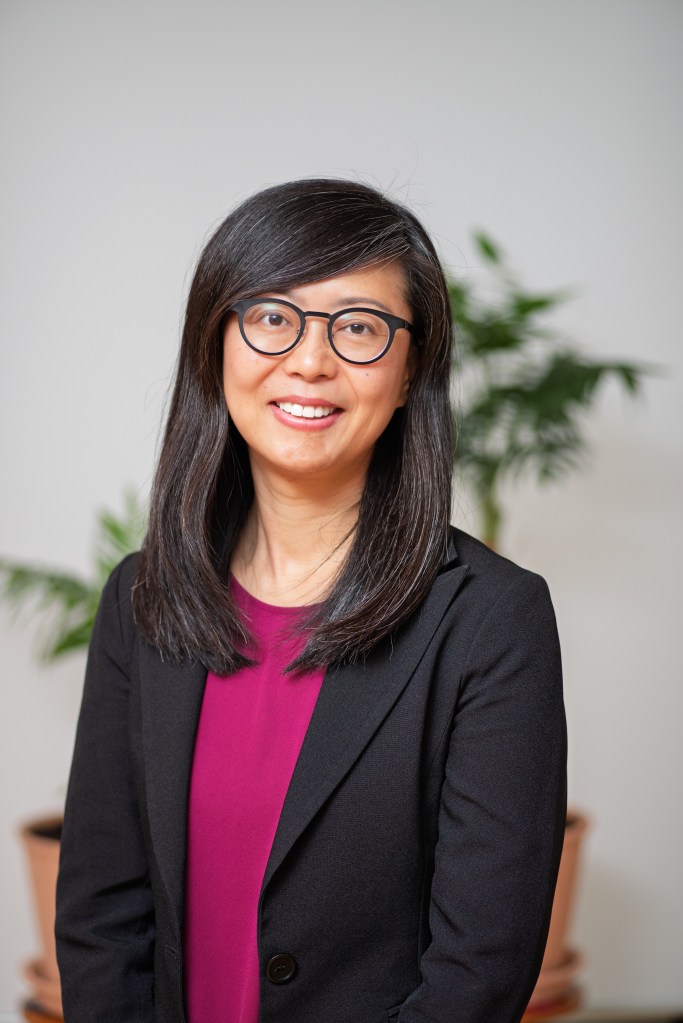
Hana Kim, a first-generation Korean Canadian, serves as Director of the East Asian Library at the University of Toronto and was previously Head Librarian of the Asian Library at University of British Columbia. She is the editor of Asian Canadian Voices: Facets of Diversity and has published work on Asian Canadian heritage and librarianship. She received the 2018 Korean Canadian Heritage Award, the 2008 Harvard University Korean Institute Sunshik Min Prize, and the Korea Times’ 41st Modern Korean Literature Translation Award. Her original poetry and translations have appeared in various publications, including Ricepaper Magazine. [All contributions by Hana Kim.]
 Cha
Cha 