
茶 FIRST IMPRESSIONS
茶 REVIEW OF BOOKS & FILMS
[FIRST IMPRESSIONS] “Skipping, Living: Notes on Xi Xi’s Mourning a Breast” by Madeleine Slavick
Click HERE to read all entries in Cha on Mourning a Breast.
Xi Xi (author), Jennifer Feeley (translator), Mourning a Breast, Giramondo Publishing, 2024. 368 pgs.
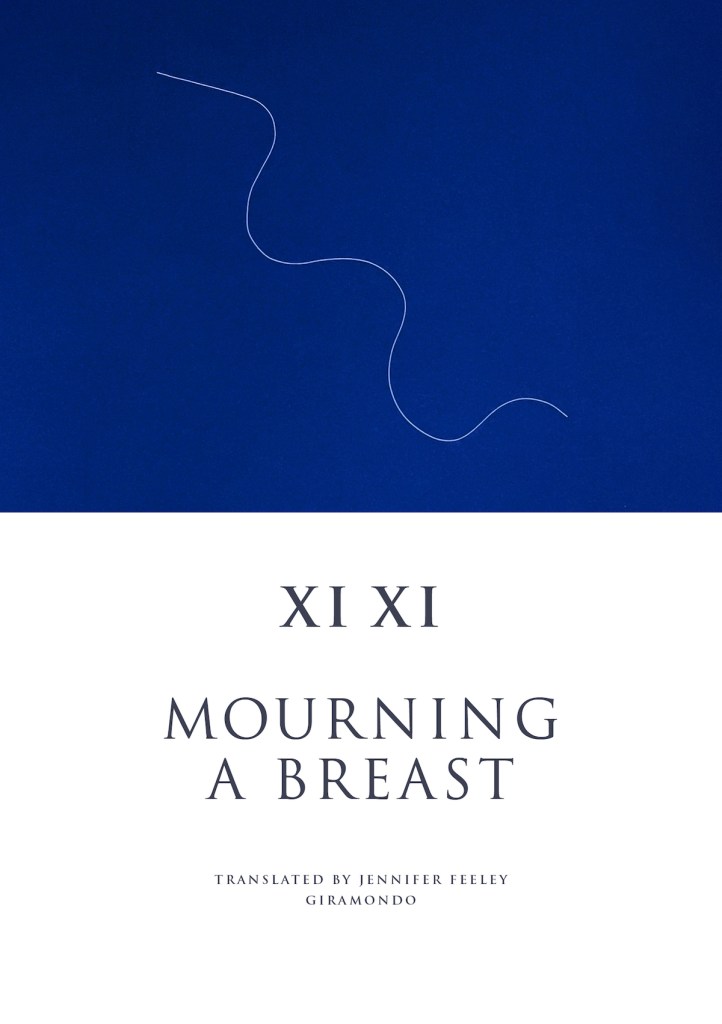
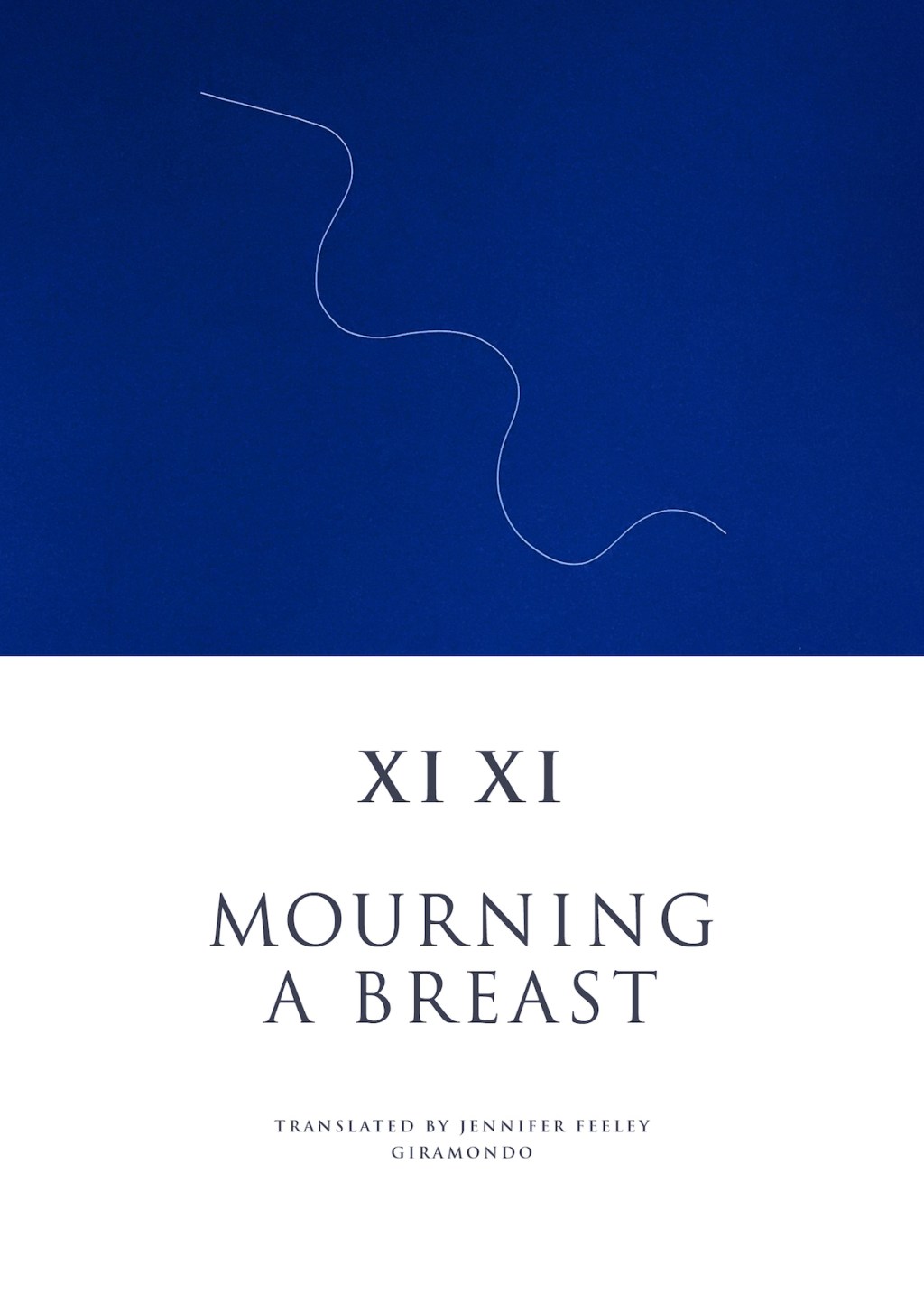
I have never read a book like this, in which the writer invites the reader to skip to another chapter that may be of greater interest, in which the writer dips into topics as if travelling while writing, noting this, questioning that, moving between modes, scientific, colloquial, literary, and often using long paragraphs, as if these handsome blocks are meant to contain all of this. Although the book is titled Mourning a Breast, I do not see grief as its central register. There is loss, and a “sunken valley” where a “hill” of a breast once was, yet there are also considerable reserves of joie de vivre. I read the Giramondo edition published in Australia, its cover featuring a detail of a cyanotype with a curved white irradiated line, delicate, surgical, and whimsical all at once. The top band is blue, the bottom white, and they are equally sized; the design speaks of two, signalling that this is a book in translation. The cyanotype’s title, “stairs into a stream”, also suits a book of sensitive and sensible meandering, a book rich in wordplay. The writer’s name, 西西 or Xi Xi, is a pen name chosen for its playfulness; can you see a girl in a skirt joyfully skipping from one hopscotch square to another? I do. I never met Xi Xi during my 25 years in Hong Kong, nor the translator Jennifer Feeley, though we have mutual friends, and Jennifer and I are friends online. I adore Feeley’s Afterword and recommend that it be read before the main text, a practice I have long followed. I see both writer and translator as emanating positivity and possibility, curiosity and humility. Cheer. Humour runs throughout the book: Argyle Street in Mong Kok sells no argyle socks. The chapter “Flipping Through the Dictionary”, or perhaps “Skipping Through”, is a flurry of words rooted in “mal”, some of which incorporate the meaning of “bad”, although a malamute is “not a malady that renders one unable to speak”. In the Afterword, the reader learns that it was Feeley who devised “mal” as a way to make the Dictionary chapter work in English. Learning and affirmation loom large, particularly in a new understanding of the body: the writer admits to not having known where the liver is before the experience of breast cancer, which in Chinese is “breast rock”, and after surgery Xi Xi embraces different ways of living, tai chi by the sea, choosing certain cooking oils, eating fewer sweets, wearing clothing that does not irritate the wound, such as a half slip pulled up high, and among all the chapters, “The Body’s Language” carries the strongest current. Overall, I loved being led around Hong Kong by Xi Xi, walking through the HSBC building with her, “can you feel the lightness? Its body seems to have the wings of a seagull, stretching out as it soars”, discovering custom made swimsuit shops on upper floors, entered only via a buzzer. I once lived in an old village house near the Prince of Wales Hospital, and there it was again, this time from the inside, patients waiting in hallways, talking, not talking. I will end these notes by recalling a few of the quirky things 西西 writes about the breast: that wolves have eight, opossums thirteen, that its structure resembles a peach tree, and that it has been said Jesus suckled only on Mary’s right breast.
How to cite: Slavick, Madeleine. “Skipping, Living: Notes on Xi Xi’s Mourning a Breast.” Cha: An Asian Literary Journal, 25 Dec. 2025, chajournal.com/2025/12/25/notes-on-mourning.

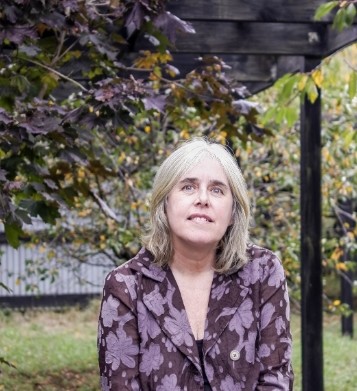
Madeleine Slavick is the author of several books of photography, poetry, and non-fiction, including Fifty Stories Fifty Images (of Hong Kong), Something Beautiful Might Happen (with Shimao Shinzo), Delicate Access (with Luo Hui), Round: Poems and Photographs of Asia (with Barbara Baker), and China Voices (with Oxfam). Her most recent book, Town, was named a best book of the year for 2024 in New Zealand, where she now lives. Born in the United States, she lived in Hong Kong from 1988 to 2012. [All contributions by Madeleine Slavick.] [Madeleine in ChaJournal.]
 Cha
Cha 