
茶 FIRST IMPRESSIONS
茶 REVIEW OF BOOKS & FILMS
[REVIEW] “The Endearing Sisterhood in Yoko Ogawa’s Mina’s Matchbox” by Fathima M
Click HERE to read all entries in Cha on Mina’s Matchbox.
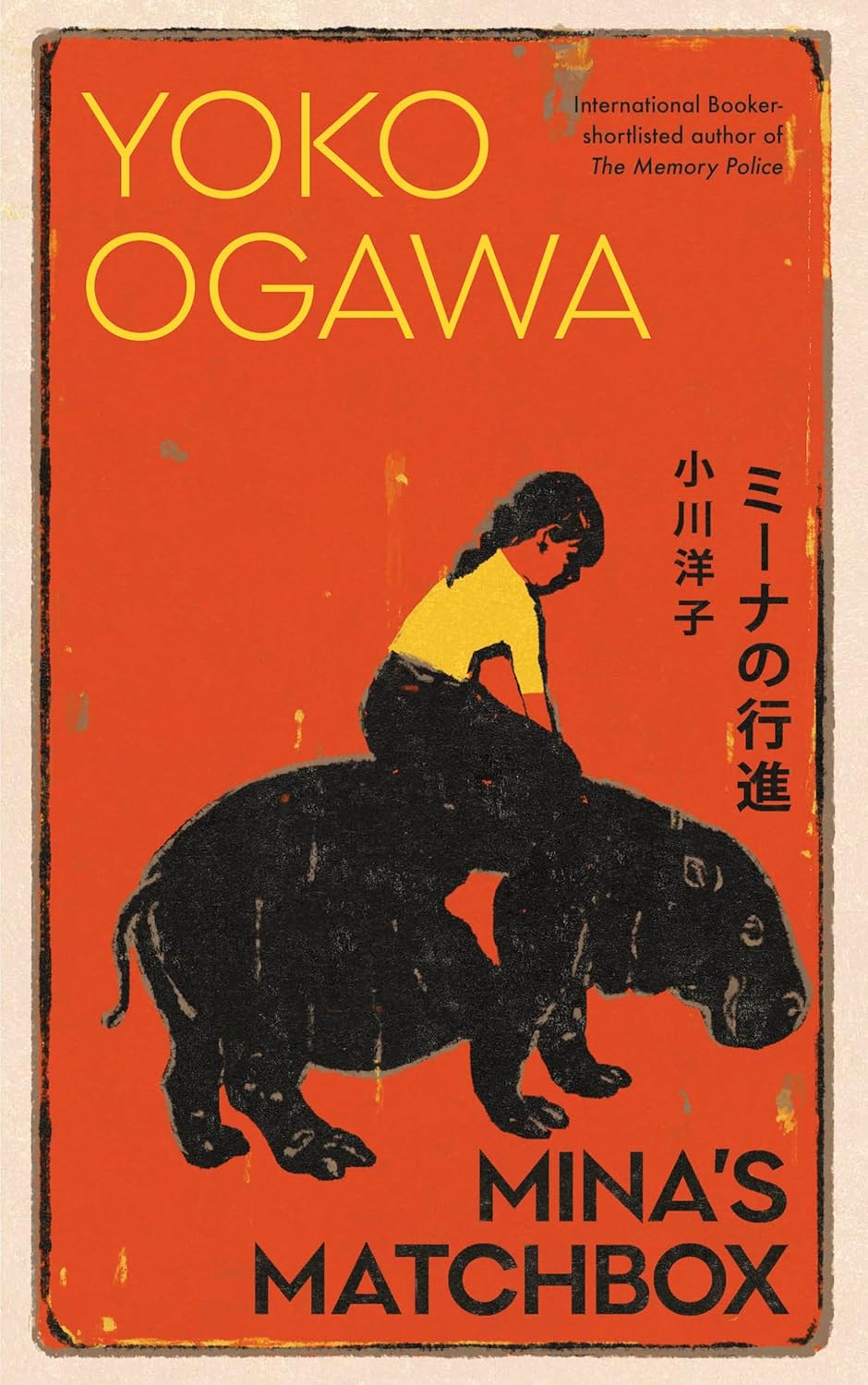
Yōko Ogawa (author), Stephen B. Snyder (translator), Mina’s Matchbox, Pantheon Books, 2024. 288 pages.
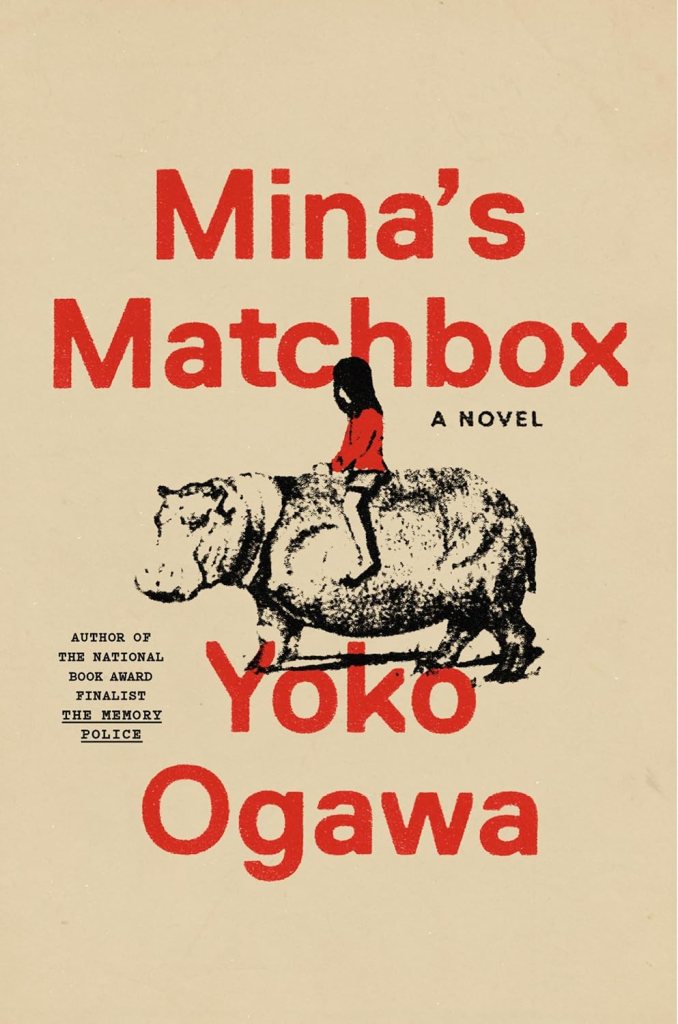
Set in 1972 Japan, Mina’s Matchbox is an endearing tale of love, friendship, and solidarity. The novel’s principal strength lies in its depiction of sisterhood and the bond between the two cousins, Mina and Tomoko. The slow-paced narrative offers ample room for reflection, rendering the novel slightly monotonous at times. Pochiko, the family’s hippopotamus, together with the opulent house and Mina’s father’s Mercedes-Benz, underscores the family’s affluence. Ultimately, the novel’s beauty centres on the enduring power of the connection between Mina and Tomoko, making their relationship its most memorable aspect.
A twelve-year-old Tomoko comes to stay at her aunt’s home in Ashiya following her father’s sudden death and spends most of her time with her cousin, Mina. The anticipated power dynamics arising from Mina’s higher social status are overcome by her genuine generosity, illustrating that profound human connection transcends social class. The cousins live a quiet life, full of affection and kindness, and the lasting bond between them is at the heart of this coming-of-age novel. Most importantly, the cousins read extensively, particularly Mina.
Mina is a quiet but likeable character. She must often miss school because of her asthma, yet she remains somewhat enigmatic. She is a voracious reader, and her cousin Tomoko borrows books on her behalf when the weather is unfavourable and she cannot go outside. Mina also has an intriguing hobby of collecting matchboxes, though the reasoning behind it is never revealed. The narrator of the novel says, “The box of matches she kept in her pocket. The matchboxes were her precious possessions, her talismans.” They were valuable because she collected them, not because they were expensive. Mina’s character develops gradually, but her demeanour remains unchanged. Her friendship with Tomoko lacks intensity, yet it is sincere and possesses depth. There is no jealousy or peer pressure. It is a novel in which characters are meant to be felt rather than described. It is also a novel that celebrates the ordinary aspects of life. The quiet routine of family meals, playtime, and watching television becomes worthy of introspection.
Mina’s unique hobby of collecting matchboxes suggests that not everything in life, especially personal preferences, must serve a utilitarian purpose. In fact, everyone in the novel has a hobby entirely devoid of utility. Her aunt is obsessed with proofreading. She even proofreads the commentary on television. She is quiet, reserved, yet kind. The uncle is seldom at home, but when he is, he repairs broken objects around the house and remains as kind and charming as ever. Everyone remains calm in the novel, even during dire situations. They follow a strict routine. There is scarcely any change in their daily rhythm, though the uncle’s impromptu visits disrupt the pattern briefly.
Tomoko is very curious to know more about her uncle and even her aunt, yet they hardly spend any meaningful time with her. At times, it feels as though the image of a happy family is an illusion. There are moments when it seems that the aunt is navigating a difficult period in her family life by keeping herself occupied with proofreading. She is quiet and discreet. The uncle appears to have another life elsewhere, and the grandmother, despite her years in Japan, misses her German connections. Yet everyone maintains a cheerful façade and continues through life without bitterness.
The description of the affluence of Mina’s family and Tomoko’s need to stay with them might induce a temporary anxiety in the reader that she is unlikely to be welcomed there. Yet not only is Tomoko welcomed, the house becomes her home. The cultural and class amalgamation within the household becomes blurred, and they all live together as a family. Mina’s grandmother is Jewish, having migrated from Germany, and now calls Japan her home. Yoneda San takes care of the family by keeping the house clean and preparing delicious meals, but she is never treated as inferior. Even the pets are treated with care and affection. At times, there is an air of monotony in the narrative; the love does not feel expressive, yet it is ubiquitous and respectful of others. There are no secrets in the novel per se, but there is a sense of the end of a particular era in Japan, the backdrop of which forms the crux of the narrative.
The most endearing parts of the novel are those that depict the love of reading. The slow-paced joy of reading, in tandem with the novel’s unhurried rhythm, is ideal for any reflective reader, and it leaves ample room for multiple interpretations. There are descriptions of other books within the book: the ones Tomoko read and cherished, and the ones she did not enjoy as much. At times, it seems likely that she will become a writer and storyteller herself, for a love of reading is the greatest trait in any writer. The relationship between humans and nature depicted in the novel is as commercial as it is caring. The presence of a hippopotamus is a symbol of excessive wealth, yet Mina’s bond with it is filled with care and affection. It appears harmless, and yet the indifference of the affluent towards animals—keeping them confined at home—cannot be overlooked.
Towards the end of the novel, Mina and Tomoko have become adults who remain on very good terms, and Tomoko looks back at her year at her aunt’s home with great fondness. The family’s wealth has diminished, and her uncle’s family no longer lives there. This highlights the centrality of memory in the novel. Tomoko looks back on her experiences and recalls them in her later years. By then, not only has Japan’s economic boom faded, but both Mina and Tomoko have carved different paths for themselves. History changes, circumstances shift, but the gift of human friendship endures time and alterations in fortune, and literature is the only medium that can preserve such subjective memories.
How to cite: M. Fathima. “The Endearing Sisterhood in Yoko Ogawa’s Mina’s Matchbox.” Cha: An Asian Literary Journal, 24 Nov. 2025, chajournal.com/2025/11/24/matchbox.



Fathima M teaches English literature in a women’s college in Bangalore, India. She likes hoarding books and visiting empty parks. [Read all contributions by Fathima M.]
 Cha
Cha 