

茶 FIRST IMPRESSIONS
茶 REVIEW OF BOOKS & FILMS
[FIRST IMPRESSIONS] “In Their Words, We Find Ourselves: Reading Lin Yi-Han’s Fang Si-Chi’s First Love Paradise” by Hana Kim
Yi-Han Lin (author), Jenna Tang (translator), Fang Si-Chi’s First Love Paradise, HarperVia, 2024. 272 pgs.

When I first picked up Lin Yi-Han’s Fang Si-Chi’s First Love Paradise, I did not immediately open it. I hesitated because I knew that reading it, as a woman raised in South Korea, a librarian, and a mother, would mean confronting truths that resonate painfully across our cultural context. The unspoken pressures on girls to remain silent are woven into daily life in ways that are often invisible.
Lin Yi-Han 林奕含 (1991–2017) was a Taiwanese writer. Her debut novel, originally published in Taiwan as Fang Siqi de chu lian le yuan 房思琪的初戀樂園 (Guerrilla Publishing, 2017), tells the story of Fang Si-Chi, a bright, sensitive girl whose world collapses when she is sexually abused by her teacher, a man admired by her family and society. Lin writes not in anger but in sorrow, and her prose shimmers with a beauty that renders the cruelty even more unbearable. What unsettled me most was how ordinary the violence felt, how easily it was dismissed, romanticised, or excused.
In autumn 2024, the University of Toronto’s Cheng Yu Tung East Asian Library hosted a conversation with scholar Dr Shana Ye, Associate Professor of Women and Gender Studies at the University of Toronto, whose research focuses on transnational feminism and queer studies, and translator Jenna Tang, celebrating the novel’s first English-language release. I remember that afternoon clearly, witnessing in my role as a librarian. The audience was quiet, attentive, almost reverent. When Tang read Lin’s lines aloud, the words carried a fragile ache, as if crossing languages had not lessened their resonance but deepened it.

As I listened, I thought of other women in East Asia who have spoken out against long-silenced injustices. Cho Nam-Joo, author of Kim Jiyoung, Born 1982 (House of Anansi Press, 2020), which was later adapted into the film Kim Ji-young: Born 1982 (dir. Kim Do-Young, 2019), and Shiori Ito, whose Black Box: The Memoir That Sparked Japan’s #MeToo Movement (The Feminist Press at CUNY, 2021) was adapted into the documentary Black Box Diaries (2024, dir. Shiori Ito), are part of a literary conversation that connects South Korea, Japan, and Taiwan. Their works speak to one another across borders, revealing a shared emotional landscape of constraint and defiance.
Sometime after the event, I wrote a poem, “In Their Words, We Find Ourselves,” which begins:
She wears the faces of mothers,
carries the unspoken sorrows of daughters,
bears the silence of sisters.
For me, Lin Yi-Han’s story speaks beyond one young life and one society. It exposes how patriarchy seeps into the rhythms of everyday life, how closeness and trust can be twisted to dominate and injure, and how literature can give voice to experiences that society has long silenced.
Working in a library, I often reflect on how stories such as Lin’s are preserved. Each book spine, each call number, carries a pulse, a reminder that silence, too, can be archived. In my poem, I listed the call numbers of these works not merely as catalogue entries but as coordinates on a map of resistance, guiding readers towards empathy and recognition.
At the end of the conversation, people sat in silence for a moment, letting the words settle around them. Reading Fang Si-Chi’s First Love Paradise is not easy. It leaves a lingering pain, yet within it, I found connection, linking languages, generations, and the reclaimed voices of women.
Lin Yi-Han’s novel reminds us that literature can be both wound and salve. Through Tang’s careful and nuanced translation, English readers can now feel what many of us in Asia have long carried: how trauma and silence echo through classrooms, families, and institutions. Yet through her art, Lin also gives us permission to grieve, to speak, and to listen.
Raised in South Korea and now living in Canada, I read Lin’s words from across the Pacific, feeling both distance and kinship. The world she describes is not far from the one in which I grew up, nor from the one my daughter will inherit. Through reading, teaching, and sharing her stories, we help to build a world that confronts reality, acknowledges pain, and amplifies long-silenced voices.
How to cite: Kim, Hana. “In Their Words, We Find Ourselves: Reading Lin Yi-Han’s Fang Si-Chi’s First Love Paradise.” Cha: An Asian Literary Journal, 1 Nov. 2025, chajournal.com/2025/11/01/first-love-paradise.

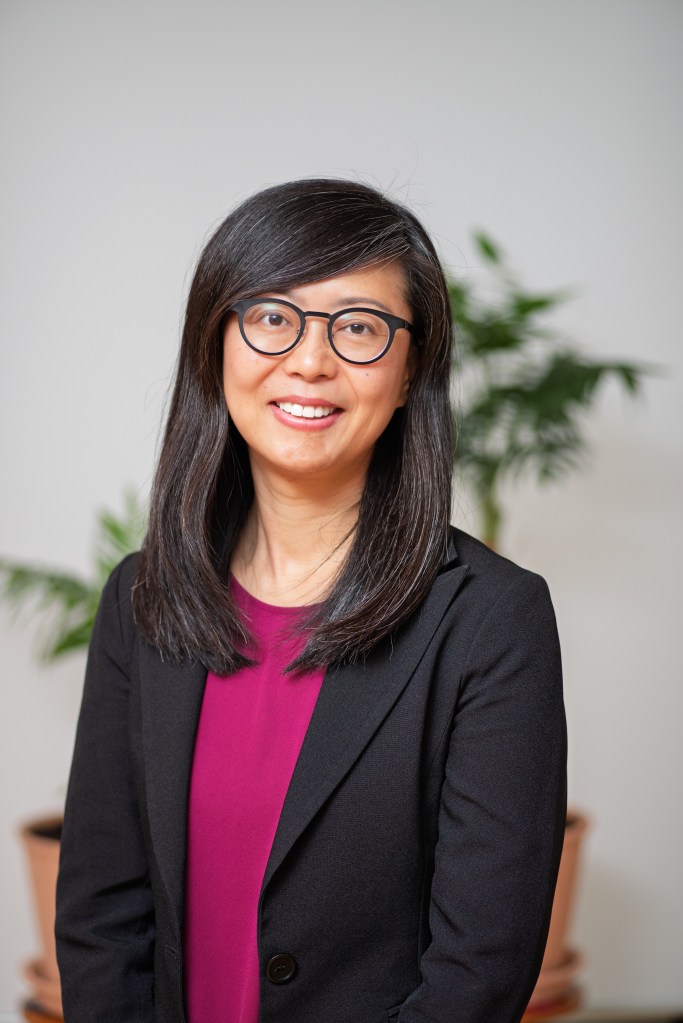
Hana Kim, a first-generation Korean Canadian, serves as Director of the East Asian Library at the University of Toronto and was previously Head Librarian of the Asian Library at University of British Columbia. She is the editor of Asian Canadian Voices: Facets of Diversity and has published work on Asian Canadian heritage and librarianship. She received the 2018 Korean Canadian Heritage Award, the 2008 Harvard University Korean Institute Sunshik Min Prize, and the Korea Times’ 41st Modern Korean Literature Translation Award. Her original poetry and translations have appeared in various publications, including Ricepaper Magazine. [All contributions by Hana Kim.]
 Cha
Cha 