

茶 FIRST IMPRESSIONS
茶 REVIEW OF BOOKS & FILMS
[REVIEW] “Alternative Local and Translocal Hong Kong Histories in Larissa Lai’s The Lost Century” by Yiwen Liu
Larissa Lai, The Lost Century: A Novel, Arsenal Pulp Press, 2022. 374 pgs.
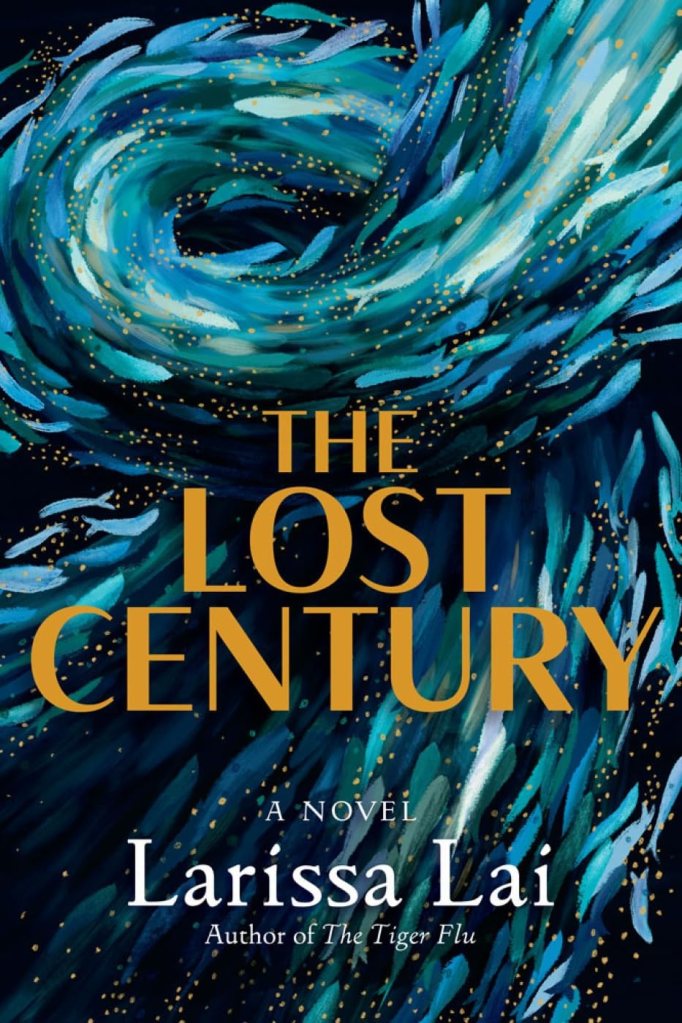
Published in 2022 and penned by one of the most influential Chinese Canadian writers, Larissa Lai, The Lost Century is Lai’s first novel about Hong Kong, long anticipated by both readers and the author herself.
As a work of fiction, the story blends underrepresented historical facts with speculative histories. The novel connects two “handovers” in Hong Kong through a frame narrative: the Japanese Occupation of British Hong Kong (1941–1945) and the 1997 sovereignty transfer from the British Empire to the PRC. Although these two historical events are internationally well known, Lai is among the first to draw a deliberate comparison that allows readers to reflect on the ongoing violence of entangled imperialisms in Hong Kong.
At the outset of the frame narrative lies the melodrama involving the Mah, Cheung, and Lee families, which took place some half a century earlier. This is told by Violet Mah to her great-niece Ophelia in a Cantonese seafood restaurant in Hong Kong on the rainy evening of the Sino-British sovereignty transfer ceremony, 30 June 1997. Interwoven into this narrative frame is a complex, everyday Hong Kong history that sharply critiques state violence, including British colonialism, Japanese militarism, and Chinese chauvinism, while deliberately decentring them. Lai achieves this by foregrounding fraught kinship ties and unexpected alliances among “others.” So enraptured are Violet and Ophelia by the telling of these family stories that they never make it to the sovereignty transfer ceremony. The novel’s seemingly anti-climactic ending is a radical gesture that resists the supposed climax engineered by the entangled imperial powers.
In addition to featuring occasional speculative elements, a style Lai is renowned for in her poetry and earlier fiction, The Lost Century educates readers about Hong Kong’s local and translocal histories through a decolonial lens. Concerning local history, the novel centres on Wong Nai Chung Village, the native village of Old Cheung and his family. In public discourse, the village is associated with colonial modernity; it is now largely known as the historic site of present-day Happy Valley, a prosperous neighbourhood surrounding the Jockey Club Racecourse on Hong Kong Island. Very little is known about how Wong Nai Chung Village was transformed from an “expanse of rice paddies” into a “filled-in swamp” through quarrying and land reclamation, or how its Hakka villagers responded to such forced transformation (pp. 116–17). Lai’s novel rises to this task by gradually linking the village’s violent transformation with the tragic changes in Old Cheung’s life over the course of the narrative. After failing to save his elderly mother from the drowning village, Cheung finally releases his repressed anger against “first the British, now the Japanese,” but tragically does so at the expense of falling into Chinese chauvinism (p. 291). Old Cheung’s narrative arc aligns with the novel’s self-conscious refusal to romanticise anti-colonial Chinese characters or Hong Kong’s pre-colonial history. This is primarily achieved through the portrayal of two lifelong friends—Old Cheung (Hakka, Tin Hau believer, anti-Communist) and Old Lee (Tanka, converted Christian, pro-Communist)—who must navigate their profound ideological differences. The novel reveals that conflicts existed among diverse Chinese communities even before the arrival of the British and the Japanese, such as discrimination against the Tanka and the Hakka–Punti wars. More importantly, it demonstrates that living in and with difference requires accepting that we can never find “pure allies”; how to approach complicity is thus a crucial yet often overlooked task in decolonial work.
In its treatment of translocal history, Lai creates Japanese, Black, and Métis characters who forge difficult yet enduring solidarities with local Hong Kong people during the Second World War. These fictional narratives draw on recent scholarship about underrepresented inter-ethnic relationships across the Asia-Pacific in the nineteenth and twentieth centuries. Tanaka Shigeru, born to Japanese merchant parents residing in Hong Kong, represents the longstanding trade connections between Japan and Hong Kong before the war. After the Japanese Occupation in December 1941, Shigeru protects Emily Mah and his other friends while serving as a translator under coercion from the Kempeitai. An even more marginalised history is depicted through the letters exchanged between the Jamaican Chinese character Isadore Davis Wong and his Black Canadian cousin Morgan Horace. Their correspondence between 1937 and 1942 raises pressing questions that remain relevant today: how can one resist Euro-American colonialism and racism without romanticising non-Western powers? Can Pan-Asian and Pan-African dreams persist without resorting to state violence?
Halfway through the novel, Lai introduces a Métis character, William Courchene, who arrives in Hong Kong as a soldier of the British Army Aid Group after the city’s occupation. Amid the chaos of war, a moving kind of (mis)identification occurs. Violet Mah, who is one-sixteenth British, sees herself in Courchene, whose people also possess mixed heritage from European settlers and First Nations communities in Canada. Judging only by his appearance, Violet mistakes Courchene for “Canadian Chinese” (p. 204). This initial resemblance may trigger in Violet a simplistic longing for blood-related familiarity, yet her identification with Courchene soon evolves into a subtle social intimacy that gestures towards decolonial possibilities among peoples of different ancestral roots. As with the representation of Hong Kong’s diverse local communities, the novel offers hopeful, yet unromanticised, conclusions to these non-Chinese narratives. Building cross-ethnic solidarity is neither a seamless nor a natural process; it requires the ongoing labour of negotiating difference.
As someone trained in postcolonial studies within English departments across Asia and North America and working on Hong Kong literature, I have long awaited a novel such as this. It attends to Hong Kong’s specific coloniality while situating it within the broader global decolonial project. When I taught the novel in a diverse university classroom in Vancouver earlier this year, I discovered that many students resonated deeply with Lai’s Hong Kong narrative. Some, with Hong Kong heritage through their parents or grandparents, were eager to learn how a story about the city’s history might help them reflect on their own positions navigating between China and the West as Chinese Canadians. To my pleasant surprise, other students, including a postmemory bearer of the Iranian Revolution and a child of mixed heritage from the Russian borderlands, also found Lai’s Hong Kong story a productive point of reference for articulating their otherwise inexpressible experiences in a North American university classroom of English literature.
How to cite: Liu, Yiwen. “Alternative Local and Translocal Hong Kong Histories in Larissa Lai’s The Lost Century” Cha: An Asian Literary Journal, 18 Oct. 2025, chajournal.com/2025/10/18/lost-century.

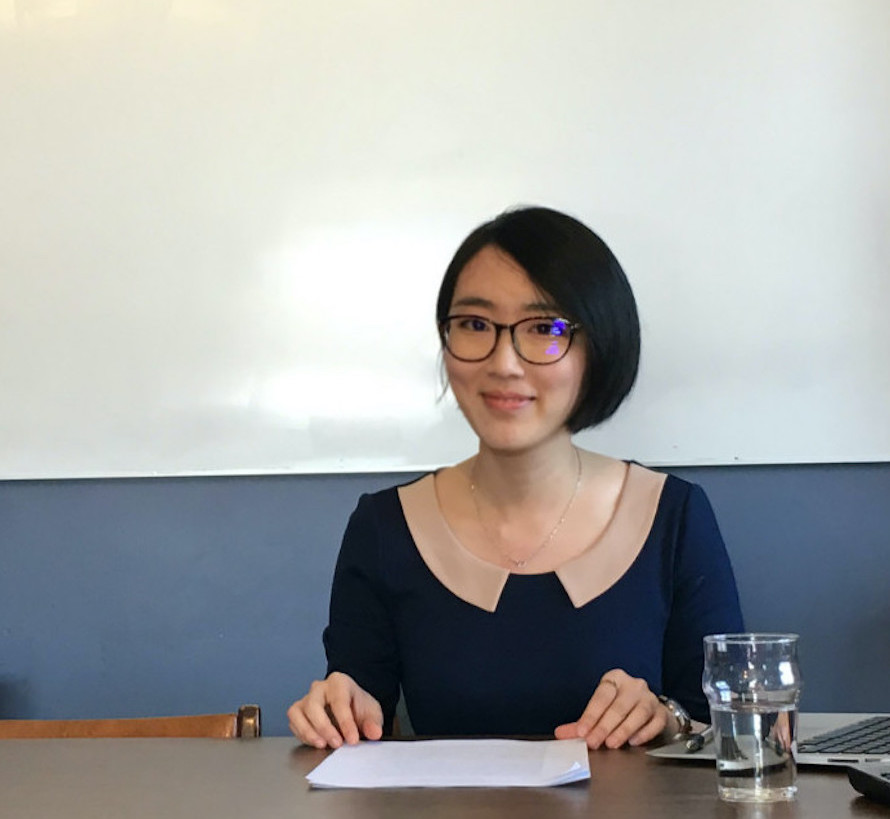
Holding a PhD in English from Simon Fraser University, Yiwen Liu is currently a SSHRC Postdoctoral Fellow at the University of Toronto. Her primary research focuses on Hong Kong Sinophone literature produced between the 1940s and 1980s, re-theorising the relationship between the Cold War and postcolonialism. She teaches theories and literatures of postcolonialism, diaspora, migration, and global Asias. [All contributions by Yiwen Liu.]
 Cha
Cha 