
[ESSAY] “Pseudo-Resistance and Ethical Beauty: A Critique of South Korean and Japanese Cinematic Aesthetics” by Zheng Wang
In the narrative context of East Asian visual media, both South Korean and Japanese films and television series excel at exposing the darker facets of human nature and the entrenched realities of class stratification. Yet they diverge along two markedly distinct ethical and aesthetic trajectories. This divergence is not merely a matter of cultural idiom but signals deeper tensions—resistance, ethics, aesthetics, and subjectivity all intersect in complex and revealing ways.
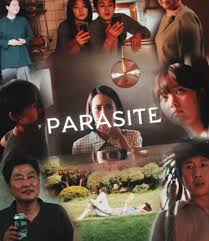
South Korean productions, such as Parasite (dir. Bong Joon-ho, 2019) and Anna (dir. Lee Joo-young, 2022), frequently employ a sharply critical lens to interrogate social injustice and the violence inherent in capitalist systems. Yet they often refrain from offering genuine avenues of resistance. When resistance does emerge, it is ambiguous, oblique, or filtered through aesthetic stylisation. This is what I refer to as the “pseudo-resistance” and “pseudo-aesthetic” of Korean visual media—they do not represent a true rupture with the existing order, but rather an adaptation or reconfiguration within it.
The mobility of the underclass becomes the narrative centrepiece, but their ascent is typically conditional upon assimilation into the very system they ostensibly critique—resistance thus becomes a narrative motif, not an ethical stance.

Anna (2022), dir. Lee Joo-young
Take Anna, for example: the protagonist, Lee Yu-mi, rises from a poor and humiliated assistant to a figure of high society by fabricating her identity and adopting the name “Anna.” Ostensibly, this is a narrative of defying one’s class destiny; in truth, it reveals merely a strategic repositioning—an adaptation made possible through the internalisation of the system’s value logic. Although she may question the legitimacy of power, her actions ultimately amount to little more than the appropriation of its symbols and positions. The so-called “success” in this story is achieved only through the suppression, compromise, or even erasure of the authentic self.
In such narratives, “class ascension” never confronts the systemic violence at the root of inequality. Instead, it seduces the audience with the illusion that one can prevail through cunning, ruthlessness, or moral elasticity—a capitalist fantasy of individual triumph. South Korean cinema excels in eliciting emotional catharsis through intense tragedy and conflict, yet this release often conceals rather than reveals the despair of lived reality. It purports to amplify the voices of women or the proletariat, while in effect, it rearticulates the logic of capital—drawing the viewer into an aestheticised performance of “resistance” without interrogating what is actually being resisted.
This illusion of resistance may be understood through Slavoj Žižek’s theory of fantasy, specifically in The Sublime Object of Ideology (1989). Žižek argues that fantasy is not an escape from reality but a framework that enables our accommodation of it. Such narratives operate as ideological fantasies—they allow us to imagine that meaningful transformation within the system is possible, thereby diffusing the potential for genuine critique.
From a Buddhist perspective, this notion of class mobility or “success” is likewise unworthy of celebration. Buddhism teaches the Six Realms of Saṃsāra, within which even a rise from the animal to the human realm does not constitute liberation from suffering. To applaud the protagonist’s “successful resistance” is, paradoxically, to affirm the very value system that entraps sentient beings in the cycle of rebirth—to mistake movement within the wheel for escape from it. As the Buddha said: “All sentient beings suffer.” What is called for is not ascension, but emancipation. Seen in this light, Korean cinema offers only a compensatory illusion of suffering—not a path toward its cessation.

Samurai Rebellion (1967), dir. Kobayashi Masaki.
By contrast, Japanese cinema articulates a radically different ethical orientation—what might be described as an aesthetic of “failed resistance” grounded in ethical integrity. A case in point is Samurai Rebellion (dir. Kobayashi Masaki, 1967). Though the protagonist is an assassin, he remains entrapped by fate and the constraints of class. Each act of vengeance presents a profound moral dilemma: can justice be realised through violence? Ultimately, his life is neither celebrated nor vindicated; rather, the cold indifference of the system and the solitude of moral conviction are laid bare. These tragic conclusions do not satisfy the audience’s desire for narrative reversal; they instead articulate a stark truth—that in the face of pervasive violence, the only dignity lies in the refusal to betray one’s principles.
This is the aesthetic of “failed resistance” that begins from ethics. From Yasujirō Ozu’s Late Spring (1949) to Yamada Yōji’s The Twilight Samurai (2002) and Mizuta Nobuo’s Weakest Beasts (2018), Japanese narratives often eschew dramatic class mobility in favour of ethical distance from systemic imperatives. Even where resistance is fated to fail, its moral substance must be preserved. Such “ineffective but beautiful resistance” conveys a reverence for failure, a profound scepticism toward imposed norms, and—most importantly—a final gesture toward the preservation of human dignity.
Here, we may invoke Guy Debord’s theory of the “society of the spectacle.” In The Society of the Spectacle (1967), Debord contends that in modern society, reality has been transfigured into images, and lived experience supplanted by consumption. South Korean cinematic “resistance” becomes precisely such a spectacle—transforming revolt into a consumable visual commodity. Viewers are granted momentary emotional catharsis, yet are never invited into genuine ethical engagement.
Yujiro Nakamura’s theory of “ethical aesthetics” offers a compelling counterpoint. He posits that beauty should not be confined to sensory pleasure but must engage with an ethical imperative. The highest value of art lies not in technical virtuosity or narrative tension, but in its capacity to elicit a sincere ethical response from its audience.
This notion also resonates with Immanuel Kant’s Critique of Judgment (1790): “Beauty is the symbol of morality.” Kant held that aesthetic judgement involves a free and disinterested reflection—not aimed at acquiring empirical knowledge, but at intuiting universal principles. The relationship between beauty and morality is symbolic: in judging the beautiful, we encounter the possibility of freedom and, through that, awaken an awareness of moral law. Such contemplation moves us not only towards liberty but also towards humility.
Viewed through this lens, the shortcoming of Korean cinema is not technical, but ethical evasion. It formalises, entertains, and aestheticises resistance, yet evades the deeper reflection that might lead to genuine freedom and humility. It permits us to sympathise with the protagonist, but not to interrogate the system; to witness suffering, but not to recognise its structural origins.
This is not to suggest that all Korean films succumb to the trap of “pseudo-aesthetics.” However, when resistance becomes a consumable spectacle and ethics are reduced to a dramatic device, such narratives demand scrutiny. What truly merits admiration is not the triumphant rebel, but the individual who, fully aware of inevitable failure, refuses to compromise.
In this light, the doomed march of the Shinsengumi and the unheard bells in Weakest Beasts still resonate with ethical significance—and it is precisely this resonance that defines the authentic value of art.
The ethical criterion of art does not reside in its outcome, but in its intention; not in the victory of resistance, but in the refusal to romanticise that which is being resisted.
This may indeed be the true aesthetics of resistance—a form of ethical beauty that cannot be consumed, cannot be easily misunderstood, and demands humility in its reception.
How to cite: Wang, Zheng. “Pseudo-Resistance and Ethical Beauty: A Critique of South Korean and Japanese Cinematic Aesthetics.” Cha: An Asian Literary Journal, 13 Jul. 2025, chajournal.com/2025/07/13/east-asian-visual.



Zheng (Moham) Wang, originally from Wuhan and of Yao (Iu-Mien) ethnicity, currently resides in Singapore. A member of the Independent Chinese PEN Centre, he was awarded the Wang Guozhen Poetry Prize in 2020, the Taiwanese “Fourth Luo Ye Literary Award” for fiction in 2023, the Singapore “Xinhua Youth Literary Award” for poetry, and the 2024 Lianhe Zaobao Gold Prize (Fiction Category), among others. His poetry and fiction have appeared in Qingdao Literature, Youth, Young Writers, Taiwan’s Taike Poetry, Vineyard, China Daily, Liberty Times, and Hong Kong’s Voice & Verse, P-Articles, and Hong Kong Literature. His English-language poetry has been featured in Queer Southeast Asia, Malaysia Indie Fiction, Woman, Cha, and Voice & Verse Poetry Magazine, among others. His poetry and illustrations were also selected for the 2023 Chengdu Biennale parallel exhibition “Perceiving Geography.” He holds a BA in Studio Art and Art History from Rice University (USA), an MA in Aesthetics and Politics from the California Institute of the Arts, and is currently pursuing a fully funded PhD in Art, Design and Media at Nanyang Technological University, Singapore. More at mohamstudio.com. [All contributions by Zheng Wang.]
 Cha
Cha 