
茶 FIRST IMPRESSIONS
茶 REVIEW OF BOOKS & FILMS
[REVIEW] “Haunted Inheritances and Queer Futures in Salini Vineeth’s The Tree, the Well & the Drag Queen” by Namrata
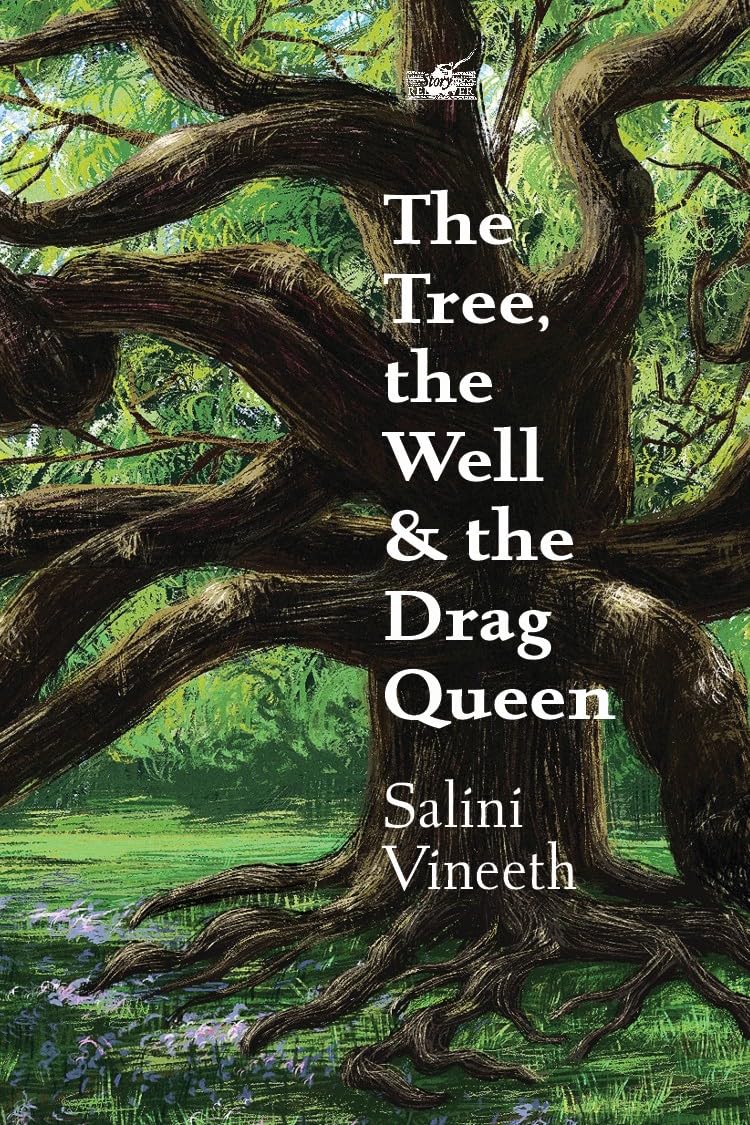
Salini Vineeth. The Tree, the Well & the Drag Queen, Red River Press, 2026. 126 pgs.
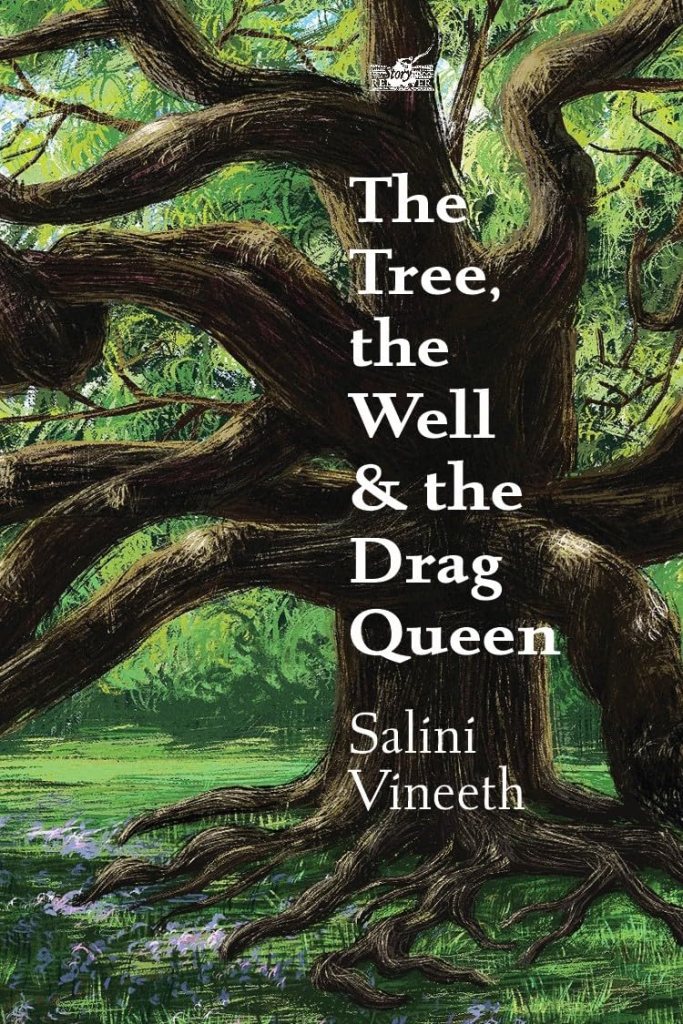
There is something deeply unsettling about the way forests remember. In Salini Vineeth’s The Tree, the Well and the Drag Queen, memory hangs from branches, sinks into wells, and passes quietly through generations like an inherited wound. The novella enters the terrain of fantasy fiction while remaining firmly rooted in the emotional and ecological textures of Kerala, in southern India. What emerges is a work that is at once gothic folktale, queer allegory, and meditation on belonging.
At the centre of the story is a drag queen living in Mumbai who is compelled to return to their ancestral village to confront a malevolent jackfruit tree that has held generations of their family in psychic and spiritual servitude. Centuries earlier, an ancestor’s encounter with a dark force transforms into a curse that extends across bloodlines, binding descendants to cycles of greed, obedience, and fear. The protagonist, having escaped the suffocating expectations of home and built an authentic life elsewhere, discovers that distance alone cannot sever inheritance. The Tree still watches. The Tree still demands.
The premise carries the architecture of myth, and Vineeth admirably resists the grand abstractions that often flatten contemporary fantasy fiction. The novella derives its power from texture and atmosphere. The landscape is dense with sensation. With creepers tightening around trunks, damp air pressing against skin, and jackfruit trees looming with both abundance and menace, the setting comes vividly alive. Kerala’s tropical ecology functions as a living consciousness within the narrative. Nature here breathes, conspires, and remembers.
There are moments when the novella recalls the haunted landscapes of Latin American magical realism or the ecological dread of contemporary gothic fiction, yet its sensibility remains distinctly local. Vineeth draws from the rhythms of oral storytelling and folklore without romanticising them. The supernatural elements emerge organically from the emotional logic of the village itself, where myth is inseparable from social order and fear travels through generations as quietly as family custom.
What makes The Tree, the Well and the Drag Queen particularly compelling is the way it intertwines queerness with questions of inheritance and social memory. The drag queen protagonist embodies a deeper rupture within systems that rely on repetition and compliance. Their refusal to conform to gender expectations, familial obligations, and inherited shame threatens the very structure that sustains the Tree’s power.
The Tree, then, becomes more than a supernatural antagonist. It is patriarchy, caste anxiety, inherited violence, and the machinery of respectability fused into one grotesque organism. The horror it generates lies in the recognition of how communities perpetuate harm under the guise of continuity. Vineeth is especially perceptive in tracing the emotional consequences of this inheritance: the guilt of departure, the seduction of belonging, and the fear of becoming unintelligible to one’s own origins.
The novella never collapses into despair. Beneath its eerie atmosphere runs a quieter insistence on dignity and self-fashioning. The drag queen’s journey resists the tendency, still prevalent in much queer writing from South Asia, to render queerness solely through trauma within the global literary imagination. Instead, Vineeth allows queerness to exist expansively, as performance, defiance, survival, and imagination. The protagonist’s identity actively reshapes it.
This is perhaps where the novella feels most contemporary. Across literature from the Global South, queer writers and artists are increasingly reclaiming folklore, fantasy, and speculative fiction as spaces from which they have historically been excluded. Vineeth contributes meaningfully to this evolving tradition by refusing the false binary between queerness and cultural rootedness. The novella suggests that queer lives are deeply entangled within such inheritances, rather than estranged from them.
Vineeth’s prose is often lyrical without becoming ornamental. She has a sharp instinct for imagery and cadence, allowing physical spaces to carry emotional tension. At times, the novella’s brevity leaves certain histories and secondary characters underexplored. One senses that its world could sustain a longer and more expansive narrative. Yet there is also an intensity to the compression. The story moves with the logic of a fever dream, circling recurring symbols and anxieties until they become impossible to ignore.
Even the book’s title carries the quality of oral myth, with a strange, rhythmic, and faintly foreboding structure. The Tree, the Well, and the drag queen function almost like archetypes within an old cautionary tale, except that Vineeth subverts the moral architecture traditionally associated with such narratives. Here, liberation belongs not to obedience but to selfhood.
Long after the novella is over, a question haunts the reader: what does it take to break free from inherited structures that demand silence and submission?
Vineeth does not offer easy answers. Instead, she crafts a haunting and emotionally intelligent work about the cost of authenticity and the human desire to belong without surrendering oneself in the process.
In its blending of folklore, ecological horror, and queer resistance, The Tree, the Well and the Drag Queen marks an ambitious and memorable turn in Salini Vineeth’s writing. It is a novella that understands fantasy as a language through which buried histories and difficult truths can finally speak.
How to cite: Namrata. “Haunted Inheritances and Queer Futures in Salini Vineeth’s The Tree, the Well & the Drag Queen.” Cha: An Asian Literary Journal, 18 Jun. 2026, chajournal.com/2026/06/18/the-tree-the-well.


Namrata is the editor of Kitaab, a South Asian literary magazine based in Singapore, and the founder of Keemiya Creatives, a literary consultancy where she works with authors and publishers in various capacities. Namrata also hosts the Bookbot Theory, a podcast on book-marketing which aims to help authors make their books sell. A published author, an independent editor and a book reviewer, she enjoys writing stories and think-pieces on travel, relationships, and gender. She is a UEA-India chapter alumnus and has studied travel writing at the University of Sydney. Her writings can be found on various sites and magazines, including Kitaab, the Asian Review of Books, Contemporary South Asia Journal of King’s College-London, Mad in Asia, The Friday Times, The Scroll, Feminism in India, The Brown Orient Journal, Inkspire Journal, Moonlight Journal, The Same, Chronic Pain India and Cafe Dissensus. Her short stories have been a part of various anthologies and she has also published two short story collections of her own. Namrata is currently working on her debut novel. [All contributions by Namrata.]
 Cha
Cha 