
茶 FIRST IMPRESSIONS
茶 REVIEW OF BOOKS & FILMS
[REVIEW] “Influence, Fandom, and Platform Power: On Asian Celebrity Cultures in the Digital Age” by Jennifer Junwa Lau
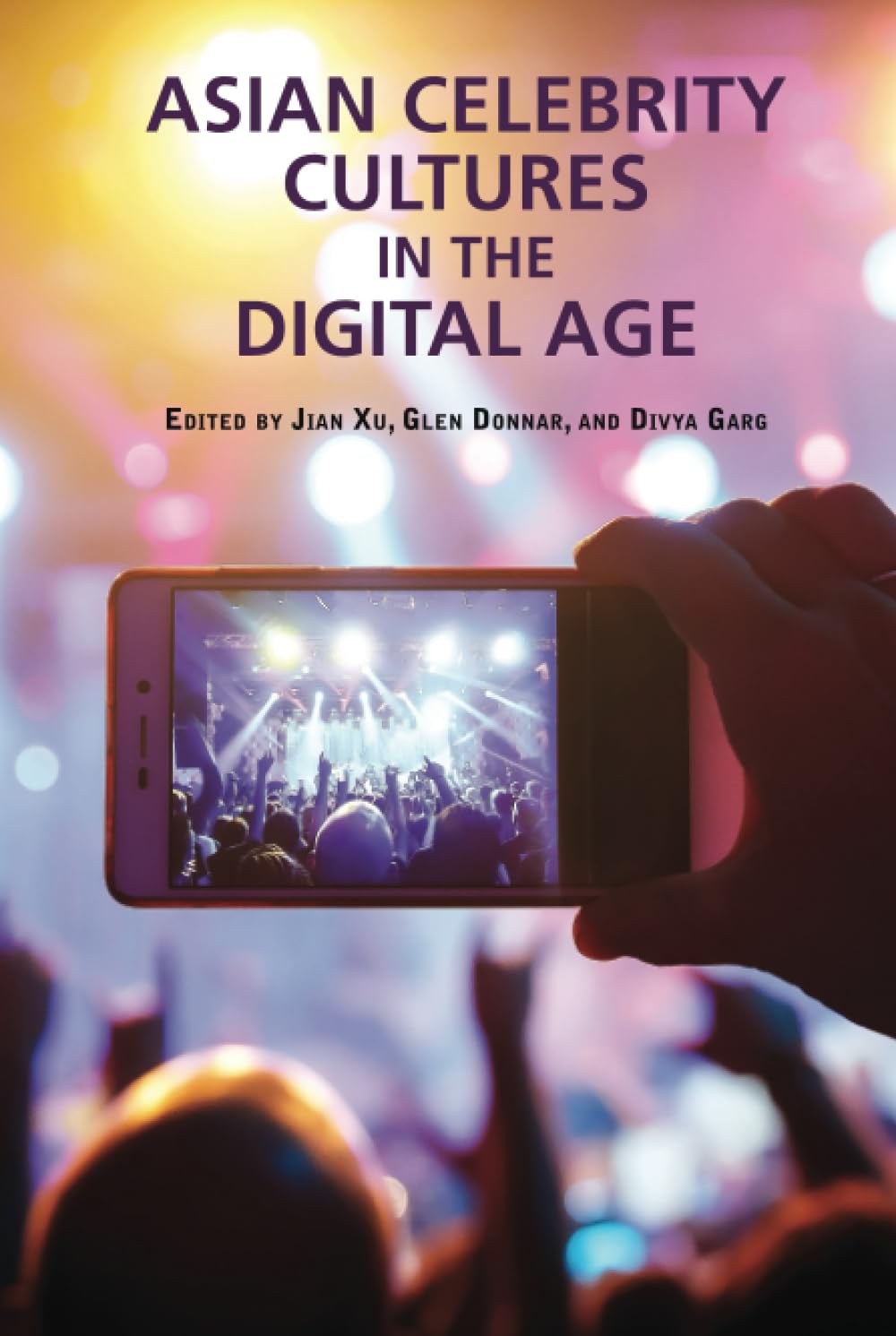
Jian Xu, Glen Donnar, and Divya Garg (editors). Asian Celebrity Cultures in the Digital Age, Hong Kong University Press, 2025. 292 pgs.
Drawing on case studies from Hong Kong, Mainland China, Singapore, Vietnam, Thailand, South Korea, Indonesia, India, and Japan, it aims to foreground Asia within celebrity studies.
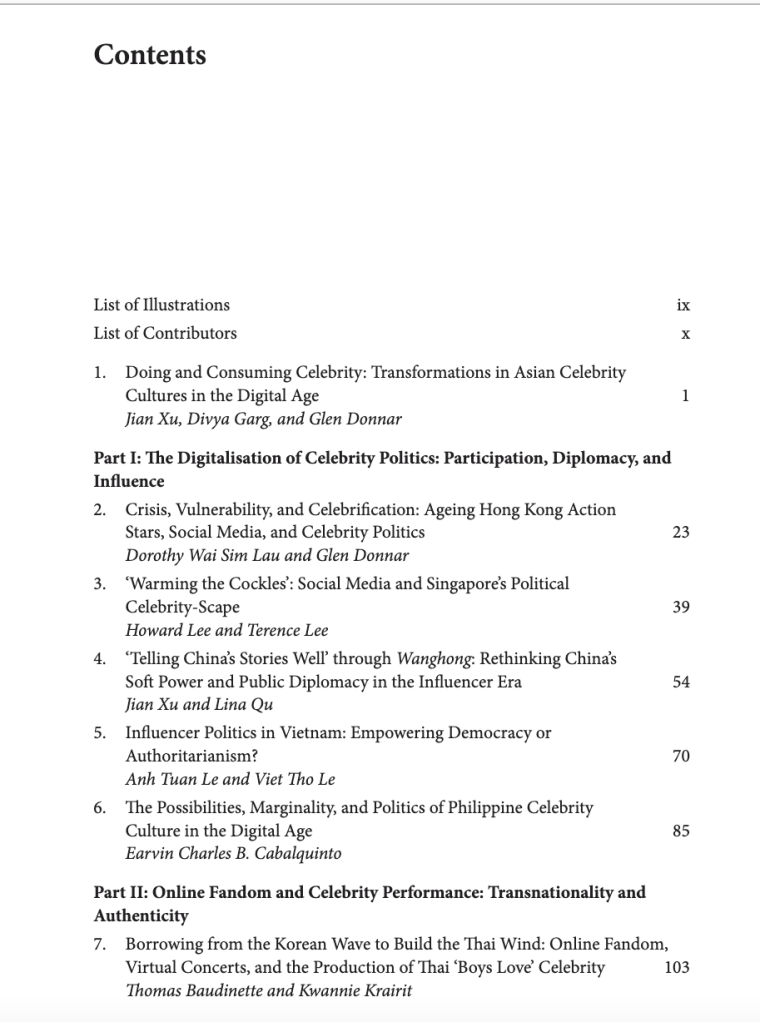
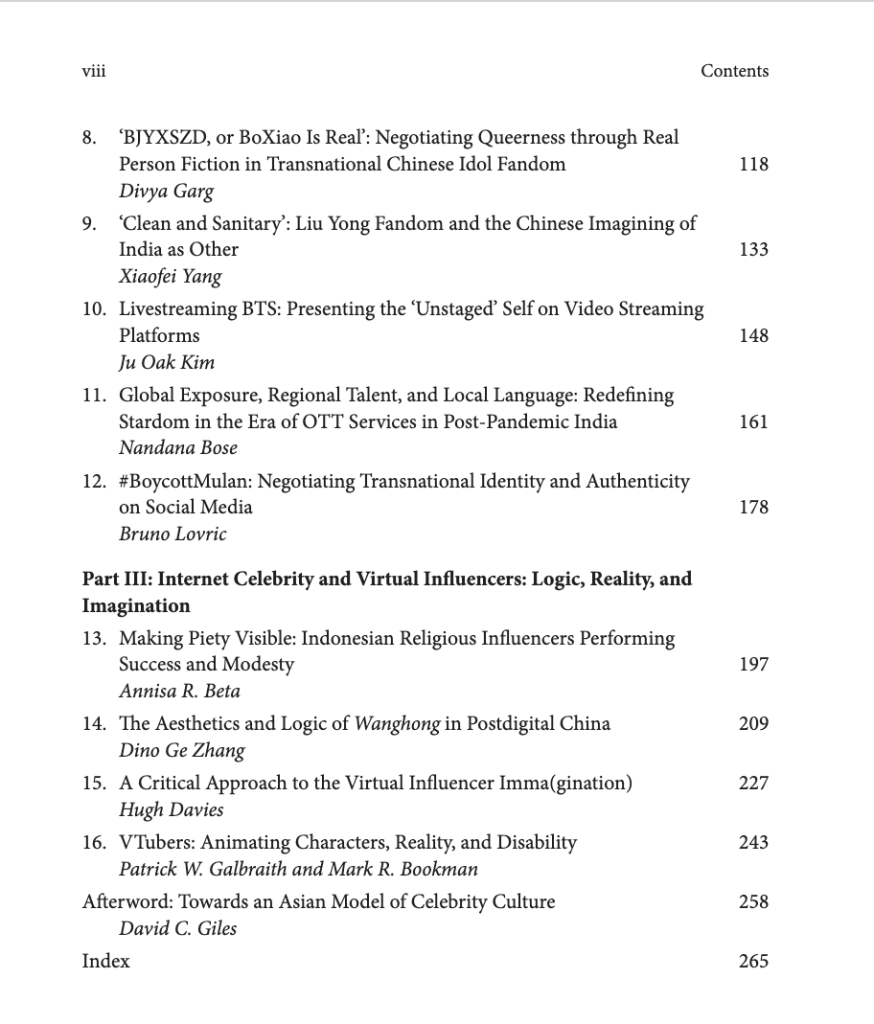
Edited by Jian Xu, Glen Donnar, and Divya Garg, Asian Celebrity Cultures in the Digital Age spans a wide geographical range across Asia in its examination of celebrity digital cultures. Drawing on case studies from Hong Kong, Mainland China, Singapore, Vietnam, Thailand, South Korea, Indonesia, India, and Japan, it aims to foreground Asia within celebrity studies, a field that the editors and several contributors argue has long been dominated by Western narratives. The book is divided into three parts: Part I, The Digitalisation of Celebrity Politics: Participation, Diplomacy, Influence; Part II, Online Fandom and Celebrity Performance: Transnationality and Authenticity; and Part III, Internet Celebrity and Virtual Influencers: Logic, Reality, and Imagination. In total, the volume contains 16 chapters written by 22 contributors.
Perhaps because this is the first collection devoted entirely to digital creators, platforms, and celebrity cultures shaped by the internet and social media in Asia, many contributors write succinctly, often relying on only one or two examples to illustrate their arguments. This approach works well in some chapters. For instance, in their study of ageing Hong Kong male stars and their use of social media in relation to celebrity politics, Dorothy Wai Sim Lau and Glen Donnar effectively juxtapose Jackie Chan and Chow Yun-fat (Chapter 2). They show that, although both men are no longer the high-impact action stars of the 1980s, their divergent political positions are clearly reflected in their social media strategies.
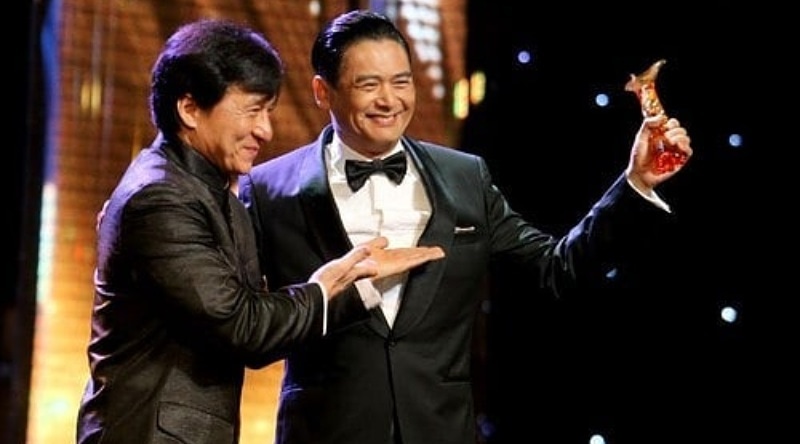
Jackie Chan and Chow Yun Fat, 2021
In other chapters, however, the limited range of examples weakens the argument. Jian Xu and Lina Qu’s study of China’s soft power and public diplomacy through influencers (Chapter 4) contrasts native Chinese wanghong (internet celebrities) whose cultural content “goes abroad” with laowai (foreign) wanghong who produce content within China. Yet the authors rely solely on Li Ziqi as the representative example of the former category and of Western mistrust, leaving the argument underdeveloped. Similarly, Anh Tuan Le and Viet Tho Le’s chapter on Vietnamese influencers (Chapter 5) offers only one example each of pro-democracy and pro-government figures. The authors conclude that opportunities for pro-democracy influencers remain limited, but this claim rests almost entirely on the case of a single jailed influencer. These chapters would benefit from a broader set of illustrations.
)
Still, several chapters demonstrate how compelling arguments can emerge from a focused analysis of one or two cases. This strength is especially evident in Earvin Charles B. Cabalquinto’s “The Possibilities, Marginality, and Politics of Philippine Celebrity Culture in the Digital Age” (Chapter 6) and Divya Garg’s “‘BJYXSZD, or BoXiao is Real’: Negotiating Queerness through Real Person Fiction in Transnational Chinese Idol Fandom” (Chapter 8). Cabalquinto’s chapter stands out for its clear articulation of the Philippines’ socio-political, economic, and historical context and how these conditions shape contemporary celebrity culture. He links race relations, particularly the dynamics between mixed-heritage and non-mixed celebrities, to acts of charity on social and mass media, situating these practices within longer histories of limited labour opportunities and U.S. influence. His introduction of the concept of “neo-colonial spectacle” is especially useful for understanding the complexities of neo-colonial spaces within and beyond Asia.
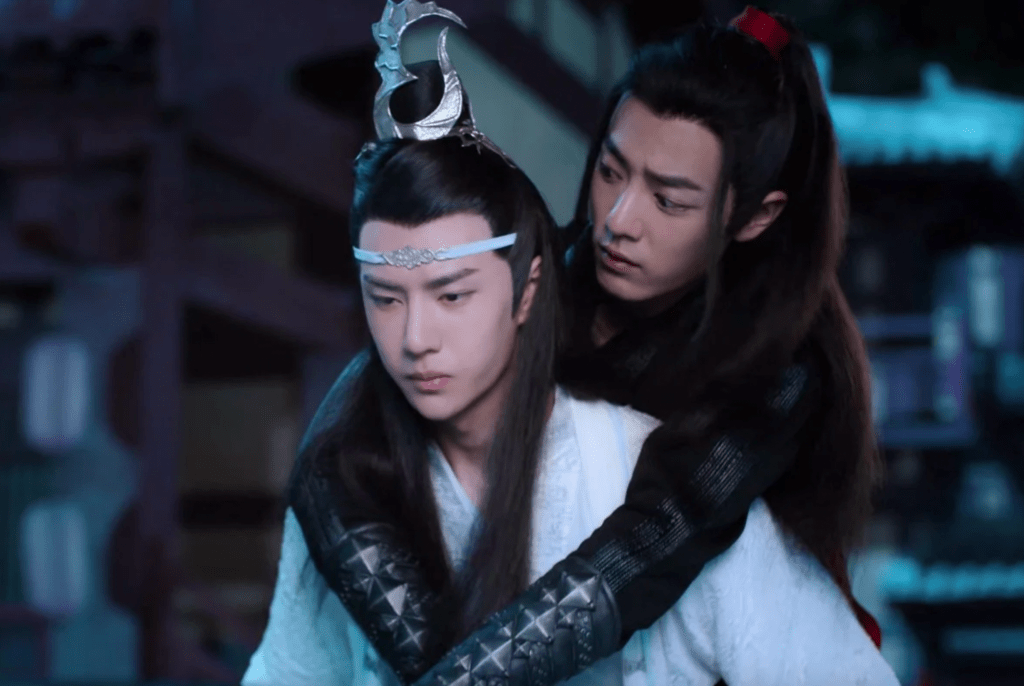
Xiao Zhan (right) and Wang Yibo (left) in The Untamed. Photo: Tencent Penguin Pictures.
Garg’s chapter examines the pressures faced by Chinese celebrities through the lens of real person fiction, focusing on Wang Yibo and Xiao Zhan, co-stars of The Untamed (2019) who later became queer love interests in fan fiction. Addressing the specificities of Chinese government censorship of homosexuality, Garg argues that, although fan fiction creates space for queer narratives, the political force of “queer” is often lost:
Fan engagement with queerness stemming from an interest in queering a celebrity or a character frequently displays a depoliticized politics of pleasure that is antithetical to the very conception and ascription of the term ‘queer.’ Queer […] is largely defined and understood in political ways that go beyond the axes of gender and sexuality within both Western and Eastern scholarship. (127)
Through the Bo Xiao phenomenon, she highlights the layered tensions between digital culture, fandom, and queer theory in the Chinese context.
)
Another promising chapter is a detailed examination of Liu Yifei, the star of Mulan (2020), and the controversy surrounding her 2019 Weibo post about the Hong Kong protests. Entitled “#BoycottMulan: Negotiating Transnational Identity and Authenticity on Social Media,” the chapter seeks to explain why Liu failed to repair her image after expressing support for the Hong Kong police. While the post resonated in China, it was reshared in the Americas without the context that a pro-CCP journalist had been attacked in Hong Kong. Yet the chapter misses several opportunities to strengthen its argument.
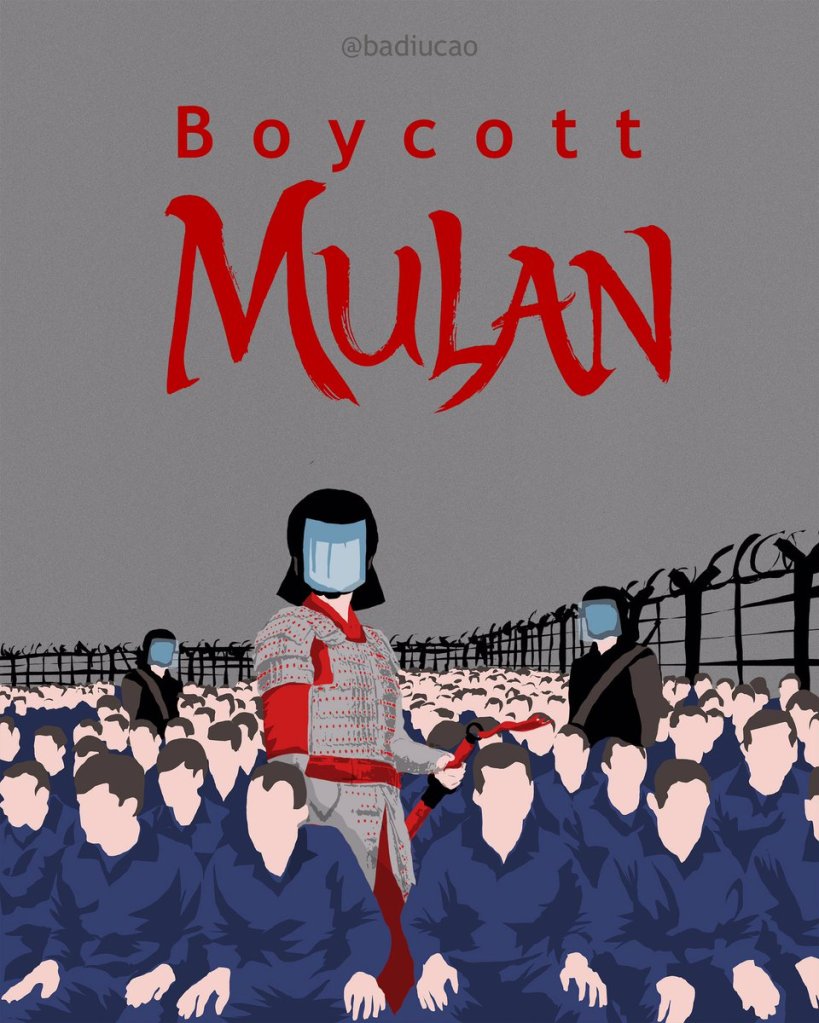
Art by Badiucao
First, in discussing Liu’s Chinese American citizenship, the author speculates that she made the statement to protect her career: “Yifei’s failure to display unwavering support for the party would have likely resulted in the revocation of a working permit and other issues” (p. 184). More examples of dual-citizenship celebrities making similar statements would have bolstered this claim. Second, the author does not address the fact that Liu did not post on Twitter herself; her Weibo post was imported into the Twitterverse. Given the book’s extensive engagement with platforms such as YouTube, Bilibili, OTT services, V Live, and Instagram, a more nuanced discussion of Weibo and Twitter, beyond ownership and intended audiences, would have been valuable. Third, while the author notes that male celebrities such as Jackie Chan, Shawn Yue, and filmmaker Pang Ho-cheung faced less criticism for similar pro-China statements, the gendered dynamics of this discrepancy are not explored, and the claim appears factually uncertain. Chan, for instance, has faced backlash on various news platforms in the past, so it is unclear why Liu is framed as uniquely targeted by Western media.1 Fourth, in arguing that Liu ignored critics in the hope that the backlash would “go away of its own accord” (p. 185), the author points to a shift in her Twitter photos from casual “slice-of-life” images to more polished ones. Yet this interpretation does not consider the role of her management team, nor does it establish whether Liu had ever engaged with fans or critics on Twitter prior to 2019. More evidence of her earlier online behaviour would have strengthened the argument.
)
The book’s tripartite structure is logical: the first section addresses digital culture and the politics of posting and participation; the second examines influencers and the production of authenticity; and the third explores virtual influencers and the broader “influencerisation” of reality. What feels surprising, however, is the scarcity of visual references in a book on digital celebrity cultures. Given that many of the platforms discussed are fundamentally visual, the inclusion of only a handful of photographs and figures seems a missed opportunity. Future volumes might consider incorporating QR codes linking to videos, images, and chats for easier access by students and scholars. Another observation from reading the book cover to cover is the inconsistent definition of wanghong. The term shifts across chapters, and although Chapter 14 addresses this fluidity, where Dino Ge Zhang conceptualises wanghong not as a person but as a pervasive influencer logic in postdigital China, it would have been helpful to acknowledge this ambiguity earlier in the volume. Still, Zhang’s chapter, “The Aesthetics and Logic of Wanghong in Postdigital China,” offers a compelling commentary on the homogenisation of experiences and the challenges faced by entrepreneurs and artists resisting the trend of “influencerisation.”
As an entry point for students and scholars, the editors and contributors succeed in demonstrating the many ways Asia is articulating its own digital celebrity cultures.
The Afterword by David C. Giles provides a strong summary of the chapters and adopts a generally positive stance towards the volume’s Asia-centred contribution. While he highlights the value of shifting a traditionally Western-centric field towards Asia, he also notes that some phenomena described in the chapters are universal. The tension between the local and the global is, of course, familiar in area studies, but as an entry point for students and scholars, the editors and contributors succeed in demonstrating the many ways Asia is articulating its own digital celebrity cultures. Chapters such as Thomas Baudinette and Kwannie Krairit’s “Borrowing from the Korean Wave to Build the Thai Wind: Online Fandom, Virtual Concerts, and the Production of Thai ‘Boys Love’ Celebrity” (Chapter 7); Xiaofei Yang’s “‘Clean and Sanitary’: Liu Yong Fandom and the Chinese Imagining of India as Other” (Chapter 9); and Nandana Bose’s “Global Exposure, Regional Talent, and Local Language: Redefining Stardom in the Era of OTT Services in Post-Pandemic India” (Chapter 11) are particularly valuable for their attention to inter-Asian influence and shifting reference points beyond the West. Contributions such as Patrick W. Galbraith and Mark R. Bookman’s “VTubers: Animating Characters, Reality, and Disability” (Chapter 16), which examines how different disabilities are “accepted” in Japanese and American streamer cultures, and Ju Oak Kim’s “Livestreaming BTS: Presenting the ‘Unstaged’ Self on Video Streaming Platforms” (Chapter 10), which explores how livestreaming fosters authenticity and global fan connection, further demonstrate the unprecedented reach of Asian digital media and its limitations elsewhere. For those interested in this developing area of media studies, many chapters in this collection illuminate the significance of the Asian context and the expanding conversations around transcultural digital influence.
- See Hollywood Reporter, “Jackie Chan facing backlash over comments” April 21, 2009 and CBC, “Hong Kong, Taiwanese media call for boycott of Jackie Chan films” April 22, 2009. ↩︎
How to cite: Lau, Jennifer Junwa. “Influence, Fandom, and Platform Power: On Asian Celebrity Cultures in the Digital Age.” Cha: An Asian Literary Journal, 22 Apr. 2026, chajournal.com/2026/04/22/asian-celebrity-cultures.


Jennifer Junwa Lau teaches Chinese literature and film at the University of Toronto Mississauga. Dr Lau’s research centres on modern Chinese literature, travel writing, diaspora studies, and translation studies. Her current project lies at the intersection of Chinese Studies and Asian North American Studies—examining the writings of transient and diasporic Chinese individuals in North America from the 1860s onwards. Her most recent work on Chinese overseas students has appeared in the peer-reviewed journal Journal of Chinese Overseas. [All contributions by Jennifer Junwa Lau.]
 Cha
Cha 