

📁 RETURN TO FIRST IMPRESSIONS
📁RETURN TO CHA REVIEW OF BOOKS AND FILMS
Quan Manh Ha and Cab Tran (editors), The Colors of April: Fiction on the Vietnam War’s Legacy 50 Years Later, Three Room Press, 2025. 306 pgs.
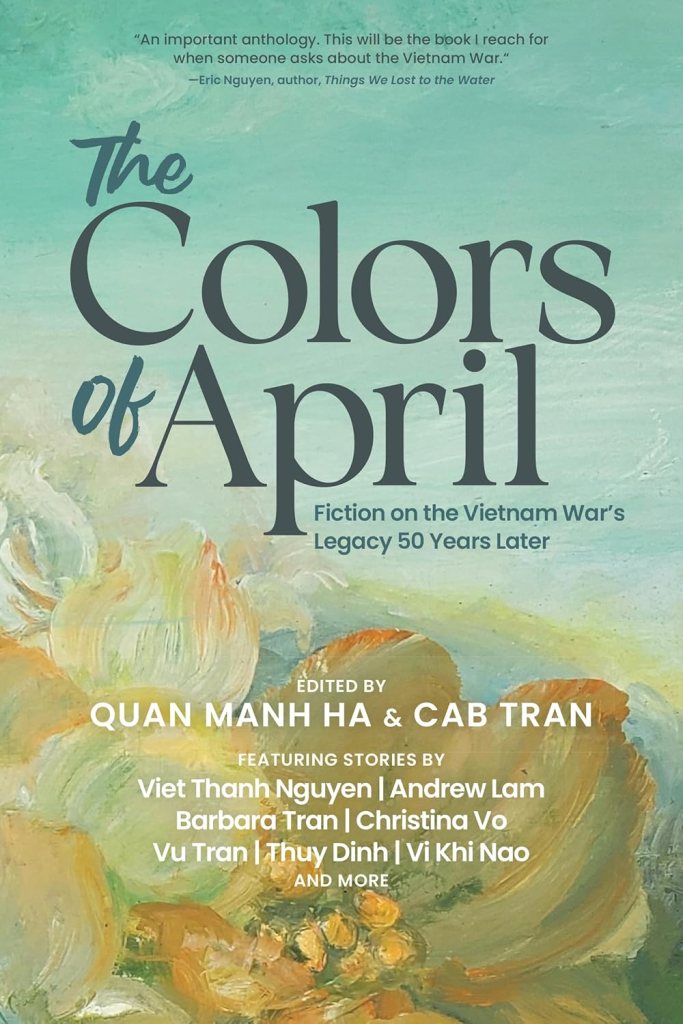
The Colors of April, edited by Quan Manh Ha and Cab Tran, is a poignant literary tapestry woven from the voices of Vietnamese authors (rendered in English translation) and Vietnamese American authors (writing originally in English). The selected stories present a richly layered exploration of the Vietnam War and its enduring aftermath. This collection—featuring both acclaimed and emerging writers—reveals a broad spectrum of political perspectives, personal experiences, and collective memories, each distinct in its articulation yet bound together by the war’s inescapable shadow. The narratives, diverse in voice and vision, ultimately converge to illuminate universal human struggles that transcend time and geography.
Together, the twenty-eight stories construct a kaleidoscopic portrait of the war’s legacy—an intricate mosaic of remembrance, ideology, and emotional scars, reflecting the complex realities of those who endured the conflict as well as those who live in its long wake. For readers born well after the war’s conclusion, and for those still wrestling with its lingering echoes, this collection offers a deeper, more nuanced understanding of its profound and far-reaching consequences. Although over half a century has passed since the war’s end, its reverberations continue to shape lives across generations. The imperative to reckon with its contradictions and confusions—its tensions, grievances, acts of remembrance, and moments of forgetting—remains as urgent as ever. As this collection compellingly illustrates, such a reckoning is not only possible, but essential.
The power of the selected stories is nothing short of profound—each narrative an indispensable thread in the collection’s intricate tapestry. Andrew Lam’s “5A, 5B, DEST: SGN” proves especially arresting in its meditation on time and cultural dissonance, unfolding aboard a flight to Hanoi. Two strangers—divided by generation yet united in transience—share a fleeting but piercing exchange, their disparate but deeply human histories converging in dialogue. Here, storytelling reveals itself as both a balm and a catalyst, spanning chasms of estrangement with quiet audacity. Lam deftly interrogates the paradox of global interconnectedness—the friction between a borderless world and the hermetic solitude of memory—a theme that reverberates throughout the anthology with striking resonance.
Many of the stories probe the generational fissures carved by the war’s enduring legacy. These narratives illuminate how divergent upbringings—moulded by the interplay of history, geography, and national identity—cultivate profoundly distinct, yet equally legitimate, interpretations of the conflict. Pulitzer Prize-winner Viet Thanh Nguyen’s “Immolation” masterfully traverses the ideological schisms within the Vietnamese diaspora, laying bare the intricate tension between assimilation and defiance in the shadow of exile. Through the lives of two young protagonists, Nguyen interrogates how the war’s aftershocks contour their precarious sense of belonging in the U.S., despite their physical remove from its immediate devastation. In this way, he offers a searing critique of the war’s transnational persistence—its memory fragmented, its weight unevenly borne across generations and borders.
In “Chị Nhàn at the End Time,” Thuy Dinh crafts a hauntingly lyrical portrait of a young girl’s fragmented recollections of South Vietnam’s collapse—and her unsettling encounters with an enigmatic housemaid. Through the prism of childhood perception, Dinh excavates the buried narratives of those ensnared in history’s upheavals. Her tale interrogates how seemingly insignificant omissions and deliberate fictions can distort reality’s very fabric, revealing truth not as a solitary revelation but as a collective endeavour—one demanding myriad voices to illuminate its full dimensions.
The anthology’s virtuosic range of tone, style, and narrative voice ensures its unflagging potency. Each story functions as a kaleidoscopic lens, refracting the war’s legacy and its indelible imprint upon those whose lives it irrevocably shaped. By interweaving perspectives from both Vietnam and the Vietnamese diaspora, The Colors of April constructs a far more polyphonic and penetrating reckoning with the conflict’s aftermath. In amplifying Vietnamese voices so frequently marginalised in Americentric historiography, the collection fosters not merely dialogue—but an empathetic communion with the past.
How to cite: Gerhart, Aaron. “An Empathetic Conversation About the Past—The Colors of April: Fiction on the Vietnam War’s Legacy 50 Years Later.” Cha: An Asian Literary Journal, 25 Mar. 2025, chajournal.blog/2025/03/25/colors-of-april

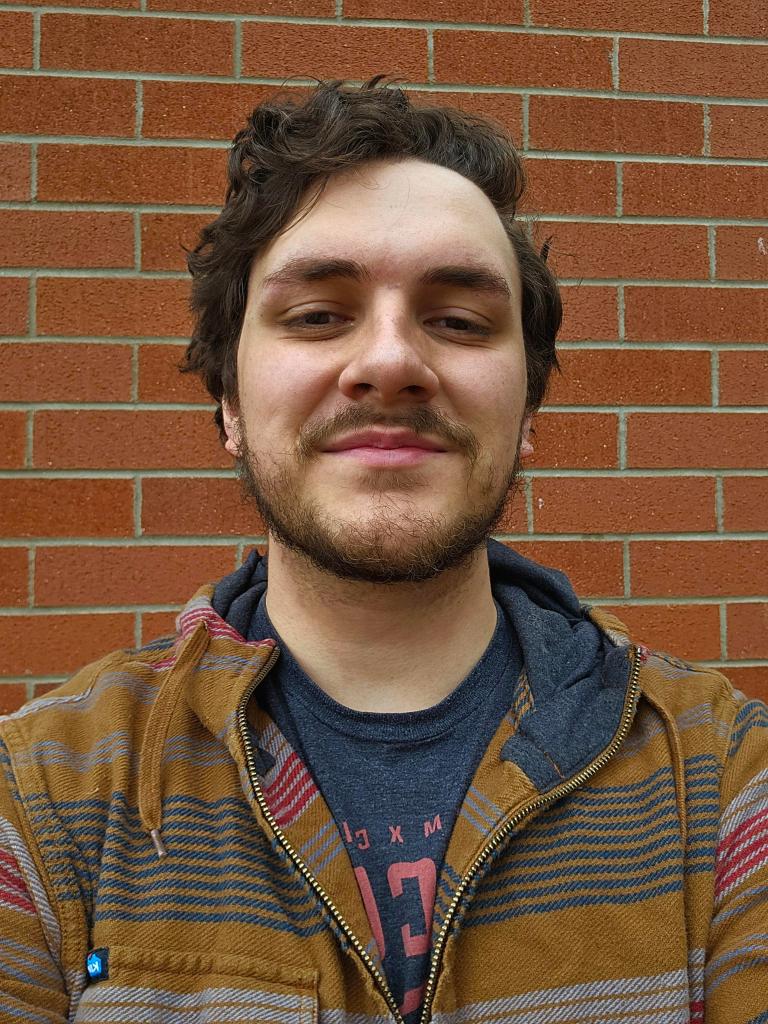
Aaron Gerhart is an undergraduate student at the University of Montana, where he pursues studies in creative writing, English, anthropology, and linguistics. His academic interests encompass contemporary American literature, Critical Refugee Studies, and descriptive linguistics. His work has been published online by The Oval, the University of Montana’s undergraduate literary magazine. He divides his time between Missoula and Helena, Montana.
 Cha
Cha 