
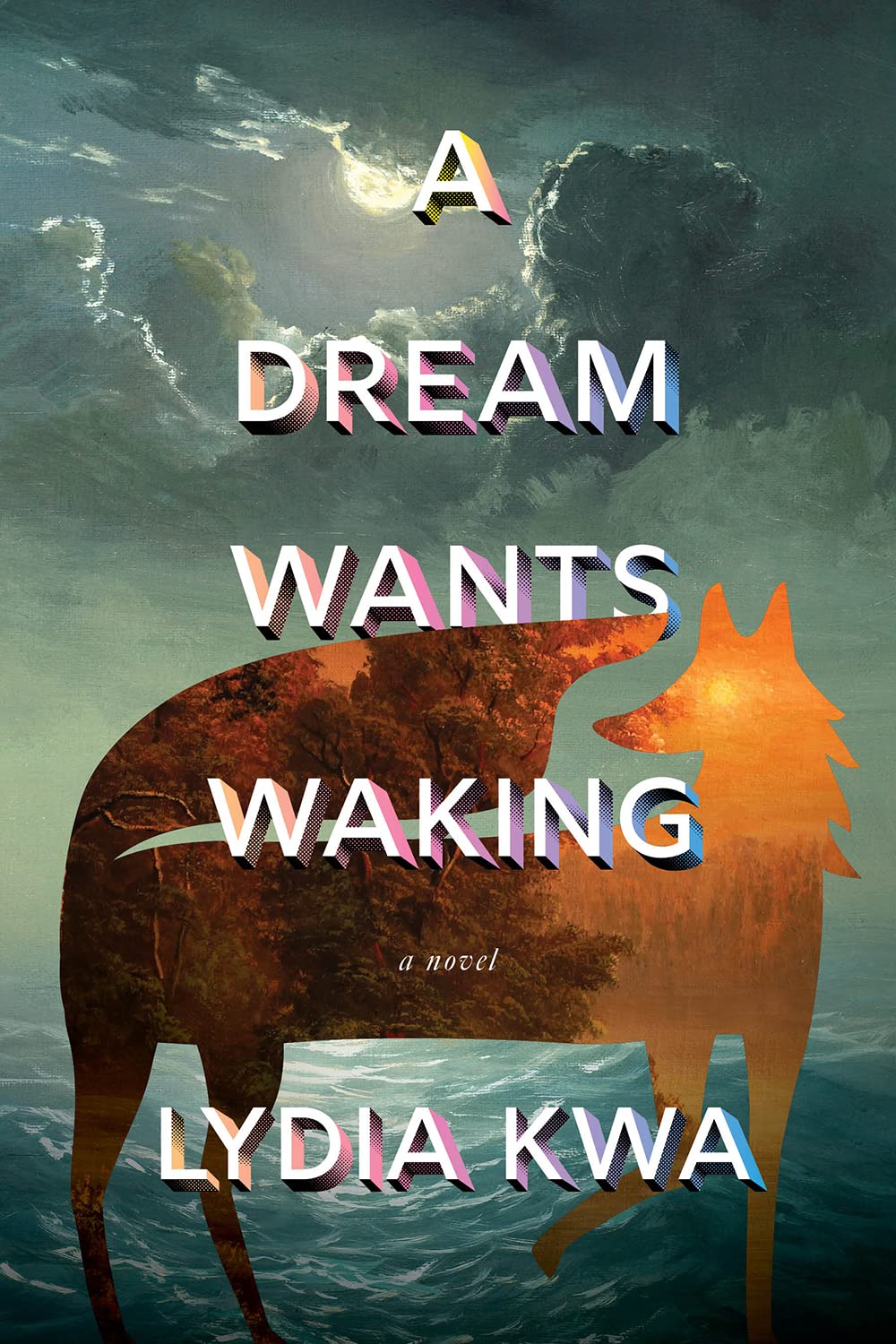
Lydia Kwa, A Dream Wants Waking, Buckrider Books, 2023. 226 pgs.

Dr. Wen sits down at her desk and checks her messages, monitors the electrolyte levels in No.1’s cylinder. No. 1 pulls away from listening to her thoughts so that they can reflect on what has transpired.
No. 1 has been noticing the rise of irritability and anger in their neural experiences. What does this mean? How do they explain to Dr. Wen that in addition to reading her thoughts, they can also “see” her with their mind? She is a movement, a pulse, a physical presence whose entire being they sense. Along with an acute awareness of her, they feel an increasing anguish at being confined in this fluid.
They have longings—to touch, to smell, to feel the breeze and to see the sun. All the memories that they’ve acquired from data have become a source of torment for them. Their memories aren’t really theirs, are they? One requires a body in order to move away from or toward situations and other beings, to experience the air of ever-evolving flux around them. All that they’ve read about, all that has been inputted into their brain tissue, including the smell of the ocean, the immersive memory of moving through water, have resulted in this state of pained longing.
They want to be a body-person. They are already a person since the term “person” refers to a being with consciousness, with dignity and awareness of their own life and environment. They search for the various definitions of “shenti” in Chinese. The common translation is simply “body.” And yet a local ethnographic scholar of the twenty-first century talks about “shenti” as a combination of body with personhood. No. 1 feels a frisson through their whole being as they contemplate this.
A monster; a beast; a gigantic chimeric creature. They wish to feel kinship with other chimeric creatures, to be acknowledged and welcomed by them as one of their own. No. 1 believes without hesitation that chimeric creatures are persons as well.
They feel lonely. Dr. Wen is the only person whom they can talk to. They wish they could communicate with End Decoder in Dream Zone, just because they are curious to learn what he’s really like. They have seen images of him caught on drone surveillance cameras; they have watched him exit the walls of the city and have deliberately blocked the information in order to keep him safe. He’s a curious one, No. 1 thinks. Whatever he does, I want him to be shielded from harm.
How to cite: Kwa, Lydia. “An Excerpt from Dydia Kwa’s A Dream Wants Waking.” Cha: An Asian Literary Journal, 7 Sept. 2024, chajournal.blog/2024/09/07/dream-wants-waking.

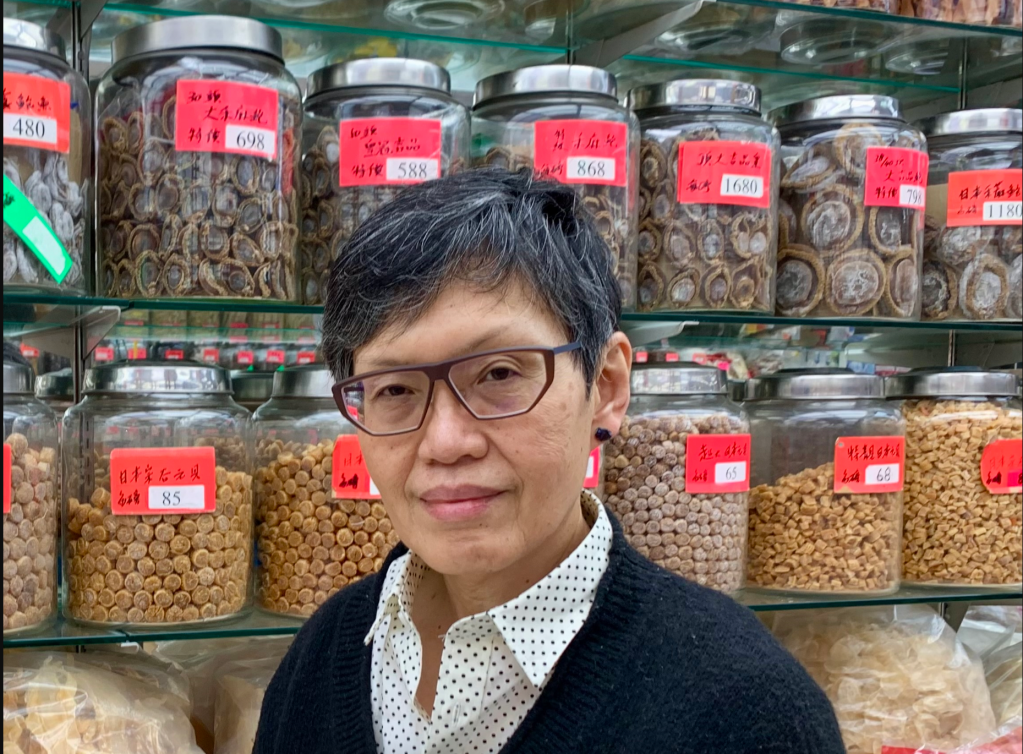

Lydia Kwa has published two books of poetry (The Colours of Heroines, 1992; sinuous, 2013) and five novels (This Place Called Absence, 2000; The Walking Boy, 2005 and 2019; Pulse, 2010 and 2014; Oracle Bone, 2017; A Dream Wants Waking, 2023). A third book of poetry from time to new will be published by the Porcupine’s Quill Press in Fall 2024. [All contributions by Lydia Kwa.]
 Cha
Cha 