
茶 FIRST IMPRESSIONS
茶 REVIEW OF BOOKS & FILMS
[REVIEW] “Living On: Xi Xi’s Mourning a Breast” by Susan Blumberg-Kason
Click HERE to read all entries in Cha on Mourning a Breast.
Xi Xi (author), Jennifer Feeley (translator), Mourning a Breast, New York Review Books, 2024. 320 pgs.
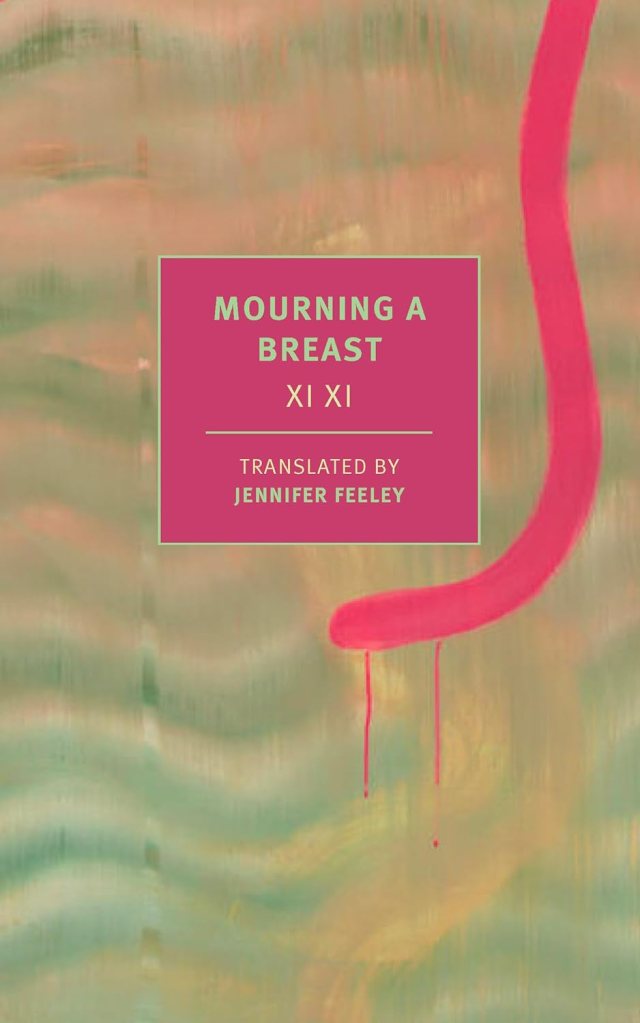
My grandmother was seventy-five when she was diagnosed with breast cancer and had a mastectomy. No one else in my immediate family had had breast cancer and it was a very scary time. The happy part of this story is that my grandma lived for three more decades and passed away at the impressive age of 104. But my family never forgot the trauma from her breast cancer and mastectomy. Events like this never quite go away, at least in our minds. So it was with interest that I read Jennifer Feeley’s new English translation of Xi Xi’s Mourning a Breast. Xi Xi was diagnosed and had her mastectomy in her mid-fifties and, like my grandmother, lived for another three more decades.
I’ve read other breast cancer memoirs and they’ve usually centred around the upheaval in younger women’s lives when they have to put their roles as mothers and wives aside—perhaps for the first time—to attend to their health. Xi Xi’s book is different because she didn’t marry or have kids and had to navigate her diagnosis, mastectomy and treatment all on her own.
Mourning a Breast is a sobering yet uplifting story because we know Xi Xi lived for decades after she was diagnosed in 1989. When the original Chinese book came out in 1992, Xi Xi’s prognosis was still up in the air because it hadn’t yet been five years, in those days the window when chances of a recurrence were still high. I think things are different now and some people have recurrences seven to ten years—or even twenty years—later. As Xi Xi writes:
…there’s no such thing as a complete cure for cancer. It can only be controlled, and the body gradually recovers, but it will never be completely cured. Once you have cancer, you’ll be dealing with it for the rest of your life, harboring an unpredictable, misshapen monster that can strike at any time and swallow you up.
Xi Xi is a poet and while she writes most of the book in prose, she does include some parts in verse, namely when she has conversations with doctors and with a friend who also has breast cancer and serves as a mentor in the process of treatment and recovery. Xi Xi tells a doctor that she’s found a lump in her breast, the doctor tells her that it could be hormones from menopause and that she should monitor it for a couple of weeks. The lump neither disappears nor shrinks. And so begins her breast cancer diagnosis and treatment.
While she writes about this journey, she intersperses it with musings about illness, the stigmas surrounding them, and what keeps her going. When she was diagnosed, she hadn’t known many people who had had cancer. A couple of teachers at the school where she taught in her early twenties had been afflicted by it, but other than that she always thought it was much more prevalent in the west than in Asia. But after her diagnosis, she learns that friends and friends of friends have also had breast cancer. One, Ah Kin, serves as a mentor and tells Xi Xi what she can expect from her mastectomy and the radiation treatment that follows.
Xi Xi thinks about nineteenth century illness and how tuberculosis was romanticised in literature. Imagine delicate women, coughing as discretely as possible into blood-stained handkerchiefs. But there is no romance in cancer, which Xi Xi views as a twentieth century (and counting) disease. Perhaps cancer would have been more prevalent in the nineteenth century, but we just didn’t know because people didn’t live as long then when many more succumbed to tuberculosis and other infectious diseases that are all but eradicated now. Throughout the book, Xi Xi wonders what gave her cancer. Could it have been genetics? Neither her mother nor her grandmothers had had breast cancer, although one grandmother died from a uterine tumour. It was too late to learn if that tumour was malignant. Or did the pollutants in the environment contribute to her cancer? She would never know, but she realised she could control the food she eats, which may ward off cancer or contribute to it.
One of my favorite parts of the book is when she’s searching for wholegrain bread because she knows that’s a healthier option than standard white bread, which is bleached and in Hong Kong often contains lard and/or sugar. Reading this part gave me flashbacks of my own time in early 1990s Hong Kong when I was just learning to read Chinese and labour over bread packaging at ParknShop to make sure the ingredients don’t include lard. Xi Xi doesn’t live in a fancy area of Kowloon and recognises that the bread shops and grocery stores in her neighbourhood don’t sell healthy bread. For that she must travel to more upscale areas, probably Central on Hong Kong Island.
Xi Xi guides the reader through the Hong Kong healthcare system, but her book also has universal themes about health and illness, navigating the unknown on one’s own, and finding community in places one would never expect. Xi Xi would go on—a decade after the Chinese original was published—to lose the use of her dominant right hand due to complications from her mastectomy. She would then learn to write with her left hand. She died two years ago at the age of eight-five. It’s a shame she didn’t live to see the English translation of Mourning a Breast, but for readers now and in the future, her work lives on eternally.
How to cite: Blumberg-Kason, Susan. “Living On: Xi Xi’s Mourning a Breast.” Cha: An Asian Literary Journal, 5 Jun. 2024, chajournal.com/2024/06/05/xi-xi-mourning-a-breast.


Susan Blumberg-Kason is the author of Good Chinese Wife: A Love Affair With China Gone Wrong. Her writing has also appeared in the Los Angeles Review of Books‘ China Blog, Asian Jewish Life, and several Hong Kong anthologies. She received an MPhil in Government and Public Administration from the Chinese University of Hong Kong. Blumberg-Kason now lives in Chicago and spends her free time volunteering with senior citizens in Chinatown. (Photo credit: Annette Patko) [Susan Blumberg-Kason and ChaJournal.]
 Cha
Cha 