
茶 FIRST IMPRESSIONS
茶 REVIEW OF BOOKS & FILMS
[FIRST IMPRESSIONS] “The Liminality of Being: Anthony Chen’s The Breaking Ice” by Jonathan Chan
Anthony Chen (director), The Breaking Ice, 2023. 97 min.

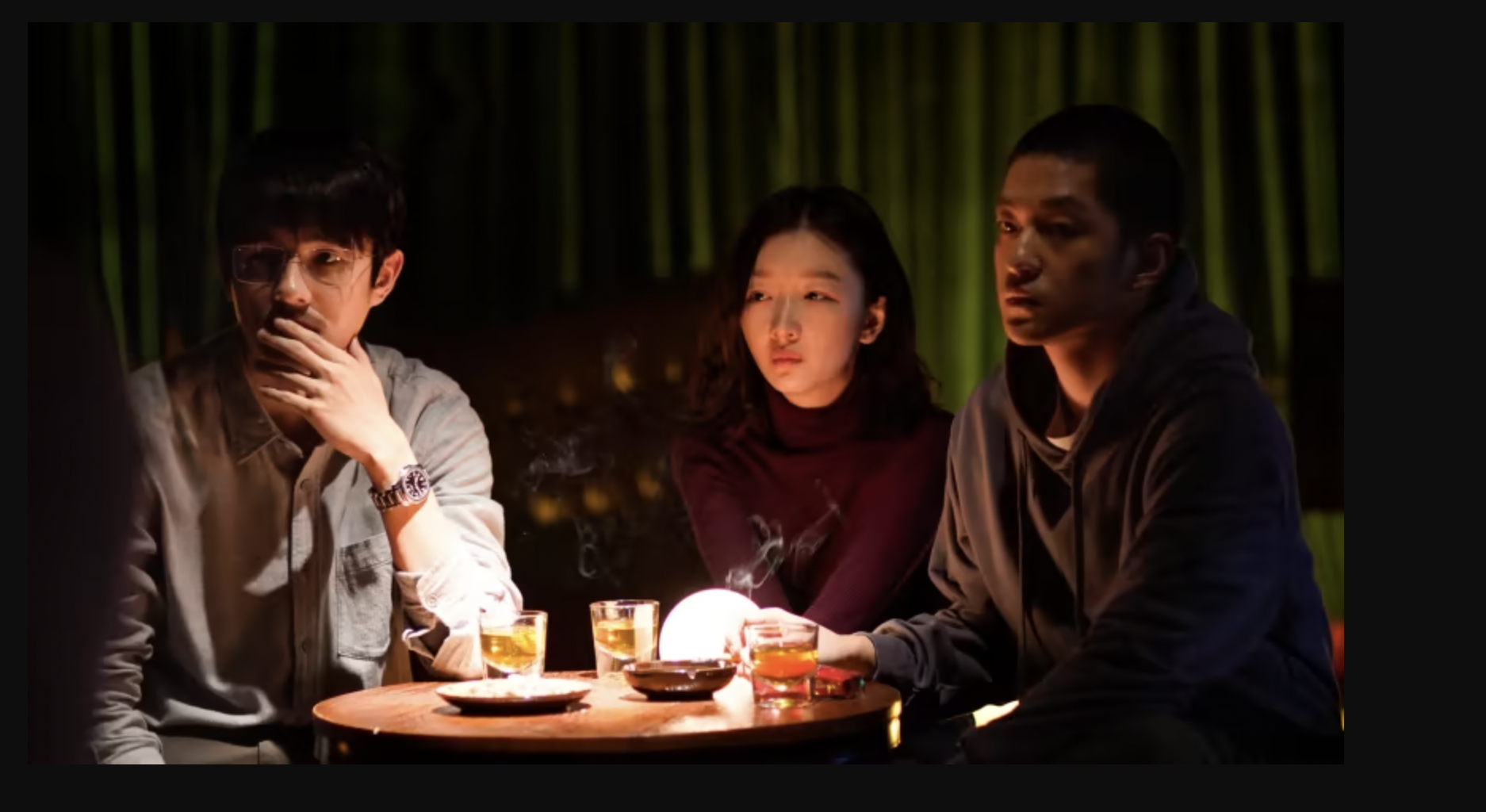
Arresting visuals, an immersive soundtrack, and interesting ideas do not ultimately make for a narratively tight film. To me, the largest culprit for that is thin dialogue. Chen entered this film wanting to create something from the listlessness he felt in the midst of the pandemic, steadily filling his script with ideas as he pulled it together logistically.
The city of Yanji, saturated in cold and surrounded by snowy forests and frozen lakes, makes for a potentially rich site of exploration. The gaze of a Koreaphile domestic Han tourist toward the region’s Korean minority. The liminality of being at the border between China and North Korea. The cultural and psychological gulf the region has with the rest of China, with the film’s protagonists hailing from places such as Shanghai and Sichuan. This gaze becomes its own exoticisation, protagonists shouting, “Saranghaeyo” at the North Korean border and eating ramyeon at the convenience store, “traditional” Korean practices presented through a wedding and cultural village. The founding myth of Tangun and the folk song “Arirang” are presented as secondary to the epiphanies, or lack thereof, of the film’s characters. Perhaps having one of the three leads as a Korean character from Yanbian would have given Chen space to add an additional complexity beyond the listlessness of the film’s three young adult leads.
Chen leads by affect, scenes meandering from one to the other over the course of four days. Yet, there seemed to be a lack of chemistry between the film’s three attractive leads, as well as a purely incidental character to their friendship. I was reminded of other cinematic love trios—in Lee Chang-dong’s Burning, Alfonso Cuarón’s Y tu mamá también, Tran Anh Hung’s Norwegian Wood, Hong Sang-soo’s Woman Is the Future of Man—where a palpable sense of tension simmers beneath the interactions on the bases of ellipses made somewhat comprehensible to the viewer. The Breaking Ice sprinkles these allusions throughout, but not always to successful effect: the introduction of Haofeng’s depression, for example, through calls from his therapist and heavy presentations of suicidal ideation, after a brooding, Murakami-esque introduction. The gradual revelation of Nana’s past as a figure skater through an ankle scar. There is a seeming opacity to these characters that never reaches a stage of meaningful release. To the extent that Chen is reacting against social norms and archetypes, such reticence could have been played either way. The film might have more sex in it than the average film in China, but it rarely has its characters break any rules in an overt manner.
Perhaps that is my frustration with Chen’s film. it was brought to completion within six months with a relatively small crew in China. More revisions and more thought might have allowed for a more careful intertwining of its threads and organisation of its ideas. The film’s visual and sonic style are polished and well-established, but that cannot make up for a lack of narrative heft.
How to cite: Chan, Jonathan. “The Liminality of Being: Anthony Chen’s The Breaking Ice.” Cha: An Asian Literary Journal, 14 Dec. 2023, chajournal.com/2023/12/14/ice.


Jonathan Chan is a writer and editor of poetry and essays. Born in New York to a Malaysian father and South Korean mother, he was raised in Singapore and educated at Cambridge and Yale. He is the author of the poetry collection going home (Landmark, 2022), which was named a 2022 Book of the Year by SUSPECT. Previously a participant in the Singapore International Film Festival’s Youth Jury & Critics Programme, his writing on film has appeared in Stories Journal, Film Criticism, and Quarterly Literary Review Singapore. More of his writing can be found at here. [All contributions by Jonathan Chan.]