
{Return to Cha Review of Books and Films.}
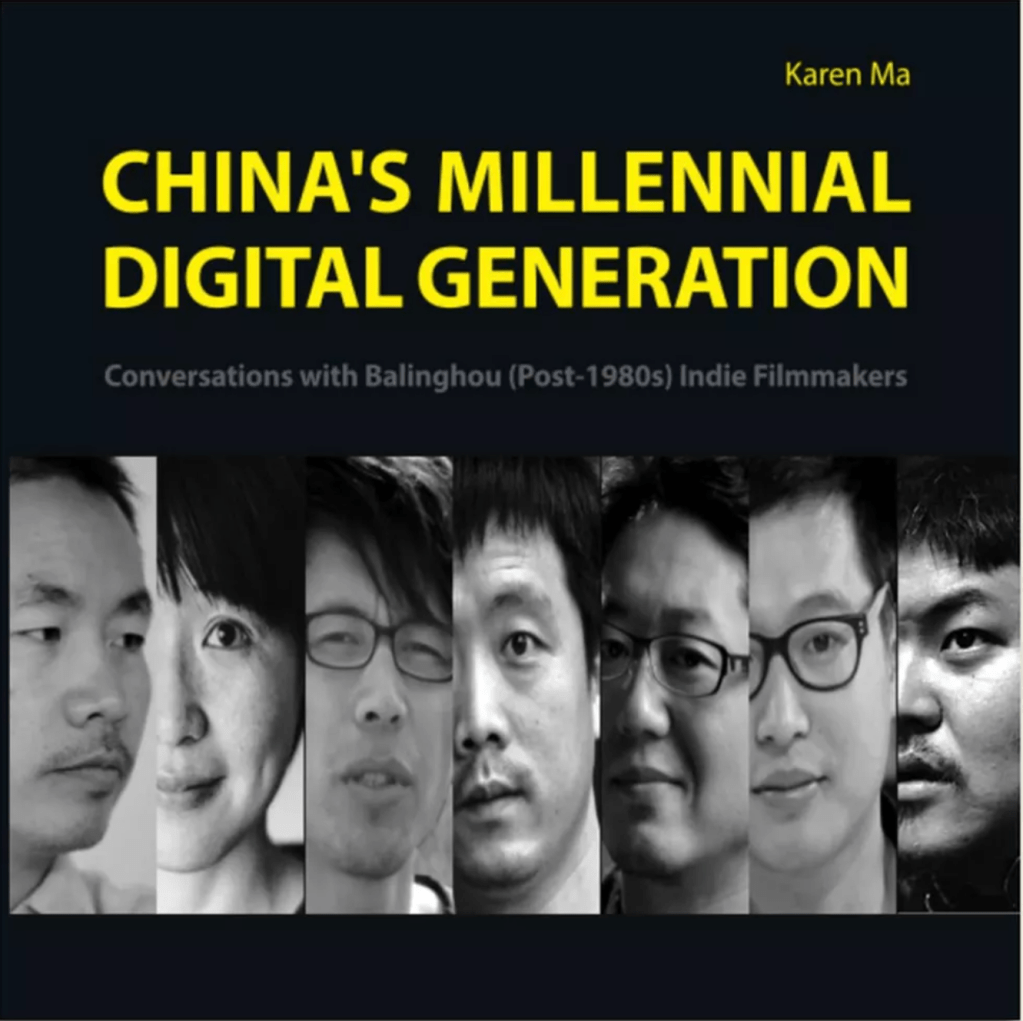
Karen Ma. China’s Millennial Digital Generation: Conversations with Balinghou (Post-1980s) Indie Filmmakers, Long River Press, 2022. 260 pgs.
On 2 January 1997, I boarded a plane in Shanghai heading to Chicago. The night before, I had gone to the Bund, enjoying the beautiful night stroll along the Huangpu River and taking pictures of the newly completed Oriental Pearl Tower, then the tallest building in China. The glitz was a big step up from the remote province of Guangxi where I was living at the time, but I was eager to leave. I was dry-eyed at the gate and did not remember saying goodbye.
That year, 1997, was a significant year in the modern history of Chinese cinema, according to Karen Ma’s illuminating new book, China’s Millennial Digital Generation: Conversations with Balinghou (Post-1980s) Indie Filmmakers. In 1997, Jia Zhangke, the celebrated director of the sixth generation of Chinese filmmakers, graduated from the Beijing Film Academy and made his debut film Xiao Wu, about a pickpocket in his hometown of Fengyang. Wang Xiaoshuai made So Close to Paradise, and Li Hong directed Out of Phoenix Bridge. That same year, the first unofficial film group, “Office 101”, emerged in Shanghai, ushering in a period of other grassroots clubs and platforms for film screenings and discussions. The years that followed, 1998–2003, became “a period of heady growth as more independent filmmakers, emboldened by the proliferation of film clubs and festivals, poured in with creative products”.
I missed being a witness to this period as soon as I boarded that plane. It was partly my eagerness to get acquainted with the new world. Another factor was the practical issue of trying to improve my English. Despite having studied the language for well over ten years since middle school, the first time I visited a grocery store in the US I failed to understand the cashier. My solution was to watch syndicated TV shows without subtitles or closed captions. And that was all I had time for as far as entertainment went. It was also free, as I had spent $100 on a used TV. It was before YouTube and Netflix, and even if I had wanted to, I would not have the means to watch Chinese films.
I have visited my parents’ home in Chengdu several times since 2001, but only made it to a cinema once or twice when I was there. There were so many other things to do, such as meeting friends from various stages of my life. And when you are in Sichuan, what else do you do but eat, and eat more. Before I knew it, it was time to head back to the Midwest.
The only Chinese film I watched in a theatre during those visits that left a deep impression on me was Crazy Stone (2006), directed by Ning Hao, a seventh-generation filmmaker, as Ma mentions in her book. I tried to recommend this film to friends who teach Asian Studies, as I had thoroughly enjoyed the dark humour of this film in which the characters speak Sichuanese instead of Mandarin. But few seemed to have even heard of it. With this book, that should no longer be a problem. In an appendix titled “A Guide to Seven Generations of Chinese Filmmakers”, Ma gives a concise yet informative summary of film history in China. Unlike most other countries that “see their film history in terms of waves”, Chinese film experts “tend to think of the generation its film directors belong to”. Reading this section of the book filled me with an equal measure of nostalgia and curiosity. I recall many films by the second, fourth, and fifth generations of directors, the films that accompanied my friends and me through our growing years. I became curious about the earliest Chinese films, which I had not seen but have discovered are now on YouTube. I’m embarrassed that I don’t know much about thesixth, seventh, and the main subject of Ma’s book, the balinghou (post-1980s) generations. I saw Jia Zhangke’s A Touch of Sin (2013) at the East-West Center at the University of Hawai‘i in 2014 when I attended the Summer Institute of their Asian Studies Program. The other Chinese film screened was The King of Masks (1996) by Wu Tianming, a fourth-generation director, who also “played a key role as mentor for fifth-generation directors, helping them find hard-to-come-by opportunities to make their first films as head of Xi’an Film Studio in the 80s,” according to Ma. I was a biology professor then, trying to “infuse Asian Studies in teaching biology”. Part of my self-education was to seek out Chinese films I had missed since 1997. I wish I had this appendix from Ma’s book back then, and I’m glad I have it now.
The West and China seem to define “generations” differently. In America, for example, generations are defined roughly every fifteen to twenty years, corresponding to human biological generations. There are the Baby Boomers (born 1946–1964), Gen-X (1965–1980, my generation, and the best, in my humble opinion), Millennials (1981–1996), and Gen-Z (1997–2012). Chinese generations, on the other hand, are based on decades. The “sent-down” generation were born in the 1950s, for example. It’s common to see the media describe their reporting subjects as balinghou, jiulinghou (post-1990s), or linglinghou (post-2000s). This perhaps is “tied to the pace and dramatic twists and turns seen in Chinese society in the last twenty years of the 20th century” and the first twenty years of the 21st century. Like “the Father of Chinese Rock” Cui Jian sings, “It’s not that I don’t understand / It’s just that the world is changing fast.”
Ma explained why she chose balinghou directors as the focus of her book,
This generation came of age around the millennium, when China experienced rapid change and fast economic growth. The term came into wider use after 2010 when an influx of new indie directors who were not only from urban centres, but also smaller towns and provincial China exploded onto the scene.
—Karen Ma, China’s Millennial Digital Generation.
In other words, she chose to write about the directors of the generation from the part of China that had gone through seismic changes yet was left behind without much economic gain—the directors who gave a voice to the marginalised and the forgotten at the fringes of society. Cell phones, the internet, and “the proliferation of overnight deliveries of parcels to small villages” blurred the lines between “first-tier cities” such as Beijing and Shanghai and remote villages in Guizhou and Hunan, yet failed to truly include the latter in the social fabric of prosperity. Children and the elderly were left behind as young adults left the villages in an attempt to strike gold in big and often remote coastal cities. The quiet bucolic countryside disappeared, giving way to construction sites of factories, forming the bottom of a man-made lake when a new dam was built, or simply becoming deserted ghost towns. When the world sees China as a “capitalist powerhouse” and its “glittering lights and economic miracle”, it needs to understand the whole of China and hear the voice of those voiceless.
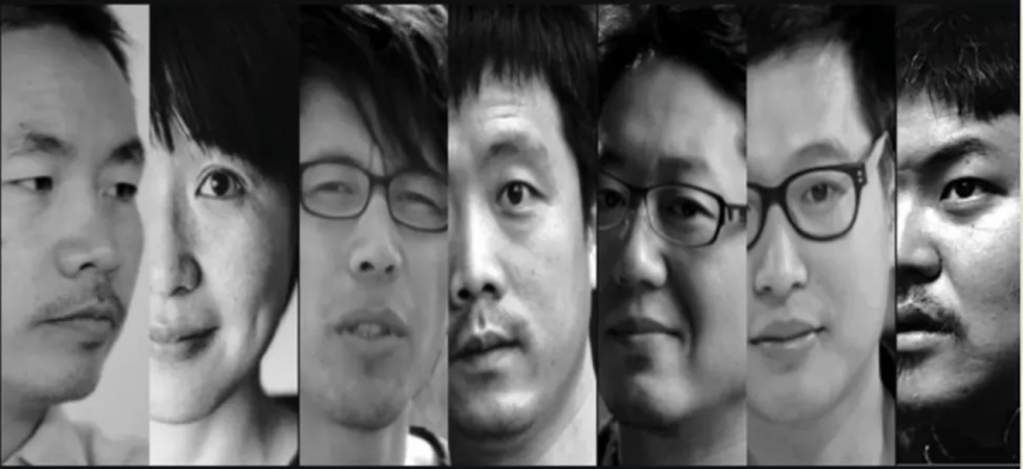
After painstaking research by “attending film lectures, exhibitions and training camps” and interviewing “some 20 young directors”, Ma includes six regional filmmakers in her book: Li Ruijun, Huang Ji, Xin Yukun, Yang Jin, Hao Jie, and Zhai Yixiang. Each representing a particular province of China, they share the following commonalities:
They all produce independent auteur films, share a rural background, are millennial balinghou artists born in the 1980s, and focus on rural society as a lens into China’s larger social problems.
—Karen Ma, China’s Millennial Digital Generation.
Ma also includes Wang Fei, “a millennial co-curator for the Chinese Independent Film Festival (CIFF) and for Xining’s FIRST International Film Festival”, to shed light on China’s 2017 Film Law and its implications, a unique challenge faced by Chinese filmmakers: the “capital-C” censorship.
In 1985, I attended Sichuan University in the provincial capital of Chengdu as one of only two students hailing from the small remote town of Kangding on the edge of the Tibetan plateau. I was a foreign graduate student at a Midwestern American university but couldn’t understand the cashier. Now without formal training, I tried to write, in a second language, stories that not many seemed to be interested in. Knowing a thing or two about hovering on the margins and never being able to “break in”, I strongly identify, in an odd way, with these filmmakers. I’m cautious about the work by the “elite” filmmakers in the early 1990s, and other “elite” artists and writers. They had been near the top of the hierarchy in Chinese society and reaped the bounty, and when changes happened, and they fell from the top, they had every right to lament, but I didn’t have an obligation to lend my ears. Because they still had Europe and America to go to, and they could still sell their work to a sympathetic foreign audience. I prefer to hear what ordinary folks have to say and appreciate those who try to lend them a voice.
In her book, Ma does a superb job of organising and presenting the materials she gathers. For each filmmaker, she includes a short biography, a filmography (which I found extremely useful as a guide for my film list), and detailed interviews in which the filmmakers give intimate, personal reflections on their origins, their path to filmmaking, the trials and tribulations along the way, and their film aesthetics. For each director, Ma also zooms in on a “case study” of one of the filmmaker’s features, complete with a video link to the film (some of the links no longer work due to tighter censorship) and “the director’s take” of the chosen feature.
Since Ma’s book is about Chinese balinghou independent filmmakers, it’s natural to ask, “What is a Chinese ‘independent film’?” In the book’s introduction, Ma points out that in the US, the term “is usually defined in contrast to (films made by) the big Hollywood studios”. She then gives a helpful synopsis of what the term meant in the “post-millennium era in the Chinese context” and how the term has changed over the years, as has everything else in China. I found the filmmakers’ direct answers to the question fascinating. The lone female director in this book, Huang Ji, didn’t explain what an “independent film” meant to her, other than “independent films should reveal feelings and emotions that have been overlooked in our everyday lives”. She also says that she was “not so close to independent film circles” because of her “family’s situation”, as a career woman who is also a mother raising a young daughter, working side-by-side with her cinematographer husband. The five male directors all answer the question directly and candidly. Their ideal “independent film” would be “freer” from the worries of relying on financiers, the box office or marketability, censorship (“yet to receive a stamp of approval from the censors”, as bluntly stated by Yang Jin), and audiences’ tastes. It would also be “purer” in the auteur’s artistic expression of an idea and its reflection on the reality of contemporary China. I sincerely hope these young directors will hold steadfast to the ideology of their art as they face the mounting adversaries that may crush the “independent film” industry. One is the input of investors’ money once these young directors achieve certain fame, which could force them to make more “commercial” films and compromise their directorial control. Another is the tightened censorship after China passed a new Film Law in 2017, and the CCP’s Propaganda Department took over China’s film and television oversight in March of 2018. Increasingly, even films and TV shows that censors have approved can be taken out of circulation, xiajia, if one star of the work is involved in a controversy due to true wrong-doings such as tax evasion, solicitation or other illicit activities, or dubious “non-patriotic” problems, such as visiting a Japanese tourist site and taking pictures like a typical tourist. It’s also now more difficult for filmmakers to enter their work in international film festivals. Unlike in the past, they now “must apply for an overseas participation permit”. The third is the decline of the entire film industry after the COVID-19 pandemic, including “the permanent closure of some 2,300 cinemas in the first two months of the shutdown alone… nearly 20 percent of China’s theatrical release capacity”.
As grassroots artists, these balinghou filmmakers shared a rural background and made most, if not all, of their films—“hometown trilogy”—based on their personal experiences. But they do so with their unique lenses, illustrating the complicated nature of contemporary China, in which nothing is black and white, and nothing easy for “outsiders” to decipher.
Li Ruijun, who has made films focused on the rural elderly, says, “I found out why Chinese peasants are so insistent on having sons—because as farmers, they don’t enjoy any social welfare benefits. …having sons is about the only way farmers can ensure that someone will look after them when they get old.”
Huang Ji, a “left-behind daughter herself”, makes films about left-behind girls who have suffered sexual abuse, but her films “stand out in sharp contrast to Western movies that explore the topic of sexual violence against children”. In her films, the protagonist “is not portrayed as a victim because the film is not about denouncing her abuser per se”. She emphasised that for her “the most interesting themes…are not about nations or politics, but about human nature, and how humans relate and react to their environments”. She agrees that she makes films “from a woman’s perspective”, but refuses the label of a “feminist filmmaker”, explaining how she takes “advantage of people’s inclination to want to protect (her) as the so-called fairer sex”; if she “didn’t do a good job or somehow made a mistake,” she could “get away with it a bit more” because people are more willing to forgive her, especially if she became “a bit teary”. I think Gloria Steinem would be rolling her eyes right now.
Hao Jie, who makes films about wifeless rural bachelors to explore the gender imbalance issue, explains that his film “The Love Songs of Tiedan” was “less a didactic feature film about China’s feudal society than nostalgia, a romantic memory” drawn from his own childhood, contrary to the “very dark view of rural marriages and romance” depicted in films hailed in the West where the audience looked at the “backward Orientals” with pitiful eyes. These films were made by the likes of Chen Kaige and Zhang Yimou, who to him were “urban-based, BFA-trained elites preoccupied with criticising history and society.”
Yang Jin calls his films “critical realism”, and he studies father’s roles in educating children and the lack of male role models for the left-behind generation, shedding light on “a rarely discussed social problem—the grim prospects for undereducated rural youth coming of age in 21st century China”. He also explores the role of faith in rural China, where the elderly and “leftover” children became Christians in order to find some anchor and purpose in their uprooted world. Ma points out that “some of the choir scenes at church captured on camera by Yang bear an uncanny resemblance to the charging youngsters singing revolutionary songs during the Cultural Revolution days”.
Xin Yukun is a rare indie director who has been “successful both critically and at the box office,” whereas none of Zhai Yixiang’s “social realism” films that explored religion and journalism in China have received a screening permit. Interestingly, Wang Fei criticises some directors who were “tripped up” by the exploding commercial film craze, which was “rather like housing prices in China”, his list including Li Ruijun, Hao Jie and Zhai Yixiang.
In 2018, the last time I visited China, my brother took me to the revolving restaurant on the Oriental Pearl Tower. The view was dazzling but the tower has long been surpassed by the Shanghai World Financial Center as the city’s tallest building. I resolved to visit more so I don’t continue to miss out on the changes and become a stranger to my homeland. The pandemic however showed how things can suddenly turn impossible and improbable. I still don’t know when I will be able to set foot on Chinese soil again. In her book, Ma mentioned that watching Chinese films eased her homesickness when she felt like a stranger, no matter where she was. Now reading her book and making a list of films to watch does the same for me. I will continue to follow these balinghou directors, and I hope their artistic visions and ideas survive these unsettling, tumultuous times. I hope Ma continues to watch Chinese films and write more books that will educate and entertain readers from both academia who teach about China and films, and the general public who just want to appreciate and enjoy something a little different.
How to cite: Collins, X. H. “Giving a Voice to Those With None: Karen Ma’s China’s Millennial Digital Generation.” Cha: An Asian Literary Journal, 12 Oct. 2022, chajournal.blog/2022/10/12/chinese-filmmakers.


X. H. Collins was born in Hechuan, Sichuan Province, China, and grew up in Kangding on the East Tibet Plateau. She has a PhD in nutrition and is a retired biology professor. She is the author of the novel Flowing Water, Falling Flowers (MWC Press, 2020), and has published short stories and essays. She now lives in Iowa with her family. For more information, visit her website and follow her on Twitter, Facebook, and Instagram. [All contributions by X. H. Collins.]
 Cha
Cha 