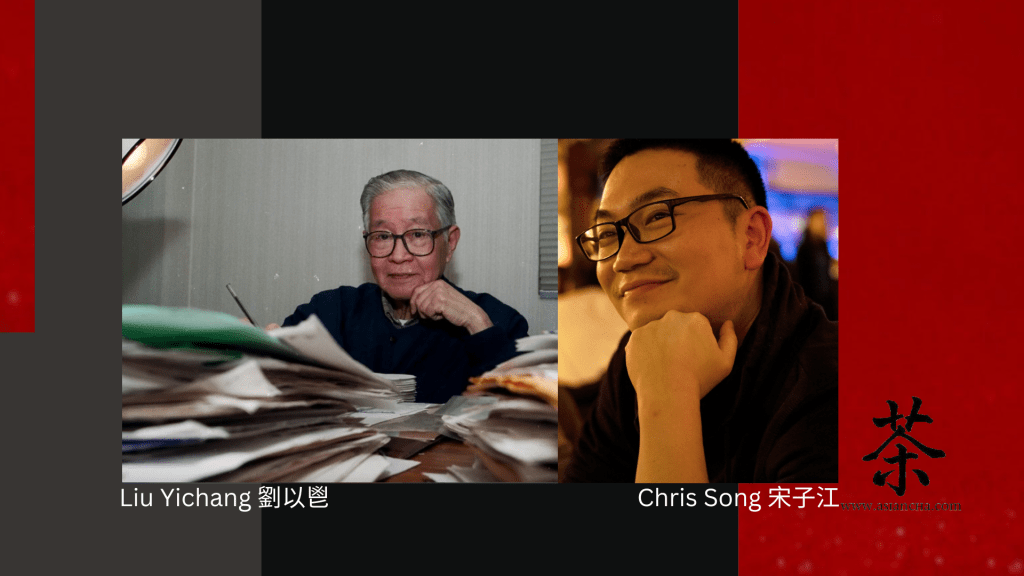
[TRANSLATION] “Mr and Mrs Hertz” by Liu Yichang, Translated by Chris Song
Chris Song’s Note: “Mr. and Mrs. Herz” occupies a distinctive place within Hong Kong literature and within Liu Yichang’s broader literary world. Although set in Singapore during the 1956 riots, the story reflects many of the defining concerns of postwar Hong Kong writing: migration, statelessness, colonial urban life, Cold War instability, and the precarious existence of displaced people moving between port cities in Asia.
Like Hong Kong itself in the 1950s and 1960s, the Singapore of the story is portrayed as a transient, multilingual, and socially fragmented colonial city shaped by refugees, itinerant workers, performers, expatriates, and the urban poor. The story’s concluding note, written after the lifting of the Kowloon curfew in 1966, further links the Singapore riots to Hong Kong’s own atmosphere of political tension and social unrest in the decade before the 1967 riots.
Within Liu Yichang’s oeuvre, the story exemplifies his deep fascination with urban marginality and psychological isolation. Liu wrote extensively, too, about ordinary lives suspended within the anonymity and brutality of the modern city. “Mr. and Mrs. Herz” belongs to this quieter but equally important strand of his fiction: observational, restrained, compassionate, yet unsentimental. Like many of Liu’s protagonists, Herz is a drifting figure caught between histories and geographies, attempting to preserve dignity through memory whilst confronting material humiliation and existential instability. The mediocre hotel setting, the overheard quarrels, the claustrophobic rooms divided by thin partitions, and the narrator’s detached yet morally attentive gaze all anticipate Liu’s later explorations of loneliness, fragmentation, and urban estrangement. At the same time, the story expands Hong Kong literature beyond the territorial limits of Hong Kong itself, situating the Sinophone experience within a wider network of colonial Asian cities.
Click HERE to read all entries in Cha
on Liu Yichang.


The year the riots broke out in Singapore, I was living at the N Hotel on Jalan Besar.
It was an old hotel, four floors high. The second and third floors were given over to the rooms partitioned by thin wooden walls into more than a dozen cubicles. The fourth floor belonged to the club of some trade association. The club and the hotel were not run by the same business. Hotel guests were not allowed upstairs to the club at will; the club members, for their part, never drifted casually down into the hotel.
The hotel’s furnishings were not only sparse but worn out with age. In every room there hung an electric fan from the ceiling. The fans were ancient. When they turned, they made a thick, bubbling sound, “blop-blop, blop-blop,” like a pot of water set over fierce firewood, boiling hard enough to spit foam.
Because every room was divided from the next by wooden partitions, unnecessary quarrels were common. Single men, unable to withstand the temptation of certain sounds, would creep out in the middle of the night and press themselves against the partitions to spy on the rooms next door. Once or twice a month somebody got his head split open for it.
Given how crude the N Hotel was, business should not have been good. Yet it had been there for decades and had never shut down from losses. After the war, Singapore grew steadily more prosperous, and modern hotels multiplied: the Adelphi Hotel, the Eastern Sea Hotel, the Ambassador Hotel, the Cathay Hotel, the Pasir Panjang Hotel… all of them first-rate establishments. By rights, in a different age like this, an old relic such as the N Hotel should long ago have been swept aside. But it remained. I was a long-term dweller there, and naturally I understood better than most people why it survived.
Only the N Hotel was exactly in between, not too large, not too small, and close to the amusement parks.
As I saw it, there were two reasons. First: performers from the song-stages lived transient lives. They came down from the Federation to Singapore, or travelled on from Singapore back into the Federation, and almost always needed somewhere to stay for a few days. The large hotels charged too much; ordinary stage performers could not afford them. The smaller hotels were too filthy and chaotic. Only the N Hotel was exactly in between, not too large, not too small, and close to the amusement parks. For song-stage performers, it was the ideal lodging. Second: unlike other hotels, the N Hotel welcomed long-term residents. Bachelors greedy for the convenience of tea and hot water, or small families wanting somewhere semi-permanent, could stay there indefinitely. The management gave special rates to permanent tenants: large rooms rented for fifty to sixty straits dollars a month, while the smaller rooms cost only thirty to forty.
At that time I was working for a newspaper, and I often came home late at night or near dawn. Renting a room from private landlords was inconvenient, and landlords did not welcome men who kept such hours. My local colleagues knew I was a newcomer, and they suggested I move into the N Hotel as a long-termer. At first, living in a hotel felt vaguely unnatural. A hotel was built for travellers, after all, and travellers ought to be like the paper figures on a revolving lantern: appearing, disappearing, appearing again, always in motion. But after enough time passed, habit settled over everything, and the strangeness wore off.
There were not many long-termers at the N Hotel. Seven or eight on the second floor, another seven or eight on the third. I lived on the third floor and knew little about what happened downstairs.
Among them on my floor was a physical education teacher from out of town. He taught at a secondary school, lived alone, and came from the same region as I did. Naturally we got along well. As for the others, although we saw one another every day, we never became acquainted.
Of all the long-termers, the ones who drew my attention most were a foreign couple. I did not know what country they came from, nor what the man did for a living. When we met in the corridor, sometimes we nodded to each other; sometimes we pretended not to see one another at all.
They were an interesting pair to look at. The man was thin and tall, like a bamboo pole; the woman short and broad, like a wooden barrel. Whenever they stood side by side, I could never suppress the feeling that they were mocking each other.
When I first moved into the N Hotel, one of the hotel boys told me the couple was already two or three months behind on their rent, and quarrelled constantly.
Nobody knew what they were arguing about, and nobody knew what language they spoke.
That much was true. They quarrelled all the time. Sometimes I would come back from the newspaper office in the middle of the night, the rest of the hotel sunk deep in sleep, and the two of them would already be shouting at each other. Their voices rose shrill and sharp, like fighting roosters at dawn, neither willing to yield. Nobody knew what they were arguing about, and nobody knew what language they spoke. But from the conditions of their lives, it seemed likely that most of their arguments had something to do with poverty.
To say they were poor would probably not have been wrong. First, the hotel cashier came upstairs constantly to demand the rent they owed. Second, Singapore was tropical, and people dressed casually there, yet even so they seemed incapable of keeping a single set of clean clothes. Third, they almost never ate breakfast. At noon and again at night, the man would return carrying one long loaf of bread from outside. They would soften it with boiling water and divide it between them.
None of the long-termers at the N Hotel wanted anything to do with the foreign couple. Whenever they appeared, people looked at them with the same expression: contempt edged with disgust.

I remember the date clearly because it was the day the great riots broke out in Singapore on 26 October 1956. At a quarter past ten that morning, violence suddenly erupted outside the Hokkien Huay Kuan building on Telok Ayer Street. Several civilians attacked the police with wooden stools and stones. The streets dissolved into confusion, and the police were forced to fire tear gas. Around eleven, on Kling Street, a twelve-year-old Chinese boy was struck by a tear-gas canister. An ambulance was summoned at once to take him to the hospital, but the wound was fatal, and he died soon afterwards. At one in the afternoon, an advertising van parked near Kling Street was set on fire. Before long, the petrol station at Lau Pa Sat was burning as well. Half an hour later, crowds appeared again on Kling Street, armed with sticks and stones, fighting openly with the police. The police opened fire. The crowd scattered. By around three o’clock, Chinatown had become even more chaotic. The riots spread through the city like a brushfire, leaping from street to street until the whole of Singapore seemed to blaze with unrest. Police helicopters flew low overhead, dropping tear-gas canisters into the crowds below. Meanwhile, riots had broken out at Paya Lebar Airport as well.
At the height of the violence, I was in a barbershop on Jalan Besar having my hair cut. The barber had just finished shaving me when Radio Rediffusion broadcast the police announcement:
“…By order of the police authorities, a curfew shall come into force throughout the island from six-thirty this evening until six-thirty tomorrow morning. During curfew hours, all persons are to remain indoors and are strictly prohibited from appearing on the streets or in any public place without lawful permission. Any person found in breach of this order shall be liable to arrest and, upon conviction, may face imprisonment for a term not exceeding three years, an unlimited fine, or both. Persons engaged in acts of arson, looting, or other violent offences during curfew hours may be shot by the police…”
After hearing the announcement, I urged the barber to hurry and wash and dry my hair. Then I went to a nearby provision shop, bought several tins of canned food, and carried them back to the hotel in my arms.
That evening, naturally, I did not go to the newspaper office. Before darkness had fully settled, Singapore had already become a dead city. At dinner, I filled myself with canned food. It was then that the thin foreigner came to my room. In English, he introduced himself.
“Good evening. My name is Herz.”
I answered in the same tone, “Good evening, Herz. Please sit down. My name is Liu.”
He sat. His face carried a look of deep depression; his eyes were crowded with doubt and disappointment, as though something inside him had already begun to collapse. He seemed exhausted. His spirit sagged visibly. His complexion was pale, powdery pale, as though someone had dusted his face with flour.
“This is a very terrible thing,” he said in a low, trembling voice. “Students gathering for meetings. That alone would not have been so serious. But now the whole thing has changed in character. It could become racial conflict.”
In truth, it was still too early to speak of racial conflict. But Herz was white, and perhaps it was precisely this possibility he feared most.
“The authorities have already taken decisive measures,” I said. “I believe the disturbance will settle down before long.”
He lowered his head like a dandelion gone to seed.
Herz neither agreed nor disagreed. He lowered his head like a dandelion gone to seed. After a stretch of silence, he stammered out a few words, “I… I heard the curfew announcement and hurried… hurried back. I… I didn’t buy anything. Now… now the curfew has begun. I can’t go out. I was wondering whether you… you might have some extra food.”
Once I understood why he had come, I immediately handed him two tins of canned food.
He took them from me and was so moved he began to cry.
Before leaving the room, he wiped his eyes with his sleeve and made me this promise, “Tomorrow, when the emergency curfew is lifted, I’ll certainly go out and buy two tins to return to you.”
I smiled. He hurried back into his own room.
Early the next morning, Herz went out as soon as it was light. I walked to the newspaper office to see what was happening there. At the office I heard two pieces: first, that the police had arrested several hundred people during the early hours of the morning; second, that the curfew order would come into force again at four that afternoon.
At three I returned from the office to the N Hotel and found Herz sitting dejectedly in one of the rattan chairs in the lobby. When he saw me, he invited me to sit down. He was still excessively anxious about the possibility of racial conflict. He talked on and on about it, in a weary, obsessive stream, though he never once mentioned the two tins of canned food. His English was very fluent, but his pronunciation was inaccurate. I concluded he was neither British nor American. When I complimented him on the fluency of his English, a pleased smile rose immediately to his face. He told me that besides English, he could also speak French, German, Spanish, and Russian.
“You’re a talented man,” I said.
He sighed.
When I asked his nationality, he hesitated before saying he was Lebanese. The hesitation was unnecessary, and precisely because it was unnecessary, it convinced me he was lying. That puzzled me somewhat. If Herz deliberately concealed his nationality, there ought to have been a reason.
As for his occupation, he told me he had once worked as an interpreter at the airport. The phrase “once worked” suggested another fact: at present he had no occupation at all. I believed my guess was correct. Herz’s pride and arrogance had not yet been worn away by poverty.
During the conversation I discovered that Herz was a man of memory.
Because of the curfew there was little to do, and out of boredom we spent a long time talking together. During the conversation I discovered that Herz was a man of memory. He said he had once owned a small shop in Cairo. He said he had once worked as a liaison officer for a large company in San Francisco. He said he had once been a street vendor in Madrid. He said he had once worked as a secretary in a travel agency in Berlin. He said he had once served as a government official in a small Middle Eastern country. In short, Herz was a man who liked to intoxicate himself with the past, and who needed the glories of the past to preserve his pride and arrogance. Everything that had once happened to him functioned like fuel. It kept producing the force that drove his life forward. His pale face showed clearly that he was not a healthy man. Yet his vitality remained strong. Poverty had not robbed him of the courage to struggle on.
While we were still deep in conversation, Radio Rediffusion broadcast another government announcement. Beginning immediately, full-day curfew regulations would be imposed. Citizens would be permitted outdoors only between eight and ten in the morning for the purchase of necessities. At all other hours they were required to remain indoors. As for when the curfew would be lifted, that would depend on the development of the situation and would be announced later.
Herz’s face turned even paler. There was no other colour left in it at all. I was about to ask him something when he suddenly sprang to his feet and hurried back into his room. That night, most of the residents at the N Hotel went to bed early. I was no exception. Sometime after midnight I was awakened by the confused sound of quarrelling. The voices came from Herz’s room, loud and piercing as before, though I still had no idea what they were arguing about.
At eight the next morning, as I stepped out of the N Hotel on my way to the newspaper office, I met Herz at the street corner.
“Good morning, Herz. Going to the market to buy food?” I asked.
He gave me an expression that was almost, but not quite, a smile. Then in a low voice he asked in return, “And you? Going to buy food?”
“I’m going to the newspaper office to see what’s happening.”
“You must return to the hotel before ten.”
“I know.”
A taxi came speeding down the road. I raised my hand and stopped it. When I reached the newspaper office, I learned that the situation was still extremely serious. Small-scale riots continued in Rochor Road, Arab Street, Jalan Sultan, Hock Lam Street, and elsewhere. I immediately went to Raffles Place, bought several tins of canned food from a provision shop there, and took a taxi back.
At noon, Mr. Herz and his wife began fighting again. After a while, only Mrs. Herz’s muffled sobbing remained. That evening, the fat little woman suddenly burst out of the room like a horse that had broken loose from its reins. She rushed downstairs at great speed. There was no doubt she had temporarily lost her reason. It was curfew hour. Anyone appearing in the streets could be arrested by the police immediately.
The moment I saw what was happening, I hurried after her. At the entrance of the hotel I caught hold of her arm and said to her in English, “You mustn’t go outside.”
She cried out hysterically, “I’m hungry! I want something to eat!”
“Go upstairs,” I said. “I’ll bring you something.”
Her reason returned almost at once. Herz came down and led her back upstairs. I took another two tins of canned food to them. Herz’s eyes were rimmed red when he said to me, “I don’t know how I can ever thank you.”
I smiled and walked over to the telephone to call the newspaper office. According to the colleague who answered, the situation remained grave. The curfew might continue for several more days. After hanging up the telephone, I thought again of Mr. and Mrs. Herz. If the curfew continued, this impoverished couple would certainly face even greater difficulties.
That night, while I was resting in the lobby, Herz came over again to talk with me. He admitted that he was Jewish.
The curfew continued for another five days.
During those five days, nobody could have counted how many times Mr. and Mrs. Herz quarrelled. On the eve of the curfew’s end, Mrs. Herz suddenly collapsed unconscious. Everyone thought she had fallen gravely ill. The hotel cashier telephoned for an ambulance at once, and she was taken to the General Hospital. The next morning the curfew was lifted. Herz walked back from the hospital, and I met him beside the lift.
“How is she?” I asked.
“Much better.”
“What illness was it?”
“Nothing,” he said. “She fainted from hunger.”
I took out my cigarette case and offered him a cigarette.
“You must find work,” I said.
Herz stared straight ahead without focusing on anything, as though he had not heard me at all. After a silence, he said only this, “I am a Jew.”
Such an answer left me completely bewildered. I couldn’t understand how a Jew like Herz could fail to find even the meanest kind of work. I remembered that when the riots first broke out, Herz had been deeply anxious about the possibility of racial conflict.
After the curfew was lifted, he returned to his old routine: going out early every morning and coming back around noon carrying a single long loaf of bread. Each time he brought the bread back, it was wrapped tightly in old newspaper. He would creep past on silent feet, as though the loaf had been obtained by some dishonorable means. In truth, I understood his feelings rather well. For a man whose self-respect had not yet entirely disappeared, living day after day on long bread alone was hardly a dignified thing.
But the things he could no longer afford to care about grew more numerous by the day. Besides the endless quarrels with his wife, the hotel cashier had begun pressing him harder and harder for the overdue rent. Herz could scarcely manage three meals a day; how could he possibly pay the money he owed the hotel? I became certain that sooner or later the management would throw him out.
Mrs. Herz understood this too. And so, on a night of violent thunder and rain, the two of them argued again. This time Mrs. Herz lost her temper completely. After smashing the teapot, teacups, and whatever else she could seize, she shot out through the doorway like an arrow, crying and shouting at once, her footsteps quick and uneven as they hurried down the corridor.
What puzzled me was this: Herz did not go after her.
The next morning I saw him in the lobby. His eyes were threaded with swollen red veins.
“Your wife has left?” I asked.
“Yes,” Herz answered. “She has gone.”
“Why didn’t you bring her back?”
Herz sighed. When he spoke, his voice trembled slightly, “She was bound to leave me sooner or later.”
I felt a great deal of sympathy for Herz and his misfortunes. But beyond giving him tins of canned food to keep him from starving, there was little else I could do for him.

Each time I passed the room he had once occupied, I could not help feeling a trace of melancholy.
Less than half a month after Mrs. Herz ran away, Herz himself was turned out of the hotel for owing too much rent. I was at the newspaper office when he left. When I returned to the hotel, one of the bellhops told me what had happened. I did not know where Herz had gone, nor what he was doing afterwards. But each time I passed the room he had once occupied, I could not help feeling a trace of melancholy. That night I dreamed of him. Herz was sleeping on a stone bench beside the Happy World pavilion. When I woke, the first thought I heard forming in my mind was this: Herz’s problem was not merely a question of shelter.
The last time I saw Herz happened entirely by chance.
That day I left the newspaper office and walked to the General Post Office at Clifford Pier to mail some letters. After posting them, I needed to buy a few household items, so I went to Robinson’s Department Store in Raffles Place.
Raffles Place was the banking district, the very heart of Singapore. Any visitor arriving from abroad who wished to shop would almost certainly make Raffles Place the first stop. Because of this, the place was always crowded in daylight, dense with pedestrians moving in every direction.
When I came out of Robinson’s carrying my purchases, someone behind me suddenly spoke to me in English.
“Sir, please have pity on me! I haven’t eaten for two days!”
I turned around.
It was Herz.
He had grown thinner, even thinner than during his days at the N Hotel. His eyes had sunk deep into their sockets; his cheekbones stood out sharply.
“Still haven’t found work?” I asked.
He seemed about to answer, but no sound came out. I took out a ten-dollar note and pressed it into his hand. Clear tears welled instantly into his eyes. He stared at me for a moment through the tears. Then, with great effort, he managed to say, “Thank you.” After that he turned abruptly and darted into the crowd like a frightened rabbit. Within seconds he had disappeared.
After that, I never saw Herz again.
Sometimes, waking in the middle of the night, I would realise I could no longer hear the quarrels of that impoverished couple, and the silence itself would seem frightening in its stillness.
One evening I went to a mahjong house near New World amusement park. I won some money, and several friends who worked the song-stages insisted I treat them to supper on Smith Street. Among them was a hunchback who frequented gambling dens hidden behind cigarette stalls. Suddenly he suggested we go to a cheap lodging house to watch what he called a “next-door opera.” Everyone’s spirits rose immediately. Laughing and joking, we went off together in search of excitement.
It was a low-class lodging house: filthy, dim, airless. To call it a lodging house was only a courtesy. In truth it was a brothel. Once the attendant understood what we wanted, he led us into a dark room with no lamp. The walls were punctured with many small holes. If you pressed your eye to one of them, you could watch the “next-door opera” unfold. The moment I leaned forward and placed my eye against one of the holes, my heart began beating wildly. The woman selling her body in the adjoining room, the woman undressing beneath the weak yellow light, was Mrs. Herz, with her barrel-shaped body.
Written on 9 April 1966,
after the lifting of the Kowloon curfew.
How to cite: Song, Chris and Liu Yichang. “Mr. and Mrs. Hertz.” Cha: An Asian Literary Journal, 16 Jun. 2026, chajournal.com/2026/06/16/hertz.


Liu Yichang 劉以鬯 (1918–2018) was a Shanghai-born and Hong Kong-based writer, editor and publisher. His best-known modernist fiction works include The Drunkard 酒徒 and Intersection 對倒, which inspired Wong Kar-wai’s award-winning films 2046 and In the Mood for Love 花樣年華 respectively. Liu wrote literary columns for various newspapers for the large part of the twentieth century, edited literary publications in Shanghai, Hong Kong and Singapore, and mentored a whole generation of Hong Kong writers. Liu Yichang was widely recognised as the most influential Hong Kong fiction writer since his arrival in the city in 1948.


Chris Song (translator) is a poet, editor, and translator from Hong Kong, and is an assistant professor teaching Hong Kong literature and culture as well as English and Chinese translation at the University of Toronto. He won the “Extraordinary Mention” of the 2013 Nosside International Poetry Prize in Italy and the Award for Young Artist (Literary Arts) of the 2017 Hong Kong Arts Development Awards. In 2019, he won the 5th Haizi Poetry Award. He is a founding councilor of the Hong Kong Poetry Festival Foundation, executive director of the International Poetry Nights in Hong Kong, and editor-in-chief of Voice & Verse Poetry Magazine. He also serves as an advisor to various literary organisations. [Hong Kong Fiction in Translation.] [Chris Song & ChaJournal.]