
Editor’s note: Matt Turner recalls a heat-soaked 2008 dérive across Beijing, tracing Soviet-era housing while reflecting on memory’s fragility and the city’s rapid transformation. Prompted by Hari Kunzru, he contrasts Situationist theory with lived wandering, critiquing both superficial psychogeography and commodified urban life. Beijing’s mutable, worker-built landscapes suggest fleeting possibilities for agency, unlike New York’s finance-driven rigidity.

[ESSAY] “Remembering a Beijing Dérive” by Matt Turner

Early one morning in Beijing in the summer of 2008, my friend Tom and I boarded the subway and rode it to the opposite corner of town, or at least as far southeast as the subway went at the time: Beijing Railway Station, not far from the Temple of Heaven. I had already plotted our route. We would spend the day zig-zagging from there back to the university where we worked and lived, near Wudaokou subway station, taking both broad boulevards and hutongs, stopping only for lunch and, if I could remember, to buy a sorely needed new pair of shoes. It was the sort of comically muggy day that, as anyone who has spent time in Beijing during the summer will attest, only slightly exaggerates the conditions that ensure a mildly throbbing and persistent “systematic derangement of the senses”, a fitting foil given that our trip had the ostensibly nerdy purpose of spotting, documenting, and photographing Beijing’s Khrushchevska, the low-rise, Soviet-style apartment blocks that were legion at the time, along our diagonal path across the city.
To my knowledge, no documentary or photographic evidence of our walk still exists. The trip evaporated like the froth on the many warm beers we gulped down at the end of the day.
)
Tom, now a lecturer on China at King’s College London, will have to forgive what may be a certain degree of creative reimagining of our little walk. It was nearly twenty years ago, after all. Although I retained a fond, if vague, memory of it, I had filed that period of my life away until only recently, when a friend sent me Hari Kunzru’s Harper’s essay “Another London”, thinking I might find something of interest in it. I did.
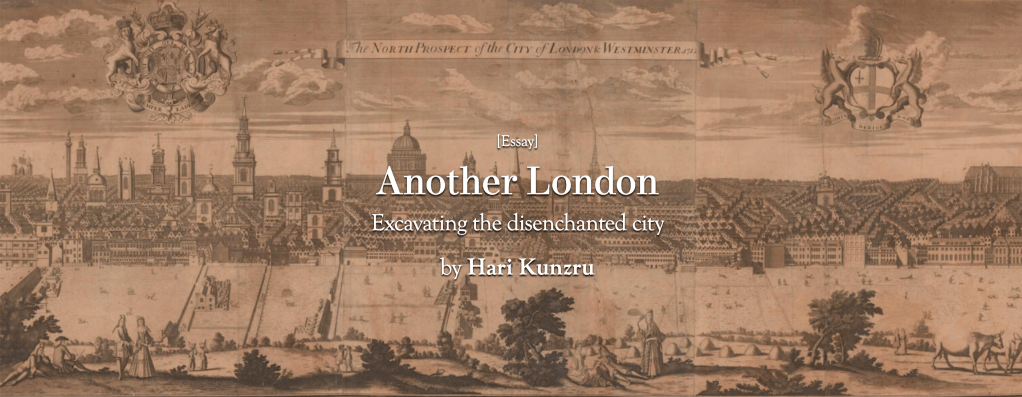
Kunzru wrote about the need to reclaim his London past, about a meeting of the Situationist International in London and their subsequent dérive, and about a subterranean, mystical London, both the historical version and the version popularised by writers as different as Iain Sinclair and Alan Moore.
I found myself equally confused and inspired by Kunzru’s essay. For example, I find the Situationists inspiring, yet Kunzru’s reading of Guy Debord and company, even the dissenters, was superficial, seemed to miss something essential, and leaned heavily into his own personal tastes rather than any antagonism between city planning and the Situationist rhetoric of liberation. He also ascribed long-debunked theories to the group, including the supposed connection to punk and the claim that the spectacle concerned “media”. In addition, his “dérive” had little in common with the Situationist dérive, amounting instead to drunken wanderings unsupported by interviews or responsible historiography, though ironically later reported, as Kunzru notes, in the dry manner of a white paper. Kunzru’s walk across London, and the essay that followed, were, by contrast, an exercise in popular journalism.
All the same, the essay nevertheless inspired my own reminiscence, a fragment of youth I would like to recover and apply, however awkwardly, to the duller condition of middle age.
Finally, the essay also prompted reflections on the difficulty of Situationist activities such as psychogeography in the city where I now reside, New York. The city differs profoundly from London. London is steeped, if invisibly, in the history of religious power. New York is transparently devoted to commerce and to harnessing the expressive power of culture for commercial purposes, justified further as an exercise in the total presence of the city, where even its unseen aspects serve its mythology. As Debord wrote in 1967:
This end of the history of culture manifests itself under two antagonistic aspects: the project of culture’s self-transcendence as part of total history, and its management as a dead thing to be contemplated in the spectacle. The first tendency has cast its lot with the critique of society, the second with the defense of class power. (The Society of the Spectacle, thesis 184, tr. Nicholson-Smith)
At the risk of appearing a wilful obscurantist and a naïve True Believer, I will forgo explication. Please be patient while I circle back to these themes later. What matters is not the consistency or depth of Kunzru’s understanding of the Situationists, nor his project of reclaiming some of the mystical energies of London. Rather, it is that he could, through a single essay, provoke memories and reflections powerful enough that I felt compelled to write something myself, reclaiming a fragment of my own past while reflecting on place and power.
)
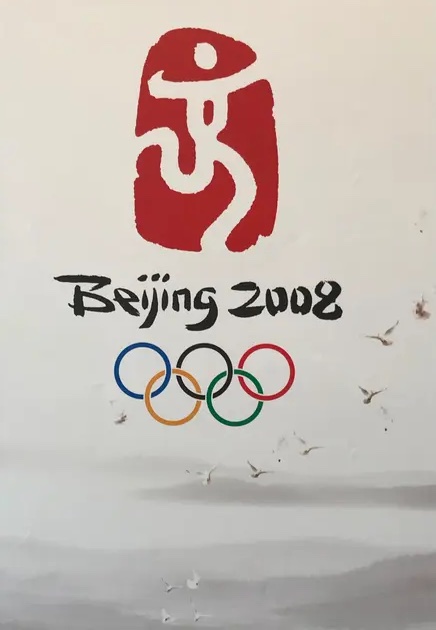
Back in 2008, in Beijing, on the day of my “dérive”, if I remember correctly, the Olympics had only recently finished. That meant the city was both dressed up and exhausted: cheesy ersatz “culture streets”, bright plush visual aids to propaganda, a relentless good mood; chunks of the old city torn out and covered with construction tarpaulins, a sudden and lingering police presence, and the uncomfortable feeling that someone had farted in the room. Functionally, the subway ran longer hours, the city was crowded with visitors, and Ai Weiwei, along with the Olympic Stadium he had helped design, was the celebrity of the moment. The profile of the visual arts had risen several levels. The local underground music scene was rebounding from temporary performance bans. And there were even a few bars and breweries that did not host cover bands. The city then, like today, was bone-dry half the year and soggy the other half.
But the truth of the situation is that I remember that day only in the form of a memory, the sort of images or feelings sustained through photographs of one’s early childhood, or through a conversation about something that happened long ago and has since displaced the actual event. I know the purpose of our walk, and I know, roughly, our route. The rest are details I will attempt to fill in, not in the manner of a “Report on the Beijing Dérive of X Date and Subsequent Psychogeographical Addendum”, and not as an aid to memory. It is only this.
After leaving the subway station, Tom and I walked slightly south-west for breakfast at a hole-in-the-wall douzhi stall across from the north gate of the Temple of Heaven. The gate of the Temple of Heaven stands at the terminus of a T-intersection. Grey bicycle racks occupy roughly half the paved open space in front of the gate. Most of the remaining space is used by people lining up to buy tickets. From inside the gate we could hear people singing.
We walked back past Beijing Railway Station. I once took a three-day “hard sleeper” train from there to Kunming, in southern Yunnan Province, on which I attempted to read Michel Foucault’s The Order of Things (1970). I may have managed twenty pages. Most of my time was spent humouring the curious nine-year-old boy in the next berth. I cannot remember what we talked about. Beijing Railway Station is a proud building at another T-intersection, constructed in 1959 as part of the Ten Great Buildings project, and it resembles a recently unearthed artefact of Soviet chinoiserie. We walked past it and headed north through Chongwenmen. The area around there had been completely redeveloped in the 1990s with multi-storey buildings, a mixture of low-cost retail and glossy-looking malls. My future mother-in-law grew up in a hutong there. The area is now a hotel complex and parking lot, though a commemorative plaque remains.
We continued north, past the green space of Dongdan Park, alongside heavy traffic, to the intersection with Chang’an Avenue, which runs the length of the city from east to west, separating Tiananmen Square from the Tiananmen Gate through which one enters the Forbidden City. Nearby lies Wangfujing, the dull pedestrian shopping street anchored by the tediously up-market Oriental Plaza mall. On our way north we stopped at the Cathay Bookstore, and then, near the east gate of the Forbidden City, I bought a cheap pair of shoes. We continued north to the area around the National Art Museum of China. The museum building resembles Beijing Railway Station, having been constructed in roughly the same period and style. Both buildings mark a self-conscious break from the organic traditional architecture of Beijing and aspire to a new hybrid modernism. “Modernism” is the correct word, since the country sought to modernise in a manner inseparable from the ideology of the government of the People’s Republic. I have never been inside the museum.
Lively and occasionally dreamlike, the beautifully repetitive hutong districts of the city raise few questions about urbanism that they cannot easily answer.
For an hour or two we continued north through the beautifully repetitive hutong districts of the city. Lively and occasionally dreamlike, they raise few questions about urbanism that they cannot easily answer. They offer a counterpoint to narratives about traditional cities that focus excessively on agriculture and the market town. Later we passed the Lama Temple and arrived at the Second Ring Road, the circular highway that acts as a protective barrier separating the old city from the rest. Beyond the Third Ring Road there are a few scattered enclaves of what are called “villages within the city”, where migrant labourers have gathered and established businesses. Otherwise the landscape is mostly block after block of Khrushchevka, or banlou, literally “slab buildings”, so called because they were constructed from precast concrete slabs. These are interspersed with slightly older brick apartment buildings. All were organised around the danwei, the work-unit system that regulated who could live and work within each residential compound.
)
One might think these buildings constituted a belittling form of architecture. Three-to-six-storey modular dwellings arranged in quadrangles, often with gates and guards. Yet I never felt that way. My psychogeographical assessment was the opposite. Nor was it merely an aesthetic judgement. Although the danwei unit had once served as a concrete measure of life, that function had, in most cases, relaxed to the point that anyone could rent in these complexes, often quite cheaply. Compare that, even today, with the pre-modern sections of Beijing, where the price per square foot resembles that of Manhattan.
Much of the old city was built for Manchu royalty and functionaries, and since the real-estate boom of the 1990s the prices serve as a reminder of that history. The area between the Second and Third Ring Roads, however, was built for workers. We stopped near Ditan Park, just north of the Second Ring, and took photographs of some of the high-rises. Each unit was, of course, a different living space. Some had closed-in balconies, some had older paned windows. Others, visible through open curtains, were piled high with books. Later, approaching the Third Ring Road, there was a row of five or six high-rises turned slightly, like waving hands, or as though they were coyly averting their gaze from mine. I had seen this row many times from the crosstown bus, noticing the porthole-like windows running down the side. This time the buildings were wrapped in blue construction tarpaulins. We could not see the windows at all. It reminded me of one late night when I was riding that same bus, the only other passenger a man who insisted on striking up a conversation with me. He too had come from somewhere else and was working at a construction site in the eastern part of the city. He did not believe me when I told him that I had worked construction myself, for years in fact. There we were, around midnight, talking about something we held in common.
One moves in synchrony with the dominant image of what the world is, yet movement and thought are circumscribed so tightly that stepping away has almost become a physical impossibility.
We finished our walk. In fact, I think we caught that very bus all the way back to Xueyuan Lu, where a giant Olympic countdown clock sat dormant, awaiting the next Games. It was a ten-minute walk to our campus gate, where a towering statue of Chairman Mao greeted us. Thinking about it now, the city had been caught in a sustained frenzy of development that, while unsettling at times, had also allowed a flourishing of institutional and cultural spaces that would become far more difficult to sustain only five years later, and nearly impossible to sustain in a place like New York without constant injections of capital. I will return to that point shortly. For now, however, I want to return to the Situationist International and the theory of the spectacle, not as media but as spectacular experience. It is a common misunderstanding that Debord was a darker Marshall McLuhan, sinisterly insisting that the medium is the message. In fact, the theory of the spectacle is a theory of being-in-the-world, a kind of Dasein. One moves in synchrony with the dominant image of what the world is, yet movement and thought are circumscribed so tightly that stepping away has almost become a physical impossibility. The illusion of unleashing an originary freedom through the subconscious merely reinforces these motions, producing the “non-lives”, to use Debord’s term, that people inhabit. It mirrors the production logic of the commodity economy in an attempt to seize upon a psychological main chance.
This touches on why I have found it so difficult to replicate the same kind of walk here in New York. The total history of the city has not opened spaces for individuation and change but has reified nearly every concrete instance of urban life into a reflection of finance capital, where the subject flows like a brainless rhizome wherever capital leads its halter. In such a place one does not assert oneself so much as accept that one is a subject of capital. Like alienating and laborious legal action, the buildings and streets are impermeable to desire and to history. It is not that history does not exist, but that history has become entirely spectacular, serving the needs of a disembodied economy that rewards only those who steer it. A dérive in New York feels like a self-conscious acquiescence to finance capital. One becomes what the spectacle demands. One is permitted to organise a dérive only to demonstrate that New York is not, in fact, inaccessible to those who fall on the wrong side of history.
)
The negative antinomy is simply depressing.
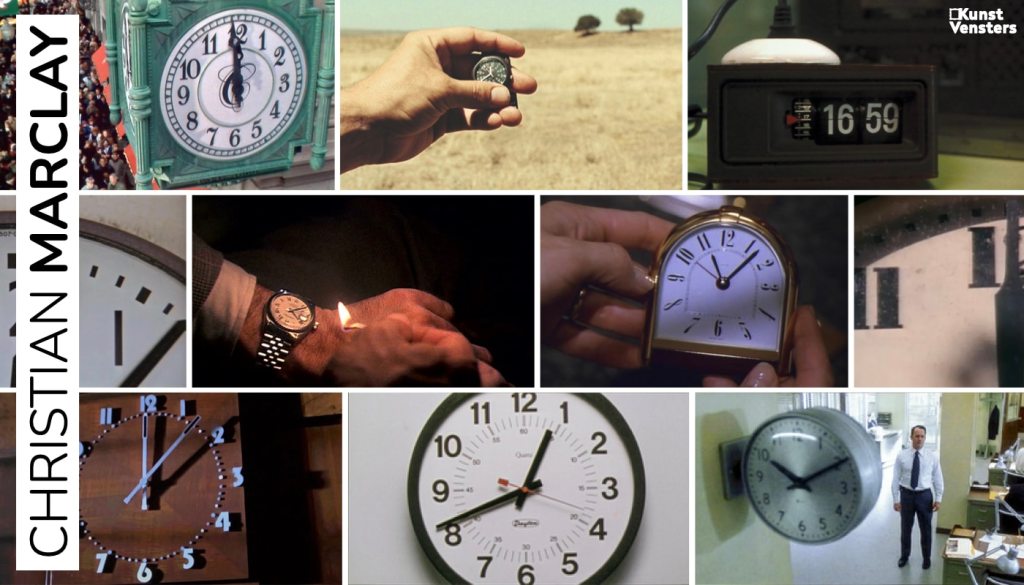
Which is why I want to close with a hot and humid night in Beijing around the same time. Tom and I were at D-22, a bar and performance space owned by Michael Pettis, a finance professor and former New York club owner who had decamped to Beijing. That night Pettis’s friend from New York, the veteran avant-gardist Christian Marclay, was unveiling his newest film, The Clock (2010). I had seen an exhibition of Marclay’s in New York at Paula Cooper Gallery a few years earlier and was also familiar with his work on Tzadik Records. I was enthusiastic. I was giddy. The film was a relentless progression of clocks drawn from mostly kitsch television images, smoothly montaged together. I looked at Tom, who was standing behind me at the bar. He grimaced. I began laughing. Marclay was one of the great artists of the time, yet the film simply was not that good. We talked loudly and drunkenly. This is how I remember it. A man stood directly behind Tom. He stared at me. He looked confused. He frowned. Then, a moment later, the emcee invited the artist onto the stage. The man standing behind Tom smiled and waved before ascending the stage.
How to cite: Turner, Matt. “Remembering a Beijing Dérive.” Cha: An Asian Literary Journal. 17 Mar. 2026, chajournal.com/2026/03/17/Derive.


Matt Turner lives in New York, where he works as a freelance translator and copy editor. He is the author of 6AMING (Antiphony, forthcoming 2026), and four other poetry collections: The Places (BlazeVOX, 2025), Slab Phases (BlazeVOX, 2022), described by Forrest Gander as “like voltaic charges”, Wave 9: Collages (Flying Islands, 2020), and Not Moving (Broken Sleep, 2019), as well as three chapbooks, including the prose memoir of his dog Xiao Chou, Be Your Dog (The Economy Press, 2022). He is also the translator or co-translator of around a dozen books from Chinese, with a focus on figures associated with China’s contemporary avant-garde, notably including work by Yan Jun, Ou Ning, and Wan Xia. His translation of Lu Xun’s modernist Weeds, the first English translation in forty years, was described by Yunte Huang as “a daring leap across the linguistic abyss”. His essays and reviews have appeared in Cha, Bookforum, Heichi, Hyperallergic Weekend, and other journals. Poems from 6AMING have appeared in Pamenar, Voice & Verse Poetry Magazine, and Antiphony, and are forthcoming in ballast, Trampoline, and Action, Spectacle. [All contributions by Matt Turner.]
 Cha
Cha 