
Editor’s note: Cha’s long-term contributor Matt Turner introduces 6AMING, his forthcoming poetry book from Antiphony, due in September. In this short essay, he discusses time-stamped automatic writing, no-music influence, not-poetry, underground journals, and resistance to spectacle, surveillance, and institutional validation. It situates the work within process-led practice, formal refusal, and poetry itself. We are pleased to present eight poems from 6AMING HERE.

[ESSAY] “NO U-TURN—6AMING: Themes and Contexts” by Matt Turner
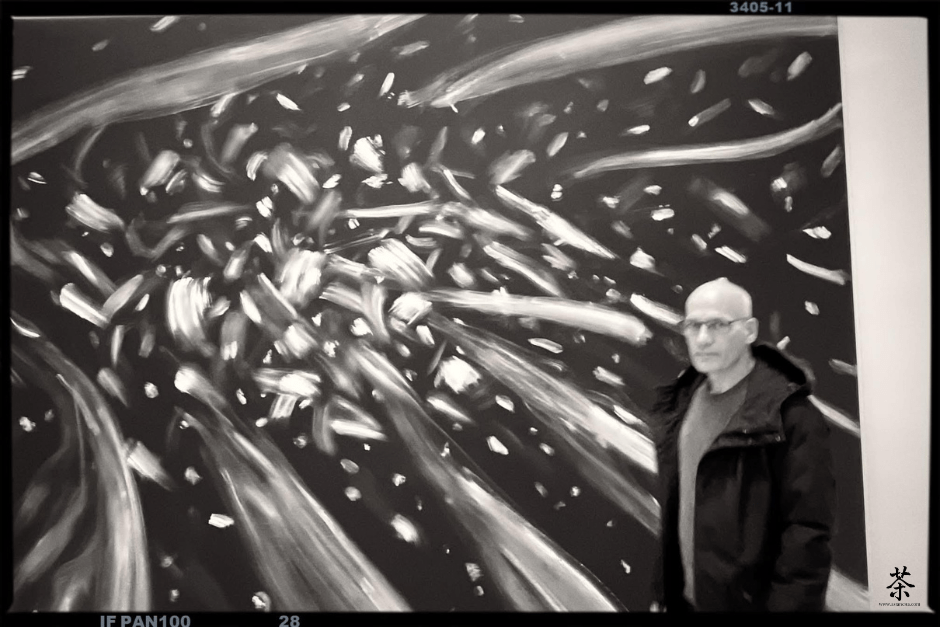
Photograph © Wang Yin
When I approached Tammy Lai-Ming Ho at Cha about running a portfolio for my forthcoming book of poetry, 6AMING (September, 2026), my only hope was that a handful of poems might appear online “gallery style”, as print magazines with a poem-a-page layout and no commentary once described it. I did not expect to be given the rare opportunity to complement, or even embellish, the poems with an essay. I therefore took some time to consider the invitation. I had written essays on architecture, music, politics, translation, other people’s poetry books, and the visual arts, but never on my own work. Given the opportunity, I decided to discuss some of the themes and contexts of 6AMING, focusing on the series “6AMING”, from which the accompanying poems are taken. In addition to “6AMING”, the manuscript also includes a long not-poem, “103 Times” (more on that term later), as well as a short note on the poems. I suppose this short piece functions as an extratextual supplement, rather than a conventional essay.
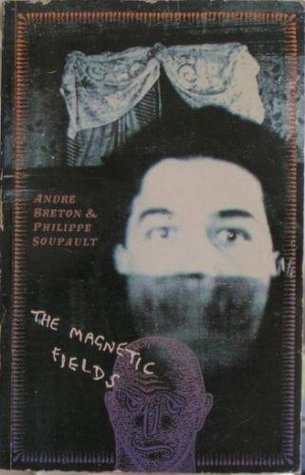
To begin with, the poems resemble automatic poems. To a degree, they are. Their titles contain no imagery or allusion beyond the times at which they were written. Imagine watching a clock count down from, say, 2:20AM to 2AM. Within that negative span of twenty minutes, I wrote whatever came into my head, or whatever I happened to observe. In some cases, I had something in mind before I began writing the poems. In psychoanalytic terminology, this process of thematic preparation is known as “priming”. I wrote longhand, as I always do, so my editing and revision consisted of typing out what I had written, deleting words that were crossed out or illegible, and occasionally removing a line or two if it functioned too obviously as a time-filler, such as “ummm, here, yow”. I was inspired by André Breton and Philippe Soupault’s The Magnetic Fields, which I had reread for perhaps the fourth time before beginning the series. Automatic writing, though often criticised for repetitiousness, preciousness, and mannerism, in short, for sleights of hand that are anything but automatic, suited me well. The process is more important than the “product” per se. One might also say that the product is the act of writing itself, while the process takes place entirely in the mind. What the reader encounters is a record.
Second, there is the question of music. When I was in graduate school for creative writing, I submitted a number of poems that professors and classmates described as “musical”. To this day, I am not entirely sure what they meant, unless it was simply that I used sounds that echoed one another, such as an abundance of “t” sounds within a line. In any case, I have always been a careful writer, and it unsettled me to be producing “musical” verse without conscious intention. What was music anyway? Surely not that. So, I took to deliberately writing poetry that tried not to repeat this so-called music, writing intentionally dissonant or flaccid verse. This approach persisted for several years. Eventually, I revised my position slightly and even produced an entire book that was intentionally musical. Around the time that book was published in 2022, I became more aware of the “no-music” scene in Beijing. In fact, I had followed it since the days of the “no Beijing” scene in the early 2000s, but I was particularly interested in its progression from dissonant rock, to experimental music, to practices closer to what is commonly understood as performance art, and I have written about these developments in Cha. I learned of a live performance by Ake 阿科 in which she recorded herself eating an apple in front of an audience and then played the recording back to them. It was music, or “no-music”, and it immediately intrigued me. It also serves as an animating spirit behind the entirety of 6AMING. As with automatic poetry, there is a reversal of priorities between process and product, as well as an elegance in the refusal to make any sense beyond the simple assertion, “this is what it is”.
The influence of both automatic writing and no-music helped me to move past some of my long-standing bugbears about poetry as a genre, and about how I wrote it. Why not write not-poetry instead? Anti-poetry was already a thing, and I was not particularly interested in fighting conventions head on. Nor did I want to make a U-turn. No U-turn.
Why? There is no worse feeling than being an artist and sensing that you are chasing after the world you are attempting to contribute to, or inhabit. For various reasons I will not dwell on here, I felt that I had been doing this for a long time. I wanted 6AMING to lack a sense of immanence. I wanted the work to constitute itself, rather than open a window onto something else. In other words, I wanted to push the work forward as an art form. But how? It is difficult to imagine living in a world in which culture, and cultural practices or products, do not exist only to generate visibility and then translate laterally into capital. Given that we all need money to survive, this is difficult to contest, except, perhaps, within the small world of the arts, and especially poetry. What was once called the “underground” is central to my vision of poetry, to my work more broadly, and to what I see as a viable strategy. Small journals such as Cha and Antiphony are vital to any conversation about poetry, about what it is or is not, and about how to move it forward. If you believe, as I do, that poetry can be a public good, this does not mean promoting “good values” (never), but rather pushing the form itself ahead. You do not chase institutional confirmation in either The New Yorker or Conjunctions. New values are created by establishing themselves.
It is by now a commonplace that everything is surveilled, transformed into image-commodities that can be disseminated and used against you. I hope that 6AMING pushes back against state-capital surveillance. Consider our images. Trump and Vance are not bad-faith actors. There is no difference between them and the spectacle itself. They move like liquid funds from account to account, inflating or deflating value at will. Their supporters resemble large language models whose existence is inseparable from the images being disseminated, a permanent army of disposable labour. 6AMING was written deliberately in response to this crisis. Yet this response requires a degree of secrecy, my final invisible motif in 6AMING. “6AMING” lists things, presses them against one another, states what they are, denies what they are, and turns them slightly. Perhaps “all that is the case” has already been inverted, like détourned text. Pushing forward and establishing themselves, the poems “fully intend to become even more inaccessible, even more clandestine. The more famous [the poems] become, the more shadowy [my] presence will be” (Debord, La Véritable Scission dans L’Internationale, thesis 57, trans. McHale).
How to cite: Turner, Matt. “NO U-TURN—6AMING: Themes and Contexts.” Cha: An Asian Literary Journal. 3 Feb. 2026, chajournal.com/2026/02/03/6AMING.


Matt Turner lives in New York, where he works as a freelance translator and copy editor. He is the author of 6AMING (Antiphony, forthcoming 2026), and four other poetry collections: The Places (BlazeVOX, 2025), Slab Phases (BlazeVOX, 2022), described by Forrest Gander as “like voltaic charges”, Wave 9: Collages (Flying Islands, 2020), and Not Moving (Broken Sleep, 2019), as well as three chapbooks, including the prose memoir of his dog Xiao Chou, Be Your Dog (The Economy Press, 2022). He is also the translator or co-translator of around a dozen books from Chinese, with a focus on figures associated with China’s contemporary avant-garde, notably including work by Yan Jun, Ou Ning, and Wan Xia. His translation of Lu Xun’s modernist Weeds, the first English translation in forty years, was described by Yunte Huang as “a daring leap across the linguistic abyss”. His essays and reviews have appeared in Cha, Bookforum, Heichi, Hyperallergic Weekend, and other journals. Poems from 6AMING have appeared in Pamenar, Voice & Verse Poetry Magazine, and Antiphony, and are forthcoming in ballast, Trampoline, and Action, Spectacle. [All contributions by Matt Turner.]
 Cha
Cha 