
茶 FIRST IMPRESSIONS
茶 REVIEW OF BOOKS & FILMS
[ESSAY] “Aesthetic Experiences: A Study of Anri Yasuda’s Beauty Matters” by Luca Griseri
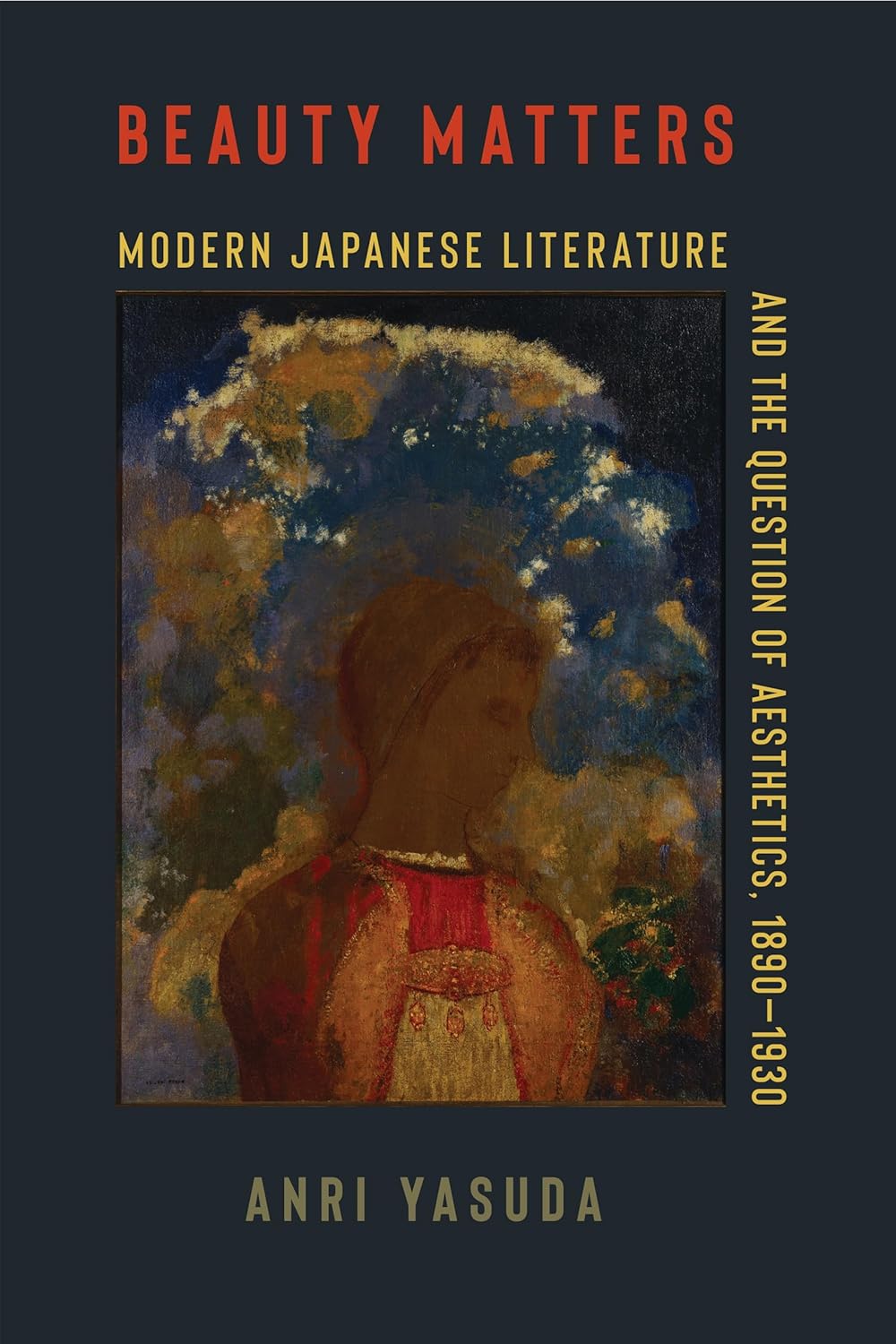
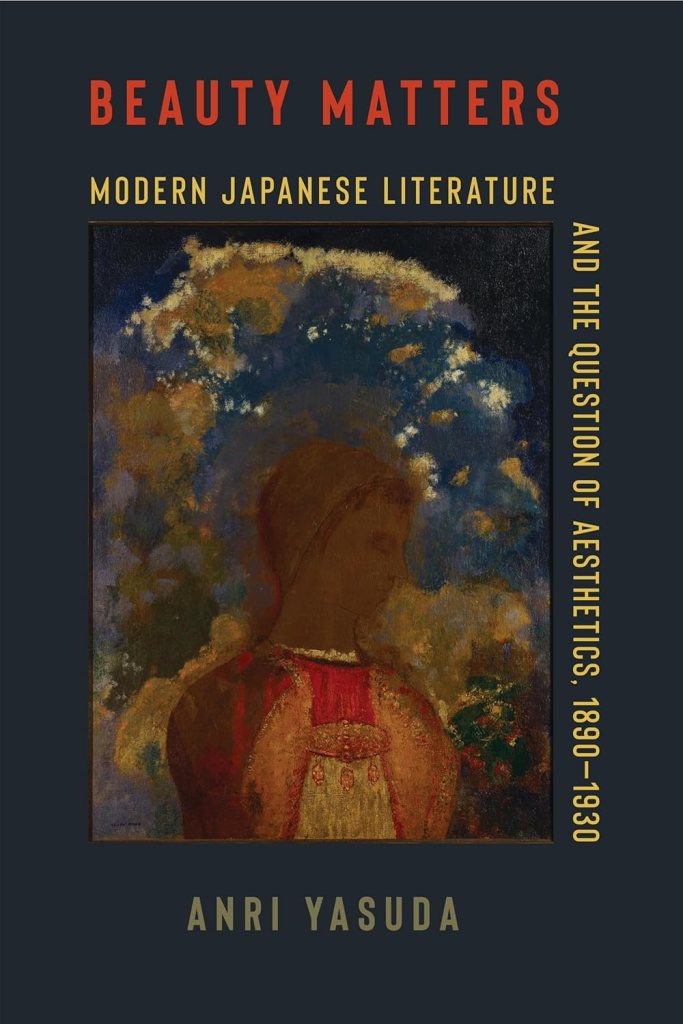
Anri Yasuda, Beauty Matters: Modern Japanese Literature and the Question of Aesthetics, 1890–1930, Columbia University Press, 2024. 304 pgs.
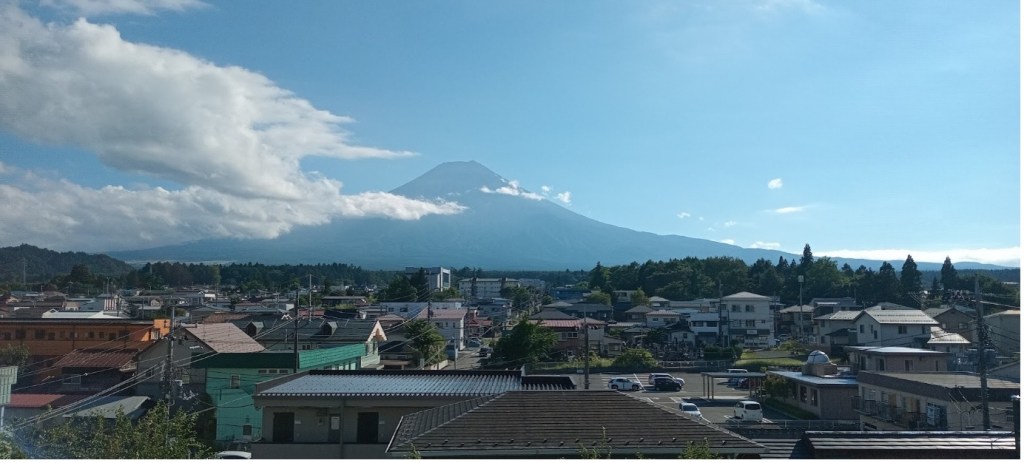
Viewed from Tenka Chaya, the “teahouse in the sky” near the Misaka Pass, Mount Fuji appears both majestic and serene, its shape framed by the sliver of Lake Kawaguchi’s blue waters visible at the bottom and by the smaller mountain in the left-hand foreground. This is one of the most beautiful and widely admired views of Fujisan. Undisturbed in its perfection, on a clear summer day it represents the ideal form of what a volcano is supposed to look like.

But Osamu Dazai, who spent two months at the teahouse in the autumn of 1938, was far from impressed. The view was disappointing, and Fujisan was underwhelming, a rather ordinary mountain that, given its wide base, ought to be much taller. Over the years, the many representations of the volcano, most famously Hokusai’s, had created a mythology, an idealised iconography that was tall and delicate, with a narrow peak, and that simply jarred with reality. And, with all the tourists who could not get enough of the view, he remarked that the evening primrose did suit Fuji well, coining a phrase destined to immortality.
)
Aesthetic Experiences
I was reminded of Dazai’s aesthetic experience, and of my own, during a recent stay in Fujikawaguchiko, after reading Beauty Matters by Anri Yasuda, an account of how ideas on aesthetics and art informed the work of a number of intellectuals who became part of the canon of Japanese literature: Natsume Sōseki, Mori Ōgai, the writers of the Shirakaba magazine, and Akutagawa Ryūnosuke.
The book is not intended as a comprehensive overview of literary discourse in the Meiji and Taishō periods (1868 to 1926), and these writers, all men from affluent backgrounds who were very much part of the cultural and political establishment, did not form a homogeneous literary movement, despite occasional personal connections and overlaps in their work. What they share, instead, is a response to a period of profound social change, articulated through often pained reflections on the meaning of literature and the relevance it might retain within society.
As Yasuda herself suggests, Beauty Matters can be read on two levels, epitomised by the ambiguity of the title’s second word. There is a contextual level, in which “matters” functions as a noun and details the writers’ work and their reflections on art and literature, and a theoretical level, in which “matters” operates as a verb and seeks to abstract from their experiences in order to draw broader conclusions. On balance, the latter is the less accomplished aspect of the book. Many of these writers’ reflections on aesthetics appear unoriginal to contemporary sensibilities. They were influenced by painting and other art forms, but ekphrasis scarcely qualifies as an innovative literary strategy. Sōseki’s F+f formula is, at best, a generic guideline, and many of the polemics between these writers and their contemporaries seem rather inconsequential.
Moreover, the conclusions Yasuda advances at the end of each chapter and in the epilogue lack substance. It is true that, despite references to figures such as Jacques Derrida and Theodor Adorno, Beauty Matters does not present itself as a philosophical treatise. Yet it also fails to fully develop the arguments it raises. Each of the central chapters concludes with summary reflections rather than original propositions. The chapter on Akutagawa, for example, feels particularly weak in its praise of the writer for his ability to “cross literature’s multiple divisions … by embracing them fully”.
This restraint is especially evident in the epilogue, which addresses a key question, “why aesthetics?”, in a manner that is overly narrow, framed largely as a mourning for the diminished role of literature and the arts in contemporary society, and not particularly well argued. Here, there was an opportunity to abstract more decisively from the experiences of the writers under discussion and to advance a compelling case for the role of the arts. Instead, the discussion does not progress beyond a reiteration of earlier points and never rises above a lament for the declining place of the humanities in academia.
Fortunately, Beauty Matters is far more persuasive and illuminating in its treatment of the historical context it examines. In these sections, the book is tightly focused and enriched by numerous references to the writers’ oeuvres, including some of their lesser-known works. In doing so, it brings vividly to life the aesthetic experiences they underwent: how they thought about the arts in the troubled times they inhabited, how they related to other writers and cultural traditions, and how these concerns were ultimately reflected in their work. Presented plainly, without eliding flaws or contradictions, these experiences amount to more than a mere chronicle of the period under consideration. They allow the reader to connect what Beauty Matters leaves unsaid and to infer meaningful lessons about what it might mean to live an aesthetic life.
)
Against Sameness
The South Korean philosopher Byung-Chul Han has argued that the impact of the Other, and the overwhelming transformative effect it has on us, is essential to any genuine experience. To experience something, he writes, means that “this something befalls us, strikes us, comes over us, overwhelms us and transforms us”, and nothing has quite such a powerful effect as engaging with what is different from ourselves. His words could easily have been written about Yasuda’s authors, whose aesthetic experiences were shaped to a significant degree by their encounter with a specific form of Otherness, namely Western culture and, more specifically, the European arts and sciences of the late nineteenth century. Many of them spent long periods of time in Europe, most famously Natsume Sōseki, who regarded his two years in England as the unhappiest of his life.
Of course, their work did not depend exclusively on Western ideas, nor was Western culture their sole point of reference. They were also deeply engaged in dialogue with Japanese and broader Asian traditions, and they were wary of adopting Western ideas uncritically, as Ōgai in particular articulated. Nor were their experiences grounded in fully coherent mental models for integrating another cultural tradition. On the contrary, their characterisations of Western culture were often simplistic and open to debate. Even Akutagawa’s views on this subject are rather generic, and he himself was aware of the limitations involved in defining something as vast as an entire civilisation, while Ōgai’s polemic on the proper way to integrate Western aesthetics appears sketchy, as Yasuda argues.
Yet it is precisely from this imperfect engagement with a different cultural tradition, and from recognising how central it was for the writers discussed in Beauty Matters, that we learn something fundamental. On the one hand, their experiences underscore the difficulty of conceptualising the Other, the need to remain conscious of the limitations inherent in such an endeavour, and the frankly risible nature of any attempt that claims to grasp the totality of an Otherness in its social, cultural, or political dimensions.
At the same time, these writers demonstrate the enduring relevance of a genuine dialogue with a different tradition, even in the absence of a fully coherent framework through which to conceptualise it. Opening oneself to the Other to the extent that they did, by braving the discomfort it entails and remaining curious about the possibilities it opens up, helps to ward off what Byung-Chul Han has described as the terror of the Same, a one-dimensional condition of perpetual self-reference in which Otherness is expelled, conformity becomes the norm, real experiences are negated, and personal growth is rendered impossible. Perhaps this is the most valuable lesson of all: not to fear engagement with a different tradition, nor the imperfection and incompleteness that such dialogue inevitably brings, because the alternative is stagnation and irrelevance.
)
Distancing
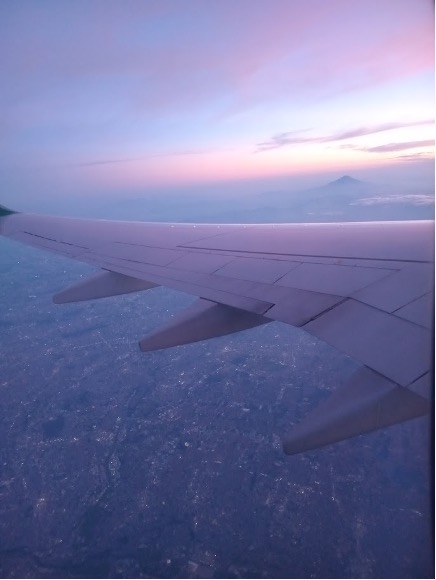
There is an interesting observation in the epilogue in which Yasuda argues that the writers she examines illustrate that “literature is also shot through with aesthetic effects”. Taken at face value, it would be difficult to disagree with this claim. On a deeper level, however, the statement matters because it asserts a distance between any aesthetic pronouncement and the wider political and social discourse in which such a pronouncement occurs. While neither Yasuda nor the writers she studies deny that a literary text reflects a broader cultural discourse, they nonetheless suggest that any aesthetic experience is entitled to a degree of autonomy from that discourse. It has value in its own right and deserves to be appreciated on its own terms, independently of its cultural origins. It demands to be understood in its distance from such a context as much as in its belonging to it.
Whether such a pure mode of appreciation is possible, or even desirable, remains open to debate. After all, born of privilege and almost by definition accessible only to a particular segment of society, it carries a distinctly reactionary tone. As Yasuda notes, all of these writers were firmly embedded within the establishment, Ōgai arguably more so than the others, given his direct involvement in the Japanese army. As insiders, they tended to tread a middle path in matters of political engagement, aligning themselves with opposing positions, as Ōgai did during the Great Treason Incident trial, to such an extent that their stances can appear overly cautious. They advocated greater freedom of expression while simultaneously warning against the dangers of too direct a challenge to the status quo. At times, the boundary between a deliberate search for distance and an almost callous indifference becomes difficult to discern, as in Sōseki’s finding solace in the thought that “as far as the Russo-Japanese war is not endless … there is leisure everywhere”.
And yet the writers discussed in Beauty Matters demonstrate how this detachment, despite its limitations and self-indulgent character, can render the aesthetic experience richer and more meaningful. The notion that an aesthetic experience may be apprehended in itself, without constant recourse to its context, alerts us to the possibility of something different, more abstract, and more universal than immediate cultural or social concerns. More than that, as an attitude or an aspiration, it grants a freedom to move beyond the confines of the here and now, to step away from the ordinary, and to risk directing one’s gaze towards something broader.
)
Does Beauty Matter?
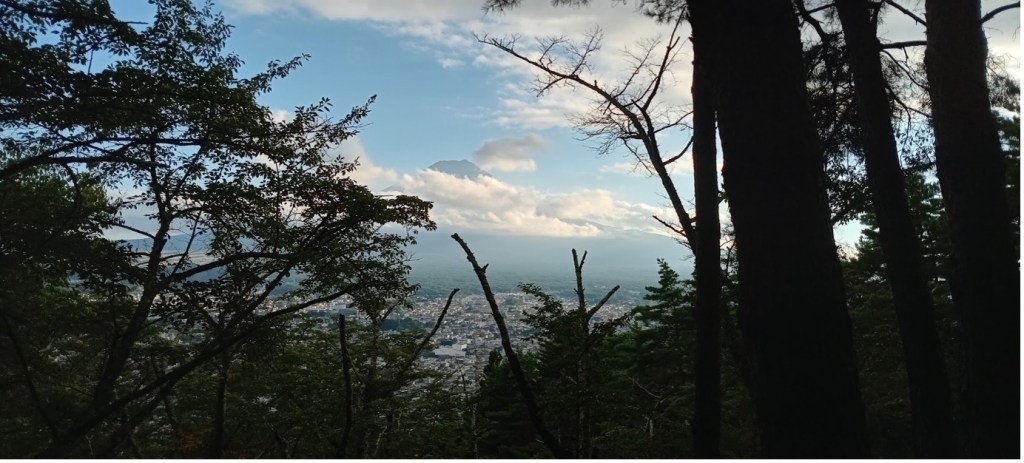
Perhaps beauty does matter, and perhaps art can help us to understand human nature, at least in part, as Yasuda suggests. Yet advocating the importance of aesthetics is not without its problems. Far from necessarily leading to progressive positions, such claims have often carried distinctly conservative overtones. The philosopher Roger Scruton, for example, who a few years ago presented a BBC documentary entitled Why Beauty Matters (2009), famously argued that religious inspiration is a prerequisite for truly beautiful art.
The idea that art matters and that it can illuminate human nature therefore requires careful scrutiny rather than uncritical affirmation. In any case, this is not the most significant lesson offered by the writers examined in Beauty Matters. What they ultimately give us is something more substantial: an account of how individuals might live an aesthetic experience, and of what cultivating a form of aesthetic awareness demands of us.
The aesthetic experiences Yasuda describes are messy and imperfect. They coexist with personal flaws, acknowledged or otherwise, and remain closely bound to evident limitations. They are imbalanced, fluctuating realisations, punctuated by inconsistency. These writers show that, beyond immediate sensory gratification, beauty acquires value precisely because it can accommodate such imperfections. Whether conceived as a dialogue with the Other or as an act of distancing, the aesthetic experience is forgiving. It does not require principled positions, nor does it demand a particularly incisive understanding of Otherness or of aesthetics itself, however desirable such qualities may be.
Because it tolerates these shortcomings, the aesthetic experience makes it easier to glimpse something that transcends our limitations, something more radical and more universal than our everyday concerns. Without placing excessive demands upon us, it allows a momentary abstraction from the confines of personality and an exceeding of the limits imposed by the particular here and now. Ultimately, it enables us to move beyond our own preconceptions. Even Dazai, for all his disdain and reservations, came to concede that Mount Fuji “really has its good points” and “was truly great”. His aesthetic response remained hesitant and contradictory, much like those of the intellectuals Yasuda discusses, and it was rendered all the more valuable by the very inconsistencies that defined it.
)
Reflections / Fujikawaguchiko, July 2025
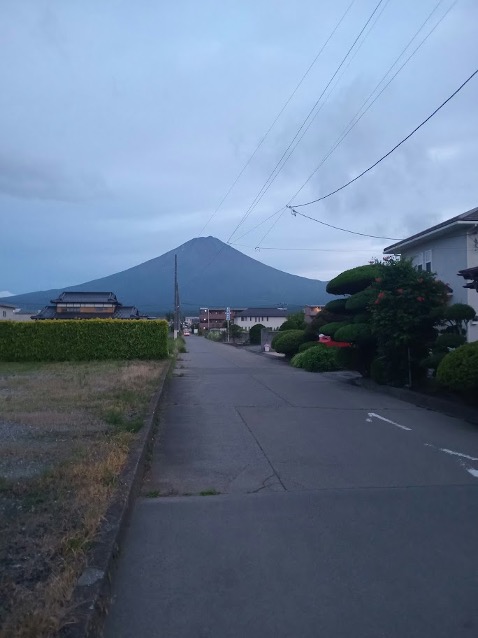
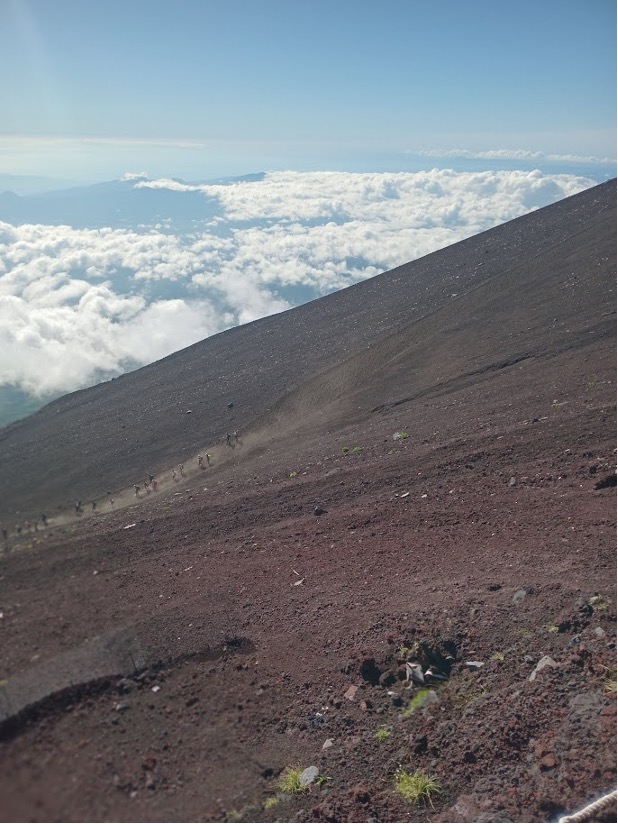
Unlike Dazai, I was never disappointed. Fujisan was always there before me when I left the apartment for my morning training runs. One tourist among thousands, I admired it from its many celebrated viewpoints: Tenku no Tori, Oishi Park, Oshino Hakkai, Lake Yamanaka, and Arakurayama Sengen. I then ran to its summit, where I tried to let go of what might have been done better and lost myself in the sea of clouds below.
Mine was an ekphrastic experience, shaped largely by Hokusai’s prints rather than by nineteenth-century European painting. In another similarity with the writers discussed by Yasuda, it was also formed through an engagement with a particular kind of Otherness. I was a Westerner gazing in awe at a Japanese icon, like countless others before me, conscious of the inevitable cultural distance and yet still liable to reproduce superficial representations in my mind. I was a traveller who had visited many countries, but for whom this specific Otherness became meaningful in a way that few others had. It was something that could be appreciated for its aesthetic quality alone and for its own sake. It was reassuring too, in the knowledge that the admiration I felt each time, because unlike Dazai I never veered from love to hate and fell in love the first time I saw Fujisan, could coexist with its own limitations and with my own.
All photographs © Luca Griseri.
How to cite: Griseri, Luca. “Aesthetic Experiences: A Study of Anri Yasuda’s Beauty Matters.” Cha: An Asian Literary Journal, 6 Jan. 2026, chajournal.blog/2026/01/06/beauty-matters.



Luca Griseri (he/him) studied history and postmodern philosophy in his native Italy. After obtaining an MBA from the University of Warwick (UK), he embarked on a career in marketing and over 18 years lived in London, Kuala Lumpur and Singapore. He is currently based in Penang, where he indulges in his passions: running, hiking in the forests and eating street food. [All contributions by Luca Griseri.]
 Cha
Cha 