
茶 FIRST IMPRESSIONS
茶 REVIEW OF BOOKS & FILMS
[REVIEW] “Twinkle Khanna’s The Legend of Lakshmi Prasad: Making Dignity a Habit” by Abhinav Tulachan
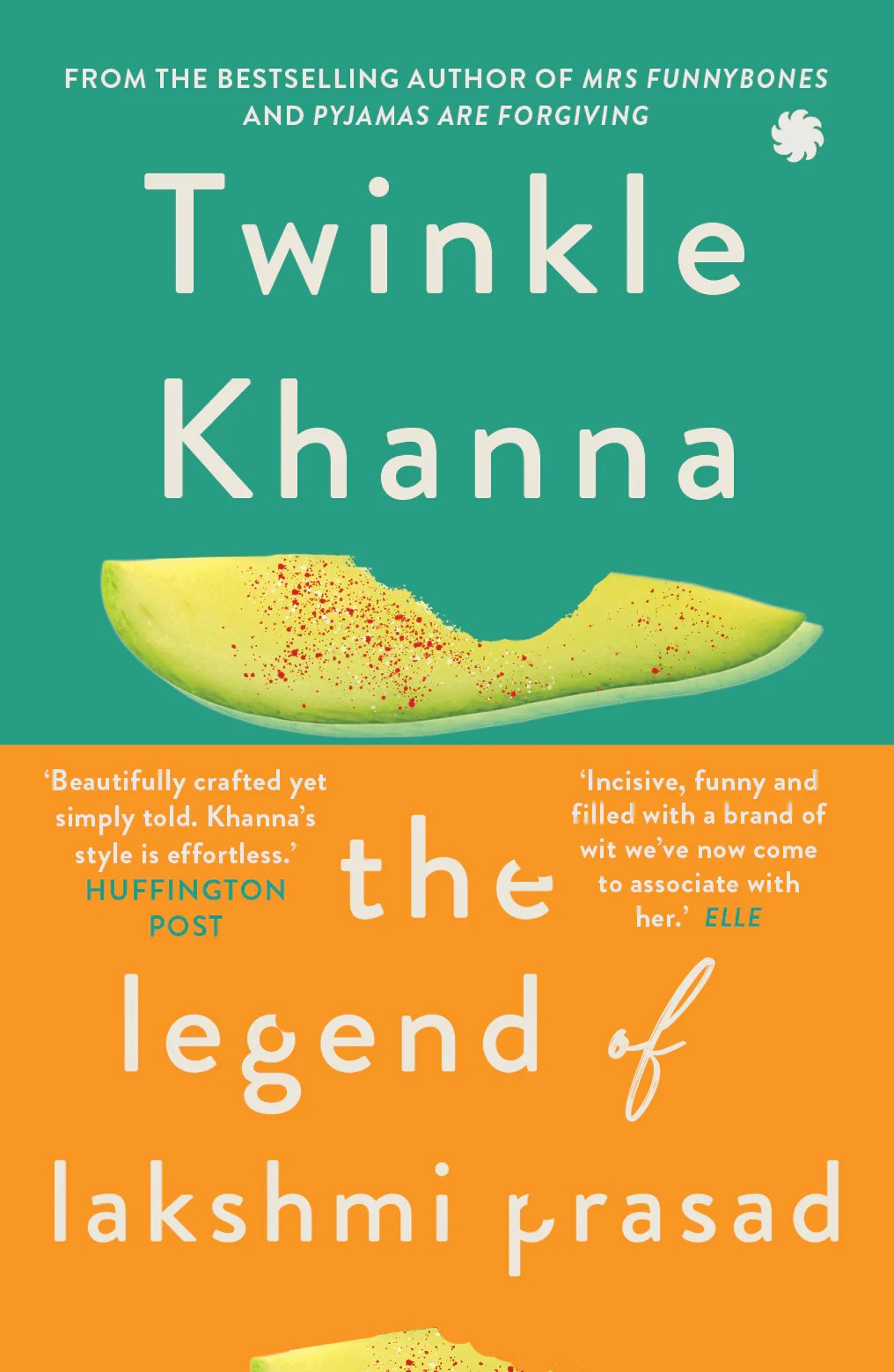
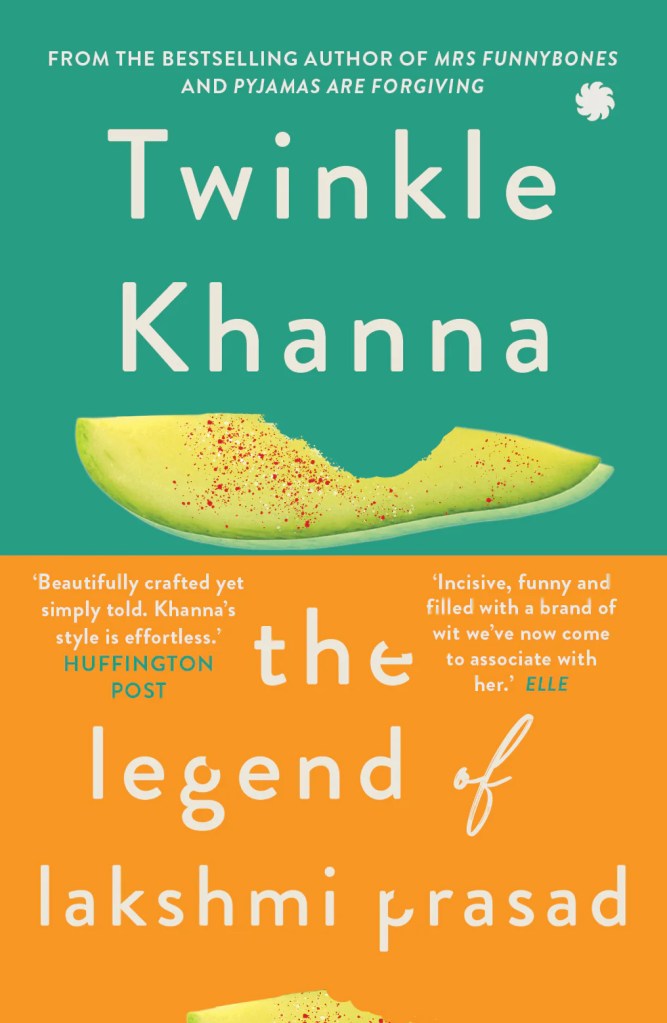
Twinkle Khanna, The Legend of Lakshmi Prasad, Juggernaut Books, 2016. 233 pgs.
It is remarkable how easy it is for people to ignore the obvious. We have been doing it for years, ever since society began to mistake what it means to be “silent” for what it means to be “civil”. There is a certain discomfort in remembering what we choose not to see. Twinkle Khanna, however, in The Legend of Lakshmi Prasad, refuses to let the reader escape that ignorance. Khanna insists that we sit with this discomfort.
A former actress, newspaper columnist, and writer of books and stories on feminism, Khanna presents a collection of four stories that take readers across India, from a simple mango orchard village to the crowded streets at the heart of Mumbai, from a rain-soaked wedding in the coastal state of Kerala to the small, dingy workshop of a man obsessed with sanitary pads to the point of near insanity. She writes short, brisk chapters, snapshots, really, that use their minimal length to collectively form a much larger argument about dignity, choice, and what it takes for an individual to loosen the grip of tradition and social perception.
All four stories, despite their varying lengths, accomplish this task with striking effectiveness.
The titular opening story, “Lakshmi Prasad”, offers insight into a girl whose idea is so generous that it almost appears illicit at first glance. Quite literally, it resolves generations of problems in her village by celebrating the birth of a girl with the planting of ten mango trees, both as an inheritance that will bear fruit when she grows up and as a living remembrance of the day she entered the world. “Salaam, Noni Appa” tells the story of sisters who trade widowhood for the chance to rediscover laughter in clubs, reclaim lost years, and unexpectedly find love in a yoga class at the age of sixty. “If the Weather Permits”, Elisa Thomas’s story, is a complicated narrative of a woman with an equally complicated and deeply confusing love life, who refuses to kneel to social expectations and, in doing so, arrives at both a collision and a revelation. The fourth and final piece, “Bablu Kewat’s Story”, which is notably longer and nearly novella-like, is Khanna’s fictionalised representation of the real-life experiences of Arunachalam Muruganantham. His stubborn invention of a low-cost sanitary pad machine defies both family and society, ultimately forcing not only a nation, but the very society that resisted him, to look.
Khanna’s voice remains pragmatic throughout the book. Her humour is evident in nearly every line, gentle at times and wicked at others. It is the humour of a writer who has clearly learned to work within public scrutiny and conversation, and who knows how to strip away ornament with a single, precise sentence. This humour is most evident in her casual deployment of names, whether biblical, cinematic, or ritualistic, without affectation. She keeps her language accessible while respecting the reader’s imagination, writing with a tone of jest and deliberate restraint, leaving space for the reader to complete the meaning themselves.
And that very trust, between her characters and her readers, is what gives the collection its steadiness, allowing it to produce moral clarity without actively preaching it. There are moments in which one sees how policy or prejudice, or both, are rooted in everyday society. One may observe how a village’s economy shapes the hopes of a mother, how age polices desire, and how women in particular are restricted in choosing the lives they want, as opposed to the lives chosen for them. There is also the absurd theatre of marriage rituals, which remain prevalent in many South Asian societies to this day.
The fourth story, however, Bablu’s fascination with sanitary pads, operates differently from the others. This is not because it is less artful. In fact, with admittedly some bias, the narrative may even be considered stronger than the rest. Rather, it differs because its purpose is so much larger.
Bablu’s tale is longer than the previous three stories combined and reads almost like reportage. In this stylistic shift, the narrative gains a kind of civic muscle, as the reader moves from initial amusement at a quirk of fate to a sudden implication in a public problem. One may first laugh at a man experimenting with sanitary pads to make them cheaper. “Why does he concern himself with what does not affect him?” one might ask. One may even feel revolted by the extent of his obsession. “It is none of his business,” one might say. Yet as the story progresses, as his reasoning becomes clear and his determination to make sanitary pads affordable to women across India takes shape, the reader realises that they may, in fact, be part of the problem.
At this point, a pause is necessary. At the risk of stating the obvious, plainness is required. Here stands the reader, a man who, until encountering this book, treated the subject of menstrual cycles as though it were someone else’s homework. Khanna names what is usually left unnamed and reminds us that dignity is not a burden to be carried by women alone. Reading the Bablu chapter, watching him withstand the shame imposed by both society and family for attempting to invent a cheaper sanitary pad, and acknowledging that some of his methods are undeniably amusing while others are unsettling, produces a peculiar and inconvenient heat of implication. This is not the guilt of a crime, but the guilt of long and comfortable inattentiveness, a refusal to acknowledge and to simplify. This admission is not intended as redemption. It merely marks the point at which listening must become action.
The fictional rendering of the figure often known as Pad Man exists only because a man refused to be shamed into silence for asking questions that society deemed beyond his concern. Khanna renders embarrassment, failure, and small humiliations with tenderness, shaping them into an eventual dignity. She does, indeed, force the reader to sit with discomfort, and it is precisely there that the collection finds its quiet power.
Khanna’s writing is what deepens Bablu’s tale and makes it profoundly human. It offers an unconventional portrayal of a heroic figure, an unsung hero, who pushes past societal standards, and past the refusal and disgust directed at his work, in pursuit of a plan that sounds simple yet proves deeply transformative: making sanitary pads affordable for women across India.
This is a book worth recommending to anyone seeking a reading experience that feels both intellectually sharpening and socially useful. Its connections to contemporary campaigns, such as the echo of Beti Bachao and public discussions around menstrual health, are present without ever becoming heavy-handed. These stories exist within a specific historical and cultural moment, not outside of it. Readers who prize complexity over comfort may find Khanna’s resolutions slightly too neat. Those who wish to be moved towards action, or simply to feel steadier about the value of small changes, will find themselves well served. Ultimately, the book’s moral project is both modest and relentless: to make dignity a habit. That ambition justifies the book’s occasional polish.
Sorrow. Laughter. Small revolutions. What might one carry away from these pages, an idea, a habit, or a refusal that borders on stubbornness? If Khanna teaches anything, it is that change, particularly the act of acknowledging what has long been ignored, often begins in the smallest of places.
How to cite: Tulachan, Abhinav. “Twinkle Khanna’s The Legend of Lakshmi Prasad: Making Dignity a Habit.” Cha: An Asian Literary Journal, 13 Dec. 2025, chajournal.blog/2025/12/13/legend.



Abhinav Tulachan is an undergraduate student in the Department of English Language and Literature at Hong Kong Baptist University. He loves reading, writing, and sharing the knowledge he has gained through his academic journey. [All contributions by Abhinav Tulachan.]
 Cha
Cha 