
📁 RETURN TO FIRST IMPRESSIONS
📁 RETURN TO CHA REVIEW OF BOOKS AND FILMS
Jerrold Tarog (director), Quezon, 2025. 135 min.

“Any man who tries to be good all the time is bound to come to ruin among the great number who are not good. Hence, a prince who wants to keep his authority must learn how not to be good, and use that knowledge, or refrain from using it, as necessity requires.”
—from Niccolò Machiavelli’s The Prince (1532)
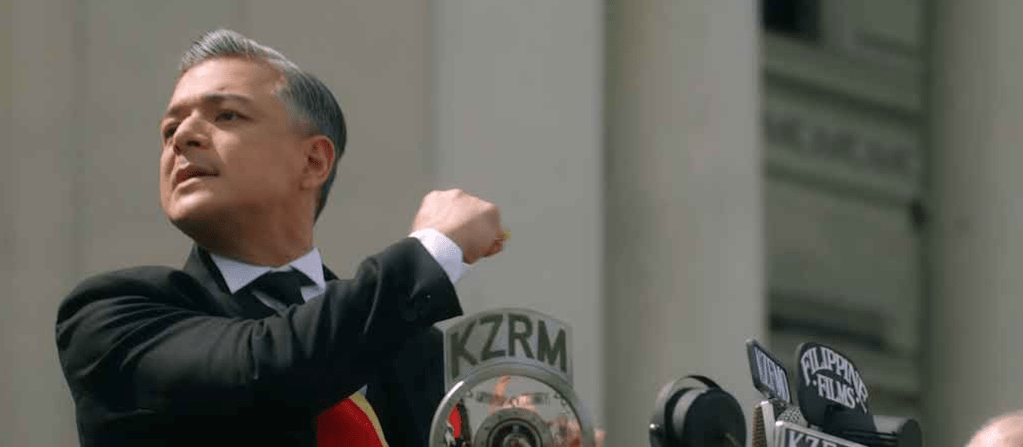
Jerrold Tarog’s biopic on Manuel Quezon marks the definitive culmination of his Bayaniverse trilogy, which began with Heneral Luna (2015) and Goyo: Ang Batang Heneral (2018). Produced by TBA Studios, a collaboration among Tuko Film Productions, Bucha Film Productions, and Artikulo Uno Productions, the trilogy explores the evolution of Filipino nationhood from revolution to statehood. With Quezon, Tarog turns his focus to the statesman who sought to transform the ideals of the revolution into governance. After much anticipation, audiences are not merely eager; they demand to see how Tarog will present one of the Philippines’ most pivotal figures, Manuel Quezon.

Jericho Rosales, known for his portrayal of virtuous characters, boldly ventures into new territory, delivering a performance that transforms his familiar charm into one that provokes visceral dislike. Mon Confiado, who excelled as Emilio Aguinaldo in Heneral Luna, maintains his reputation for compelling portrayals, while Romnick Sarmenta’s interpretation of Sergio Osmeña is nothing short of outstanding, deftly capturing the nuanced tragedy of Osmeña’s character.
This film decisively shifts the narrative surrounding Quezon. He is not merely depicted as a fervent nationalist; he emerges as a cunning, manipulative, and devious architect of political machinations. The historical Quezon employed ruthless methods to achieve his goals, and this film reflects that truth with unflinching candour. Quezon’s Machiavellian tactics, including pitting allies against one another and orchestrating smear campaigns, enabled him to obliterate the aspirations of Osmeña, Aguinaldo, and others. He betrayed those who supported him without remorse, offering gratitude only after their reputations lay in ruins.
Joven Hernando, represented by Arron Villaflor and Cris Villanueva, embodies the Filipino populace, often captivated by charismatic leaders yet blind to their failings. His journey throughout the Bayaniverse illustrates a profound transformation from naïve idealism to cynical realism, culminating in the painful recognition that Quezon, the man he idolised, has become a construct of his own disillusionment.
Remarkably, this film redeems Emilio Aguinaldo. Previously portrayed as ineffectual, Aguinaldo now displays a maturity born of experience. His principled stance against the sordid politics of the time, even at personal cost, highlights a steadfast commitment to integrity. He reflects upon his former colleagues, Mabini and Luna, who would never have stooped to the depths Quezon did. Aguinaldo’s unwavering adherence to principle, despite the burdens of his past, underscores the chasm between past and present leadership.
“I would rather have a government run like hell by Filipinos than a government run like heaven by Americans.”
Quezon’s wish has, regrettably, been realised. His relentless political manoeuvring has led to a governance style marked by chaos rather than stability. The film asserts that Quezon perfected a patronage system that continues to plague the nation, eroding meritocracy. Governor-General Leonard Wood, portrayed by Iain Glen, accurately assesses the Filipino people’s profound misunderstanding of true independence, a failure directly linked to Quezon’s political greed.
This narrative embodies a Faustian bargain, showcasing Quezon’s willingness to forsake virtuous principles for dubious gain. His pursuit of personal ambition exacts a heavy price, inflicting suffering that extends beyond the corridors of power to the margins of society. Miguel, Joven’s uncle, serves as a vital voice of reason, cautioning against blind loyalty to Quezon. His warnings resonate too late for Joven, who ultimately falls victim to Quezon’s treacherous game.
Osmeña’s portrayal is strikingly accurate. Historically depicted as Quezon’s subordinate, the film suggests that, had Quezon not ruined his reputation, Osmeña could have been a formidable statesman. His pragmatic approach, prioritising national over personal interests, stands in stark contrast to Quezon’s scheming. Had Osmeña possessed Quezon’s cunning, he might have achieved far more for the nation. This central theme conveys Tarog’s essential message: political strife benefits only those consumed by a lust for power.
“I am Manuel Ǫuezon! I am the Philippines!”
These words echo ominously, encapsulating the essence of a leader whose legacy, defined by ambition and manipulation, continues to dominate the political landscape.
Tarog’s film arrives at a crucial moment, illustrating that what we see in the Philippines today stems from the legacy of Quezon’s era. The rampant issues of corruption, patronage, and self-serving politicians are all vividly reflected in the film’s powerful message. Tarog skilfully captures the essence of what José Rizal termed the “Social Cancer”. It is important to recognise that Tarog does not depict Quezon negatively; rather, he offers a cautionary tale about how the pursuit of power and greatness can ultimately lead to one’s downfall. Behind the veneer of prominence and prestige lie unsettling truths that we cannot ignore. To label Quezon merely as a “Man of Contradiction” falls short of the complexity presented in this narrative.
While the historical accuracy and Tarog’s portrayal of Quezon are commendable, we must approach this character with discernment. Tarog urges us to remain both grateful and critical of our heroes, advocating a balanced understanding of who we are as Filipinos. This film is essential viewing; it compels us to learn from past mistakes and to ensure that they are never repeated.
How to cite: Atanacio, Gene Michael M. “Tarog’s Quezon: A Definition of Machiavellian Politics.” Cha: An Asian Literary Journal, 31 Oct. 2025, chajournal.blog/2025/10/31/Quezon.

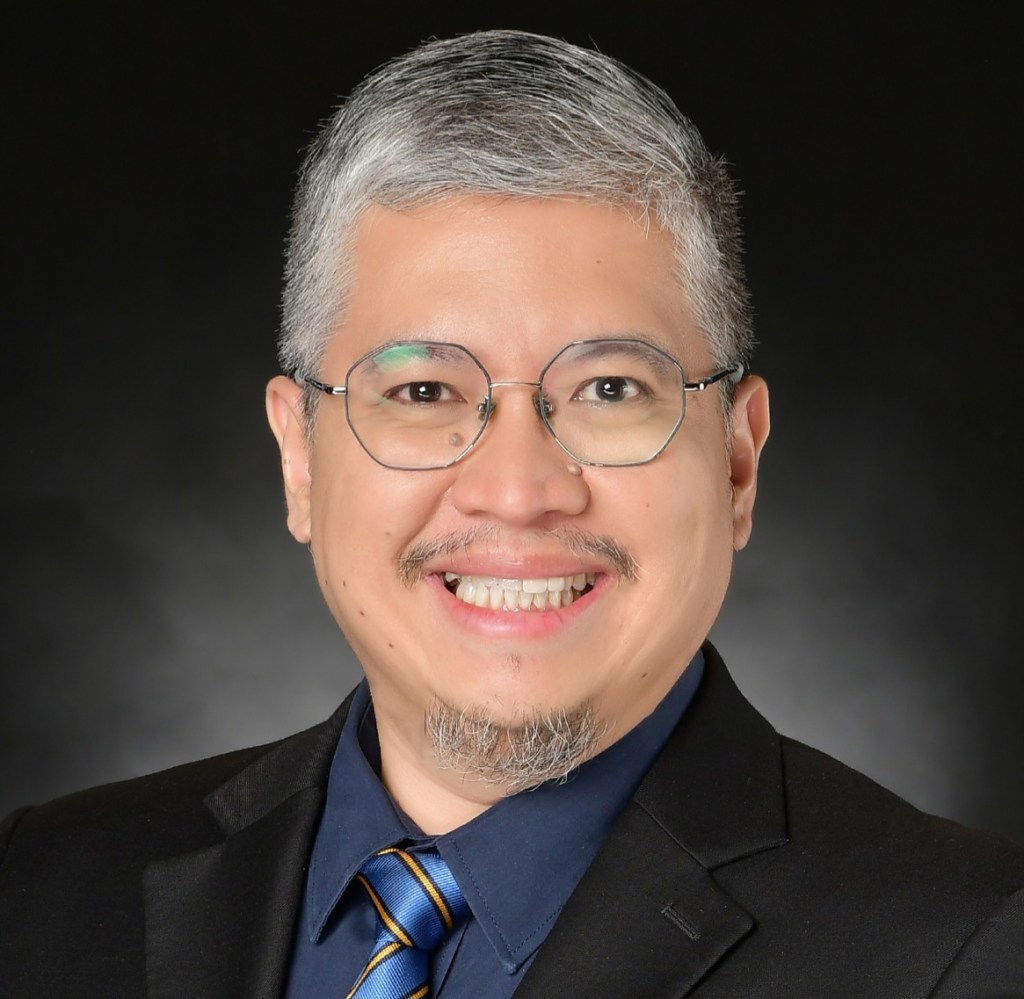

Gene Michael M. Atanacio is a University Researcher at the Research and Innovation Center and a Special Lecturer at the Lyceum of the Philippines University. He previously taught History and Social Science courses at the University of Santo Tomas and the Colegio de San Juan de Letran. He holds a Master of Philippine Studies degree from the University of the Philippines, specialising in Socio-Cultural Studies, and a Bachelor of Arts degree in History from De La Salle University. He also completed a Certificate in Teaching Programme at the Philippine Normal University and is a Licensed Professional Teacher. In addition, he is a Knight of the Order of Rizal and a member of the Philippine Historical Association and the Kapisanan ng Vexilolohiyang Pilipino.
 Cha
Cha 