
📁 RETURN TO FIRST IMPRESSIONS
📁RETURN TO CHA REVIEW OF BOOKS AND FILMS
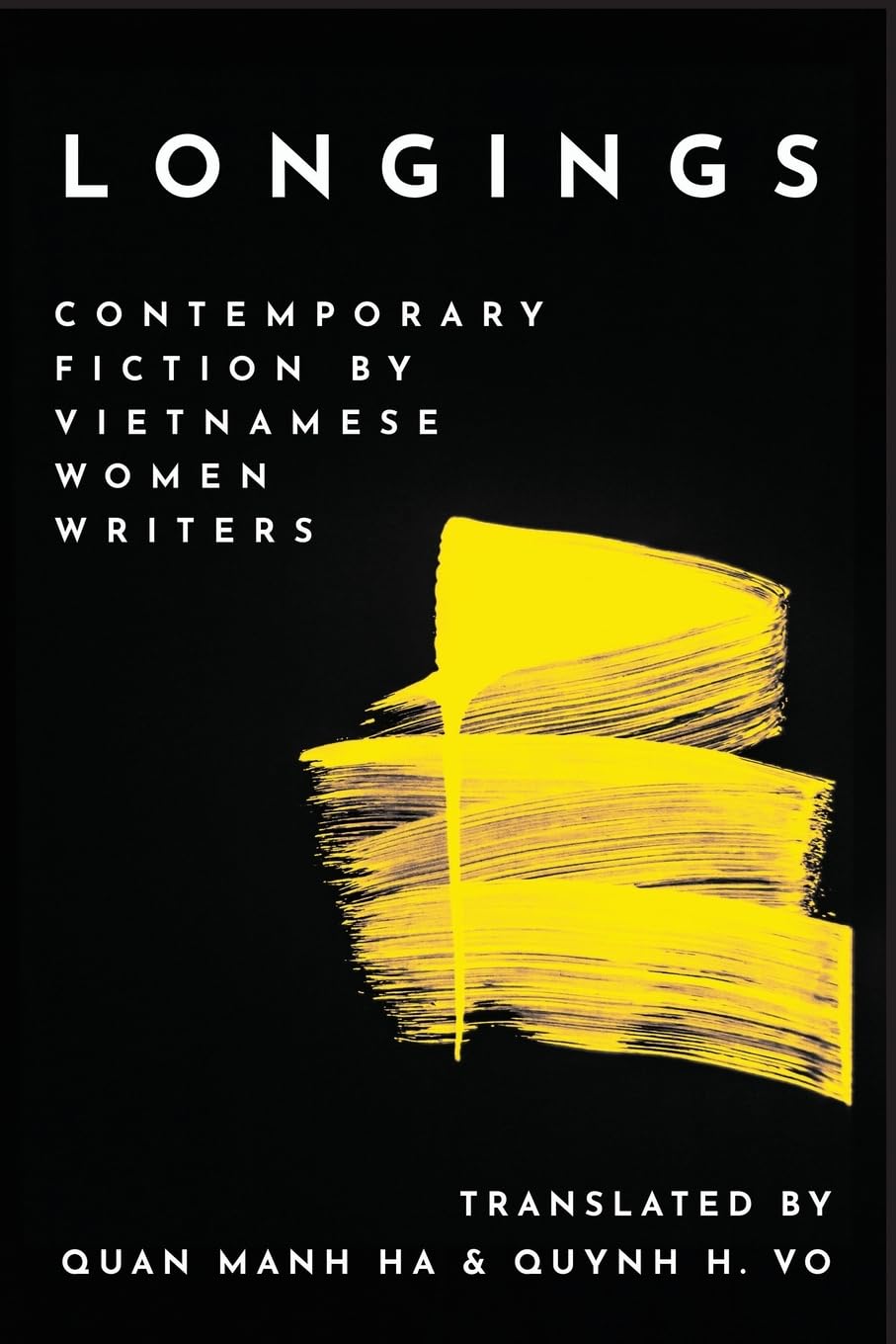
Quan Manh Ha and Quynh H. Vo (translators), Longings: Contemporary Fiction by Vietnamese Women Writers, Texas Tech University Press, 2024. 260 pgs.
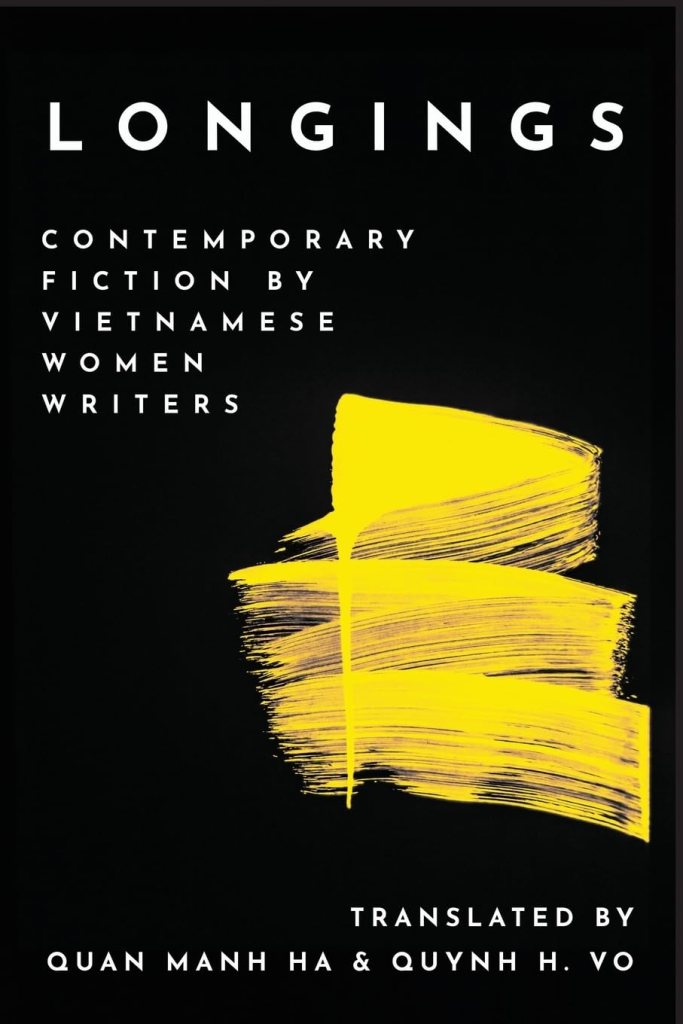
Vietnamese literature in English translation is frequently reduced to two poles: the Vietnam War and the classical or colonial past. What remains far less visible to Anglophone readers is the vibrant body of contemporary writing that has emerged since the mid-1990s, following the normalisation of diplomatic relations between Vietnam and the United States. Although the last three decades have witnessed sweeping social and economic transformations within Vietnam, only a handful of literary works reflecting this reality have crossed linguistic borders.
Published in 2024, Longings, an anthology of stories by contemporary Vietnamese women writers, shifts the focus towards the domestic, emotional, and psychological spaces of everyday life. The collection captures the subtle yet profound negotiations of selfhood and gender in a society where tradition and modernity remain in constant dialogue.
The introduction to the anthology states: “In Vietnam’s heteropatriarchal society, where Confucian doctrines of hierarchy and masculinity are still dominant, feminism is deemed a luxury.” This statement illustrates the social context within which these stories unfold. Feminism, while often considered a Western construct, has entered Vietnamese discourse through shifting cultural and global influences. Yet, as Longings reveals, its local manifestations are less ideological than experiential. The women in these stories do not speak the language of formal resistance; their questioning often takes the form of silence, irony, or endurance.
An Thu’s “The Red Cushion” sets the tone with a story that blends realism and Gothic fiction. A newlywed woman must confront her mother-in-law’s demand to produce a son and, in doing so, uncovers the family’s buried past. The “haunting” becomes both literal and psychological, an embodiment of generational guilt and the persistence of patriarchal expectation. In Tinh Bao’s “Under the Blooming Silk Cotton Tree”, the tree, with its fleeting blossoms, stands as a symbol of renewal and hope after the female protagonist is released from prison. Tran Thuy Mai’s “Green Plum” offers emotionally intricate portrayals of love and sacrifice, and a startling twist near the end complicates notions of virtue and desire, suggesting that survival itself can be a radical act. Kieu Bich Hau’s “Selecting a Husband” explores how women navigate the intersection of affection, duty, and economic necessity. Hau employs subtle irony to expose how romantic ideals are shaped—and often distorted—by social expectation. Nguyen Huong Duyen’s “Longing in Vain”, through its portrayal of a fractured family learning to live with absence, examines the fragile boundary between attachment and release. Her line, “When there is no love, attempts to hold on become ridiculous,” captures this wisdom: the recognition that longing, not fulfilment, defines much of human experience.
In Longings, the female characters do not uniformly rebel against patriarchy; some challenge it directly, while others carve out quiet forms of autonomy within its boundaries. The men, too, are portrayed not always as monolithic oppressors but as products of the same traditions that confine the women. What ultimately emerges is a portrait of Vietnamese women who, though bound by social expectations, find meaning in the very act of questioning. Their stories speak not only to the condition of contemporary Vietnamese society but also to the universal human desire for recognition, love, and freedom.
How to cite: Maine, Rebecca. “Finding Meaning in the Very Act of Questioning—Longings: Contemporary Fiction by Vietnamese Women Writers.” Cha: An Asian Literary Journal, 31 Oct. 2025, chajournal.blog/2025/10/31/longings.


Rebecca Maine is an undergraduate student at the University of Montana, where she studies creative writing, psychology, and public history. Her work has appeared on the Montana History Portal and in The Oval Literary Magazine. She lives in Missoula, Montana, with her husband and two cats. [All contributions by Rebecca Maine.]
 Cha
Cha 