

Editor’s note: We are honoured to present the personal reflection “Curriculum Vitae in Silence” and the poem of the same title by Liu Hongbin, a Chinese British poet of Tiananmen exile. He was shaped by a childhood torn between pastoral serenity in the countryside and revolutionary storm in his home city, his father taken by Mao’s regime, a silence that shadows his humane verse. In London, forged by a Kafkaesque reckoning with injustice in a land that calls itself free, he tempers a voice of stillness, Taoist in root, universal in reach, breathing displacement, exile, memory, imagination, and the quiet flame of being.

Curriculum Vitae
In Silence
Liu Hongbin
When I wrote “Curriculum Vitae in Silence”, I was not attempting to make a declaration. I was, rather, trying to listen to the faint hum beneath words, to the subtle movements of existence that occur when no one is watching. I felt that my life, if it were ever to be understood, would not be recorded in public records or awards, but in the pauses between sentences, in the moments when the world turns away and one is left alone with oneself. Silence, I felt, was my truest résumé.
The poem opens with a paradox that has followed me for most of my life: “I’ve spoken my whole life— / no one has heard a word.” These lines arrived almost unconsciously, yet they carried the weight of years. I have always spoken through writing, teaching, and poetry, but there is another kind of speech, one that occurs without recognition. It is not merely that others do not listen; sincerity is often misread as eccentricity, and truth mistaken for noise. I wanted to capture that peculiar condition of living between languages, between what is said and what is heard, between articulation and erasure.
The creaking chairs and nodding curtains in the poem represent the small consolations one invents when human attention is absent. I have lived through times when cruelty was met with silence, when justice was indefinitely postponed, and when words of truth vanished into official voids. In such moments, inanimate things offered a strange companionship. The world itself seemed to listen, even when people would not. The slow movement of a curtain, the hesitant sound of wood against wood, these became gestures of understanding I could still trust.
When I wrote, “The tragedies? / All properly staged,” I was reflecting on how pain in public life often demands performance. We are expected to narrate our suffering neatly, for reports, for hearings, for the record, yet tragedy itself resists form. It simply happens, often without witness. The line, “just the faint applause of a heartbeat refusing to stop,” felt both ironic and sacred. In a world that measures worth through recognition, the body’s quiet persistence becomes its own form of applause.
Silence, for me, is not emptiness but discipline, a practice of attention. “Even silence needs rehearsal” speaks to the necessity of learning to live without affirmation, of cultivating an interior life that does not depend on being seen. Over years of injustice and isolation, I had to learn that art. It was not resignation but transformation, the conversion of pain into awareness, of solitude into perception.
The certificates in the poem are perhaps its most ironic image, yet also its most tender. I imagined invisible awards for those who endure quietly, whose dignity survives in private. These certificates “arrive late, unsigned, folded in half by time.” I think of the countless lives that go unacknowledged yet continue to shine with integrity, the unrecorded kindness, the unheard protest, the secret faith. In my own life, gestures of support often arrived too late or incomplete, yet their very imperfection gave them authenticity. They were human.
The ending came almost of itself: “And still, / I keep speaking, / the way a candle / speaks to the dark.”
I paused after writing those lines. They felt like a quiet reconciliation. The poem begins in despair, the despair of not being heard, but ends in luminous acceptance. To speak to the dark is not to expect an answer; it is to recognise that illumination is itself a form of response. The candle does not banish the dark, but it transforms it. That, I think, is the secret of endurance, not to overcome darkness, but to remain light within it.
Looking back, “Curriculum Vitae in Silence” is less about isolation than about faith, faith in the continuity between being and expression, even when unseen. It suggests that a life, though unacknowledged, still leaves its mark; that truth and tenderness do not vanish simply because they go unnoticed. The poem became an autobiography of what was never recorded: the erased words, the unheard testimonies, the unreturned kindnesses. In silence, these fragments form an invisible archive.
Writing it, I came to understand that silence is not the absence of communication; it can be its purest form. A candle speaks not through sound, but through light. Similarly, a person may communicate most profoundly not through declaration but through the texture of presence, through endurance, through compassion, through the refusal to grow bitter.
If I were to rewrite my life as a curriculum vitae, it would not list institutions or accolades. It would list moments of attention, survival, and unrecorded grace. It would be, in essence, this poem, a brief, flickering record of a conversation with the dark.

Curriculum Vitae
in Silence
Liu Hongbin
I’ve spoken my whole life—
no one has heard a word.
Chairs creaked politely,
curtains nodded in agreement.
The tragedies?
All properly staged.
No audience,
no applause,
just the faint applause
of a heartbeat refusing to stop.
Even silence needs rehearsal.
I’ve practiced for years—
how to answer without lips,
how to confess by looking away.
There are certificates, I think,
for those who survive quietly.
They arrive late, unsigned,
folded in half by time.
And still,
I keep speaking—
the way a candle
speaks to the dark.
Header image: via
How to cite: Liu, Hongbin. “Curriculum Vitae in Silence.” Cha: An Asian Literary Journal, 29 Oct. 2025, chajournal.blog/2025/10/29/in-silence.

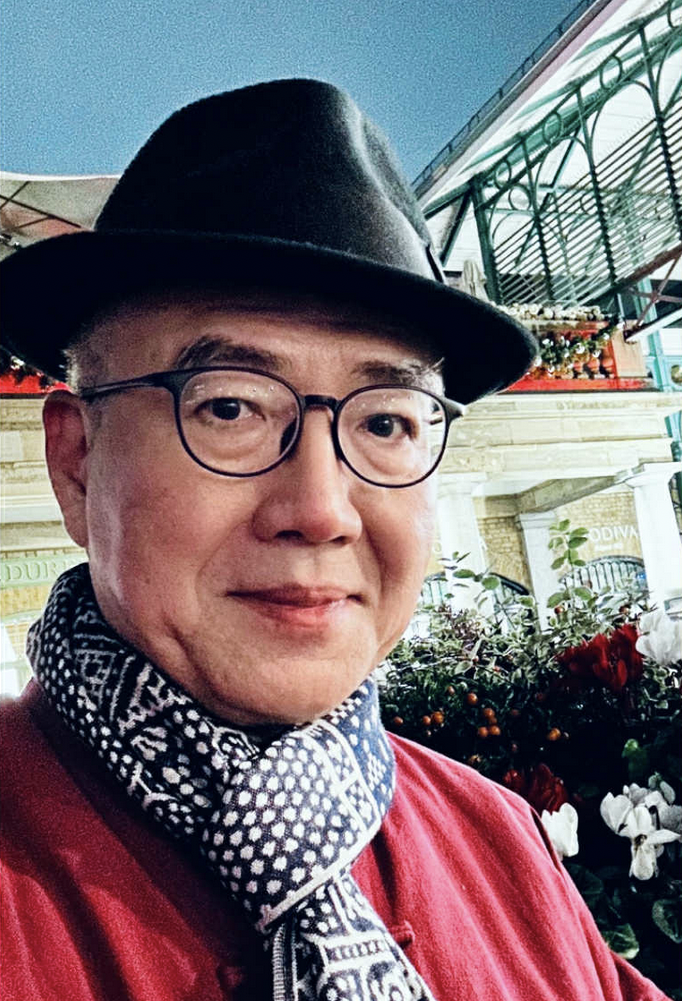
Liu Hongbin, a British–Chinese poet who writes in both Chinese and English, transcends the boundaries of culture and language, earning acclaim from some of the most distinguished voices in world literature. Sir Stephen Spender described him as “a gifted and serious poet, and an alert, intelligent, and very personable young man.” John Ashbery wrote, “Hongbin’s language of exile can teach us that belief in freedom can—and will—transcend a regime of prejudice, even if it comes from within.” Nobel Laureate Doris Lessing declared, “Liu Hongbin is a fine poet—and a brave one; his poems were among those which provoked the authorities during Tiananmen Square.” Peter Porter noted “a powerful imagination… wrestling with the perennial problems of poetic expression.” Elaine Feinstein observed, “These poems are filled with a bleak loneliness, but the images and the tone of voice are always surprising.” Arthur Miller praised his “deep democratic convictions and powerful talent.” David Hawkes wrote, “Liu Hongbin belongs to a very ancient Chinese tradition which insists that poets bear witness,” vividly capturing injustice. Le Monde Diplomatique described his poetry as “a genuine gem,” uniting lived and written experience, dancing with suffering yet radiating vital energy. Liu’s incisive verses affirm him as “one of the finest poets writing in any language today” (Ashbery).
 Cha
Cha 