
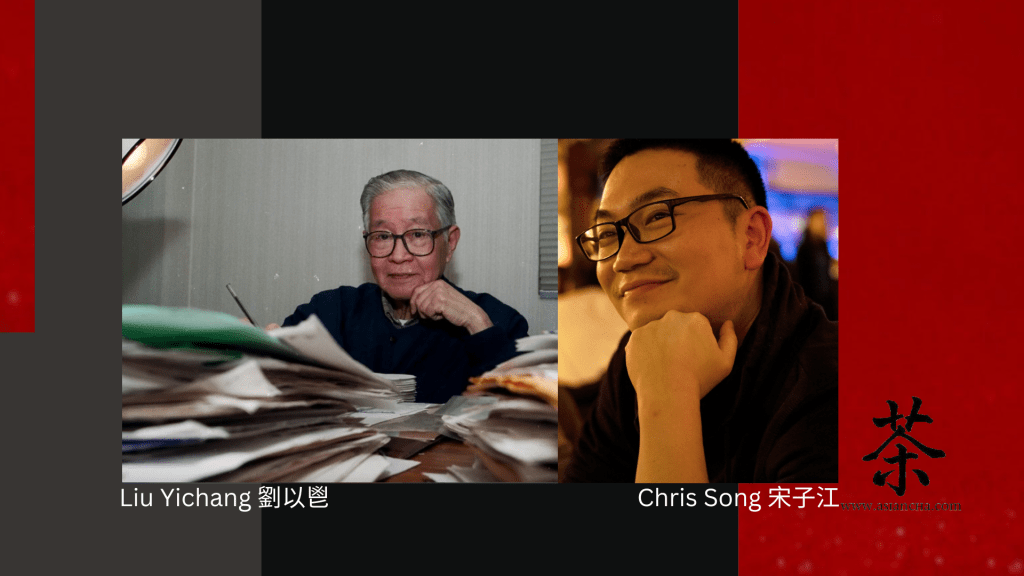
Chris Song’s Note: Liu Yichang’s 劉以鬯 (1918–2018) short story “Riot” 動亂, set against the backdrop of the 1967 Hong Kong Riots, is a hauntingly experimental meditation on violence, urban alienation, and the blurred boundary between the living and the inanimate. Rather than depicting the riot from a human point of view, Liu constructs the narrative through a polyphonic sequence of first-person monologues delivered by objects: a slot machine, a stone, a soda bottle, a rubbish bin, a taxi, a newspaper, a tram, a postbox, a water pipe, a tear-gas canister, a bomb, a streetlight, a knife, and finally a corpse. Each object narrates a fragment of the same night’s turmoil, observing and embodying human chaos while revealing the eerie vitality of the material world.
Through this shifting chorus of non-human perspectives, Liu Yichang dismantles conventional realism and replaces it with a kaleidoscopic modernist form reminiscent of cinematic montage or stream-of-consciousness narration, yet stripped of any single human consciousness. The story’s de-anthropocentrised vision, in which man-made things speak, suffer, and die, transforms the riot into a surreal morality play about the collapse of civilisation and the mechanisation of emotion. By the end, when the corpse itself reflects on its meaningless death and wonders whether the lifeless will one day rule the world, Liu achieves a devastating allegory of modern urban life: a city where humanity has become indistinguishable from the objects it creates and destroys.
Liu’s innovation lies not only in his use of object narration but also in his fragmented, cinematic structure, his existential irony, and his fusion of modernist technique with local historical trauma. “Riot” thus stands as a landmark in post-war Hong Kong literature, an early experiment in modernist urban fiction that transforms political violence into an introspective inquiry into the fate of human feeling amid the machinery of modernity.
Click HERE to read all entries in Cha on Liu Yichang.


1967 riots. Photo: Citizen News.
i
I am a slot machine, not a tiger. Tigers have life; I do not. In this world, only the lifeless can swallow coins. A year ago, a few men carted me and my kind here in a lorry. They dug holes in the pavement and “planted” us like saplings. Saplings have life; I do not. Nickels are my nourishment. I have devoured plenty, yet I never grow. People do not like me. The rich feed me grudgingly, shoving coins into my mouth with grim faces. The poor feed me nothing, but glare at me as though I have stolen something from them. The money inside me they cannot reach. Their resentment does not trouble me. Even my own injuries do not. That night, hundreds poured out from the side streets like a tide. Some shouted slogans. Some painted the walls red with brushes. Some set taxis ablaze. Some overturned rubbish bins. One man came towards me, eyes burning, swinging a heavy iron rod. He smashed my face. I was badly wounded. He did not stop. He kept striking, again and again, until I bent double. Then he hurried off, seeking another target. I remained behind, bleeding coins into the dark.
ii
In the height of chaos, someone seized me and hurled me at a policeman. He raised his rattan shield. I struck it, fell to the ground, and was kicked about.
iii
I am a bottle of soda. To be precise, a bottle of 7-Up. A girl drained the sweetness from my belly, then placed me back on the rack. I waited, patient, glassy, expectant, for the factory worker who would return me to the bottling plant, where I would once more be filled with fizz. But that night, a young man came. He gripped me by the neck and hurried down the stairs. Outside was bedlam. A taxi burned in front of the café. The slot machines were smashed. Street signs were torn from their roots. Hundreds of people ran, entangled in their own shouting. Police cars arrived. The officers formed a line, batons and rattan shields in hand. The young man burst from the crowd like an arrow and hurled me at a policeman’s steel helmet. I shattered into a thousand pieces.
iv
I am a rubbish bin. In the chaos, I had no idea how things had come to this. Curiosity made me wish to see more clearly what all the turmoil was about. Then, suddenly, several men surrounded me. Without hesitation or mercy, they beat me to pieces. They were angry. I could see that, but I could not fathom what I had done to earn their hatred. I was severely wounded. Only four words remained on my battered body: KEEP THE CITY CLEAN.
v
I am a taxi. That night, I was waiting quietly at the taxi stand when hundreds of people surged out from the side street like a tide. A police sergeant with three stripes on his shoulder climbed into my belly for refuge. Then the crowd surrounded me, tight as an iron ring. Someone splashed kerosene across my skin, struck a match, and set me alight. The heat licked at me. Inside, the sergeant faced the narrow edge between life and death; he drew his revolver and fired once into the crowd. The bullet tore into a middle-aged man’s thigh. He fell. The crowd broke apart. The sergeant vanished like a shadow at dawn. And I burned on, a gasoline lamp in the storm, lighting the street with my own undoing.
vi
I am a newspaper. My body is covered in words, headlines declaring things such as “Schools Closed in Riot Districts,” “Chinese in Hong Kong Must Practise Monogamy,” “Labour Disputes Should Be Resolved Sincerely.” That night, a woman wrapped a piece of silver in me and carried it into a pawnshop. When the silver was gone, she flung me onto the pavement outside. Soon, a strong wind rose from nowhere and lifted me into the air, sweeping me towards the heart of the unrest. From above, I saw the chaos: street signs uprooted, traffic lights torn down, rubbish bins overturned, slot machines disembowelled. I was afraid. I hoped the wind would take me somewhere else. But the wind grew tired, and I began to fall. I did not want to leave this world, not yet, but there was nothing I could do. I drifted down and landed on a burning taxi. Before it was fully consumed, I too turned to ash. I do not know why I had to die there. There must be a reason. I simply do not know it.
vii
I am a tram, perhaps the oldest of all the city’s vehicles. From dawn to nightfall I trundle along the tracks, unhurried, outpaced by cars, lorries, even the occasional bicycle. Yet people are fond of me. Those with time to spare, who wish only to watch the city slide by, treat me as a kind of sightseeing carriage. That night, I left the Sheung Wan Market and rattled towards Causeway Bay, passing through the district of unrest. Someone hurled acid at me. It splashed, burning two passengers who leapt screaming from my body. Then a stone struck the driver’s forehead, blood running down his face. I stopped, utterly still. For me, it was a new sensation. I had never experienced such things. I was curious, not afraid. I saw a slot machine beaten until it bent in pain; a taxi engulfed in fire. Compared with the burning taxi, I was fortunate, only grazed by a corrosive bottle that left small wounds. The driver was carried away when the ambulance arrived, at the same moment as the police. They formed a line, speaking through loudhailers, asking the crowd to disperse. When the crowd refused, they told the residents to close their windows and fired tear gas. The gas did not trouble me, but the people fled. The air was thick with tension, and still I found it oddly interesting. I am only a tram, after all. The workings of humankind are beyond my comprehension.
viii
I am a mailbox. The police had not yet arrived when someone shoved a burning stick into my mouth. I have always fed on letters, but his burning stick made my stomach revolt.
ix
I am an iron water pipe, gentle by nature. After being torn from my place, I did something terrible. That night, someone drove me straight through a traffic light.
x
I am a tear-gas canister. In chaos, I am authority itself. When I exhale my white smoke, people scatter as though they have seen some ancient monster. I had never seen humans before; this was my first time, and what strange, fascinating creatures they are. In panic, they rush about—something beautiful to look at. Up in the buildings, the others have sealed their windows tight. Through the glass I can still glimpse them: four people playing mahjong; a schoolchild bent over her homework; an old man of sixty teasing a girl of seventeen; a husband and wife screaming at each other; a rich man counting his banknotes; a sick one swallowing his medicine; a television glowing with the face of a beautiful woman; two middle-aged men playing Chinese chess. All of it, endlessly absorbing. I want to see more, to linger, but I cannot help myself. I fade, and fade, and fade away.
xi
I am a bomb. People have given me a nickname, DIY pineapple.1 I find it far more elegant than bomb. When the crowd fled down the side street, driven by the tear gas, someone placed me in front of the tram. The driver had already been struck and taken away by ambulance. Suddenly, the street fell silent. No one was near me; the line of policemen stood seventy, perhaps eighty yards away. I felt alone. The chaos had drained from the world, leaving behind a strange stillness. Moments ago there had been bustle. Now there was only emptiness, and my own confusion. I waited, not knowing for what. After a while, a bomb-disposal expert appeared, waddling towards me in his padded suit.
xii
I am a streetlight. Of all that happened that night, I saw it best. Before eight o’clock, everything was ordinary: trams clattered back and forth, people walked along the pavements, the air smelled faintly of exhaust and roasted chestnuts. Everything was normal. Then the clock struck eight, and hundreds surged out from the side street like a tide, armed with knives, bombs, iron rods, stones, soda bottles, sawn-off pipes, kerosene, flaming sticks. The police had not yet arrived; only a lone sergeant with three stripes was warning the hawkers to move along. When the crowd began wrecking the slot machines, the traffic lights, the rubbish bins, the mailboxes, a dozen men broke off and chased the sergeant. He was a small, round man who could not run fast. Thinking quickly, he dived into an empty taxi, hoping to drive away. The crowd surrounded it, poured kerosene from the roof, and struck a match. Fire bloomed. The sergeant drew his revolver, fired once; a man’s leg burst red, and the crowd scattered. A tram arrived; the mob hurled acid at it, burning the driver. Then came the police—five cars, sirens slicing the air. They formed a line in the middle of the street; the crowd threw stones and soda bottles. The lead officer raised a loudhailer and urged them to disperse. They did not. Stones kept flying. The police warned the nearby residents to shut their windows and doors, and soon the sound of slamming shutters filled the street. Tear gas burst open. The crowd scattered. Paramedics lifted the bleeding tram driver into an ambulance; its siren wailed like something wounded. Gradually, the tension eased; the riot seemed over. But at the centre of the street, a single bomb remained. A bomb expert emerged from a police car and set it off. When it exploded, shrapnel whistled past me, glinting through my light. I was unhurt, but I saw the wreckage, the terrible quiet that follows fury, and wished I could dim myself to darkness. An hour later, the police withdrew. People crept back out of their buildings. The world almost returned to normal. Then, as if to remind everyone of the evening’s true nature, one man stabbed another to death.
xiii
I am a knife. After the police left, one young man drove me into another’s waist. The stabbed one fell, gasping, then stopped breathing altogether. I bathed in his blood.
xiv
I am a corpse. Though blood still seeps from my waist, life has left me. I have no idea who killed me, or why. Perhaps he was an enemy. Perhaps he mistook me for someone else. Perhaps he only wanted release. Perhaps he was mad. In any case, I am dead. I did not die for a cause, only as an ant might, crushed underfoot at the edge of the street. This is a world unravelling into chaos. And I wonder: will it someday belong entirely to the lifeless things?
22 February 1968
Hong Kong
- In Hong Kong Cantonese during the 1960s and 1970s, the slang term “DIY pineapple” refers to an improvised hand grenade made from a metal canister or pipe filled with explosives, a makeshift bomb resembling a pineapple because of its shape and texture. ↩︎
How to cite: Song, Chris and Liu Yichang. “Riot.” Cha: An Asian Literary Journal, 23 Oct. 2025, chajournal.blog/2025/10/23/riot.


Liu Yichang 劉以鬯 (1918–2018) was a Shanghai-born and Hong Kong-based writer, editor and publisher. His best-known modernist fiction works include The Drunkard 酒徒 and Intersection 對倒, which inspired Wong Kar-wai’s award-winning films 2046 and In the Mood for Love 花樣年華 respectively. Liu wrote literary columns for various newspapers for the large part of the twentieth century, edited literary publications in Shanghai, Hong Kong and Singapore, and mentored a whole generation of Hong Kong writers. Liu Yichang was widely recognised as the most influential Hong Kong fiction writer since his arrival in the city in 1948.


Chris Song (translator) is a poet, editor, and translator from Hong Kong, and is an assistant professor teaching Hong Kong literature and culture as well as English and Chinese translation at the University of Toronto. He won the “Extraordinary Mention” of the 2013 Nosside International Poetry Prize in Italy and the Award for Young Artist (Literary Arts) of the 2017 Hong Kong Arts Development Awards. In 2019, he won the 5th Haizi Poetry Award. He is a founding councilor of the Hong Kong Poetry Festival Foundation, executive director of the International Poetry Nights in Hong Kong, and editor-in-chief of Voice & Verse Poetry Magazine. He also serves as an advisor to various literary organisations. [Hong Kong Fiction in Translation.] [Chris Song & ChaJournal.]
 Cha
Cha 