
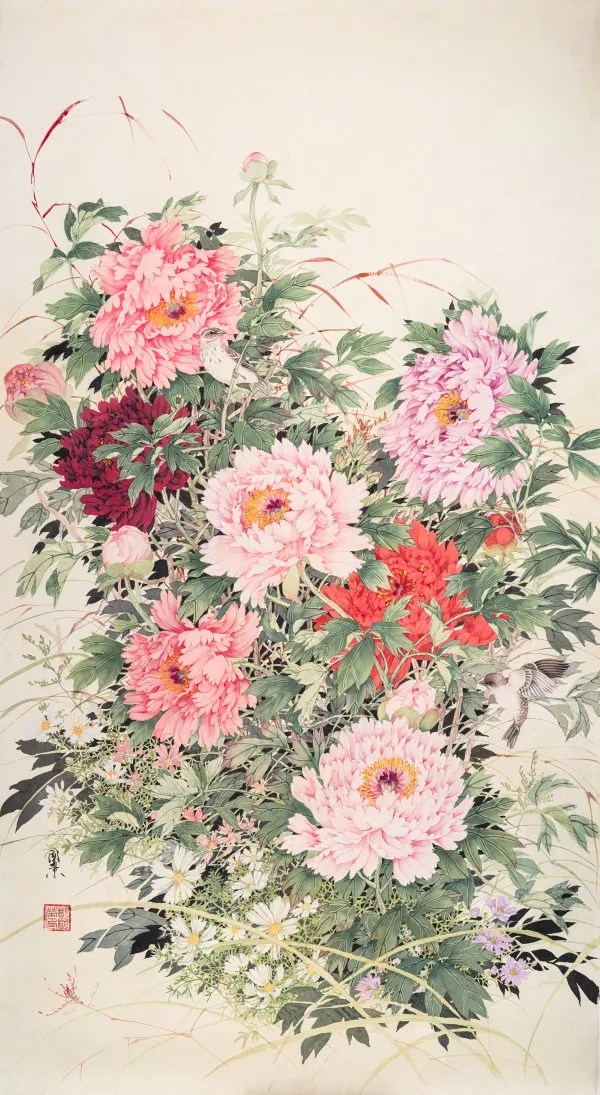
Editor’s note: In this conversation with Sadie Kaye, 77-year-old Hong Kong artist George Tang Kwok-wing reflects on his seven decades in art in the lead-up to his participation in Fine Art Asia 2025, where he unveiled a monumental new large-scale floral painting. Tang discusses his lifelong pursuit of balance between tradition and innovation, the experiences that have shaped his distinctive style, and the enduring joy he finds in creation. His reflections offer a thoughtful glimpse into a lifetime devoted to painting and the quiet optimism that continues to define his work.

INTRODUCTION
Sadie Kaye

With an illustrious career spanning more than seven decades, Hong Kong artist George Tang Kwok-wing continues to captivate audiences at the age of seventy-seven, this time with a monumental seven-foot floral painting debuting at Fine Art Asia 2025 from 4 to 7 October. Tang’s enduring energy and creative spirit have made him a force of nature in the world of Chinese painting, his work revered both locally and internationally.
Tang’s artistic journey began at the age of seven, when he studied under the esteemed painter Pau Shiu Yau 鮑少游, a devoted disciple of the Japanese master Takeuchi Seiho 竹內棲. Years of disciplined training laid the foundation for Tang’s distinctive blend of tradition and innovation, a hallmark that has defined his career.
In the 1970s, Tang pursued further studies in London, where his works garnered rapid critical acclaim. His debut exhibition in 1977 at the Alfred Speelman Art Gallery in Mayfair—a premier destination for Chinese art—marked a turning point. Tang’s paintings soon graced galleries far beyond the United Kingdom, with notable international exhibitions in Singapore and Canada, including a milestone show at Toronto’s Agfruteh Art Gallery and Museum in 1985.
By the late 1980s, Tang had crystallised a signature style. His artistry fuses the meticulous technique of gongbi 工筆 with the expressive movement of freehand brushwork, achieving luminous peony paintings celebrated for their vibrant colour and dynamic vitality. In 2009, Tang’s reputation reached new heights when Hongkong Post commissioned him to design a floral stamp series commemorating the tenth anniversary of Hong Kong’s floral stamps—a project that sparked wide public interest and dialogue.
Beyond his own painting, Tang has influenced generations as a dedicated educator. From 2002 to 2024, he taught at The Chinese University of Hong Kong’s School of Continuing and Professional Studies, inspiring countless students to embrace Chinese painting. His impact in the field has been further recognised by Ink Global, which named him among the Top 500 Finest Chinese Artists in 2017 and elevated him to the Top 200 in 2021.
He is also a recovering lawyer who ran his own practice as a solicitor in Hong Kong for decades, and a devoted father and grandfather of twins.
Today, Tang remains a passionate creator, particularly drawn to large-scale works. The forthcoming Fine Art Asia 2025 exhibition will showcase not only his latest grand floral composition but also the evolution of his artistic journey—from childhood sketches to the masterful works of his maturity.
Tang hopes his art will convey a message of timeless optimism: “When one nurtures a positive spirit, beauty can be found everywhere in life—just as it blossoms in my paintings,” he shares. As Fine Art Asia 2025 approaches, Tang’s story stands as a testament to the transformative power of creativity and the enduring beauty that flourishes when art and soul unite.
I was fortunate enough to sit down with him to discuss his inspirations and the remarkable energy that continues to drive him as he embarks on an exciting new chapter, transforming a lifelong passion into a flourishing late-career renaissance.

Painting a Legacy
of Optimism & Beauty
Sadie Kaye & George Tang Kwok-wing
Sadie Kaye (SK): Your artistic journey began at a very young age under the guidance of Pau Shiu Yau. How did those early lessons shape your creative outlook and technique?
George Tang Kwok-wing (GT): I was a rather mature child for my age. My artistic journey began with Pau, my teacher, like most beginners, by copying sketches. A significant surprise arrived when he finally taught me to paint bamboo with ink. I was overjoyed. I was no longer just watching the adults but was now participating in a revered tradition. I was fascinated by how the brush twisted and turned to achieve the desired form on paper. In those early days, there was little room for creativity, as mastering the technique was the primary goal. Self-indulgence would have to wait.
SK: What drew you to florals, and in particular, to the monumental scale of your most recent works?
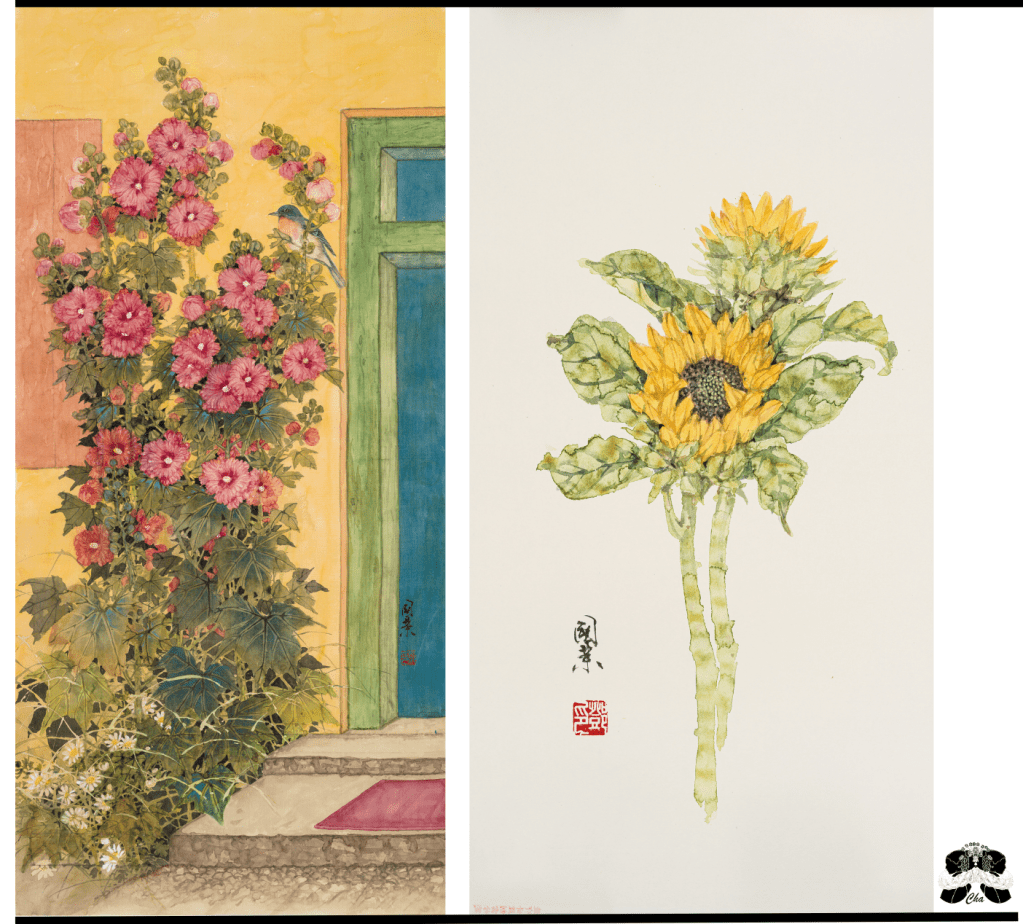
GT: To graduate from Pau’s institute, I had to complete a curriculum covering birds and flowers, landscapes, figures, animals, and fish and insects. I painted many horses in my youth, as I’ve always been fond of them. I also did landscapes, but being traditionally oriented, I often found them monotonous unless executed on a very large scale. Floral subjects have always been my favourite. They connect effortlessly to daily life—from blades of grass by the roadside to morning glory climbing a windowsill. I adore large-scale paintings for their ability to create a “wow” effect, and I will continue to make them for as long as my physique allows.
SK: Having studied in London and exhibited internationally, how have different cultures inspired or influenced your approach to Chinese painting?
GT: Living abroad has allowed me to view different cultures with a more liberal perspective, unlike many masters from previous generations who rejected anything “foreign.” I believe such resistance is detrimental to progress. Over the years, I have experimented with Western colours, utensils, mediums, and compositions that deviate from tradition. I wonder what Pau would say to me if he were alive today!
SK: Could you describe the process of developing your signature style that merges gongbi precision with freehand expressiveness?
GT: I frequently use silk for meticulous brushwork, as it is less absorbent than rice paper. Once, I discovered an old piece of silk that had turned brown with age. Seeing that it was unsuitable for a traditional Gongbi painting (known for its precise outlines), I decided to paint a freehand flower on it, but I applied the same meticulous detail I would have for a Gongbi piece. The result was immensely satisfying. From that day on, I began creating many Gongbi-style paintings without the traditional outlines, yet retaining their intricate detail. This approach feels more relaxed while preserving the grandeur of classic Gongbi brushwork.
SK: How do you balance tradition and innovation in your art, and what role do you see for each in the evolution of Chinese painting?
GT: I do not believe we should discard tradition entirely. It annoys me when some contemporary artists dismiss any trace of traditional techniques, colour palettes, subjects, or presentations as outdated pitfalls or even mistakes. I firmly believe there is room for both traditional and contemporary art to coexist. Trends in artistic appreciation are always changing, and I would not dare to declare one superior to the other. I prefer a collaboration between the two: a contemporary approach to traditional themes, or a traditional technique applied to a contemporary concept, striving to keep the best of both old and new. They are not irreconcilable; in fact, this fusion can create a fairer and more nuanced dialogue.
SK: Your 2009 commission for Hongkong Post’s floral stamp series reached a wide audience. How did it feel to see your work celebrated in this way, and did it affect your artistic direction?
GT: Of course, there are moments of vanity. I have felt carried away seeing long queues of people waiting for my signature on the stamps I designed for HK Post. I giggled when some even argued over who was first in line—an unbelievable scene! But in the end, stamps are just stamps, and compositions are always different. I continue to paint as I always have.
SK: What challenges have you faced in sustaining such energy and creativity throughout your seven-decade career, and how have you overcome them?
GT: I often ask myself a puzzling question: how have I sustained my passion for painting for over seventy years, amidst all the changes in my education, career, and family? There were several times I considered giving up, asking myself, “What the heck? What for? Why bother?”—especially when more urgent issues demanded my attention.
Very often, it was simple inertia that held me back. The longest such period lasted three months, after I graduated from university and was painfully adapting to the demands of a new career. I struggled with whether to quit painting altogether.
My solution was to turn to calligraphy whenever I felt stale or unsure. It allowed me to create without the pressure of composition, and soon enough, my desire to paint would always return. These periods of doubt have become less frequent over the years, as painting has become an inalienable part of my identity, thank God.
SK: How do you envision the future of Chinese painting, and what advice would you share with the next generation of artists?
GT: My advice to anyone interested in art, whether as a career or a hobby, is to follow your heart. Everyone is different—our likings, DNA, temperament, and nature all determine the life we pursue. I am aware of the shifts in the Chinese art scene, where contemporary styles now predominate. The key is to do what makes you happy; don’t force yourself into a style you dislike. One can easily make a statement or provoke thought by painting something morbid or shocking, but you must decide if that truly brings you joy.
SK: What are the positives of coming to a profession later in life? What advantages do you feel this gives you over Gen Z and Millennial artists?
GT: I believe it’s never too late to start a profession, provided one has the necessary foundation of skill, training, and knowledge. However, the journey is entirely different when it’s pursued for love rather than livelihood.
I am fortunate. Though trained as an artist, I am not compelled to paint for income. This freedom from commercial pressure is a privilege that allows me to explore my artistic path without burden—a path that is often difficult for those who depend on it.
SK: You often speak of optimism and finding beauty everywhere. How do you nurture this positive spirit in your daily life and creative process?
GT: My inspiration comes from the beauty that surrounds us all: vibrant blossoms, decayed leaves in a hundred shades of green and brown, wild dandelions, and broken tree trunks. To me, these are wonderful subjects. Nature is my muse, and I especially love composing these elements into lush floral paintings. Ultimately, you see beauty when you have an eye for it, and you find joy when you carry it in your heart.
SK: What do you hope exhibition-goers will take away from your upcoming exhibition at Fine Art Asia 2025?
GT: I hope that those who see my work will share in this delight and connect with their own lives through a lens of optimism, resilience, and colourful abundance.
EXHIBITION DETAILS
Public Opening Hours 公眾開放時間
4—6 October 2025 2025年10月4至6日
Saturday to Monday 11am—7pm 星期六至星期一上午11時至下午7時
7 October 2025 2025年10月7日
Tuesday 11am—6pm 星期二上午11時至下午6時
The last admission time is 30 minutes before closing.
最後入場時間為展會結束前30分鐘
Venue 場地
Hall 1DE, Hong Kong Convention and Exhibition Centre
香港會議展覽中心,1DE號展覽廳
How to cite: Kaye, Sadie and George Tang Kwok-wing. “Painting a Legacy of Optimism & Beauty.” Cha: An Asian Literary Journal, 5 Oct. 2025, chajournal.com/2025/10/05/george-tang-kwok-wing.

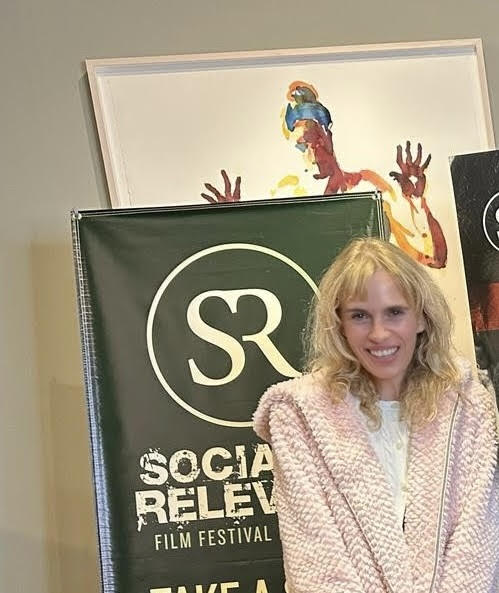
Sadie Kaye is a storyteller from Hong Kong who creates quirky podcasts, offbeat documentaries, and independent films. Her humour columns for RTHK Radio 3 and essays on mental health have been published by the South China Morning Post and featured in numerous anthologies by the Hong Kong Women in Publishing Society and the Hong Kong Writers Circle. She has produced two feature films for Contro Vento Films: the first, Transference, went viral on YouTube with over 29 million views, while the second, To Love a Narcissist, is set for release in North America early next year. [All contributions by Sadie Kaye.]


George Tang Kwok-wing, born in 1948, is a celebrated Chinese artist renowned for his vibrant floral paintings. Tang began painting at the age of seven under Pau Shiu Yau, a painter of the Lingnan School and a disciple of the Japanese master Takeuchi Seiho. In the 1970s, he studied in London, earning acclaim with his 1976 overseas debut at the Alfred Speelman Art Gallery. His works have been exhibited in Hong Kong, Singapore, and Canada, most notably at Toronto’s Aftukhteh Art Gallery and Museum in 1985. In 2009, he designed a widely admired floral stamp series for Hongkong Post. He was selected among the 500 Finest Chinese Artists in Ink Global 2017 and among 200 in 2021. Now aged 77, Tang remains active, having recently completed a seven-foot floral painting for Fine Art Asia 2025. His art radiates optimism, embodying beauty and positivity through dynamic floral compositions.
 Cha
Cha 