

📁 RETURN TO FIRST IMPRESSIONS
📁 RETURN TO CHA REVIEW OF BOOKS AND FILMS
Eva Yip Man-lai (director), Cecilia Lau (organiser), Yat Yat Kingdom, 2025.
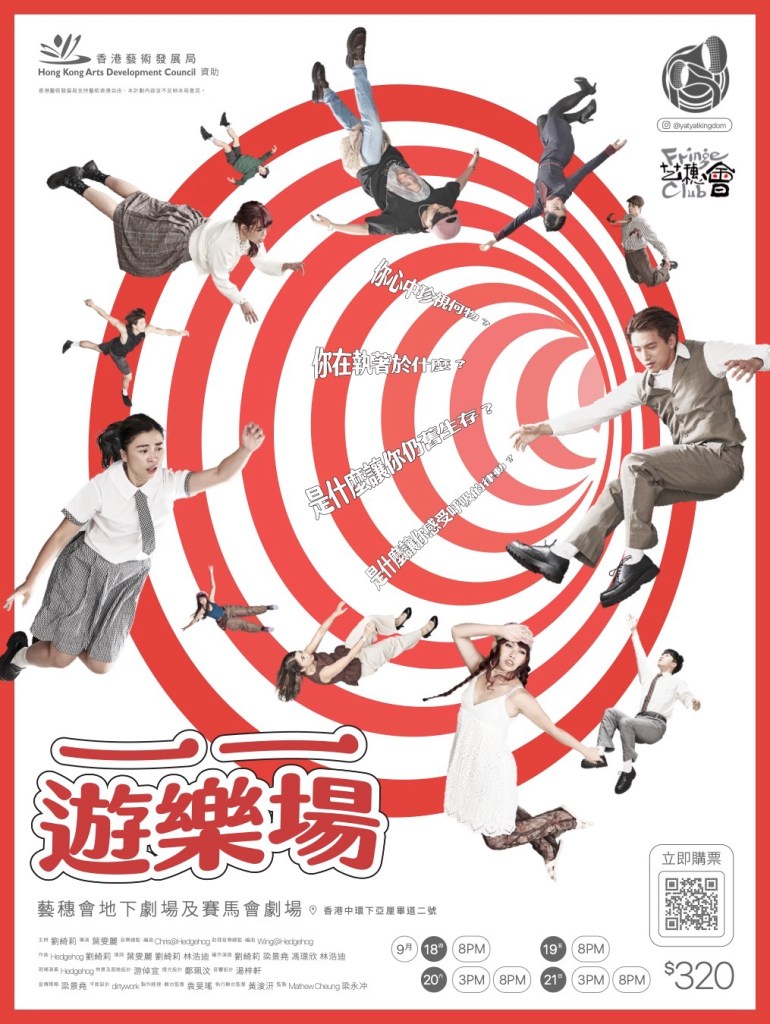
In the world of theatre, actors often serve as vessels for the stories of others, portraying characters born from playwrights’ imaginations and embodying lives that are not their own. After all, is not an actor’s greatest talent the ability to transform themselves into someone else’s life? Yet Yat Yat Kingdom transcends this tradition, inviting the audience into a raw, vulnerable space where performers reveal the truths of their struggling days.
Collaboratively devised by actors Cecilia Lau, Terrence Leung, Tiffany Pattinson and Andygap Lim, this production is more than a play. It is a tender confession, a mirror held up to the struggles and resilience of Hong Kongers. As Cecilia Lau noted in an interview with InmediaHK, she hopes to turn the theatre into a safe space where everyone feels comfortable to share, stepping beyond traditional theatrical boundaries. Indeed, Yat Yat Kingdom does not merely convey heartfelt messages in the manner of a play: it also invites the audience to imagine, indulge, and feel, creating a fully immersive two-hour experience.
The production’s opening is immediately captivating. Upon entering the venue, the audience is instantly drawn into a game of Red Light, Green Light. The seamless engagement fosters a natural sense of participation, with interactive elements warming everyone up. Other games such as Simon Says, Rock-Paper-Scissors and roaring like a wild lion further enhance the lively atmosphere. Watching adults enjoy these activities made me ponder why such games are perceived as only for children. Do we not all have the capacity, and indeed the need, to play?
Another notable aspect of the show is the strict no-latecomer policy. Anyone arriving after the designated time is not permitted to enter, ensuring that once the door is closed, there are no disruptions. This decision maintains a smooth flow for the play and creates a serene environment in which the audience can fully concentrate on the experience.
A game without consequences is never truly engaging, but here the “punishments” are gentle rather than harsh. Actors might ask losing participants random questions to encourage the sharing of experiences. One common question is, “Who was the first person you said ‘I love you’ to?” Some mention a pet, others a lover, but most often the answer is their mother.
Unexpectedly, such a simple question evokes a darker childhood memory for Tiffany Pattinson. Her mother would insist that she say “I love you” every day, even when she did not feel like it or after a quarrel. Over time, Pattinson realised that this ritual was a toxic and hypocritical practice, a means by which her mother continually over-controlled her emotions. In the centre of the audience, her anguished body inclines unwillingly towards a balloon, symbolising the daily tug-of-war between her and her mother, a metaphor that resonates with the audience’s own inner teenage rebellions.
Alongside this, a live video is projected, showing a little house with a girl doll weeping apart from angry parents. The vivid imagery and effective integration of multimedia enrich the audience’s imagination, enabling us to share in Pattinson’s teenage scars.
This is one of four intimate stories in Yat Yat Kingdom, each uniquely interwoven with the performers’ real lives. Although the piece blends numerous artistic elements including ballet, hip-hop, guitar and pop music, none detracts from the performers’ ability to express their feelings. Rather, it seems natural for them to tell their stories through these forms, as though artistic techniques act as a mask to soften the exposure of ruptured flesh.
Yat Yat Kingdom is suffused with compassionate reflection, yet every detail of the production is thoughtfully designed. Curtains are drawn back to reveal a live band; a floating balloon is finally squeezed until it bursts. One particularly striking design has the audience moving through the space of The Fringe Club while wearing headsets that whisper the story of a suicided actor. As someone easily distracted, my mind often wanders during immersive theatre when the audience must move around. But here, I was able to focus on the narrative and contemplate its meaning, so that no second felt wasted or idle.
This provides insight into director Eva Yip Man-lai’s techniques. I have seen many immersive theatres before, yet most have disappointed or bored me. The problem is not solely the quality of the performers, but rather the overstimulation of immersive theatre itself. Its sensory elements, aimed at engaging all five senses, too often overshadow the content. No wonder such productions frequently leave only an overwhelming impression. But in Yat Yat Kingdom, everything is in balance. Yip’s delicate calibration of each art form creates a fluid and surprising immersive experience.
As the performance draws to its close, Cecilia Lau’s personal reflection on her late friend adds a gentle warmth. Her story illustrates how saving a life can be nuanced, arising from something as simple as a kind stare or an offer to buy fishballs. Whenever Lau feels disheartened, she recalls her friend’s sweet smile and altruistic spirit, drawing strength to persevere.
Life in Hong Kong is not easy, yet its young artists are astonishingly ambitious and bold. Yat Yat Kingdom unveils their most fragile moments, exposing vulnerability without shame while simultaneously affirming their resilience and courage. The stage sets are minimal, the cast small, yet their faces shine with dedication to take the road less travelled.
How to cite: Fung, Dawna. “Between Play and Pain: Yat Yat Kingdom‘s Tender Confession.” Cha: An Asian Literary Journal, 3 Oct. 2025, chajournal.blog/2025/10/03/yat-yat.

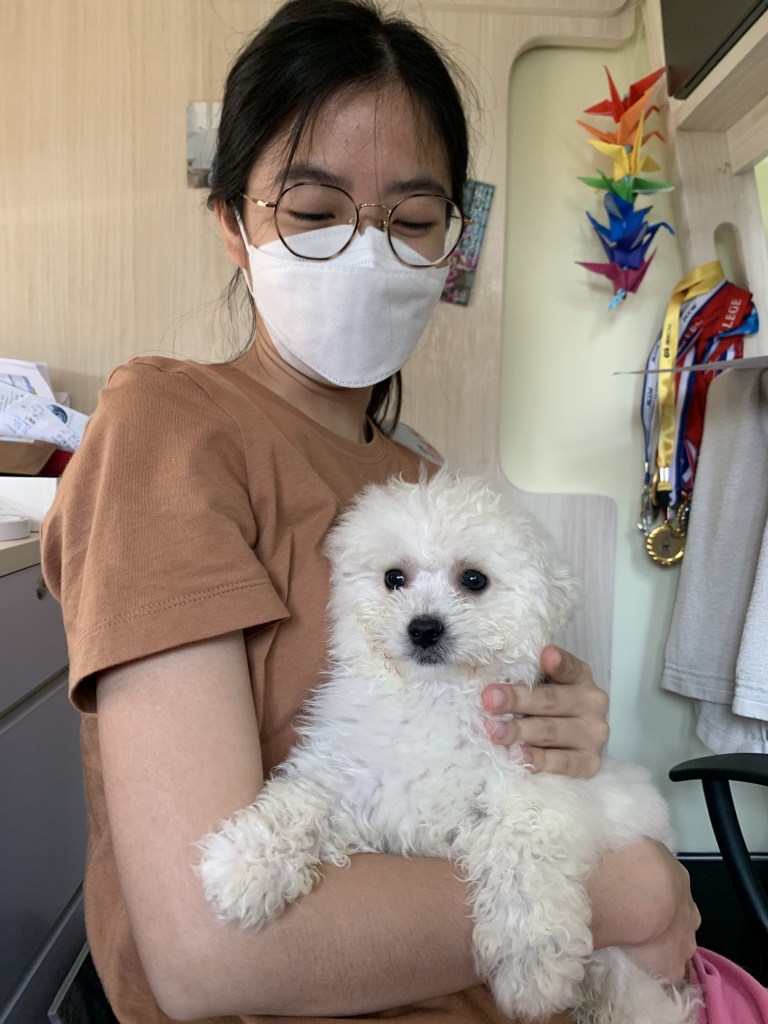
Dawna Fung was born and raised in Hong Kong. She tried very hard to complete her degree in journalism but failed due to a small mistake calculating her credits calculation (maths is not her strength) and has been forced to defer for now. Her poems and prose have been featured in Voice & Verse Poetry Magazine, Fleurs de Lettres and Canto Cutie. In her free time, she writes as a freelance journalist and art critic (hmm, not so free at all) and has published in Hong Kong Free Press, The Theatre Times, Prestige Hong Kong, FairPlanet, and The Hong Kong Economic Journal. [All contributions by Dawna Fung.]
 Cha
Cha 