
📁 RETURN TO FIRST IMPRESSIONS
📁 RETURN TO CHA REVIEW OF BOOKS AND FILMS
Mahmoud Alshaer & Mohammed Al-Zaqzooq (editors), Letters from Gaza: A Collection by the People; Unveiling Their Stories and Emotions from the Year That Has Been, Penguin Random House SEA, 2025. 250 pgs.

In 1952, René Clément directed the French anti-war drama film Jeux Interdits (Forbidden Games, 1952), where the idea of chaos in war is projected through two children caught between the animosity of adults. A decimated maturity can only be comprehended through the lens of innocence. Thus, when the two protagonists, Michel and Paulette, befriend each other and begin to navigate life amid death by burying animals killed during the war, a crumbling innocence becomes starkly visible. The world has prepared itself to be haunted by wars, genocides, and conflicts, because power is always associated with adulthood. Innocence, by contrast, obstructs the activities of adults. As we eat our favourite meals, watch a good film, receive a warm response from a friend, or secure a raise at work, a genocide grows unchecked every day before our eyes, demonstrating the relentless capability of power. The staggering reality lies in accepting that the genocide being inflicted upon Gaza by the State of Israel is not halted by those who parade the banner of peace. Instead, it is justified through haunting silence, or through subtle support that safeguards alliances and the power they bestow.
Today, while we enjoy the privilege of secure homes, access to medical facilities, and educational institutions, Gaza has slowly been transformed into an open grave. Beyond human corpses, it is now a graveyard of learning, joy, hope, and humanity. A world that once championed human rights has itself perished within the ruined homes, schools, and hospitals of Gaza. Letters from Gaza: By the People, From the Year That Has Been, edited by Mohammed Al-Zaqzooq and Mahmoud Alshaer, is a collection in which several writers and translators unite to help us comprehend the plight of their homeland. Some of these writers and translators are already dead, some remain in the midst of war, awaiting a death that arrives without warning. Those still alive are unable to give interviews, for even the publishers of this book cannot reach them. The editors, once researchers and teachers in Gaza, now find their institutions obliterated by the Israeli army. It is a tragic reality, yet this collective misery has been afforded little space in today’s geopolitical discourse.
In the publisher’s note, we learn that most of these writers remain unaware that their works have even been published. To frame the book’s context, the publisher cites a crucial statement from the United Nations, expressing grave concern over the deliberate pattern of Israeli attacks targeting schools and universities. This precise destruction of Gaza’s intellectual and educational structures reveals a calculated intent. The United Nations termed it a “scholasticide”, an assault upon the very foundations of the Palestinian education system. The question arises: why target schools? After the Hamas attack on Israel, Prime Minister Benjamin Netanyahu declared in a press conference that his army would not stop until Palestine ceased to exist. Education sustains hope for the future generation. Once hope dies, generations either face oblivion or fade unnoticed. Israel’s actions were strategic, deliberate, and meticulously organised. Yet they were not gradual. They were expeditious, inhuman, and brutal.
Doha Kahlout, in her letter “A Siege of Questions and Answers”, translated by Haytham el-Wardany, lays bare a life that mirrors our own, but for her and countless others, that same life descends relentlessly downhill. She articulates a collective anguish through questions: “Who am I? How did I end up here? What more do I have to lose to get through these days?” She mourns a past that has been pledged to theft. As the Israeli army intensifies its campaign to destroy Palestine, she foresees a future stripped bare—not even a memory, not even a figment of imagination will remain. The questions that baffle Gazans persist: What is happening? What will follow? In her letter, Doha explains that in their rare quiet moments, they cling to memories of the past, uncertain of when those fragments will be torn away. Uncertainty robs victims of voice and of words. She writes of being driven by the occupation army to Northern Gaza, where only fear remains. Some claim that the South is safe, yet it too carries the weight of countless corpses. Then the question shifts: where to go? Eventually the mind concedes that every departure is either hand in hand with death or a fleeting brush with survival. In this absence, further questions erupt: When? With whom? To where? Many trapped in Gaza repeat these same questions. The tragedy is that no answers exist—and if they do, no one can reach those who most need to hear them.
On 31 December 2023 at 11:45 pm, Ahmed Mortaja wrote a letter titled “Hubb and Harb”, translated for this book by Enas El-Torky. In the letter Ahmed promises himself that he will fall asleep by imagining the bombings outside his building as fireworks, disguising the screams of children as the celebratory reception before Eid. In critical moments we make small adjustments to preserve our peace of mind. Likewise, he tells himself that he is lying in bed because the evening party with his friends was not that great. It is a placebo, he believes, that might help him sleep. When people are cornered they grasp at whatever surrounds them and, at the same time, interrogate their surroundings so as not to think of what is unbearable. Thus Ahmed writes: “I will fall asleep cold and curl into myself and think, don’t worry… this is just the price we pay for being hot (cold) natured.” He is not criticising his homeland. He is simply in denial, seeking refuge in the place where he grew up. He is taking a small step towards tomorrow because he cannot face the rest of his future.
Husam Maarouf’s poem “…Beside the River”, translated by Soha El-Sebaie, conveys the exhaustion of the Gazan people with unadorned force. Many stand in solidarity with the victims of this genocide, yet the Israeli army and government proceed with little remorse. Husam writes that the people of Gaza ask for nothing; they expect nothing from their lifeless gaze. He urges them to close their eyes, for tears will not alter the fact that a bomb leaves bodies scattered. He adds that even the most fashionable slogans of solidarity and protest will not open the gates of heaven for them. This genocide is our collective failure. Politicians elsewhere chose silence; people turned their attention to other matters that keep them relevant. Thus he writes, as for the amputated hand that pierces your gaze / that’s your eternal sorrow… maybe you’ve seen it among the carnage. In the end, like so many Gazans, he knows he cannot escape this slaughter. He hopes only that death will be less painful. He wants every Gazan to die in safety.
No use crying beside the river twice;
the first causes a wave,
the second wipes it away;
it’s the river, a continuation of the void.
Mahmoud Jouda’s letter “All of This—Why?”, translated by Enas El-Torky and written on 27 February 2024, is a message of hope, one that also resonates in Pingle Pranav Reddy’s documentary Occupied (2020). The documentary shows how, even amidst conflict, the people of Palestine sustain their art. In the letter, song becomes part of collective memory. Families gather in camps to shield themselves from drone strikes and gunfire. Within these camps they either try to capture a frequency to listen to songs on the radio, or they sing in their own voices to keep warm and to quieten fear. Lovers marry in these makeshift shelters, and all they have to bind them is a song. They do not sing aloud, for that would draw danger closer. Instead, they hum the tune, quietly yet with intention. Later in the letter Mahmoud writes: “When hope is gone, song remains.” A reminder of their solitude; an image at once tender and heart-rending; a present moment that may never become a future.
This collection of more than fifty letters, written in prose and poetry, reveals a Gaza we can scarcely imagine. News reporters show us only the physical devastation; the emotional reality remains hidden from most of us. Letters from Gaza takes us into the hearts of Gazan existence, into its present state of accumulated despair, and compels us to interrogate our silence. It is not something we are accustomed to doing, yet every thirty seconds a man, woman, or child is murdered in Gaza by a country whose own citizens fill the streets in protest against their government, its leader, and his army. These letters matter because tomorrow many of their writers and translators may no longer be alive, yet they hope at least to be remembered, along with their struggles. No one wishes to vanish like a mayfly. These letters may help future generations to reflect on what human beings are capable of—and whether such capabilities are worthy of admiration or of shame.
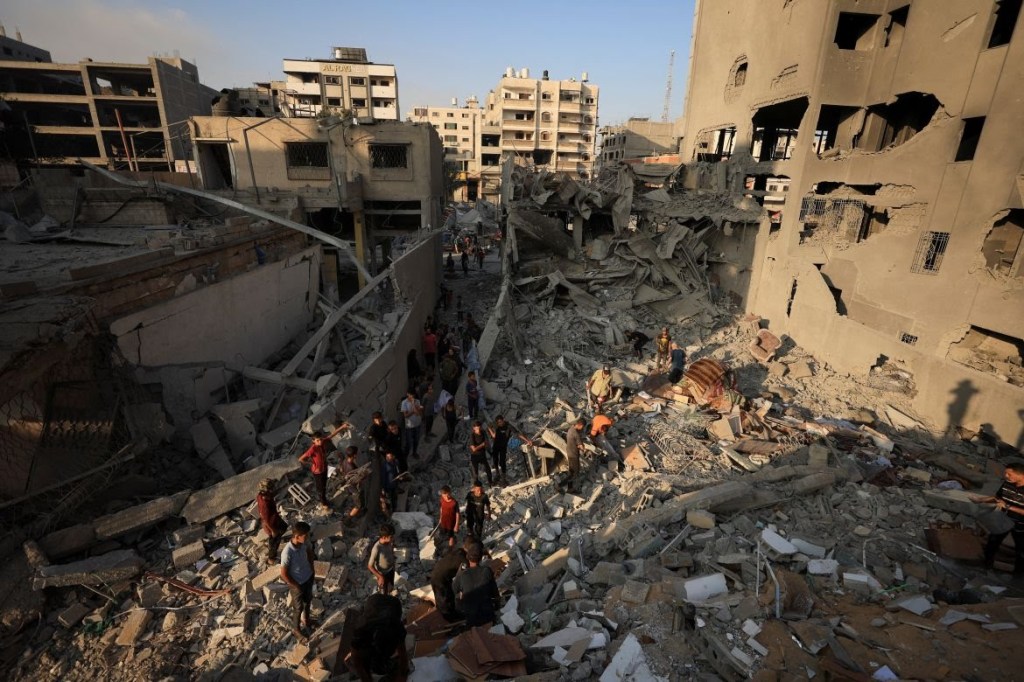
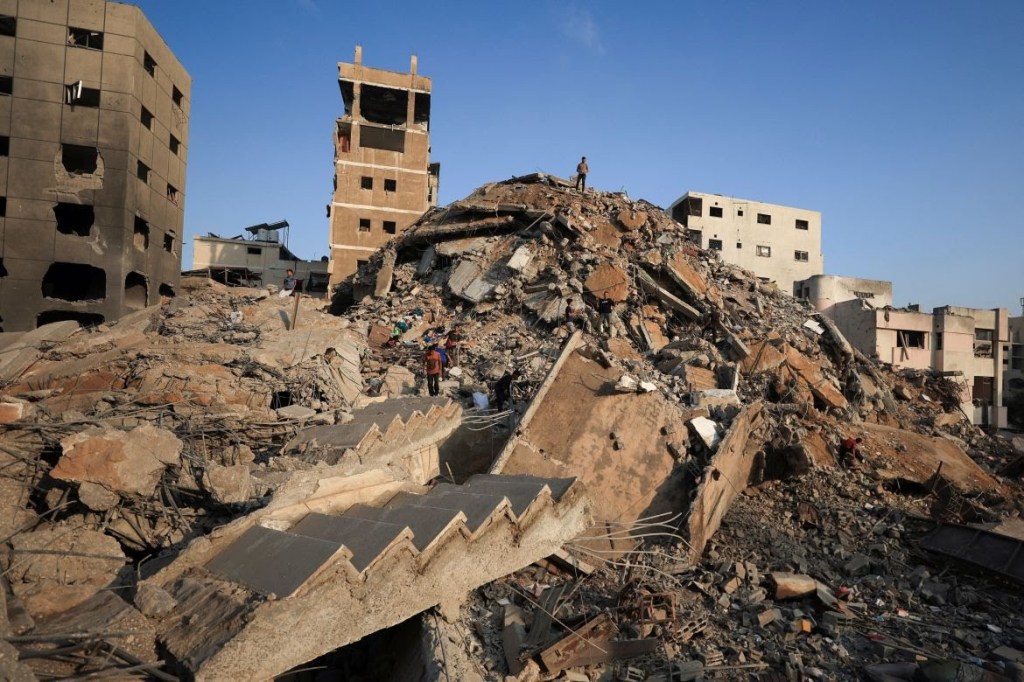

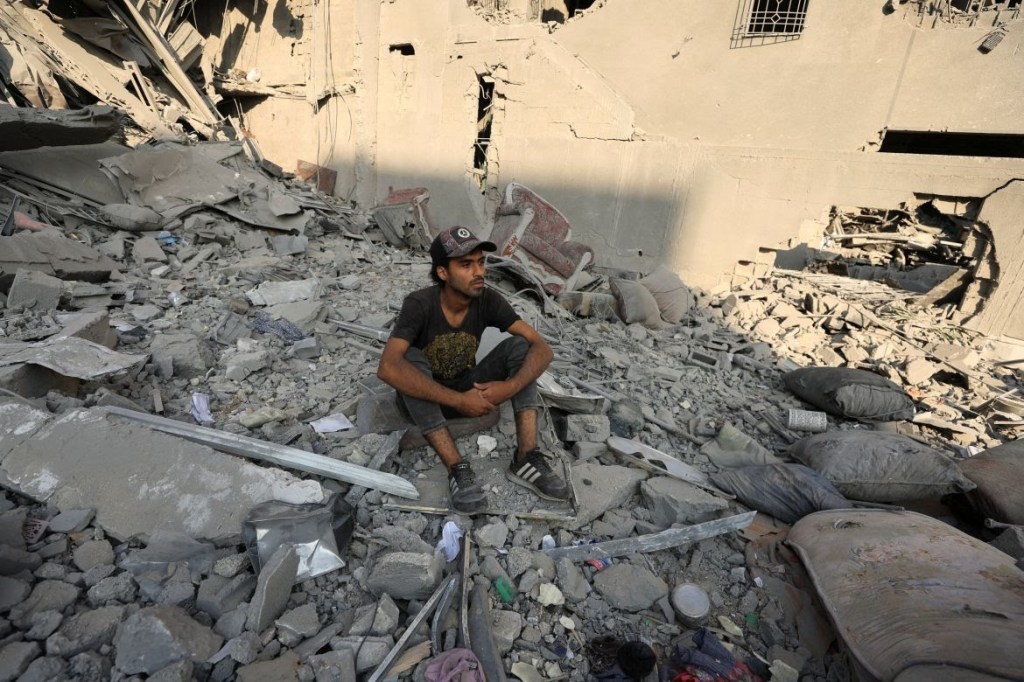
All photographs by Dawoud Abu Alkas of Reuters.
How to cite: Deb, Kabir. “A War, Many Cries, and a Long, Unkind Sleep: Letters from Gaza.” Cha: An Asian Literary Journal, 22 Sept. 2025, chajournal.blog/2025/09/22/letters-gaza.


Kabir Deb is a writer based in Karimganj, Assam. He is the recipient of the Social Journalism Award (2017), the Reuel International Award for Best Upcoming Poet (2019), and the Nissim International Award (2021) for Excellence in Literature for his book Irrfan: His Life, Philosophy and Shades. He reviews books, many of which have appeared in national and international magazines. His most recent book, The Biography of the Bloodless Battles, has been shortlisted for the Sahitya Akademi Yuva Puraskar (2025) and the Muse India Young Writer’s Award (2024). He currently serves as the Interview Editor for the Usawa Literary Review. Instagram: @the_bare_buddha [All contributions by Kabir Deb.]
 Cha
Cha 