
TIFF 2025
▞ 10. The Archivist’s Film: A Conversation on Kunsang Kyirong’s 100 Sunset
▞ 9. She Was Screaming into Silence: A Conversation on Cai Shangjun’s The Sun Rises On Us All
▞ 8. You Don’t Belong to Anyone: A Conversation on Kalainithan Kalaichelvan’s Karupy
▞ 7. The Paper Boy: On Park Chan-wook’s No Other Choice
▞ 6. Saigon Does Not Believe In Tears: On Leon Le’s Ky Nam Inn
▞ 5. The Need for Change: On Kei Ishikawa’s A Pale View of Hills
▞ 4. The Angel of Death: On Jafar Panahi’s It Was Just An Accident
▞ 3. Of Eros & Of Dust: On Ratchapoom Boonbunchachoke’s A Useful Ghost
▞ 2. Light At The End of the Labyrinth: On Genki Kawamura’s Exit 8
▞ 1. Affairs of the Heart: On Cai Shangjun’s The Sun Rises On Us All

Ratchapoom Boonbunchachoke (director), A Useful Ghost, 2025. 130 min.
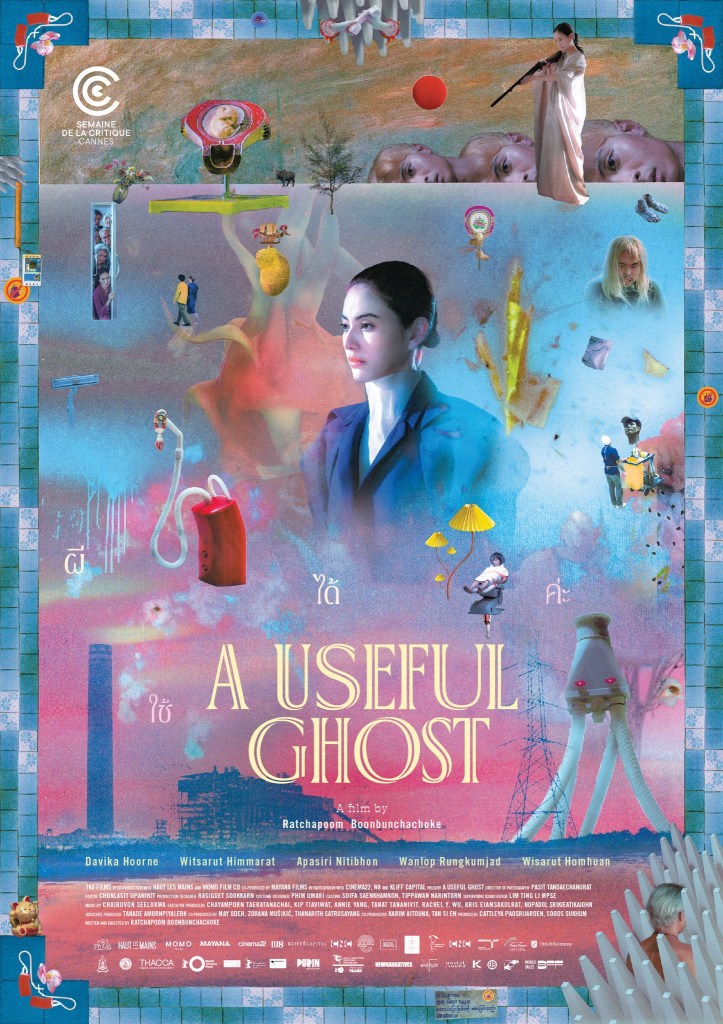
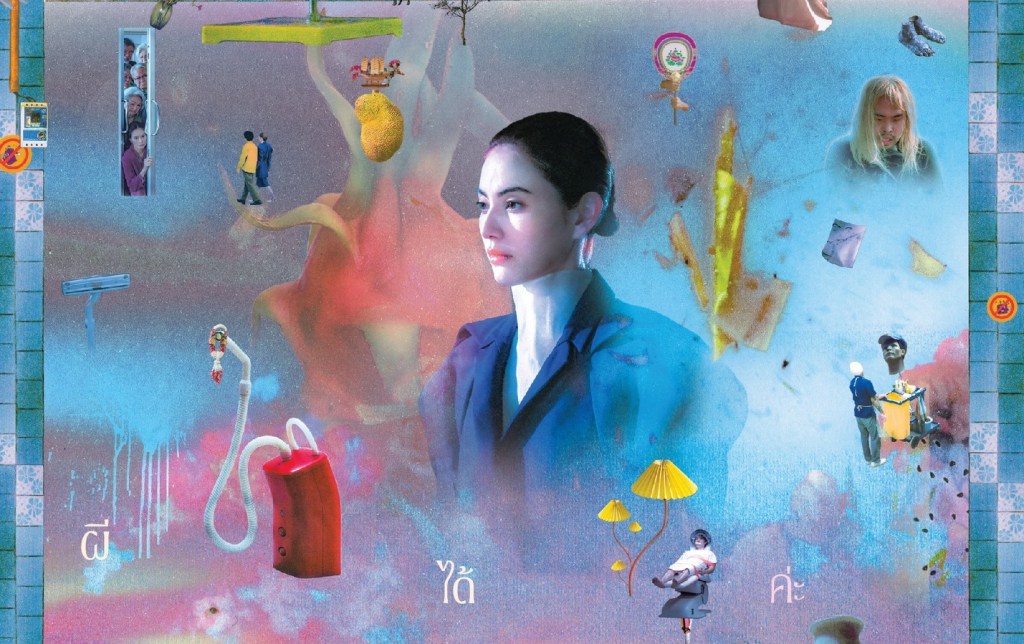
Surrealism, when executed with acuity, alters the way one perceives the ordinary. Cannes Grand Prix Winner A Useful Ghost, written and directed by Ratchapoom Boonbunchachoke, lays bare its conceit early on: in this world, ghosts—both benevolent and malevolent—inhabit inanimate objects and demand to be reckoned with. Our way into this unruly yet satisfying tale is an unnamed, self-described academic ladyboy (Wisarut Homhuan), who, in an attempt to combat the pervasive dust afflicting both the nation and his flat, purchases a vacuum cleaner which, in the dead of night, begins to cough. Alarmed, he contacts the shop to request a repairman. When Krong (Wanlop Rungkumjad) arrives—full bladder, shoes firmly on—our protagonist is immediately drawn to him and becomes engrossed in his recounting of the ghosts’ histories. This history—an inversion, as well as a nod, to the Lumière Brothers—begins within the walls of a factory, where the death of a worker and an inexpugnable bloodstain precipitate the gradual unravelling of the life and career of the owner, Suman (Apasirl Nitibhon).

Krong, like Scheherazade before him, keeps us perpetually attentive while permitting us to lose ourselves in a labyrinth of interwoven narratives. Central among these is the tale of Suman’s son, March (Wisarut Himmarat), and his late wife, Nat (Davika Hoorne)—inspired by the famed Thai legend of Mae Nak. After Nat dies in childbirth, March, paralysed by grief, discovers that she has possessed a red vacuum cleaner with an elongated white hose. Their first wordless reunion, in the deserted aisle of a factory, is unforgettable: the roller of the vacuum slowly ascends March’s body, unbuttoning his immaculate white shirt before stimulating his nipples with its swirling bristles, overwhelming him with pleasure. Until this point I had been cautious, perhaps sceptical, about the film; but this audacious turn towards the erotic—so absent in contemporary cinema—persuaded me entirely, particularly when it was undercut by the horrified gaze of a monk and Suman’s aghast interruption.
“That’s not how we use vacuums,” she says; later: “Please stop screwing your vacuum.”
It is Boonbunchachoke’s expansive imagination, animating vacuums, refrigerators, and machines alike, that renders A Useful Ghost not merely poignant but monumental—a cinematic testament to Thailand’s bloody past. As March insists upon maintaining his relationship with the vacuum, against the disapproval of his late father’s family, the boundary between the living and the dead becomes ever clearer, as does the reason for Nat’s return. “My body has expired,” she tells the monks who attempt to banish her, “but my love hasn’t.” When it emerges that her very existence is sustained by the force of March’s memory, Suman and the elders intervene, subjecting him to electroshock therapy to erase his recollection—thus venturing into the terrain explored by Spike Jonze in Her (2013) and Michel Gondry in Eternal Sunshine of the Spotless Mind (2004). The seamless arrival of Minister Paul, and with him the chilling prospect of invading and obliterating dreams, elevates the film to the level of a parable on power and corruption.
The historical wound the film references directly is the 2010 “red shirt” massacre, carried out under the regime of former Prime Minister Abhisit Vejjajiva and his deputy Suthep Thaugsuban. According to Human Rights Watch, the crackdown resulted in 98 deaths and 2,000 injuries among protestors who had demanded the dissolution of parliament and fresh elections. These ghosts, then, come to embody far more than the uncanny: they signify the return of the repressed, sustained by love and memory, yet forever at risk of erasure should the world forget them. The archaic mural that opens the film—a vestige of the People’s Party of the 1930s—becomes a powerful metaphor, soon replaced by the construction of a shopping mall adorned with a sign that proclaims: The Future is Now.
“Ghosts shouldn’t give in to the living,” the academic ladyboy declares. “Their return is an act of protest in itself.” The film’s historically specific political context, rendered through the universally recognisable structure of a horror tale and imbued with a dazzlingly queer sensibility, makes A Useful Ghost—which premiered at the Critics’ Week sidebar of the 2025 Cannes Film Festival, where it won the Grand Prize, and has since been selected as Thailand’s Oscar entry—among the most sensual, invigorating, relevant, and redemptive films I have encountered in recent years. It contains sequences unlike anything I have ever seen—or will easily forget.
“I’ll remember your name,” the ladyboy intones as Krong surrenders to la petite mort.

“Remember your life. Remember your death. Remember the story you told. Remember your struggle.” At the time of writing, no military personnel responsible for the 2010 massacre have faced trial. Yet A Useful Ghost insists that the law does not possess the final word: the future belongs to the queers—and to our phantasms.
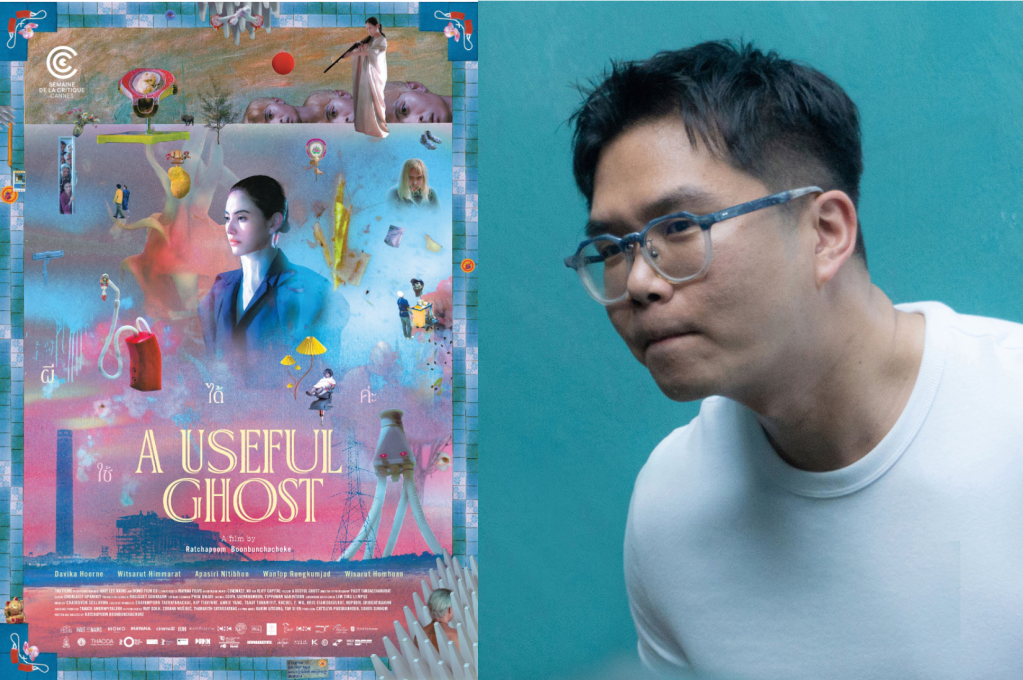
Ratchapoom Boonbunchachoke
How to cite: Nagendrarajah, Nirris. “Of Eros & Of Dust: On Ratchapoom Boonbunchachoke’s A Useful Ghost.” Cha: An Asian Literary Journal, 7 Sept. 2025, chajournal.blog/2025/09/07/useful-ghost.


Nirris Nagendrarajah (he/him) is a Toronto-based writer whose work has appeared in paloma, Polyester, Fête Chinoise, In the Mood Magazine, Tamil Culture, in addition to Substack. He is currently at work on a novel about waiting. [All contributions by Nirris Nagendrarajah.]
 Cha
Cha 